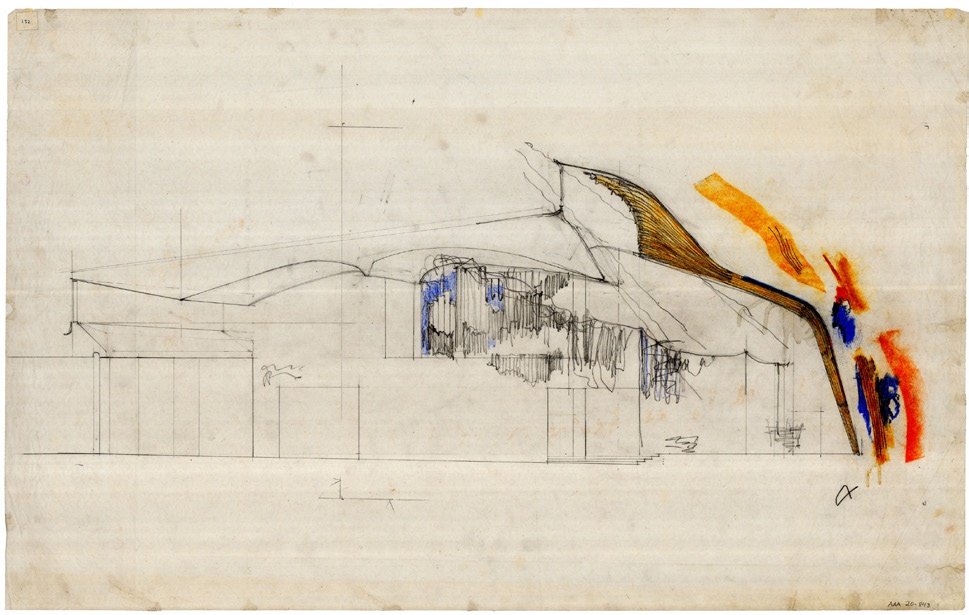
Seeing photos by Janne Tuunanen of Helsinki buildings by Alvar Aalto only whet my appetite to see more. There's a preternatural calm in the architect's complex, eccentric designs. His drawings capture the thought in them, resolving details while crafting open, generous spaces.
There's a batch of pencil drawings by architectural visionary Claude Parent on view now at gallery #A83 in New York City. Completed late-in-life, these perspectives flicker between physical structure and total abstraction.
Some offer enough detail about materials and scale to conjure buildings. All are rendered with devastating precision and a steady hand. One sees and understands that all that's needed to make a new architecture is pencil and paper. [Vue en surplomb de Petra-la-Neuve, 2007]
Go see this! A new exhibit of drawings by architect Liz Swanson, Blueprints for Future Outlaws, just opened at Lexington Art League’s Lillian Boyer Gallery. Her works are precise and luminous, collapsing memory, architecture and myth.
This series, responds to current political upheavals and carries an added specificity and charge. Yet there's is so much pleasure in the drawings. [Liz Swanson: https://t.co/c6DznRRi4w, Exhibit: April 22, 2022 - June 3, 2022, Loudon House: https://t.co/BIANL35hX8]
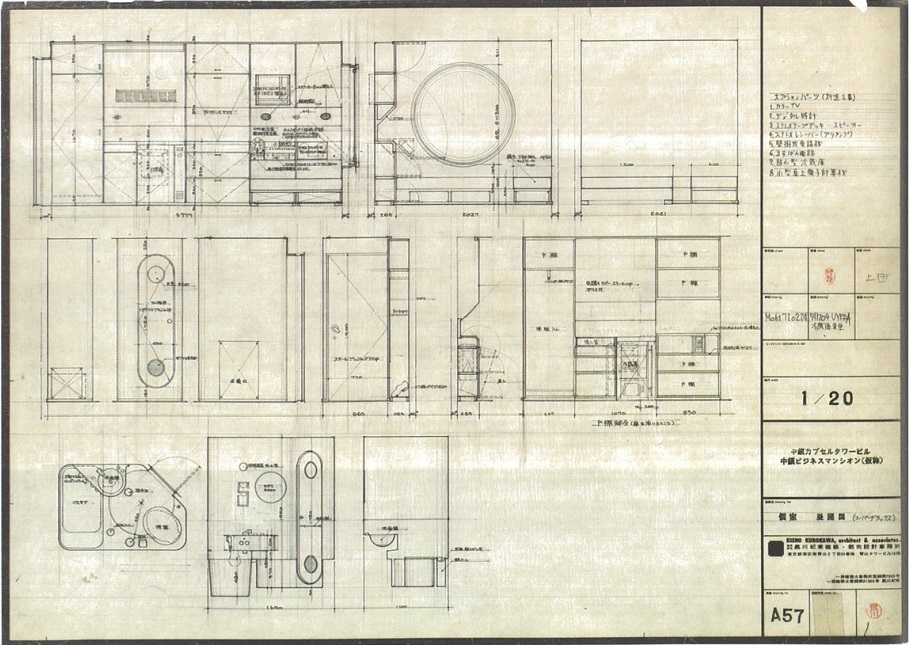
Architects lost a building and a battle this week when demolition began for the Nakagin Capsule Tower in Tokyo. At a moment when brutalism, tiny houses, and adaptive reuse are all in style, it seems like terrifically bad timing.
The tower's parti -- a block of interlocking single-inhabitant units -- holds real promise for both long-term and emergency housing. Devising modular units that are also portable and combinable might be the best next steps. [Kisho Kurokawa, Nakagin Capsule Tower, Tokyo, 1970]
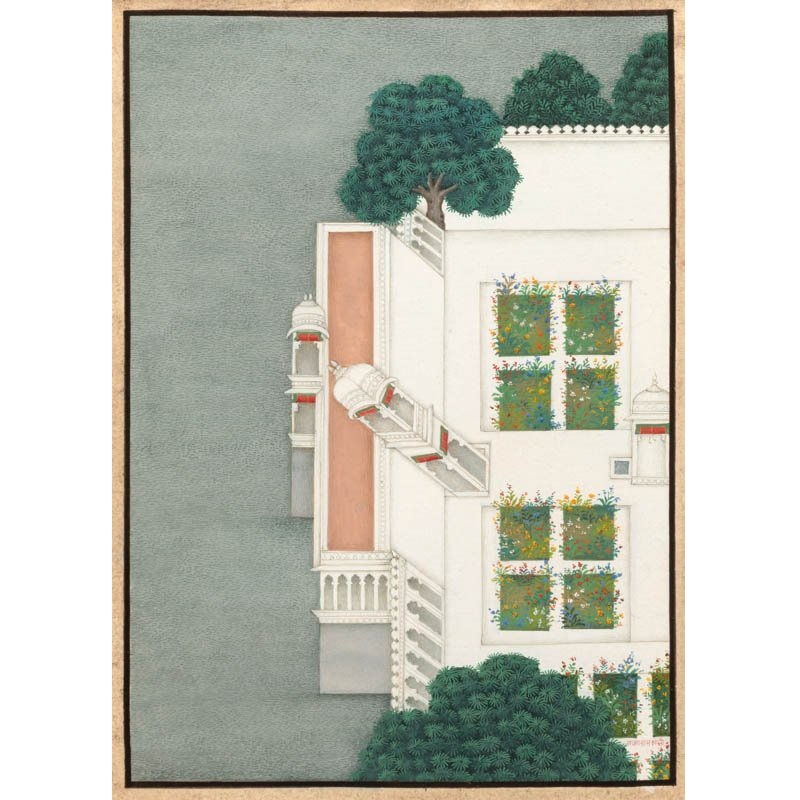
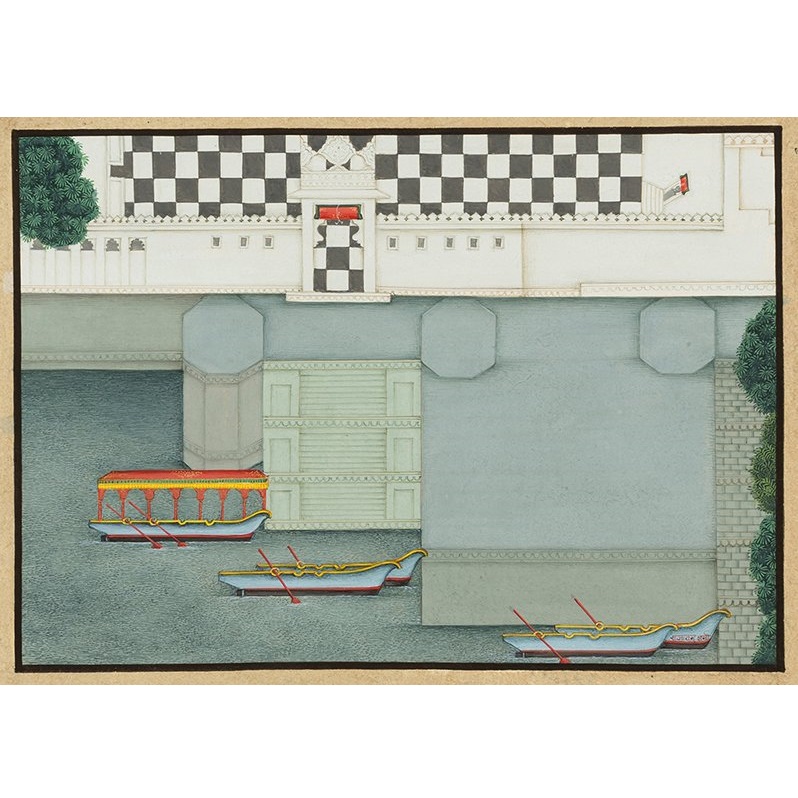
What's the point of perspective? Miniatures by contemporary Udaipur painter Raja Ram Sharma beg the question. They're joyfully free from the conventions of western perspective. Yet the scenes are judiciously composed, natural, startlingly clear. They loosen the mind and the eye.
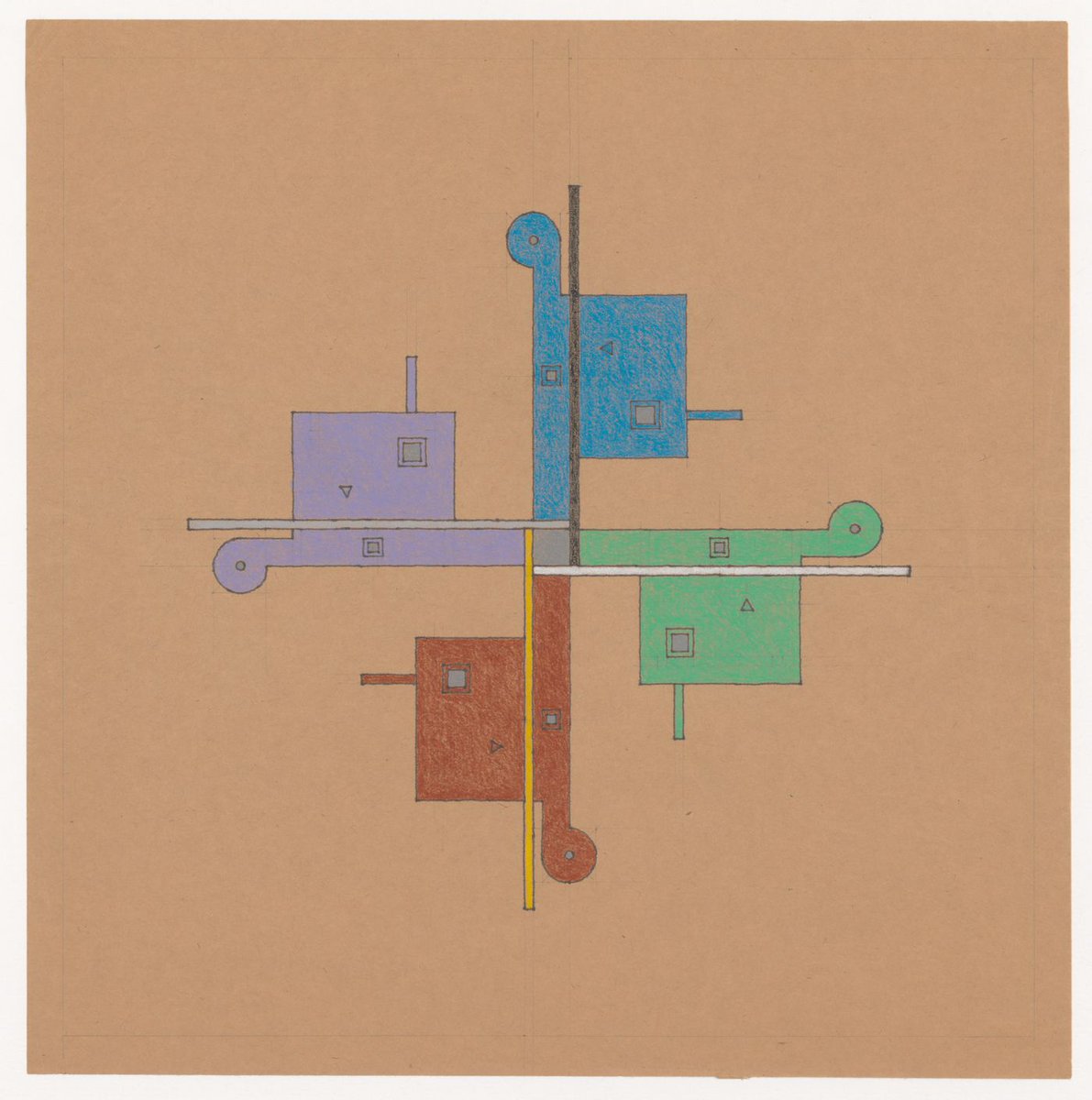
The single-family house is the most loaded and sentimental architectural form. Only architects working with very special clients -- or no clients at all -- can rise above.
John Hejduk's paper houses, whose inhabitants (The Poet, The Suicide, The Musician, Two Brothers) are figures from collective myth, do. Their distended, abstract forms, at once blank and baroque, tell stories that don't add up to lifestyle fantasies.
The exhibit "Sigurd Lewerentz: Architect of Death and Life" at @ArkDesC honors the magnificent undersung Swedish modernist. There are drawings from his modest, monumental churches (St. Peter's, St. Mark's, Skogskyrkogården Chapel) and joyful, Art Deco-inflected secular works.
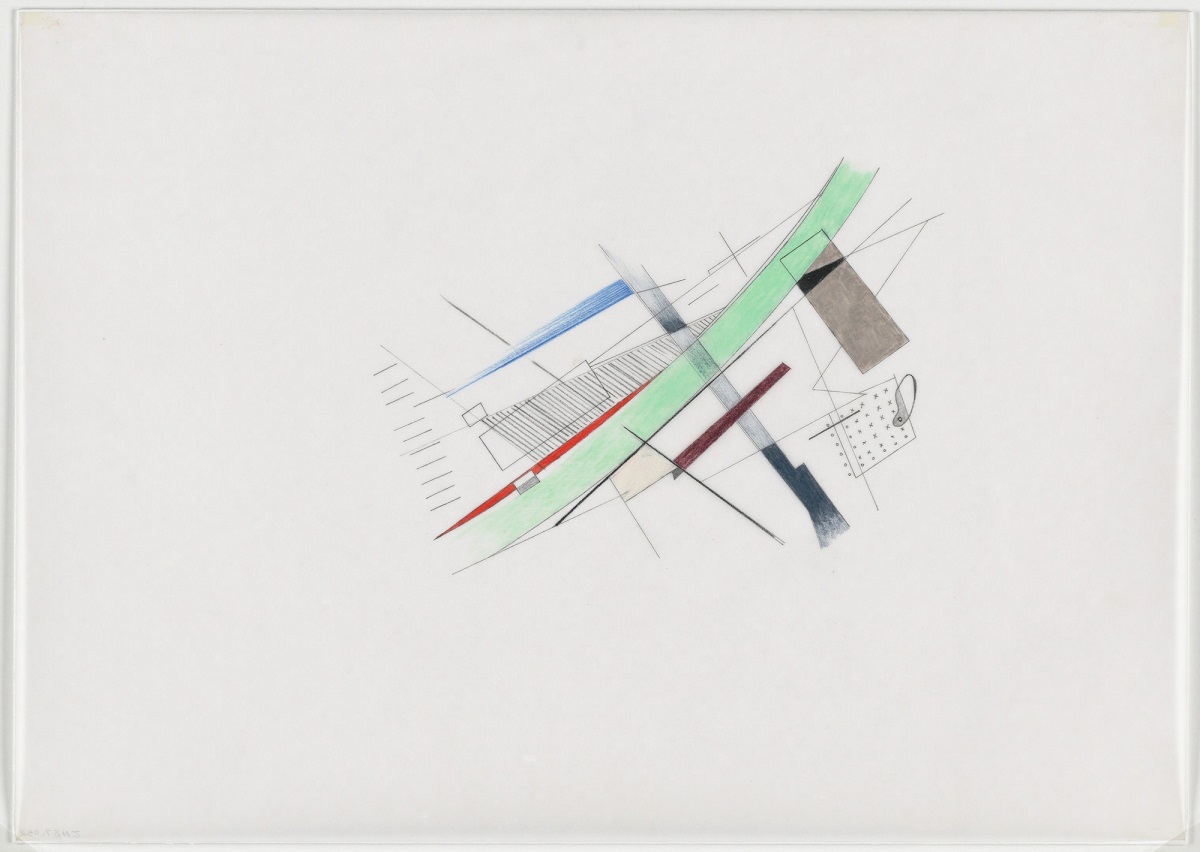
And makes it all the more impressive that an architect who drew like this -- with wildness and clarity -- built the same way. [Drawing: Zaha Hadid, Parc de la Villette Project (Plot breakdown), Paris, 1982-83. Collection: The Museum of Modern Art. Series: https://t.co/Fop9D1xcrM]
The longer I work as an architect, the more supportive I am of unbuilt and even unbuildable projects. Without some dreaming we get lifeless, uninspired buildings. Looking at Zaha Hadid's competition drawings for Parc de la Villette gives a wistful sense of what might have been.