A Starbucks has become a tourist attraction at Urumqi's Grand Bazaar. I stopped by to see how the store draws on local design and spoke with Hanum Ain binti Zainal, Director of Kuala Lumpur’s Project Implementation and Building Maintenance Department, during her visit to Urumqi for the Global Mayor Dialogue.
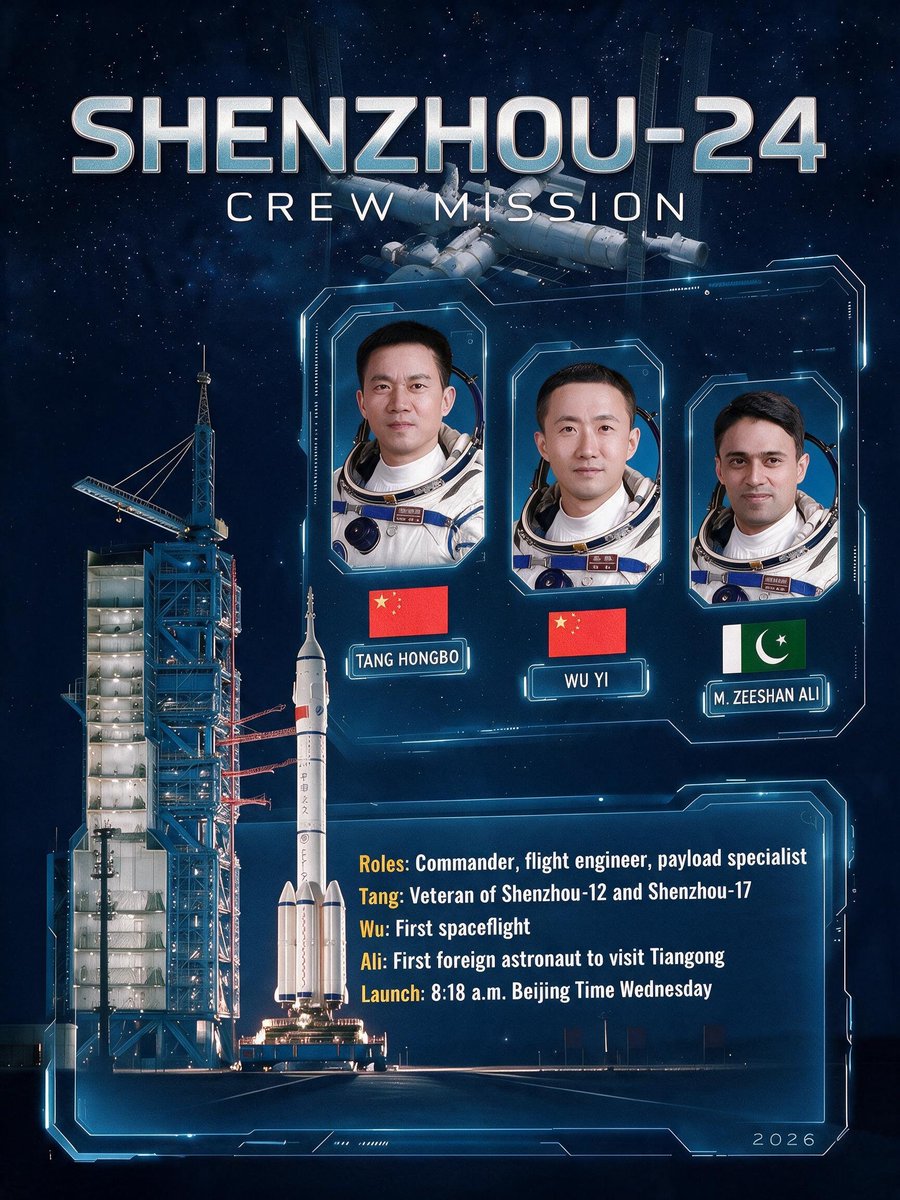
A historic first for China's Tiangong space station: a Pakistani astronaut is about to join its crew, marking the first joint spaceflight involving Chinese and foreign astronauts in China's crewed space program.
The Shenzhou-24 crew will include Chinese astronauts Tang Hongbo, who will command the mission and make his third visit to Tiangong, and Wu Yi, embarking on his first spaceflight, alongside Pakistan's Muhammad Zeeshan Ali, who will serve as a payload specialist.
Liftoff is scheduled for 8:18 a.m. Wednesday (Beijing time) from the Jiuquan Satellite Launch Center in northwest China. A new chapter in China-Pakistan space cooperation is about to begin!
Pakistani astronaut Muhammad Zeeshan Ali, selected as a payload specialist to join the Shenzhou-24 spaceflight mission, will become the first foreign astronaut to board China's Tiangong space station.
In orbit, Ali will join in the crew's routine work and focus on joint China-Pakistan space science experiments, primarily installing experiment samples and units and carrying out in-orbit experiments as scheduled.
Ali will return to Earth aboard the Shenzhou-23 spaceship after completing a short-term joint flight.
Could a data centre be ready for servers in just 100 days? With this question in mind, I went inside Alibaba Cloud's facility in Ulanqab, Inner Mongolia, to see how CUBE 5.0 works. The power and cooling systems are built in a factory, then fitted together on site like giant building blocks. That makes assembly faster. The design also supports energy-efficient cooling and gives the facility room to adapt as new generations of AI chips arrive.
Could a data centre be ready for servers in just 100 days?
Step inside Alibaba Cloud’s facility in Ulanqab, Inner Mongolia to discover how CUBE 5.0 works.
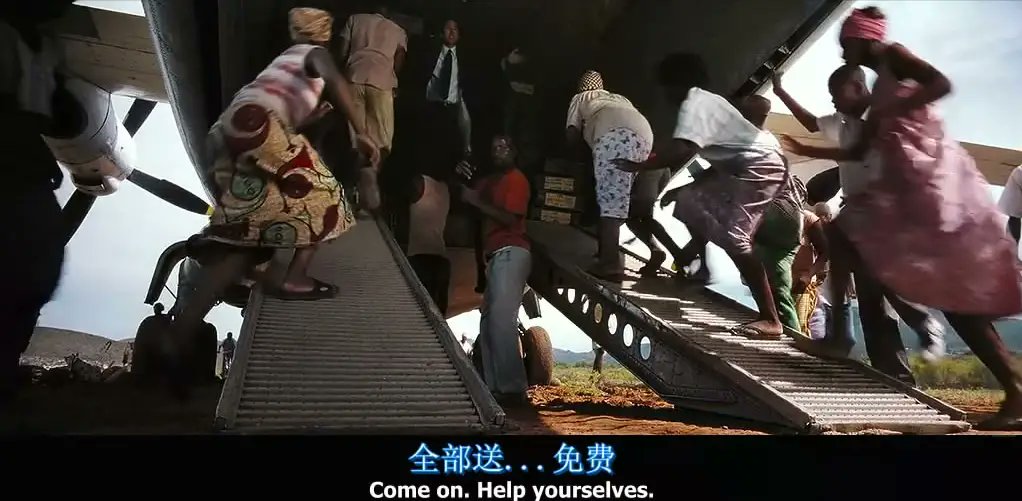
Remember the scenes in Lord of War where planes are taken apart? Here's a real-life version from Wuhan, China — though this time, there's no arms dealing or war involved. It's just business.
Meet Pan Feng, a young scrap-metal who recently landed what may be the coolest deal of his career: dismantling a retired Airbus A300 passenger jet for scrap.
The aircraft had been sold at a judicial auction earlier this year. Its buyer needed someone to dismantle the fuselage and recycle the materials. After more than two months of negotiations, Pan got the job in July.
His father wasn't convinced. Having spent his entire career in the scrap business, he worried that taking on something as massive as a passenger plane could turn into a costly mistake.
Pan decided to take the risk. In August, he saw the passenger jet up close for the first time. He had never even flown on one. But there was no time for sightseeing. He was already sizing up the aircraft, working out how much aluminum could be salvaged and how much labor and transportation would cost.
The dismantling got underway in September. The engines, landing gear and other valuable components had already been taken away, leaving Pan's team with the fuselage, made up largely of aluminum alloys. Over the next month, plasma cutters sliced through the metal skin as the aircraft was taken apart piece by piece. Wings, fuel tanks, steel and stainless steel were separated and sorted, ready to be sent to downstream processors.
The deal didn't make him a fortune — he just managed to break even. But Pan says the experience was well worth it. He learned the ins and outs of aircraft dismantling and gained valuable experience that could help him turn a profit if he takes on a similar project in the future.
And there's a personal bonus: he'd fulfilled a childhood dream. As he joked when he first saw the aircraft: "I've never been on a plane. But I can at least buy one to take apart, right?"
While browsing a 2001 copy of China Daily in the library, I found something perhaps even more fascinating than its APEC headlines: the advertisements.
Thailand's CP Group showcasing its growing presence in China. Thai Airways welcoming APEC delegates. US insurance giant MetLife congratulating China on hosting APEC 2001 while expressing support for China's accession to the WTO. And page after page of Shanghai businesses eager to connect with the wider world.
These were more than commercial advertisements. At the time, China's vast market potential and rising living standards were creating enormous opportunities for international businesses. These ads captured the optimism of a country opening up, the confidence of foreign investors in China's future, and the growing commercial connections between China and the Asia-Pacific.
It was October 2001, just weeks before China joined the WTO. The country was standing at the threshold of a new era of globalization, and Shanghai offered a glimpse of the opportunities that lay ahead.
Many foreign companies that established a presence in China during those early years went on to become huge beneficiaries of the country's remarkable economic transformation. What might have seemed like a bold bet on an emerging market turned out to be a long-term business opportunity.
Twenty-five years later, China's market remains vibrant and resilient. The international business community continues to find opportunities in its scale, dynamism and evolving consumer demand. The energy and futuristic spectacle of this year's APEC gathering in Shenzhen offer another glimpse of China's continuing commercial potential.
A quarter-century ago, those advertisements reflected confidence in China's future. Twenty-five years on, that story is far from over.
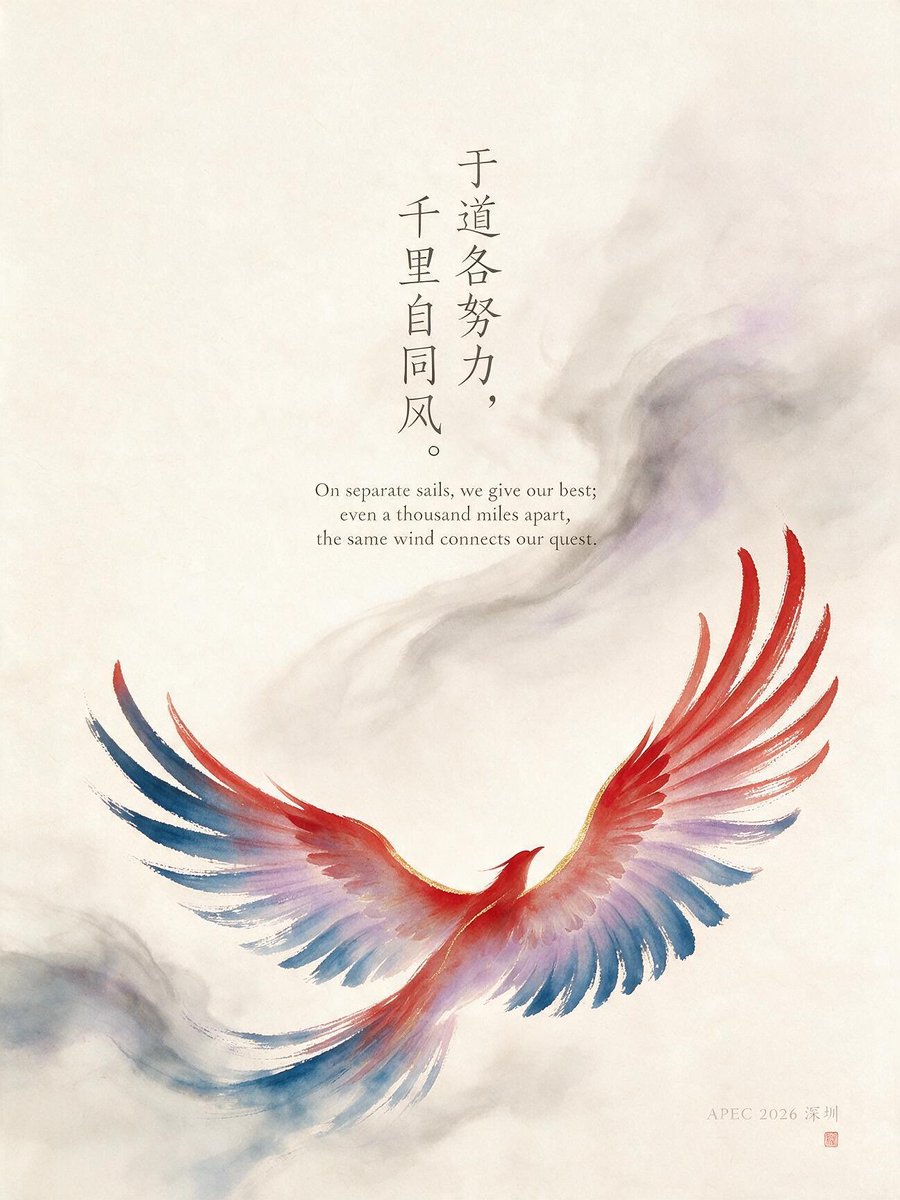
At the APEC welcome dinner in Shenzhen on Nov. 18, the toast quoted a Song dynasty line by Zhou Xingji, from "Seeing a Friend Off Eastward":
"On separate sails, we give our best; even a thousand miles apart, the same wind connects our quest."
The line means: we each press forward on our own path in life, and though a thousand miles apart, we still share the same clear wind — a phrase long used to express kindred spirits and mutual encouragement across distance.
APEC's 21 economies differ vastly in system and circumstance. But they can each strive in their own way — and the more each does, the closer they grow. That's the whole point of APEC in one sentence.
Forget the suits — it’s all about the scarves at this year’s APEC family photo in Shenzhen!
Every leader is wearing one, in either red or blue. A small accessory with a lot of thought behind it
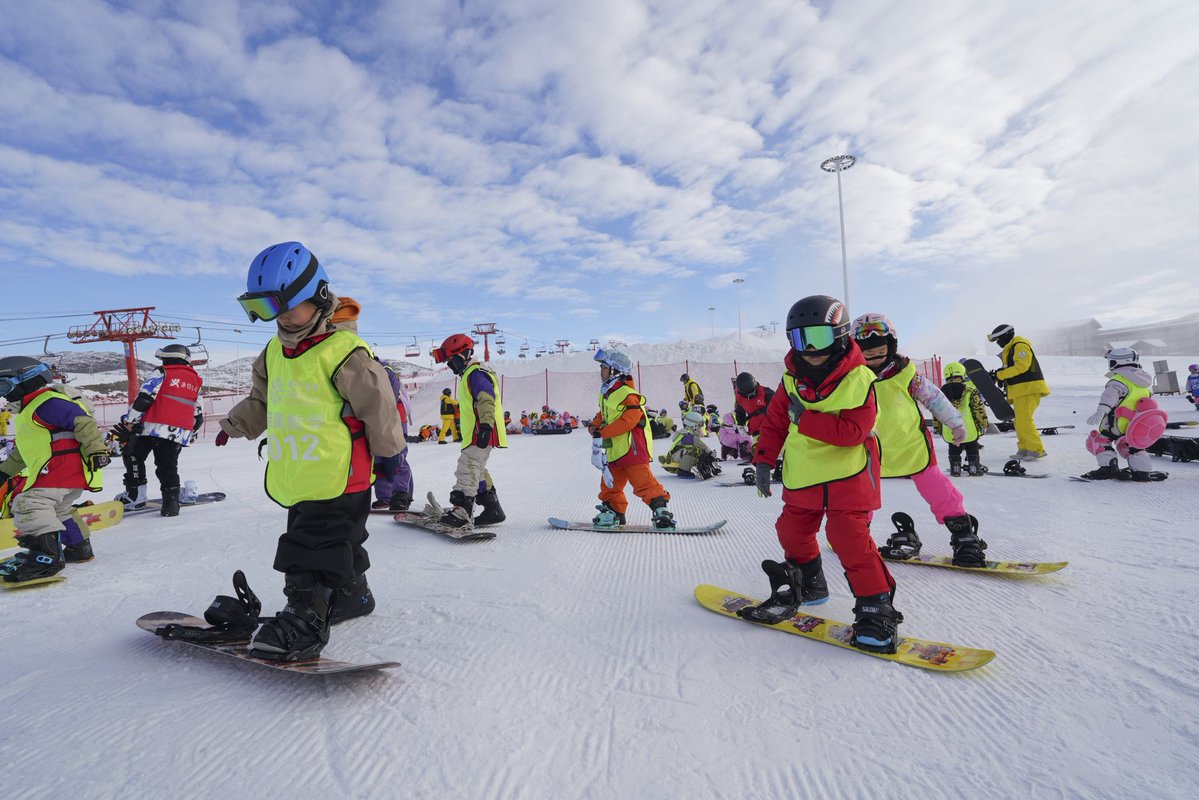
Remember the slopes where Eileen Gu won Olympic gold?
That's Genting Snow Park in Zhangjiakou, one of the three competition zones of the Beijing 2022 Winter Olympics.
Now, as winter returns, local schoolchildren are getting a special holiday to enjoy the snow for themselves.
Starting November 18, primary school students in Zhangjiakou are getting a three-day "snow holiday," giving them a five-day break when combined with the weekend.
And Zhangjiakou is just the beginning. More snow holidays are scheduled for December in places including Hulunbuir in Inner Mongolia, Jilin Province and Altay in Xinjiang. Some regions are also offering students free opportunities to ski and skate, along with free admission to tourist attractions.
The Beijing 2022 Winter Olympics brought winter sports into the spotlight. The challenge now is to keep that enthusiasm going beyond the Games. Snow holidays are one way to do it — giving children time to get outdoors, try winter sports and experience the snow firsthand.
For these students, the Olympic legacy isn't just something they watched on TV. It's something they can experience for themselves.
Same red carpet, two very different ways to roll it out.
In Shenzhen during APEC, people use a machine to roll out the red carpet. Meanwhile, in DC, people are doing it the old-fashioned way — rolling it out by hand, and getting down on their knees to smooth it out.
Shanghai, Beijing, and now Shenzhen. Three APEC host cities offer a window into China's changing relationship with the world.
From making goods for global markets to putting AI to work on factory floors, how might China's experience contribute to the Asia-Pacific's next stage of growth?
This video shows what connects these three moments, and what Shenzhen could bring to the conversation.
10 tonnes. All electric. First crewed flight!
China's independently developed CE-25A electric commercial aircraft has taken to the skies with three crew members on board.
With room for 19 passengers and a range of 400 km, the aircraft is designed to connect cities through electric aviation.