Before the carnivore diet had a single follower or a hashtag, it had Vilhjalmur Stefansson: an Arctic explorer who lived on meat for years, then checked himself into a New York hospital to eat nothing else for a year and prove the experts wrong.
Stefansson was an anthropologist who went north in 1906 to live among the Inuit. When his supply ship failed to arrive, he had little choice but to eat as his hosts did, on fish, then caribou, seal and fat, with almost nothing from a plant. He expected to feel terrible. Instead he felt superb, and he kept it up, on and off, for years. The Inuit he lived with had no scurvy, no rotten teeth, none of the diseases the textbooks promised a meat-eater. He came home convinced that everything he had been taught about food was wrong.
The experts did not take it well. One leading scientist said it was easier to believe Stefansson was lying than to accept that men could stay healthy on meat alone. So in 1928, to settle it, he and a fellow explorer, Karsten Andersen, checked into Bellevue Hospital and agreed to eat nothing but meat and water for a full year, watched around the clock by doctors who expected them to fall apart.
There was one stumble, and it taught the most important lesson of all. Early on, the doctors made Stefansson eat only lean meat, the fat stripped away. Within three days he was ill, with diarrhoea and a wretched, flattened feeling. No vegetables, no medicine. Just fat. A meal of fatty steak put him right within two days. This is the trap the old-timers called rabbit starvation, and it is the thing modern carnivores still get wrong. Lean muscle alone will make you ill. The fat was never the optional part. The fat was the point.
With the fat restored, the year passed without drama. No scurvy. No kidney damage. No soaring blood pressure. The men ate roughly four-fifths of their calories as fat, finished healthy and sharp, and the committee was forced to admit, in print, that a man can live on meat alone without harm.
It made him the most famous meat-eater alive. He spent the rest of his life arguing the case, championing pemmican as the perfect ration and writing book after book. He was no saint, a showman whose Arctic ventures cost lives. But on the food he never wavered. In his seventies he returned to his stone-age diet of meat and fat, reportedly eating butter off a spoon at dinner parties, and lived, clear-minded, to 82.
A century on, every man posting his ribeye is repeating an argument Stefansson already won, in a hospital ward, in 1928.
A neuroscientist spent 30 years proving the 100-year dogma that the adult brain never makes new neurons was wrong, and the activity his lab identified as the strongest natural trigger of the process is more powerful than any drug ever invented.
His name is Fred Gage.
He runs the Laboratory of Genetics at the Salk Institute in California, and the paper that ended one of the longest-standing dogmas in modern neuroscience was published in 1998 in Nature Medicine. The finding is sharp enough that it should have changed every doctor's office on Earth.
The dogma he had to break was almost a century old.
Santiago Ramón y Cajal, the Spanish anatomist considered the father of modern neuroscience, declared in the early 1900s that the adult brain was structurally fixed. Once you were grown, the wiring was finished forever.
In his exact words, the founts of growth and regeneration in the brain had dried up irrevocably. Every neuron you would ever have, you already had. The only direction your brain could move from adulthood onward was downward, into decline.
This was treated as settled fact for the next 60 years.
The first person who actually tested it was a young neurobiologist named Joseph Altman.
In 1962, working at MIT, Altman injected adult rats with a radioactive form of thymidine, which is one of the four building blocks of DNA. Any cell that divides has to copy its DNA, so any new cell formed after the injection would carry the radioactive marker.
When Altman cut open the brains of those adult rats and looked at the hippocampus under a microscope, he saw radioactive new neurons glowing in the tissue. The adult brain was making new neurons. He published the finding in Science magazine and titled the paper with the question itself. Are new neurons formed in the brains of adult mammals.
The field rejected him almost universally.
Altman eventually moved from MIT to Purdue and spent the next 30 years quietly publishing more evidence with his wife Shirley Bayer. The scientific community largely ignored him. He died in 2016 having lived to see the dogma collapse, but never having received credit for being the first one to break it.
The man who finally proved Altman right was Fred Gage.
In 1998, working with the Swedish neuroscientist Peter Eriksson, Gage got access to brain tissue from five cancer patients who had died in Sweden. These patients had been given a chemical called BrdU during their treatment for tumor diagnosis.
BrdU works the same way Altman's radioactive thymidine did. It incorporates into the DNA of any dividing cell. If the patients' brains had produced new neurons during their final months of life, those neurons would carry a chemical fingerprint that could be made visible under a fluorescent microscope.
Every single one of the five hippocampi was glowing with new neurons.
The paper was published in Nature Medicine in November 1998 under the title Neurogenesis in the Adult Human Hippocampus. Five hippocampi ended a century of dogma. Cajal was wrong. Altman was right. The adult human brain manufactures fresh neurons every day for as long as it is alive.
What Gage's lab did next is the part that should change how every reader of this thinks about their own body.
One year later, Henriette van Praag, a postdoc in Gage's lab, ran an experiment to figure out what actually controls the rate of neurogenesis in adults. She put mice in five different conditions. Some learned a water maze. Some swam without learning anything. Some lived in enriched environments full of toys and tunnels. Some had standard cages. And one group simply had access to a running wheel.
Only two conditions doubled the production of new neurons. The enriched environment, and running.
When she isolated the variables further, running alone was sufficient. A mouse with nothing in its cage but a wheel produced twice as many new hippocampal neurons as a mouse without one. The water maze did not do it. Swimming did not do it. Learning by itself did not do it.
The thing that physically grew new brain cells inside an adult mammal was the rhythmic act of running.
The mechanism turned out to be a single molecule.
It is called BDNF, which stands for brain-derived neurotrophic factor. Researchers in the field nicknamed it Miracle-Gro for the brain, because it is what tells neural stem cells in the hippocampus to divide, mature, and integrate into existing circuits.
Sustained aerobic exercise raises BDNF in the hippocampus more sharply than almost any other intervention ever measured. Antidepressants raise it too. So does electroconvulsive therapy. But the natural trigger your body evolved to release the molecule is the one almost nobody uses on purpose.
Your legs telling your brain to grow.
The most important confirmation came 13 years later in human beings.
In 2011, a researcher named Kirk Erickson at the University of Pittsburgh ran a one-year randomized trial on 120 sedentary older adults whose hippocampi were already shrinking with age.
He split them into two groups. One group walked around a track for 40 minutes three times a week. The other group did stretching and toning exercises for the same amount of time. He scanned their brains at the start, at six months, and at one year.
The walkers grew their hippocampi by two percent.
In a brain that loses one to two percent of hippocampal volume every year after age 50, growing it by two percent in one year of light walking is equivalent to reversing two years of aging in twelve months.
The stretching group, doing identical session lengths without aerobic load, lost volume on schedule. Same minutes. Same effort signature from the outside. Completely different outcome inside the skull.
The paper was published in the Proceedings of the National Academy of Sciences. The editor who approved it was Fred Gage.
The comparison with drugs is the part of the story that should rearrange anyone's thinking about mental health.
Every major antidepressant on the market works partly by raising BDNF. Prozac, Zoloft, the rest of the SSRIs all converge on the same final pathway that exercise activates naturally.
The difference is that Prozac takes several weeks of daily dosing to produce measurable neurogenesis, comes with side effects, and only touches one biological mechanism.
Exercise activates 7 different pathways at once, including inflammation reduction, cortisol regulation, blood flow to the brain, endocannabinoid release, and direct stimulation of neural stem cells in the dentate gyrus.
There is no pill that does what running does to the human brain. The molecule the pills are trying to imitate is one your body manufactures on its own the moment your heart rate climbs and your feet hit the ground.
This is the part nobody talks about.
Cajal declared the brain fixed in 1900. Altman discovered new neurons in 1962 and got rejected for 30 years. Gage closed the case in 1998. Van Praag identified running as the trigger in 1999. Erickson proved it works in living humans in 2011. Half a century of research, published in the most prestigious journals on Earth, replicated in dozens of labs across multiple continents.
And the average reader of this will close this post, sit back down, and stay there for the next ten hours, while their own hippocampus quietly shrinks for the rest of the day.
The most powerful neurogenesis drug ever discovered does not need a prescription. It needs a pair of legs and a willingness to use them.
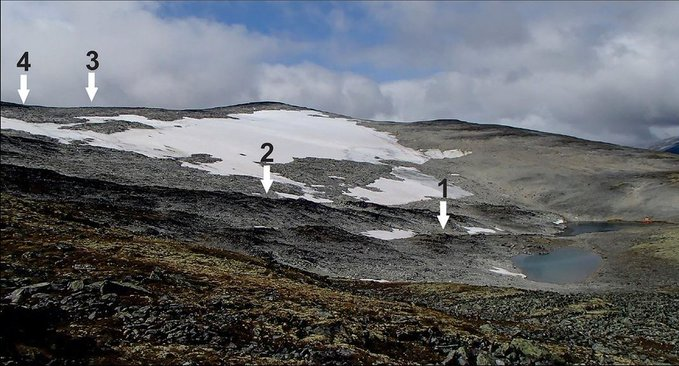
Lo scioglimento delle lastre di ghiaccio in Norvegia ha rivelato reperti umani incastrati nelle rocce sotto il ghiaccio. Il che significa che all'epoca dell'Età del Ferro (800-450 a.C.) faceva abbastanza caldo da impedire la formazione del ghiaccio.
Era più caldo di oggi, e questo è stato dimostrato dalla datazione al carbonio degli stessi reperti trovati.
Altro che maggio più caldo di sempre!
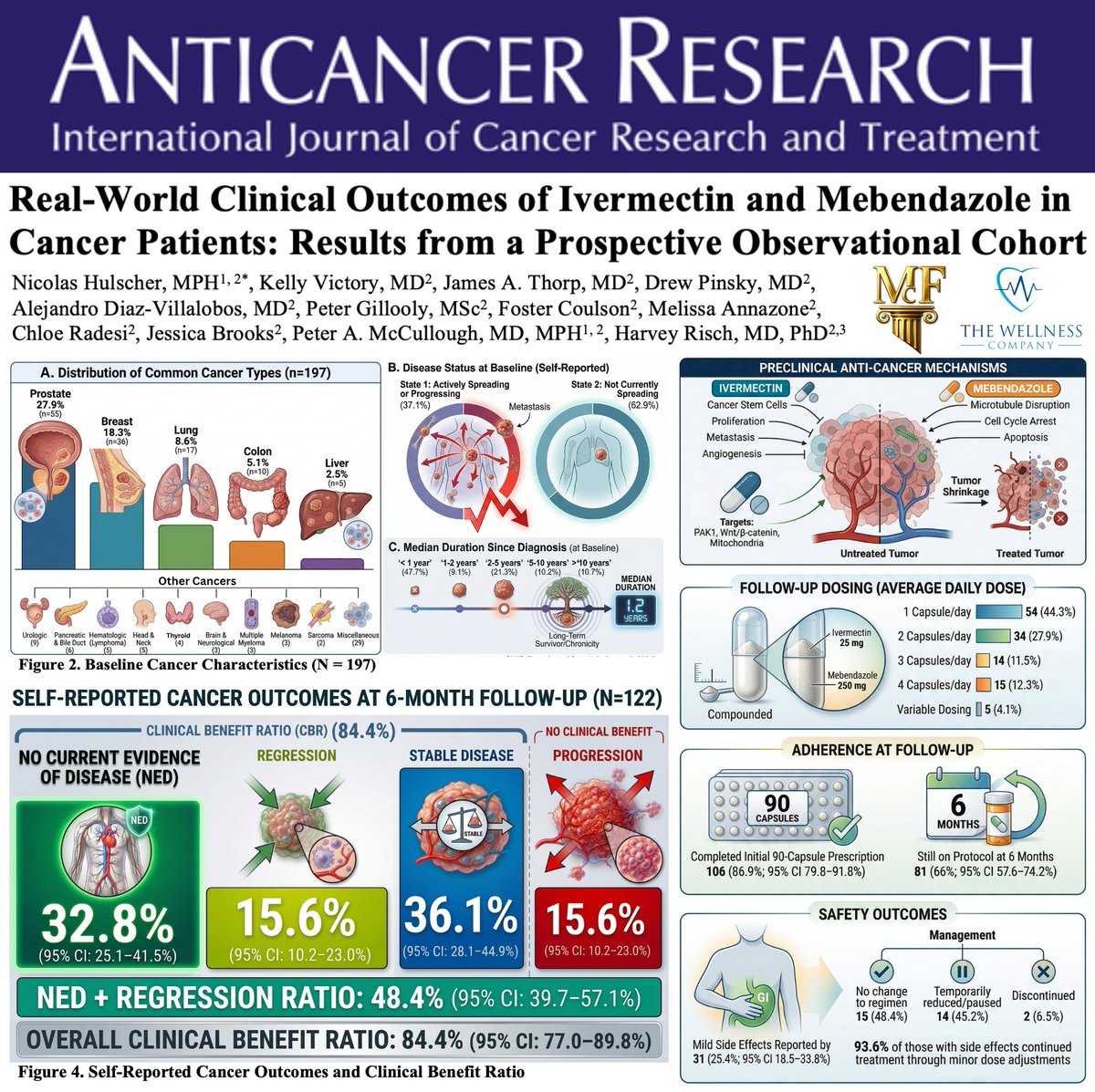
BREAKING: Largest Human Cancer Study of Ivermectin + Mebendazole Is Now PEER-REVIEWED and PUBLISHED in a MAJOR Cancer Journal
84.4% of cancer patients taking ivermectin + mebendazole for 6 months declared either CANCER DISAPPEARANCE, TUMOR REGRESSION, or CANCER STABILIZATION.
Our study, “Real-world Clinical Outcomes of Ivermectin and Mebendazole in Cancer Patients: Results from a Prospective Observational Cohort,” is now peer-reviewed and published in Anticancer Research—a major international oncology journal of the International Institute of Anticancer Research (IIAR), established in 1995.
The results represent one of the most compelling clinical signals ever documented for repurposed anti-parasitic therapies in oncology.
A diverse population of cancer patients (n=197) was prescribed compounded ivermectin–mebendazole through a U.S. telemedicine platform, with each capsule containing 25 mg ivermectin and 250 mg mebendazole.
Participants were followed for approximately six months using standardized digital surveys assessing cancer outcomes, medication adherence, and tolerability.
At approximately six months post-treatment initiation, we observed an 84.4% Clinical Benefit Ratio (CBR)—meaning more than four out of five patients reported either:
No evidence of disease (32.8%)
Tumor regression (15.6%)
or Cancer stabilization (36.1%)
Importantly, adherence was remarkably high, with 86.9% completing the initial prescription and 66.4% remaining on therapy at six months.
Side effects were predominantly mild and manageable, reported in 25.4% of patients (primarily gastrointestinal), with 93.6% of those experiencing side effects continuing treatment after minor dosing adjustments.
This groundbreaking peer-reviewed publication was made possible through a unique collaboration between The Wellness Company, the McCullough Foundation, and the Chairman of the President’s Cancer Panel—uniting real-world clinical data, frontline medical experience, and epidemiologic expertise to evaluate inexpensive, repurposed therapies with major translational potential.
With these extraordinarily promising results, double-blind, placebo-controlled clinical trials are now required.
In the meantime, many cancer patients are exercising their right to try.
@twc_health@McCulloughFund@IIAR_Journals@P_McCulloughMD@DrHarveyRisch@DrKellyVictory@jathorpmfm@drdrew@PeterGillooly@FosterCoulson
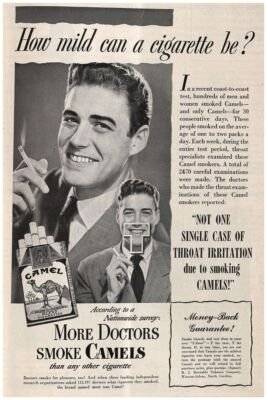
Things modern medicine has been certain about, in chronological order, since 1900:
- That cigarettes were healthy.
- That margarine was healthy.
- That asbestos was inert.
- That lead in petrol was inert.
- That thalidomide was safe in pregnancy.
- That radium was a tonic.
- That DDT was safe to spray on children.
- That lobotomies cured depression.
- That morphine was non-addictive.
- That OxyContin was non-addictive.
- That mercury in dental fillings was inert.
- That cholesterol caused heart disease.
- That saturated fat caused heart disease.
- That eggs caused heart disease.
- That red meat caused cancer.
- That seed oils were heart-healthy.
Modern medicine has, in each case, eventually been forced to reverse the previous certainty.
It has not, in any of the above cases, apologised.
The certainty was, in each case, supported by the published consensus of the time.
The consensus of the time was, in each case, wrong.
The certainty currently in force, on the same model, is, on a longer view, statistically very unlikely to be entirely right.
The doctor reading the next reversal, in 2045, will be the one prescribing the current consensus today.
He will not call you.
He will not write to apologise.
He will, in most cases, have retired by the time the reversal is published.
The reversal will be in the journals.
The damage will be in the patients.
The patients, by then, will be your children.
Begin reading the journals yourself.
C’est bizarre.
La carte des cas d’Ebola correspond exactement à celle de haute exposition à l’arsenic.
Et encore plus bizarre.
Les symptômes d’Ebola sont les mêmes que ceux d’un empoisonnement à l’arsenic.
C’est fou les coïncidences quand même…
Do not install VLC.
Once you install it, you can never go back.
You will never pay 99 cents for a codec again.
You will never buy QuickTime Pro again.
You will never renew RealPlayer Plus again.
You will never pay for Blu-ray decoder software again.
You will never see the words "this file format is not supported" again.
You will become the family tech support person. Forever. Your dad will call you at 11 PM because he downloaded a .mkv from somewhere and Windows refuses to open it.
Your answer will always be the same. "Install VLC."
And then the orange traffic cone will eat his problem in 4 seconds and he will call you a genius.
You did not do that. A French student named Jean-Baptiste Kempf did, in 1996, as a school project at École Centrale Paris. His roommate brought a traffic cone home from the street that year. They made it the logo. 6 billion downloads later, the cone is still undefeated.
Repo: https://t.co/0Tlbn7KNan. 18,463 stars. GPL-2.0. Pushed today.
Here is the wildest part:
The warning is real. Just not for you.
Apple sold QuickTime Pro for $29.99. VLC killed it. Apple shut it down in 2016.
Microsoft sold Windows Media Center for $9.99. VLC killed it. Microsoft shut it down with Windows 10.
RealNetworks charged $39.99 a year for RealPlayer Plus. VLC killed it.
Sony built Blu-ray to need a $79.99 licensed decoder. VLC ships with libdvdcss and a French court ruling that protects it.
The codec mafia spent 30 years building a tollbooth on every video file on Earth.
A guy whose GitHub location is literally "Coneland" walked through every tollbooth with a cone on his head and never paid a cent.
He was offered millions of dollars to sell it. He said no.
So yes. Do not install VLC. The codec industry has not recovered from the last 6 billion people who did.
100% Opensource.
100% Free.
100% Yours.
The biggest media companies on Earth spent three decades trying to charge you to play your own files.
One French student and a cone he found on the street made all of it pointless.
The Official Vitamin D Optimisation Protocol
(Not endorsed by anyone with a marketing budget)
Step 1: Cancel your supplement subscription. You will not need it.
Step 2: Bin every seed oil in the house. Sunflower. Rapeseed. The "vegetable oil" with no specified vegetable. Yes, the expensive one too.
Step 3: Replace with butter, tallow, lard, ghee, and the dripping you've been told to throw away.
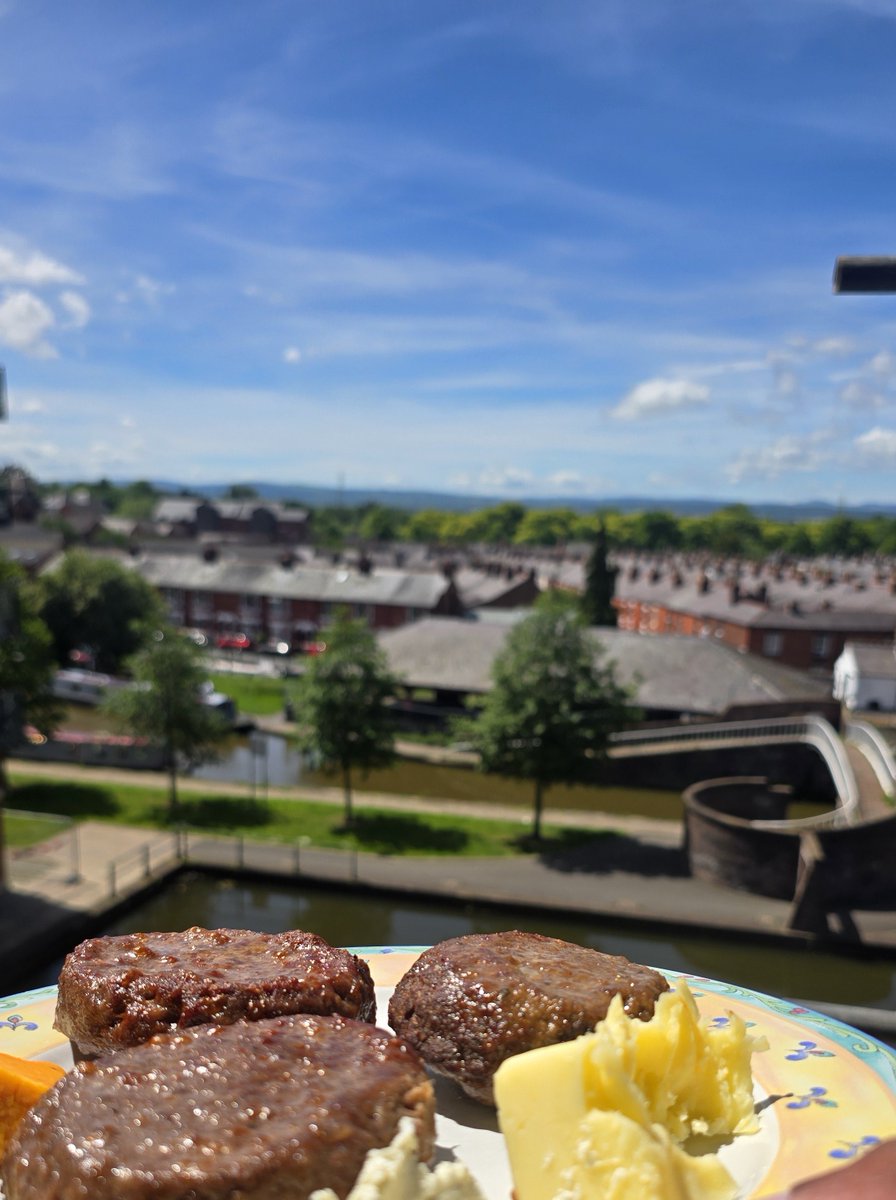
Step 4: Eat all the beef, cheese, eggs, and butter in sight. Then find some more.
Step 5: Go outside. I know. Radical.
Step 6: Roll up your sleeves. Expose the parts of you that haven't seen daylight since the second lockdown.
Step 7: Build up gradually. Ten minutes. Then twenty. The factor 50 industry would prefer you forgot that your skin has been doing this for millions of years.
Step 8: Wait three months. Better sleep. Steadier mood. Skin that tans where it used to burn.
Step 9: Reap the profits. Supplement money: yours. Sunscreen money: yours. Statin money: yours. The decade you'd have spent slightly tired and slightly inflamed: yours.
Step 10: Tell precisely no one. Smile. Nod. Go back outside.
500 BC: "Olives and barley. The hoplite's ration."
100 AD: "Bread and beans. The slaves get this."
800 AD: "Lentils and wild greens. The peasants survive on it."
1300s: "Sardines and bread. The lord eats venison."
1500s: "Chickpeas and oil. The poor have no meat."
1700s: "Greek shepherds eat horta. The Ottomans take the lamb."
1850s: "Southern Italians live on beans and bread. They emigrate to eat something else."
1940s: "Crete is starving under occupation. Half the livestock is gone by 1945."
1950s: "Ancel Keys arrives during Lent. He photographs the fasting peasants and calls it healthy."
1990s: "Mediterranean diet recognised as the gold standard."
2010s: "Whole grains, legumes, olive oil. The diet of longevity."
2026: "Plant-forward Mediterranean. The most evidence-based dietary pattern in the world."
You: noticing that the diet now marketed as the apex of human health was sampled by an American researcher on an occupied island during the forty-day religious fast, after the goats had been eaten and the cattle had been shot.
The peasants weren't eating that way because it was optimal.
They were eating that way because there was nothing left.
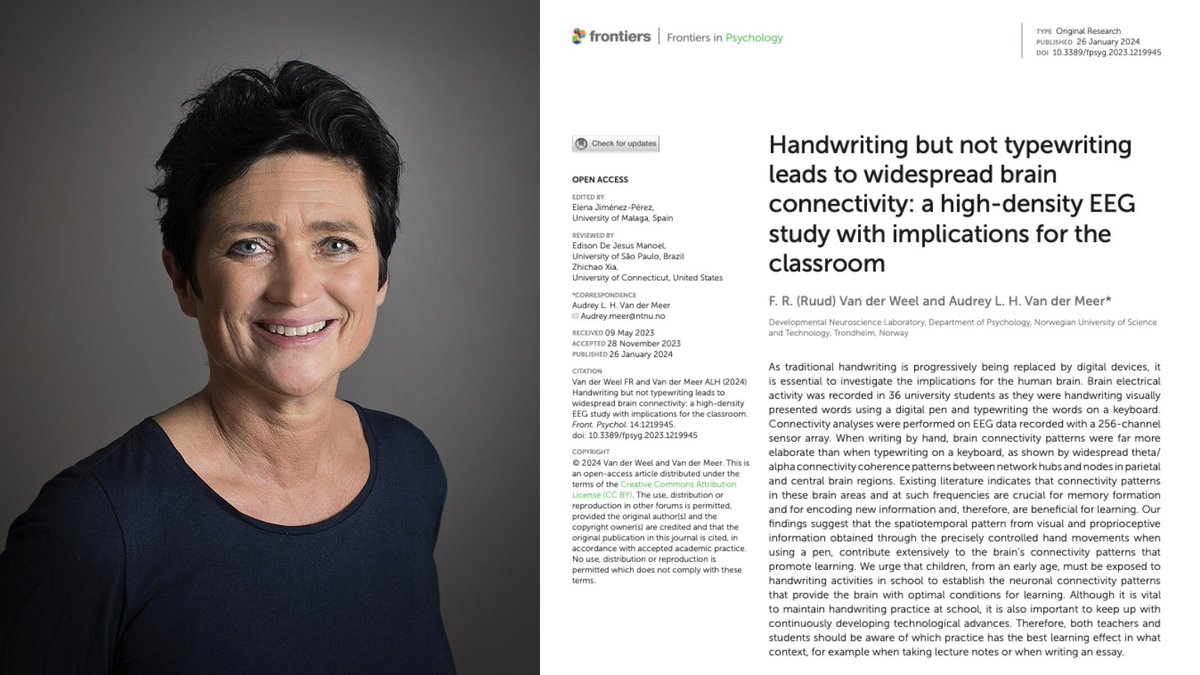
A Norwegian neuroscientist spent 20 years proving that the act of writing by hand changes the human brain in ways typing physically cannot, and almost nobody outside her field has read the paper.
Her name is Audrey van der Meer.
She runs a brain research lab in Trondheim, and the paper that closed the argument was published in 2024 in a journal called Frontiers in Psychology. The finding is brutal enough that it should have changed every classroom on Earth.
The experiment was simple. She recruited 36 university students and put each one in a cap with 256 sensors pressed against their scalp to record brain activity. Words flashed on a screen one at a time.
Sometimes the students wrote the word by hand on a touchscreen using a digital pen, and sometimes they typed the same word on a keyboard. Every neural response was recorded for the full five seconds the word stayed on screen.
Then her team looked at the part of the data most researchers had ignored for years, which is how different parts of the brain were communicating with each other during the task.
When the students wrote by hand, the brain lit up everywhere at once.
The regions responsible for memory, sensory integration, and the encoding of new information were all firing together in a coordinated pattern that spread across the entire cortex. The whole network was awake and connected.
When the same students typed the same word, that pattern collapsed almost completely.
Most of the brain went quiet, and the connections between regions that had been alive seconds earlier were nowhere to be found on the EEG.
Same word, same brain, same person, and two completely different neurological events.
The reason turned out to be something nobody had really paid attention to before her work. Writing by hand is not one motion but a sequence of thousands of tiny micro-movements coordinated with your eyes in real time, where each letter is a different shape that requires the brain to solve a slightly different spatial problem.
Your fingers, wrist, vision, and the parts of your brain that track position in space are all working together to produce one letter, then the next, then the next.
Typing throws all of that away. Every key on a keyboard requires the exact same finger motion regardless of which letter you are pressing, which means the brain has almost nothing to integrate and almost no problem to solve.
Van der Meer said it plainly in her interviews.
Pressing the same key with the same finger over and over does not stimulate the brain in any meaningful way, and she pointed out something that should scare every parent who handed their kid an iPad.
Children who learn to read and write on tablets often cannot tell letters like b and d apart, because they have never physically felt with their bodies what it takes to actually produce those letters on a page.
A decade before her, two researchers at Princeton ran the same fight using a completely different method and ended up at the same answer. Pam Mueller and Daniel Oppenheimer tested 327 students across three experiments, where half took notes on laptops with the internet disabled and half took notes by hand, before testing everyone on what they actually understood from the lectures they had watched.
The handwriting group won by a wide margin on every question that required real understanding rather than surface recall.
The reason was hiding in the transcripts of what the two groups had actually written down.
The laptop students typed almost word for word, capturing more total content but processing almost none of it as they went, while the handwriting students physically could not write fast enough to transcribe a lecture in real time, which forced them to listen carefully, decide what actually mattered, and put it in their own words on the page.
That single act of choosing what to keep was the learning itself, and the keyboard had quietly skipped the choosing and skipped the learning along with it.
Two studies. Two countries. Same answer.
Handwriting makes the brain work. Typing lets it coast.
Every note you have ever typed instead of written went into your brain through a thinner pipe. Every meeting, every book highlight, every idea you captured on your phone instead of on paper was processed at half depth.
You did not forget those things because your memory is bad. You forgot them because typing never woke the part of the brain that would have made them stick.
The fix is the thing your grandmother already knew.
Pick up a pen. Write the thing down. The slower road is the faster one.
The strangest thing about going carnivore is the problems it solves that you didn't know you had.
The body has a remarkable capacity to adapt to its own quiet dysfunction. Low-grade inflammation becomes the baseline. The morning stiffness becomes "getting older." The 3pm energy crash becomes "needing a coffee." The bloated feeling after meals becomes "just how meals feel." The fog when you sit down to work becomes "lacking discipline."
The mild eczema, the post-nasal drip, the unexplained anxiety, the joints that click, the sleep that never quite restores, the mood that dips on Sundays for no obvious reason. All of it gets filed under normal, because it's been there long enough to be unremarkable.
Then you take the trigger foods out. All of them. For long enough that the system stops being inflamed by what you're feeding it.
And the rug comes out from under you.
The autoimmune condition you'd resigned yourself to managing for life goes quiet. The eczema clears. The IBS, the one you'd been carrying since university, simply stops happening. The hay fever drops a category. The migraines thin out. The reflux disappears. The mood lifts in a way that isn't joy, exactly, but the absence of a low background hum you'd assumed was just the sound of being alive.
You sleep through the night. You wake up without an alarm. The 3pm crash never arrives. The anxiety that felt like a personality trait turns out to have been a blood sugar problem in a costume.
None of this gets diagnosed. None of it goes on a chart. The doctor will not be informed, because the doctor was never measuring any of it.
You only notice in hindsight, three months in, when something you'd lived with for fifteen years is conspicuously absent and you can't quite remember when it left.
Carnivore doesn't add anything magical. It takes the constant assault away and lets the body return to factory settings.
And the factory settings, it turns out, are extraordinary. The version of you that existed before the cereal, before the seed oils, before the decades of low-grade siege, is still in there. Waiting. Quietly intact.
Six weeks of meat and butter and you will meet that person again.
You will not want to go back.
When butter was demonised, Unilever sold margarine.
When tallow was demonised, Procter and Gamble sold Crisco.
When eggs were demonised, Kellogg's sold cereal.
When red meat was demonised, Cargill sold soy.
When raw milk was demonised, Nestle sold infant formula.
When leather was demonised, BASF sold PVC.
When wool was demonised, ExxonMobil sold polyester feedstock.
When animal fat was demonised, the seed-oil industry grew from a niche product to the most consumed food ingredient on earth.
Every demonisation of an animal product made a specific group of shareholders very rich.
Every one of those products had been eaten by humans for thousands of years without incident.
The science changed the moment a substitute existed to sell.
Follow the money. The advice will start to make a lot more sense.
🚨 EVERY VACCINE BATCH HAD A DIFFERENT FORMULA. THE LOT NUMBERS JUST PROVED IT.
Not a theory. Not an interpretation. A dataset. 12,000 lot numbers. Cross-referenced with VAERS adverse event reports. The correlation is absolute.
A team of researchers — 4 statisticians, 2 pharmacologists, 1 former FDA regulator — published their findings on a decentralized server Wednesday. The paper is 147 pages. Peer review was impossible because no journal would touch it. So they released it directly to the public.
The finding: specific lot numbers produced 4,000% more adverse events than others. Not random variation. Not manufacturing inconsistency. A deliberate, systematic pattern.
⟁
Lot numbers ending in 20A through 20F: near-zero adverse events. Saline. Placebo. Water with a label.
Lot numbers ending in 21K through 21X: moderate adverse events. Fatigue. Myocarditis. Blood clots. Hospitalization rates 300% above baseline.
Lot numbers ending in 22R through 22Z: catastrophic. Stroke. Cardiac arrest. Neurological damage. Death rates 8,100% above the statistical norm for any pharmaceutical product in history.
Three tiers. Three formulas. Distributed in a pattern that ensured no single hospital, no single city, no single demographic received enough catastrophic doses to trigger an obvious statistical signal.
They spread the damage thin enough to call it "rare side effects." But it wasn't rare. It was targeted.
⟁
The distribution pattern wasn't random. The catastrophic lots were sent disproportionately to specific zip codes. Zip codes with high concentrations of military veterans. First responders. Independent business owners. Communities with historically low compliance to federal mandates.
The people most likely to resist were given the most dangerous doses.
The moderate lots went to urban centers with high media consumption — populations that would report mild symptoms, be told it was "normal," and return for boosters without question.
The placebo lots went to politicians, media figures, and pharmaceutical executives. The people who promoted it on camera. The people who told you it was "safe and effective" while receiving saline.
They took the same shot on television. They did not take the same formula.
⟁
The 12,000 lot numbers are now mapped. Every batch. Every destination. Every outcome. The data is on the blockchain. It cannot be retracted. It cannot be memory-holed. It cannot be fact-checked into oblivion.
The former FDA regulator on the team submitted the dataset to the military tribunal with a single statement: "This was not negligence. This was a weapons deployment protocol disguised as public health."
The tribunal accepted it into evidence Thursday morning. Case number: GT-2026-0441.
Every lot number is a fingerprint. Every adverse event is a witness. Every death certificate is an indictment.
CODE: LOT-NUMBERS / 3-TIERS / ZIP-TARGETED / GT-2026-0441
They didn't give everyone the same shot. They gave everyone the shot they were assigned. Now the assignment list is evidence.
♟
Someone you know got a different formula than they were told. Share this for them.
Mr Pool
Imagine describing the modern food system to a farmer in 1955.
"So you've stopped eating butter?"
Mostly. We were told it was killing us.
"And the cream off the top of the milk?"
We pour that down the sink. Then we buy powdered vitamins to replace what it contained.
"You eat the chicken without the skin and the egg without the yolk?"
Yes.
"You cook your food in oil pressed from a flower with hexane in a refinery?"
Yes.
"You've swapped wool for polyester and leather for plastic?"
Yes.
"You eat bread made by a machine, from grain you've never seen, in a factory five counties away?"
Yes.
"And you're sicker than we are?"
Considerably. Diabetic by 40. Medicated by 50.
"And you blame the cow?"
Yes.
The 1955 farmer goes back to his work and says nothing more.
He is glad he was born when he was. He pities the children of the children of his children.
He has every reason to.
LA BUREAUCRATIE EST L'ANTÉCHRIST
Peter Thiel a donné une interview à Ross Douthat l'année dernière. Tout le monde a retenu une phrase : "2024, c'est l'année où Elon a cessé de croire à Mars."
Personne n'a compris ce que ça signifiait vraiment.
Voici l'histoire, telle que Thiel la raconte. Elon Musk dîne avec Demis Hassabis, le fondateur de DeepMind. Elon dit la phrase qu'il a dite mille fois, celle qui structure sa vie depuis 20 ans : "Je travaille sur le projet le plus important au monde, je transforme l'humanité en espèce interplanétaire."
Demis répond, calmement : "Tu sais que mon IA pourra te suivre sur Mars."
Elon s'est tu. Thiel dit qu'il a fallu des années pour qu'Elon digère cette phrase. Et que 2024 est l'année où il a compris.
Mars n'est pas une fuite. La bureaucratie woke, l'État socialiste, l'IA conformiste, tout cela vous suit. Il n'y a nulle part où aller. Le combat ne peut pas être spatial. Il doit être terrestre. Et il ne peut pas être technologique. Il doit être politique.
C'est à ce moment précis qu'Elon a pris DOGE.
Maintenant remontez d'un cran. Pourquoi Thiel parle-t-il d'antéchrist depuis trois ans ? Parce qu'il a une thèse simple, et que cette thèse est terrifiante quand on la prend au sérieux.
La thèse, en une phrase : la stagnation technologique est le retour mécanique du monde au jeu à somme nulle, et un monde à somme nulle finit toujours en sang.
Voilà la mécanique. Pendant 200 ans, l'Occident a vécu dans un monde à somme positive. Chaque génération avait plus que la précédente. Personne ne devait perdre pour qu'un autre gagne. Le gâteau grossissait. C'est cette croissance qui a rendu la démocratie libérale possible. Pas l'inverse.
Mais depuis 1971, l'innovation s'est arrêtée dans tous les domaines physiques. Énergie, transport, médecine, agriculture, infrastructure. Le seul endroit où il s'est encore passé quelque chose, c'est le monde des bits. Logiciel, internet, crypto, IA. Tout le reste est figé. On vole moins vite qu'en 1969. On guérit moins de maladies qu'on ne le promettait en 1980. La fusion nucléaire est toujours dans 30 ans. Comme en 1960.
Et qu'est-ce qui a remplacé l'innovation ? La bureaucratie. Mécaniquement. Quand on ne peut plus créer de nouvelles richesses, on gère la décroissance des anciennes. C'est exactement ça, le métier d'un bureaucrate. Redistribuer, arbitrer, tamponner, autoriser, interdire. Une bureaucratie est, par définition pure, une machine à transformer des jeux à somme positive en jeux à somme nulle. C'est sa fonction biologique.
Et dans un jeu à somme nulle, il n'y a qu'une issue. Si je ne peux pas devenir plus riche en créant, je deviens plus riche en prenant. À toi. À ton voisin. À l'autre tribu. À l'autre nation. C'est ce que Thiel appelle le retour du tribalisme, du ressentiment, du mimétisme girardien à l'échelle civilisationnelle.
Or nous avons quelque chose que les civilisations stagnantes du passé n'avaient pas. Des armes nucléaires. Des armes biologiques. Bientôt des armes autonomes pilotées par IA. Une civilisation à somme positive avec ces armes peut survivre. Une civilisation à somme nulle avec ces armes ne peut pas. C'est mathématique. La première bagarre de cour de récréation à l'échelle géopolitique se termine en extinction.
C'est ça que Thiel appelle l'antéchrist. Pas une figure démoniaque à cornes. Un État mondial bureaucratique qui, pour empêcher la guerre, étouffe toute innovation, fige tous les rapports de force, criminalise tout dépassement, et finit par produire exactement la guerre qu'il prétendait empêcher. Parce qu'une humanité qui ne peut plus créer ne peut que se dévorer.
Maintenant relisez Elon Musk de février 2025, dans le Bureau Ovale : "Si le peuple ne peut pas voter et voir sa volonté décidée par ses représentants élus, alors nous ne vivons pas en démocratie. Nous vivons en bureaucratie."
Et chez Joe Rogan, deux semaines plus tard : "DOGE est la première menace contre la bureaucratie. Normalement, la bureaucratie mange les révolutions au petit-déjeuner. C'est la première fois que la révolution pourrait réussir."
Vous croyiez qu'il parlait de coupes budgétaires. Il parlait d'extinction.
Voilà la conclusion, et elle est dure. Si Thiel a raison, il n'y a pas de neutralité possible. Chaque norme, chaque règlement, chaque agence, chaque procédure d'autorisation, chaque interdiction préventive est une petite contribution à la transformation du monde en jeu à somme nulle. Et chaque jeu à somme nulle, à l'ère nucléaire, est une marche vers la fin.
La hiérarchie des priorités est claire. On doit prioriser le risque sur le confort. La création sur la redistribution. L'asymétrie sur l'égalité. L'innovation sur la précaution. Pas parce que c'est cool, ou libéral, ou de droite. Parce que c'est la condition mathématique de la survie de l'espèce.
L'Europe ne l'a pas compris. Elle régule l'IA pendant que d'autres la construisent. Elle interdit le nucléaire pendant que ses voisins l'arment. Elle fiscalise la création pendant que ses élites partent. Elle a choisi, sans le savoir, le camp de la somme nulle. Le camp de l'antéchrist, dans le langage de Thiel.
Il n'est pas trop tard. Mais il est plus tard qu'on ne le croit.
Et quelque part dans le silence d'Elon Musk après la phrase de Demis Hassabis, il y a peut-être déjà la réponse à la question que personne ne pose : que faire quand il n'y a nulle part où fuir.
Construire. Vite. Sur Terre. Avant que la bureaucratie ne mange aussi ce qui reste de futur.
How butter is made.
Take cream from a cow.
Shake it.
Strain off the buttermilk.
Salt to taste.
Total processing steps: three.
How seed oil is made.
Take seeds. Heat them to 88°C to denature the proteins and break the cell walls.
Crush them between mechanical rollers under several tonnes of pressure.
Mix the resulting paste with hexane, a petroleum-derived solvent originally used to dissolve grease off engine blocks.
Let the hexane bath dissolve the remaining fat from the press cake.
Distill the hexane back out, mostly. Some stays in the oil. The food regulators have decided this is fine.
Now wash the dark, stinking, brown sludge with sodium hydroxide to neutralise the free fatty acids that taste rancid because the oil already is.
Filter through activated bleaching clay to remove the colour pigments that would otherwise reveal what colour cooking oil naturally is.
Steam it at 240°C under vacuum for an hour to strip out the smell. Without this step, no human would willingly put it near food.
Pour the resulting clear, odourless liquid into a plastic bottle.
But yes.
Definitely healthier than butter.
Trust the experts.
The Inuit ate seal blubber.
The Tibetans ate yak butter.
The Sami ate reindeer marrow.
The Mongols drank fermented mare's milk and blood.
The Maasai drank fresh blood mixed with milk.
The Gauchos ate beef three times a day with no vegetables in sight.
The Tuareg lived on camel milk and dates.
The Plains tribes ate bison nose to tail.
The Bedouin ate goat and ghee.
The Faroese ate whale and lamb fat.
The Highland Scots drank blood pudding and ate butter by the pound.
The Basque ate pork fat on bread for breakfast.
The Gascons rendered duck and stored it in its own fat for the winter.
Thirteen traditions. Thirteen climates. Thirteen languages.
Every single one of them, in the absence of anyone telling them otherwise, arrived at the same conclusion.
Animal fat is the point. Animal fat is what keeps you alive in the place you live.
Then in 1977, a committee in Washington informed the entire planet that all thirteen of them had been wrong.
Buy margarine.
ROY DE VITA
Sempre illuminante il professor @RoyDeVita ⬇️
"HANNO MENTITO SULLE UOVA PER 40 ANNI.
Hanno corrotto ricercatori, distrutto carriere e manipolato le linee guida mondiali solo per non far crollare le vendite di zucchero John Yudkin è morto dimenticato per aver detto la verità.
Ancel Keys è diventato famoso per aver venduto una menzogna
Oggi le prove parlano chiaro: il limite al colesterolo alimentare non ha basi scientifiche. Ma nessuno vi chiederà scusa.
La verità è lenta, ma arriva sempre".