Did you know The Bishop is a proud @smithsonian Affiliate?
This special connection helps us bring even more opportunities for discovery, learning, and exploration to our community!
Come experience the wonder for yourself!
“At the Vanguard” is heading to @CAU next. Featuring over 100 objects from 5 partner universities, this exhibition is a collaboration between @NMAAHC & @sitesExhibits and is part of our HBCU History and Culture Access Consortium. Visit by Sunday, July 19. https://t.co/iMgXyrFnOO
@NMAAHC@sitesExhibits We are honored to serve as the next stop on this important national tour and look forward to welcoming visitors to experience the rich history, impact, and legacy of HBCUs. ���️🐾
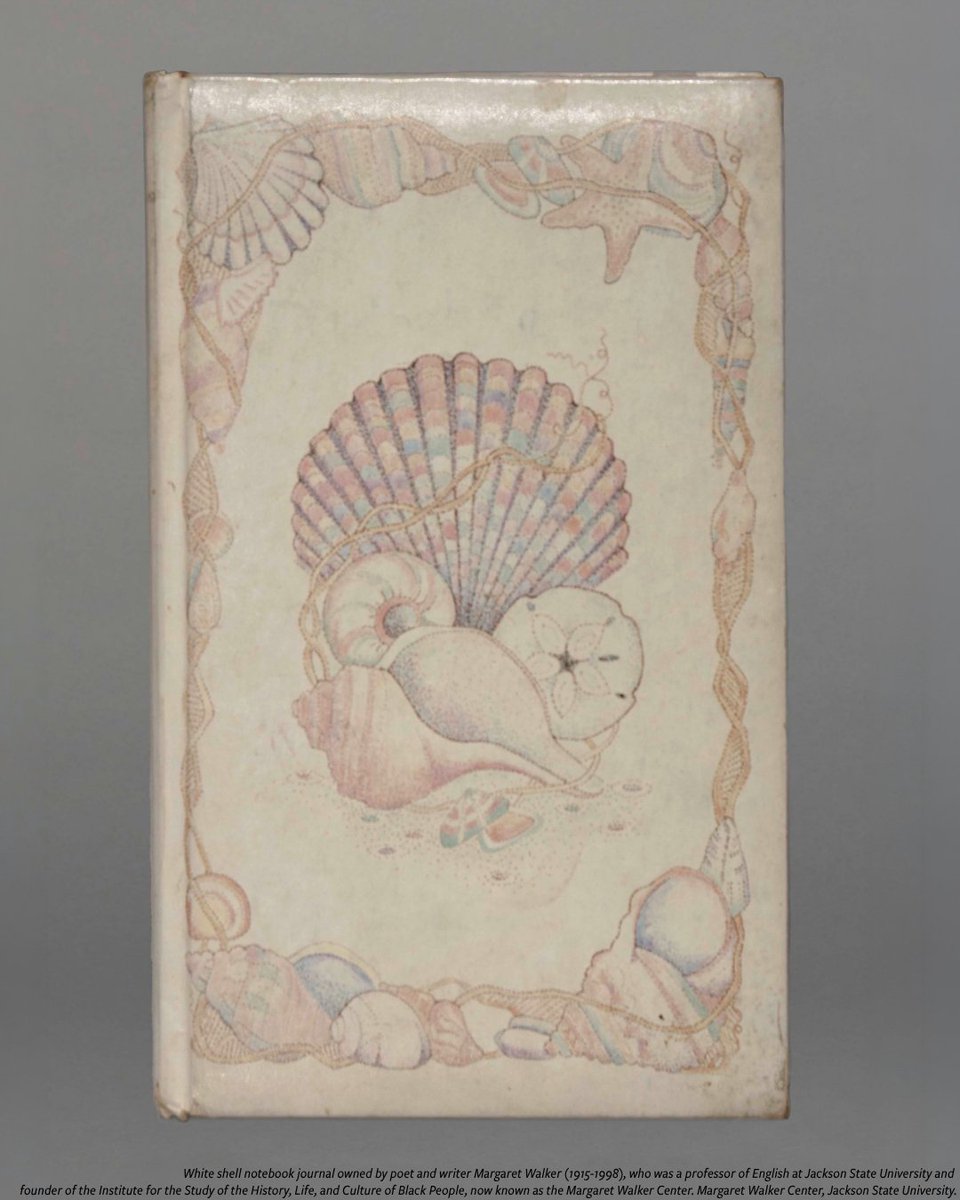
At Jackson State University @jacksonstateU, Margaret Walker documented events through literature, art, and networking events to help future generations appreciate their history. Walker founded the Institute for the Study of the History, Life, and Culture of Black People in 1968.
As Michigan’s first Smithsonian Affiliate, the MSU Museum brings exhibitions like "X-ray Vision: Fish Inside Out" from the Smithsonian Institution to our community.
See it for yourself: https://t.co/VfEkDLNMJn
@smithsonian@sitesExhibits
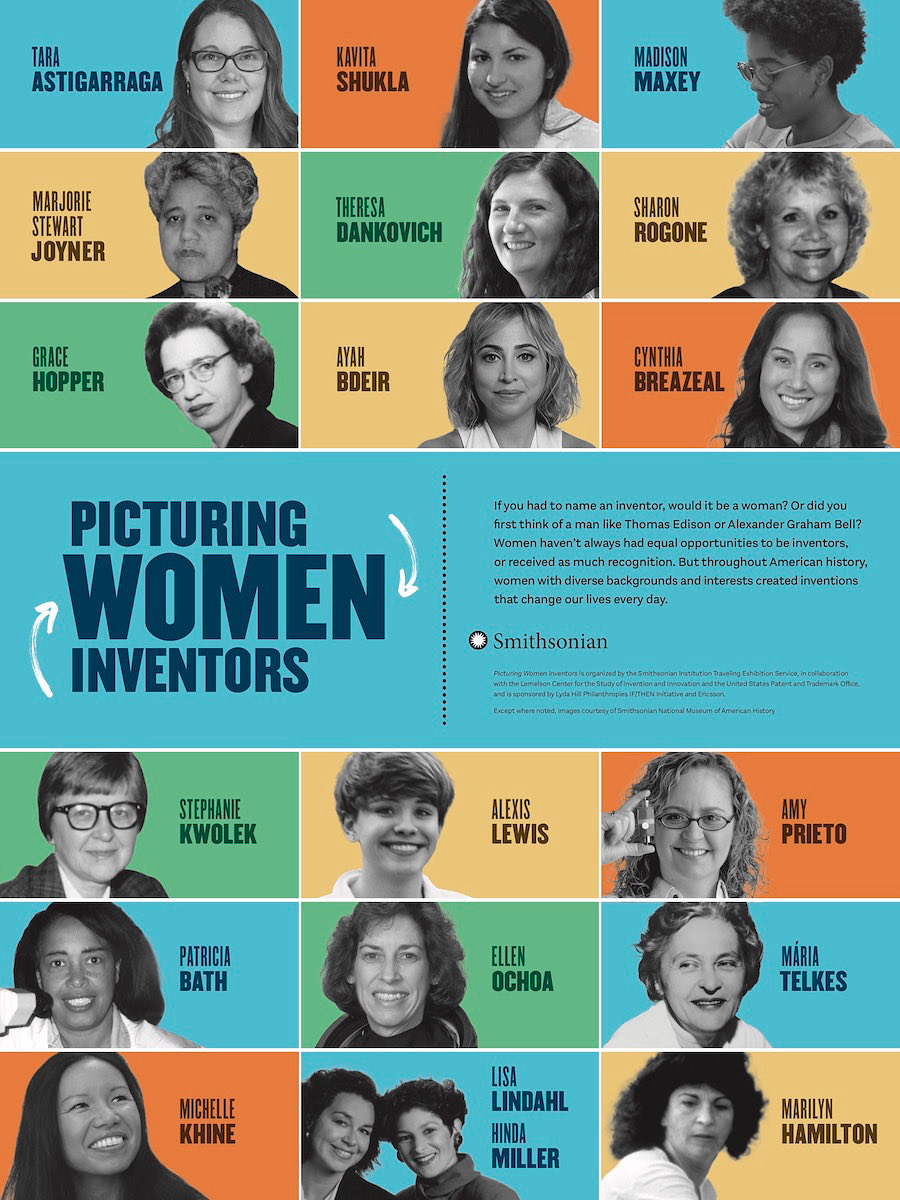
“Picturing Women Inventors” explores the inventions of 19 highly accomplished American women. Astronauts, computer pioneers, and businesswomen join athletes, engineers, and even teenagers in this remarkable group of inventors!
Request your free copy: https://t.co/BwaKyPWkzt
On Jan. 16, our museum will open a powerful new exhibition “At the Vanguard: Making and Saving History at HBCUs” celebrating the legacy of historically Black colleges and universities (HBCUs).
Explore stories of creativity, resilience, and legacy through rare collections from five Historically Black Colleges and Universities: @CAU, @FAMU_1887, @JacksonStateU, @TexasSouthern and @TuskegeeUniv in “At the Vanguard.” Learn more: https://t.co/rbE8aNJH8v
“At the Vanguard: Making and Saving History at HBCUs” weaves together stories of ingenuity, artistry, persistence, and resistance through the transformative world of HBCUs collections. See it @NMAAHC starting Friday, Jan. 16. #HBCUExcellence
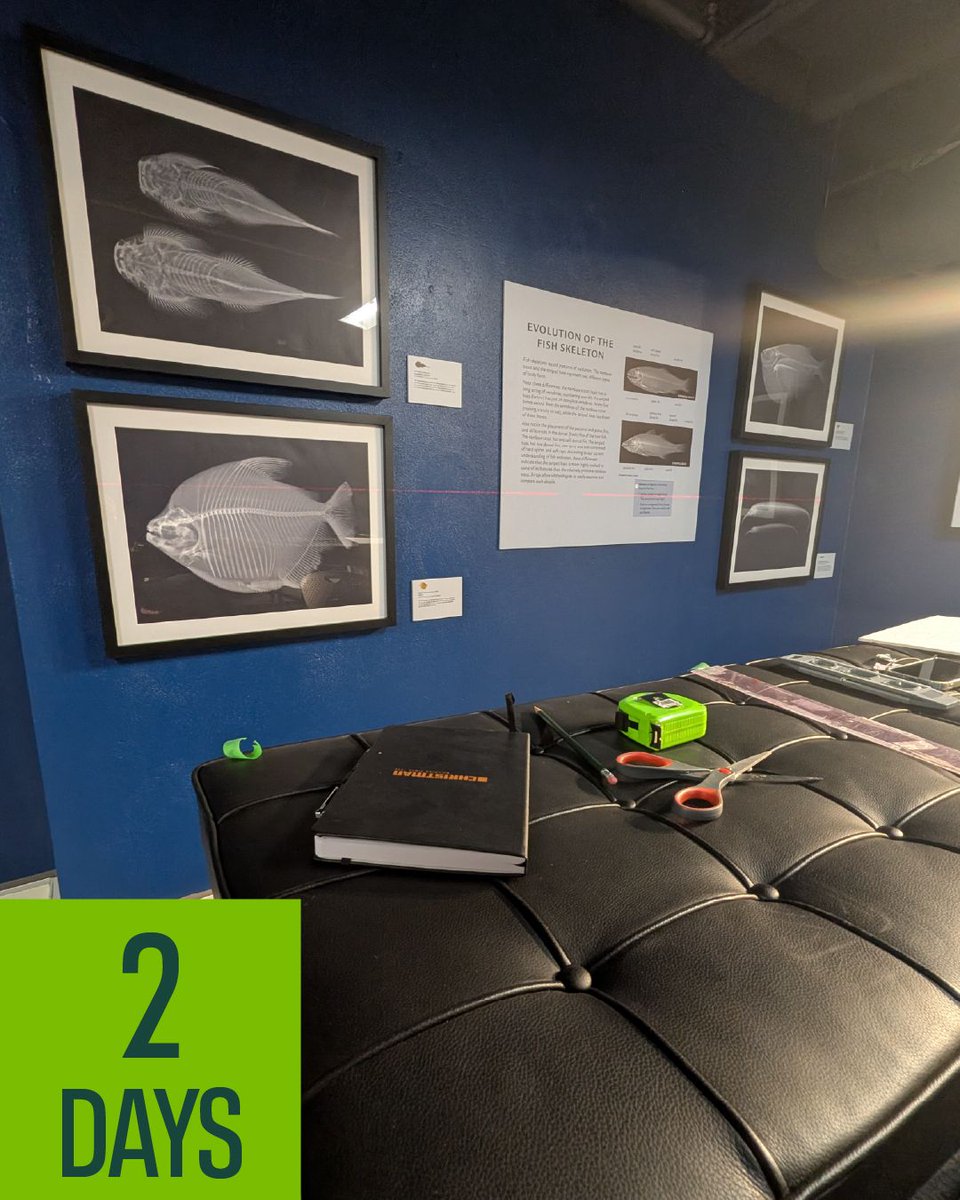
Tomorrow is our reopening! In addition to "Blurred Realities" in the Main Gallery, the Museum is full of new exhibitions like "X-Ray Vision: Fish Inside Out," a @sitesExhibits exhibition showcasing dramatic digital X-ray images of fish skeletons. (Seen here behind-the-scenes)
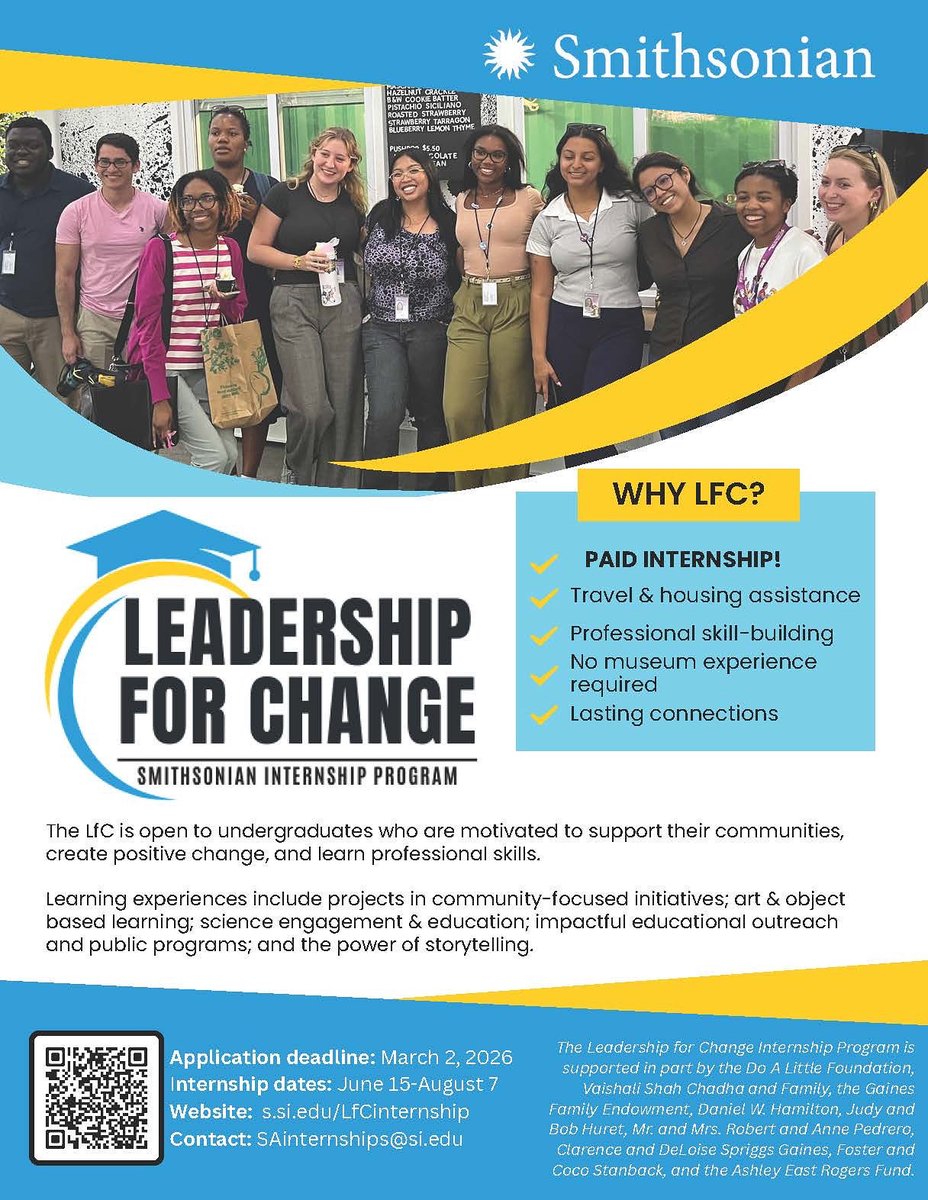
We are now accepting applications for our 2026 @Smithsonian Leadership for Change Internship program (June 15-August 9, 2026)!
Learn more here: https://t.co/A9VyrerML9
What really happened at the 1st #Thanksgiving? The way we understand the story is an example of how Native Americans are represented (and misrepresented) in our national narrative. @SmithsonianNMAI explores the complicated history: https://t.co/MGPvcY9rNl #NDNsEverywhere
The Smithsonian is in the process of reopening our museums, research centers, and the National Zoo. For the latest updates and opening information, please visit https://t.co/B45x9CR1na and check back regularly as information may change.
The government shutdown may not affect Smithsonian traveling exhibitions in your area. To learn about the status of Smithsonian Institution Traveling Exhibition Service exhibits in your community, please check with your local cultural organization for individual operating status.
Due to the government shutdown, Smithsonian museums are temporarily closed beginning on Sunday, Oct. 12, along with our research centers and the National Zoo.
📷: Smithsonian Castle
We will update our operating status as soon as the situation is resolved. We do not plan to update social media other than to inform you of changes to our operating status.
Cierra Chenier is a writer, historian and storyteller born and raised in New Orleans. She was a child when Hurricane Katrina destroyed her family's home. Read her story: https://t.co/vx0iKKn1qV
❤️🐘 August is Asian Elephant Awareness Month, and we’re celebrating Spike, Bozie, Swarna, Maharani, Trong Nhi and Nhi Linh in a BIG way! Follow along as our animal care team shares stories and fun facts about this endearing—and critically endangered—species.
. . .
At 13,250 pounds and 10.5 feet tall at the shoulder, our male Asian elephant, Spike, weighs as much as a school bus! (And, he’s the largest animal at the Zoo.) Male Asian elephants are typically larger than females, and this is the case with the Zoo’s herd, too. Our largest female, Maharani, is 8.5 feet tall and weighs 8,565 pounds.
. . .
How do keepers know precisely how much the elephants weigh? It takes a unique scale to withstand the weight of a full-grown elephant. In this case, a 10-foot long, 5-foot-wide scale made of steel plates and girders. The scale is built into the base of a protective elephant chute, which keepers have trained the elephants to enter. On a keeper’s cue, Spike will walk onto the scale and stand still while it registers his weight. Keeper Megan Boyd rewards his patience and good participation with a favorite treat: grain!
. . .
Weigh-ins can help keepers understand if an animal is feeling OK or has access to too little or too much food. Each animal has a diet designed specifically for their needs so, to keep things balanced, the reward for stepping on the scale often comes directly from their favored items in that diet. Zoo nutritionists can pair weights with visual or hands-on exams to monitor body condition, and to make sure animals are developing normally or maintaining the proper amount of weight.
. . .
Video description: Asian elephant Spike walks into the Elephant Barn and stands upon a scale while it registers his weight in kilograms. Text on screen reads: How to weigh an elephant in 3 big steps. Step 1: Train and build trust. Step 2: Guide slowly and steadily (with treats!). Step 3: Position on a custom scale and read the results.
. . .
✏️ Learn more about our herd: https://t.co/8oIKk4DfkV.
. . .
#AsianElephantAwarenessMonth
#AsianElephantAwarenessMonth2025
#SavingAnimalsFromExtinction