Se recibirán postulaciones hasta el 15 de marzo de 2026
Enviar CV y carta describiendo experiencia en laboratorio y/o investigación a:
[email protected]
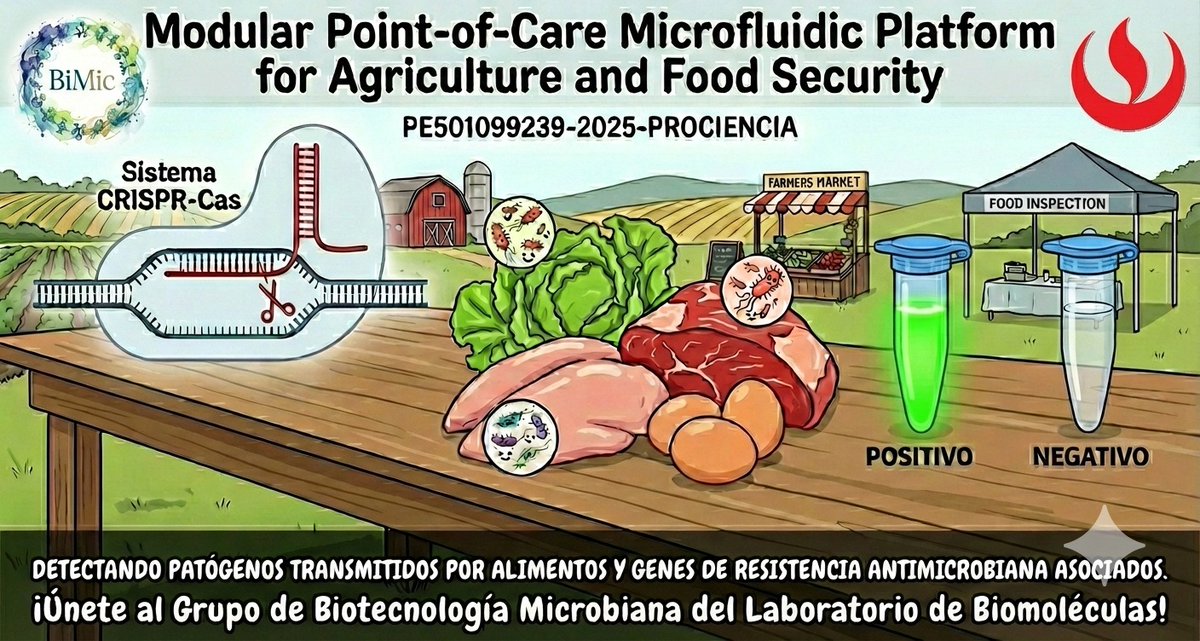
En el marco del proyecto: “Modular Point-of-care Microfluidic Platform for Agriculture and Food Security” (ProCiencia - Proyectos Especiales PE501099239-2025), se cuenta con 02 plazas para tesistas de maestría.
Ofrecemos:
Entrenamiento en técnicas de biología molecular, CRISPR-Cas, expresión de proteínas recombinantes, ensayos de afinidad.
Incentivo monetario
Ser parte de un equipo multidisciplinario, con experticia en tecnologías de investigación básica y aplicada de vanguardia
Requisitos:
Estudiante de último año de maestría en bioquímica, biología molecular, bioingeniería, u programas de ingeniería afines a las ciencias de la vida
Experiencia en investigación, deseable en biología molecular, análisis de secuencias, o electroquímica.
....
Antibiotic resistance is spreading in clinical, industrial and environmental settings. We need new ways to promptly detect it.
Here, we share a versatile and portable molecular toolbox to detect antibiotic resistance markers with Crispr/Cas technology
https://t.co/2LsFRBkUTf
ChatGPT is everywhere and everyone is using it.
But most academics don't know how to use it *smartly.*
Here's how to use ChatGPT intelligently (and ethically) for academic purposes:
Researchers from Peru have developed a low cost molecular toolkit for COVID-19 detection using open-source locally produced reagents.
To test portable applications they showed proof of concept by running workflows with Bento Lab.
https://t.co/ylL8nBNk8b
👇🧵[1/6]
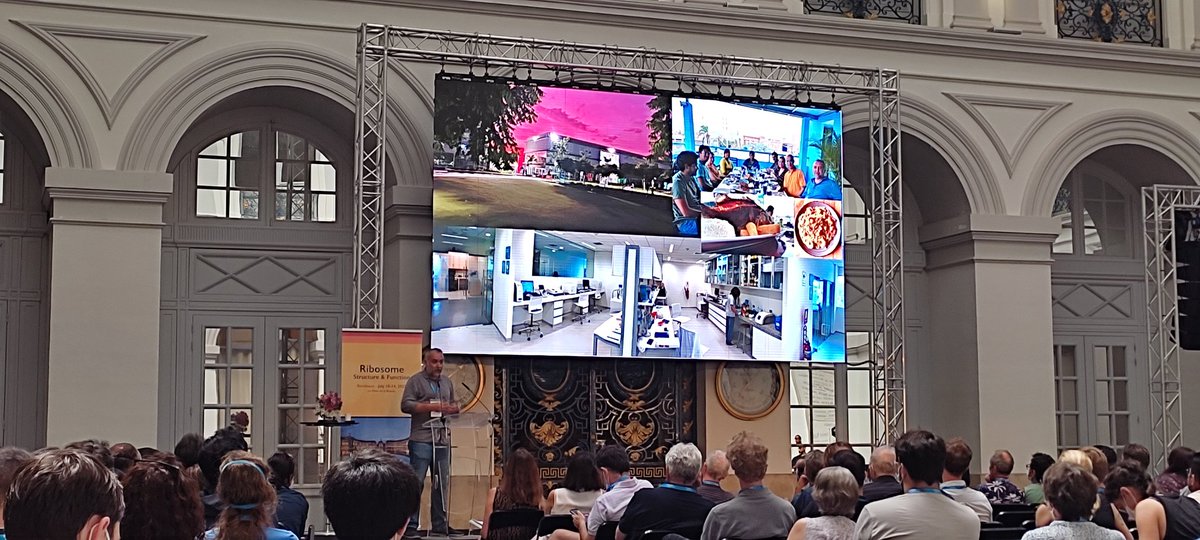
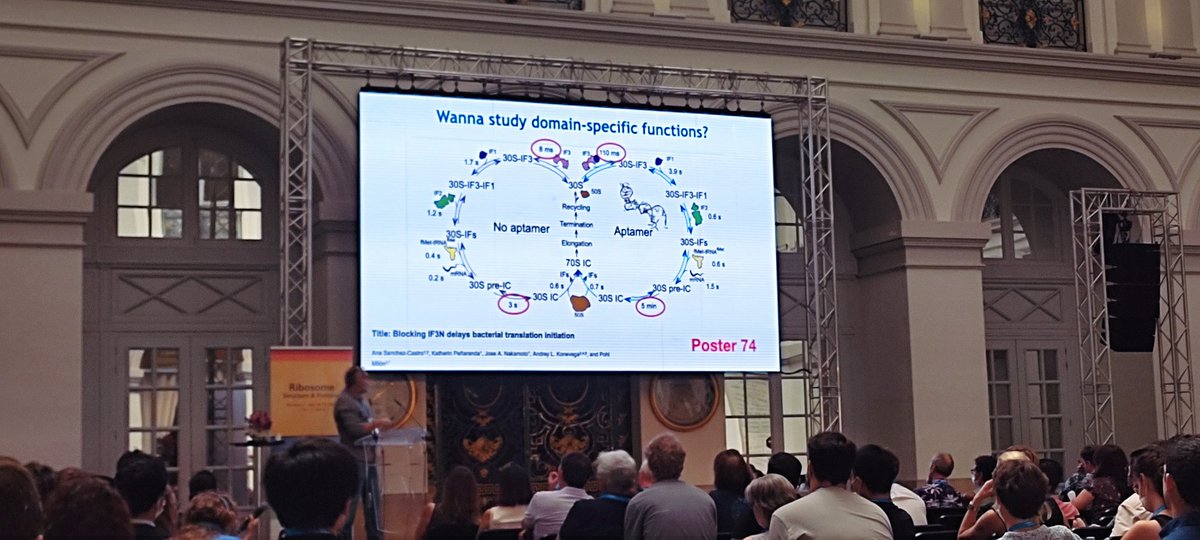
@2022Ribosomes Today @pmilonma presented what our group do in ribosome research and the pretty good infrastructure and team that we have at @UPCedu. Also, a little bit about #peruvianfood
@2022Ribosomes Today @pmilonma presented what our group do in ribosome research and the pretty good infrastructure and team that we have at @UPCedu. Also, a little bit about #peruvianfood.
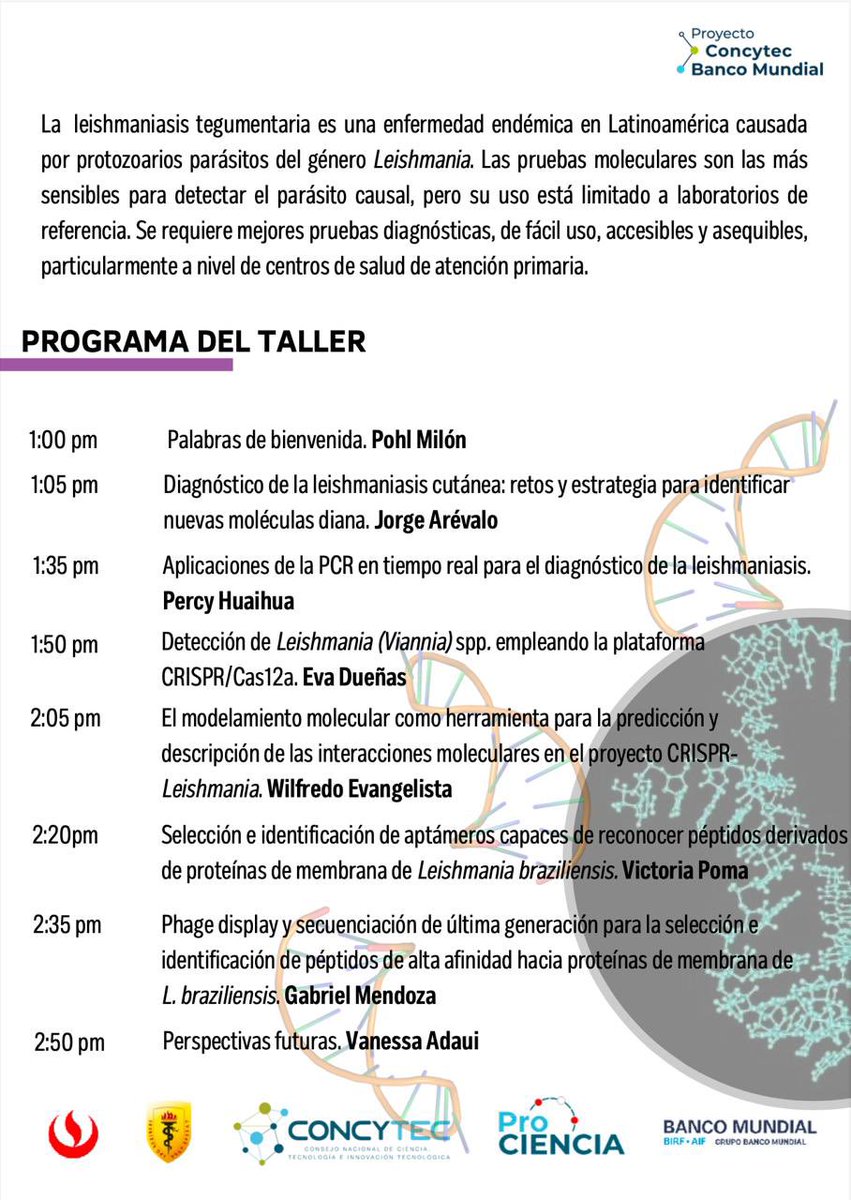
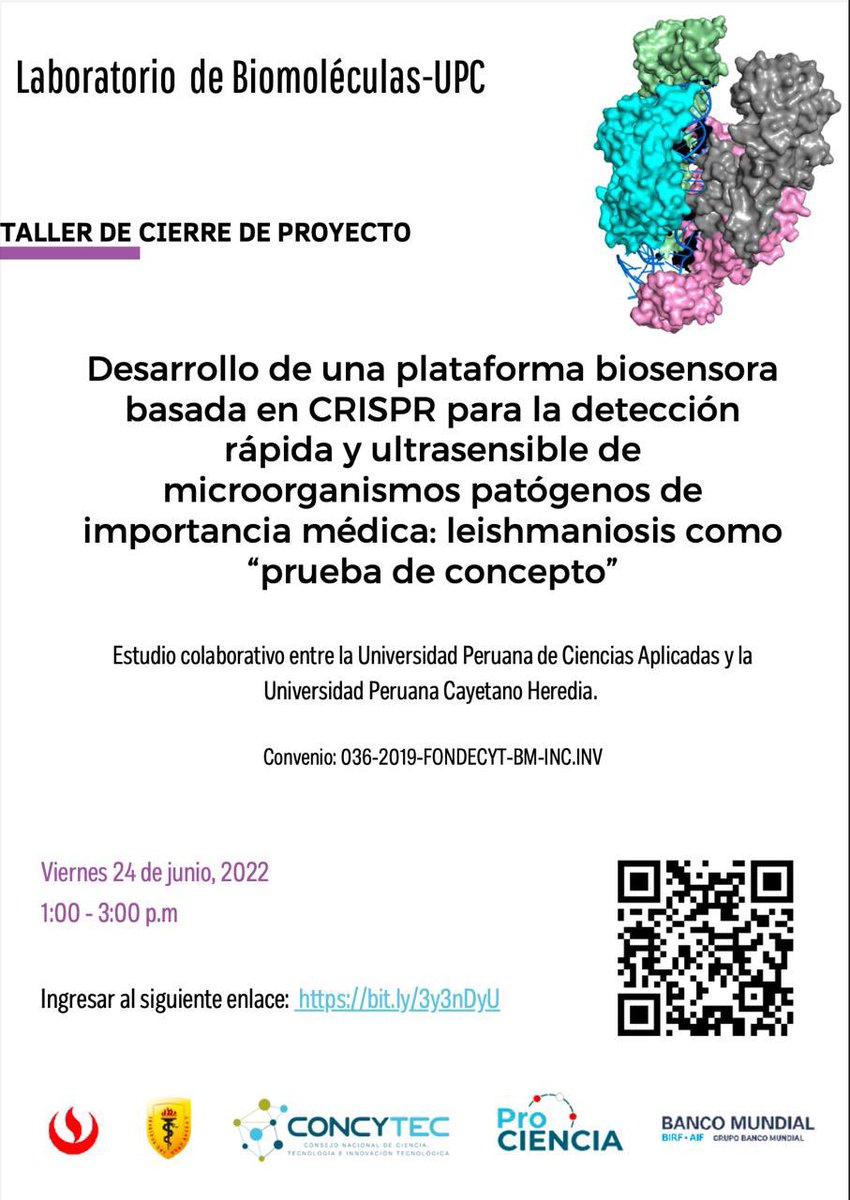
Estimada red y sociedad, están cordialmente invitados al taller de cierre del proyecto que permitió desarrollar sistemas de detección de la Leishmaniosis, o “Uta”, usando la tecnología CRISPR/Cas!
Viernes 24 Junio, 13:00
https://t.co/px4KvCSLHd
@ProcienciaPeru@ConcytecPeru
Happy to share our last research. Congrats to everyone involved in this work (the DIG (Miguel Quiliano and Alicia Arica) and the ABB (@pmilonma) groups at @UPCedu, and Mirko Zimic team at @CayetanoHeredia
Although this molecule has been reported as an inhibitor of the SYK enzime, it also represents a starting point for further development of new anti-TBC drugs, but based on molecules that already have excellent pharmacokinetic parameters, especially oral bioavailability
Here goes our latest collaborative effort, exquisitely led by the Adaui Group!! Awesome work from Eva Dueñas @Dvea17 and collaborators at UPCH and @UPCedu!
Novel CRISPR-based detection of Leishmania species https://t.co/plK2x6rNc3