“Choose a word. How has your understanding of its meaning changed as you have grown up?”
That question was on this year’s gaokao, China’s national college entrance examination, which began on June 7. And one student’s response went viral.
The student chose the word “hesitation,” citing the South Korean writer Kim Ae-Ran, who had previously discussed the word during a television interview two months ago.
“Initially, hesitation might have been viewed as a negative word, but as humans now compete against AI, it has become a quality that humans need,” the student told domestic media in an interview outside her high school after the exam. “I think it represents a shift in meaning.”
The interview quickly went viral, the student’s novel perspective drawing widespread applause.
When asked about the differences between AI and humans, Kim had previously said, “I’ve discovered something in humans that AI lacks: ‘hesitation.’ When hearing about others’ troubles and pain, humans hesitate, weigh their options, and ponder their words. Moreover, I believe that within this hesitation lies a difficult-to-maintain understanding and composure. Often, compared to the smooth and quick suggestions of AI, the clumsy silence of humans is more comforting.”
A retired teacher who built a stone path to a little-known cemetery honoring educators and revolutionaries near Hangzhou’s West Lake has drawn support from the students and teachers of the schools they founded.
China’s new hit TV drama, “The Protagonist,” has sparked a wave of livestreamed readings of the novel on which the show is based, triggering debate over copyright infringement.
https://t.co/Znh1WMHnP2
Ever since emojis became part of everyday lexicon, the Chinese internet has been rife with wordplay and absurdist substitution. But are they bringing people together, or pushing them further apart?
Read more: https://t.co/aIfOYsHHFe
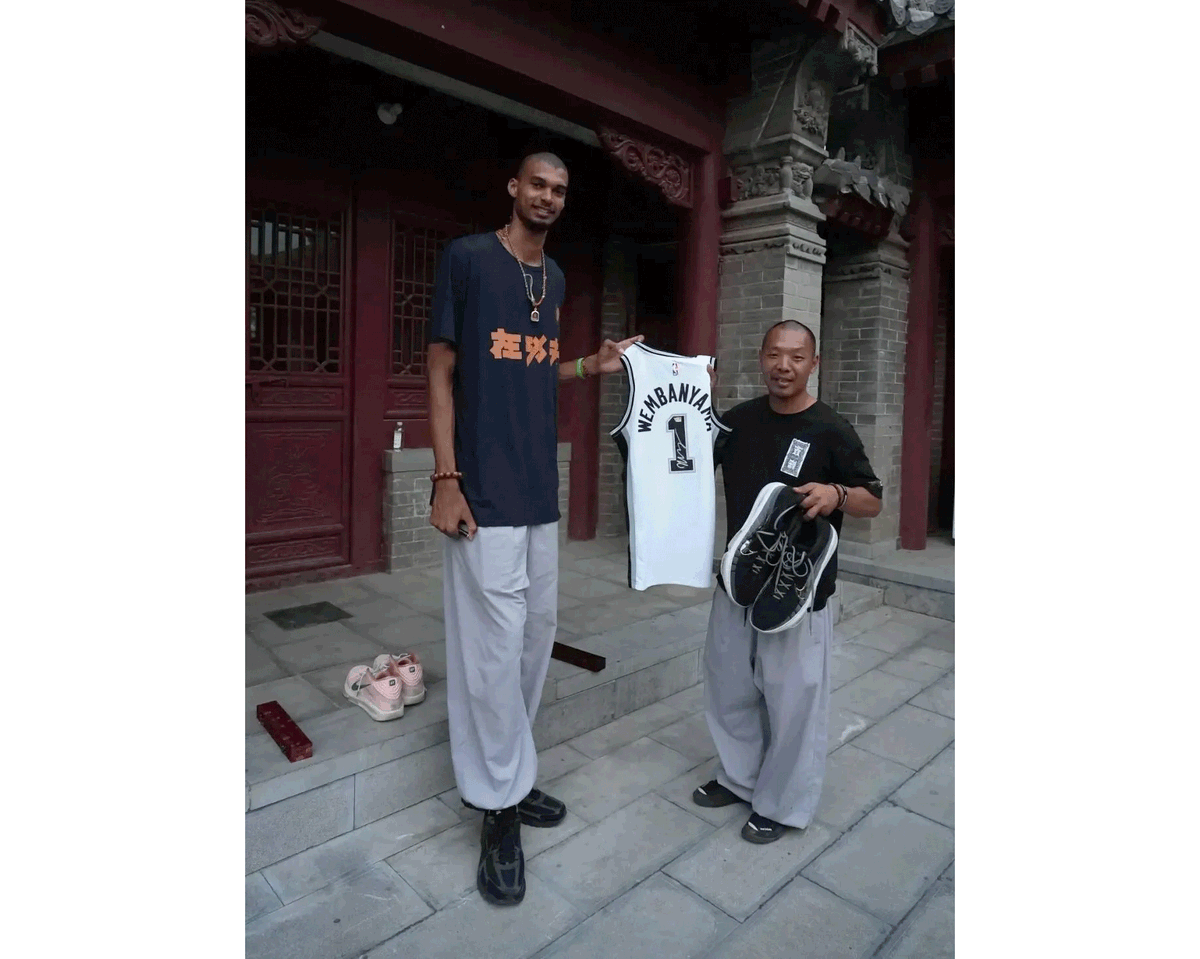
French basketball star Victor “Wemby” Wembanyama — leader of the NBA’s MVP rankings in March — spent 10 days last June receiving training in martial arts and meditation at China’s much-storied Shaolin Temple on the outskirts of Zhengzhou, capital of the central Henan province. Here, his master, Yan’an, who previously taught in the United States, shares how the 21-year-old San Antonio Spurs forward adapted to the rigors of monastic life.
Read more: https://t.co/eZ2wGVE3ei
A vagrant bunting charmed Shanghai before flying into a glass wall, igniting debate over how urban greening efforts can prevent fatal bird-window collisions.
https://t.co/X4h7lI61Iv
Universities spent years competing with increasingly elaborate welcome packets featuring everything from microchips to deep-sea water. Now regulators are urging schools to return to a simple one-page letter.
https://t.co/SKPDsHaunU
A retired teacher who built a stone path to a little-known cemetery honoring educators and revolutionaries near Hangzhou’s West Lake has drawn support from the students and teachers of the schools they founded.
Chinese referee Ma Ning has become the unlikely face of the 2026 World Cup in China, with memes about the 46-year-old going viral and multiple domestic brands announcing collaborations with him.
Over the past week, Ma has been announced as brand ambassador for several major Chinese companies, including tech giant Lenovo, consumer electronics maker Hisense, and dairy brand Mengniu. Official accounts dedicated to Ma have also been launched on lifestyle platform Xiaohongshu, also known as RedNote, and video streaming site Bilibili.
Ma is the only Chinese match referee at this year’s FIFA World Cup, which will run from June 12 to July 20. It marks his second appearance at a World Cup, following his debut at the 2022 tournament in Qatar, where he served as a fourth official — an assistant referee who works off-pitch.
With China’s national football team failing to qualify for this year’s World Cup, Ma has emerged as someone Chinese fans can still support. Ma is joined at the tournament by assistant referee Zhou Fei and VAR official Fu Ming.
“China has been absent from the World Cup for 24 years, so any Chinese presence — whether a player or even a referee — becomes a rare and highly visible point of connection,” Chen Diandian, founding partner of domestic sports media and consulting group ECO Sports, told Sixth Tone.
Read more: https://t.co/9I3CdD3t7x
Thanks to AI, a new form of solo entrepreneurship has taken root, granting individuals the ability to perform tasks that once required many workers.
https://t.co/sMWzt0Kkd0
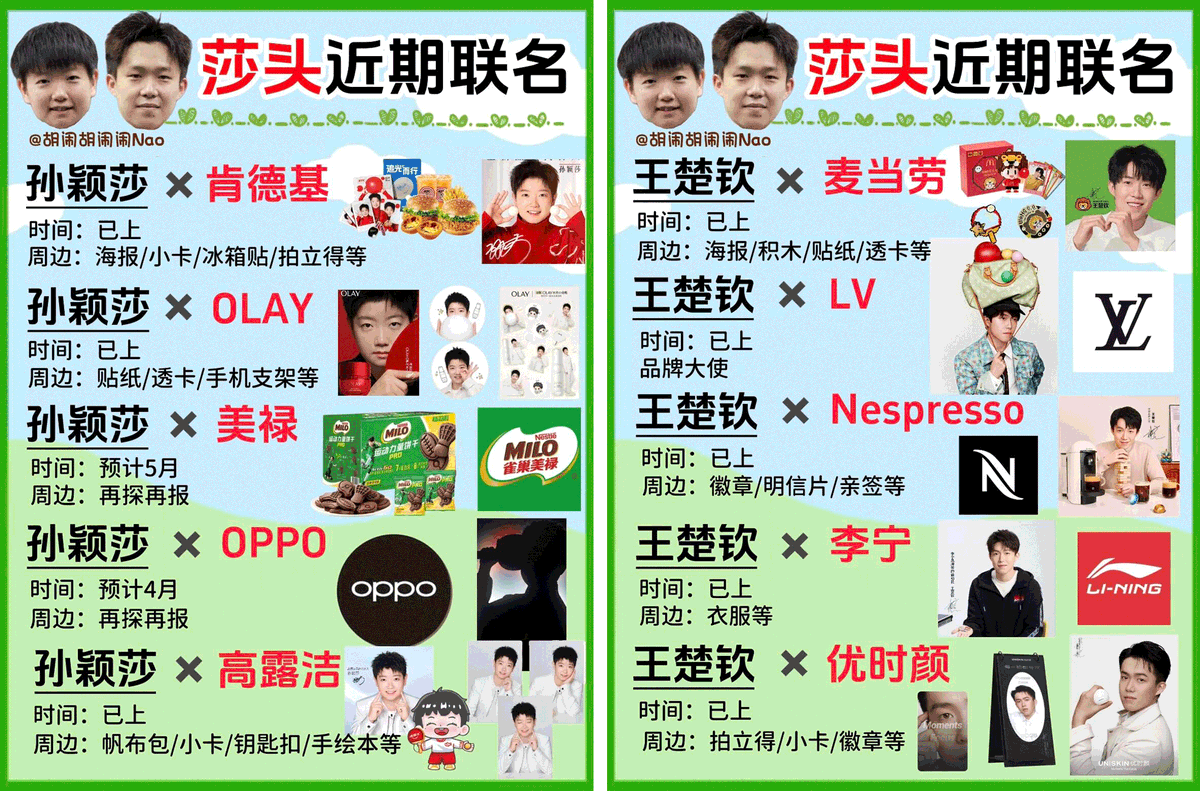
Shippers, solo stans, and spreadsheets — Chinese authorities step in as online attacks and arguments engulf the world of elite table tennis.
Read more: https://t.co/heAvTV08MN
Interviews found that fears of inequality, loneliness, sacrifice, and disappointment shape attitudes toward marriage as much as economic pressures do.
Read more: https://t.co/0Ih0grKM1w
Hong Jian, an artist in Chinese painting, began his “Shanghai Stories” series 20 years ago, and has since depicted many city landmarks including Wukang Mansion and the Sihang Warehouse, where a group of Chinese soldiers famously held out against invading Japanese troops in 1937.
https://t.co/Hp3cBPDoEb
A documentary director who set out to explore the lives of Chinese and American teens revisits unreleased footage of the murder suspect when he was 16.
https://t.co/6MbPYmlW7S
The road was planned to cut through a critical spoon-billed sandpiper habitat. By first organizing online, and then taking action offline, amateur activists halted its construction.
https://t.co/QJXxfcZLit