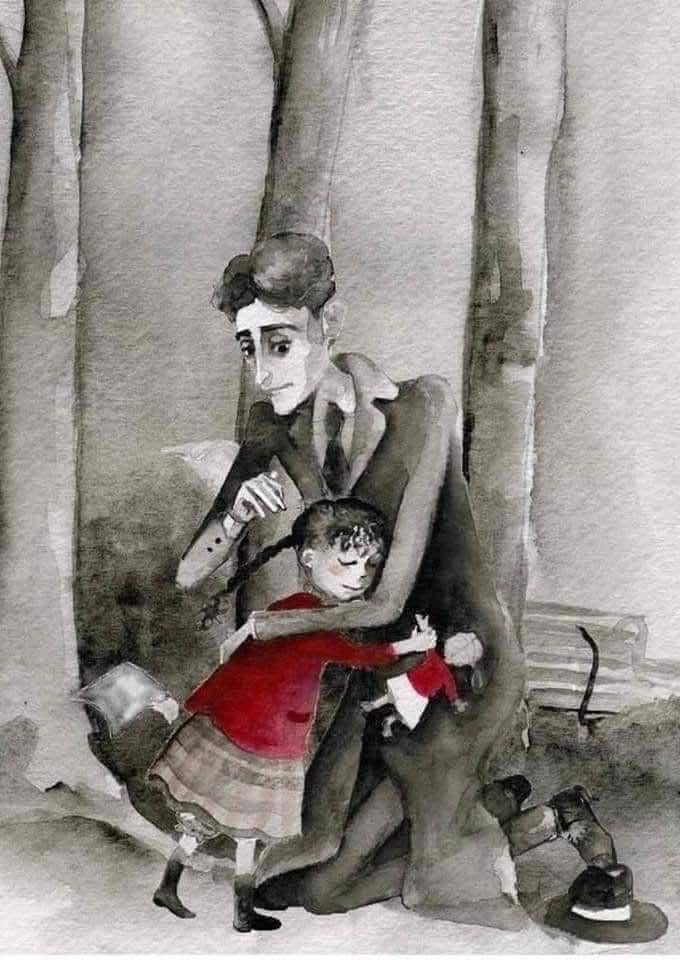
At 40, Franz Kafka (1883-1924), who never married and had no children, walked through the park in Berlin when he met a girl who was crying because she had lost her favorite doll. She and Kafka searched for the doll unsuccessfully.
Kafka told her to meet him there the next day and they would come back to look for her.
The next day, when they had not yet found the doll, Kafka gave the girl a letter "written" by the doll saying "please don't cry. I took a trip to see the world. I will write to you about my adventures."
Thus began a story which continued until the end of Kafka's life.
During their meetings, Kafka read the letters of the doll carefully written with adventures and conversations that the girl found adorable.
Finally, Kafka brought back the doll (he bought one) that had returned to Berlin.
"It doesn't look like my doll at all," said the girl.
Kafka handed her another letter in which the doll wrote: "My travels have changed me." the little girl hugged the new doll and brought her happy home.
A year later Kafka died.
Many years later, the now-adult girl found a letter inside the doll. In the tiny letter signed by Kafka it was written:
Everything you love will probably be lost, but in the end, love will return in another way.
✨🙌🏾💫
My daughter came home from school and said,
“Mum, you’re not going to believe what happened in history class today.”
Her teacher told the class they were going to play a game.
He walked around the room and whispered to each kid whether they were a witch or just a regular person. Then he gave the instructions:
“Form the biggest group you can without a witch. If your group has even one, you all fail.”
She said the whole room instantly lit up with suspicion.
Everyone started interrogating each other. Are you a witch? How do we know you’re not lying?
Some kids clung to one big group, but most broke off into smaller, exclusive cliques. They turned away anyone who seemed uncertain, nervous, or gave off even the slightest hint of being guilty.
The energy shifted fast. Suddenly everyone was suspicious of everyone.
Whispers. Finger-pointing. Side-eyes. Trust dissolved in minutes.
Finally, when all the groups were formed, the teacher said,
“Alright, time to find out who fails. Witches, raise your hands.”
And not one hand went up.
The whole class exploded. “Wait! You messed up the game!”
And then the teacher dropped the bomb:
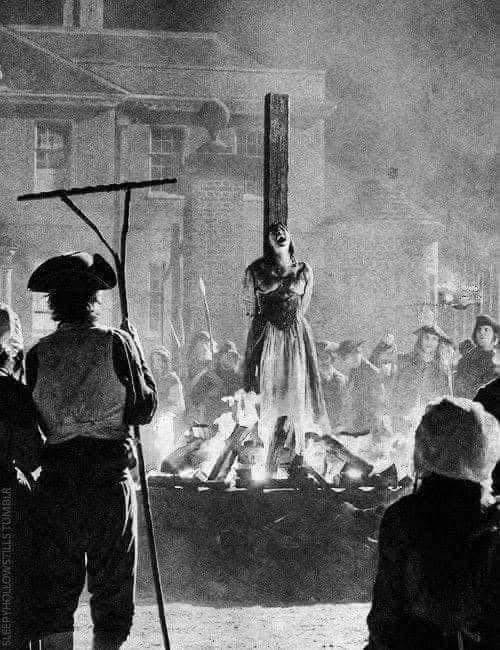
“Did I? Were there any actual witches in Salem, or did everyone just believe what they were told?”
My daughter said the room went dead silent.
That’s when it hit them. No witch was ever needed for the damage to happen. Fear had already done its work. Suspicion alone divided the entire class, turning community into chaos.
And isn’t that exactly what we’re seeing today?
Different words, same playbook.
Instead of “witch,” it’s liberal, conservative, vaxxed, unvaxxed, pro-this, anti-that.
The labels shift, but the tactic is the same.
Get people scared. Get them suspicious. Get them divided.
Then sit back while trust crumbles.
The danger was never the witch.
The danger is the rumour. The suspicion. The fear. The planted lies.
Refuse the whisper. Don’t play the game. Because the second we start hunting “witches,” we’ve already lost.
[Naomi Dennis]
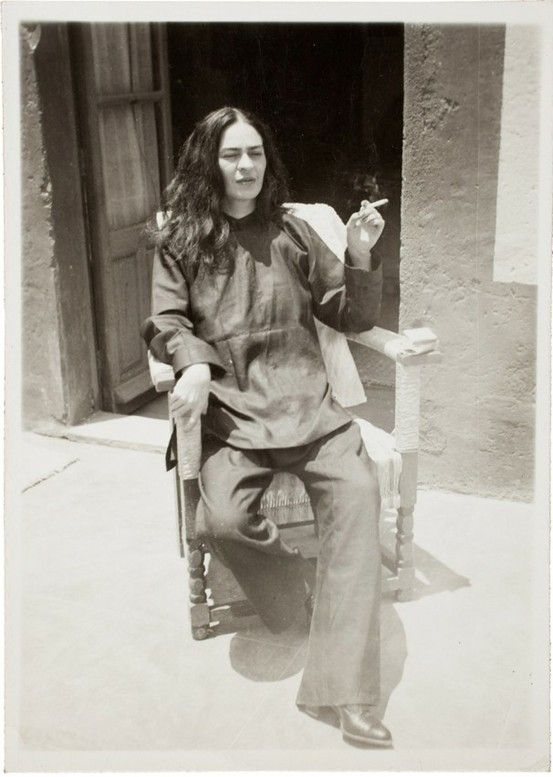
“In the end,
I believe there is nothing we must do to be loved.
We spend our lives trying to look more beautiful, more intelligent.
But I've understood two things:
Those who love us see us with their hearts and give us qualities
beyond the ones we truly have.
And those who refuse to love us will never be satisfied with all our efforts.
Yes, truly.
I believe it is important to let our imperfections be.
They are precious,
for they help us understand those who see us with the heart.”
— Frida Kahlo