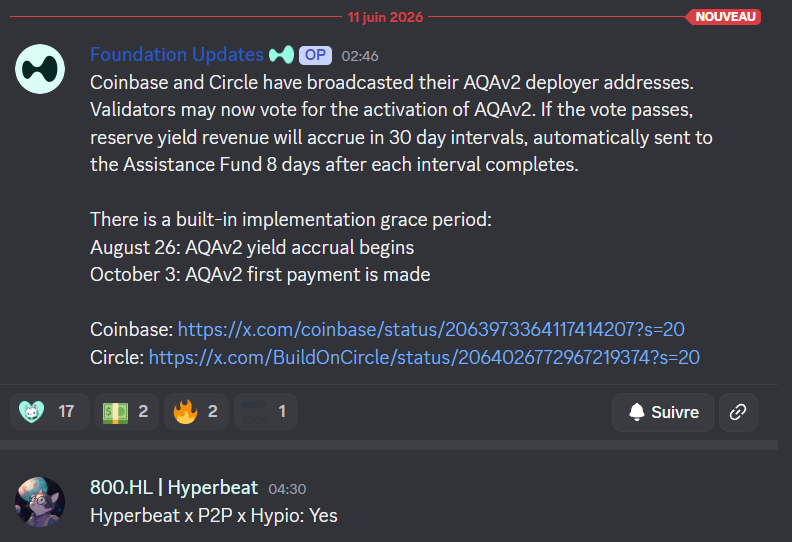
AQAv2 is live for validator vote.
Coinbase and Circle have broadcasted their deployer addresses.
If the vote passes:
August 26: yield accrual begins
October 3: first payment hits the Assistance Fund
$5B+ in $USDC. 90% of reserve yield flowing to buybacks. The countdown starts now.
Hyperliquid.
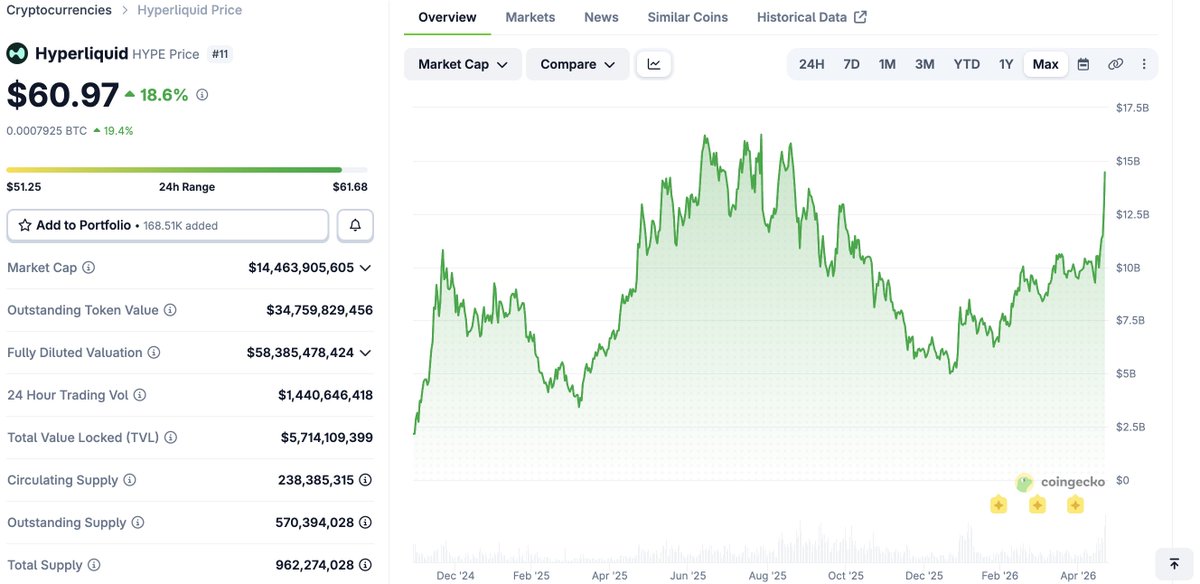
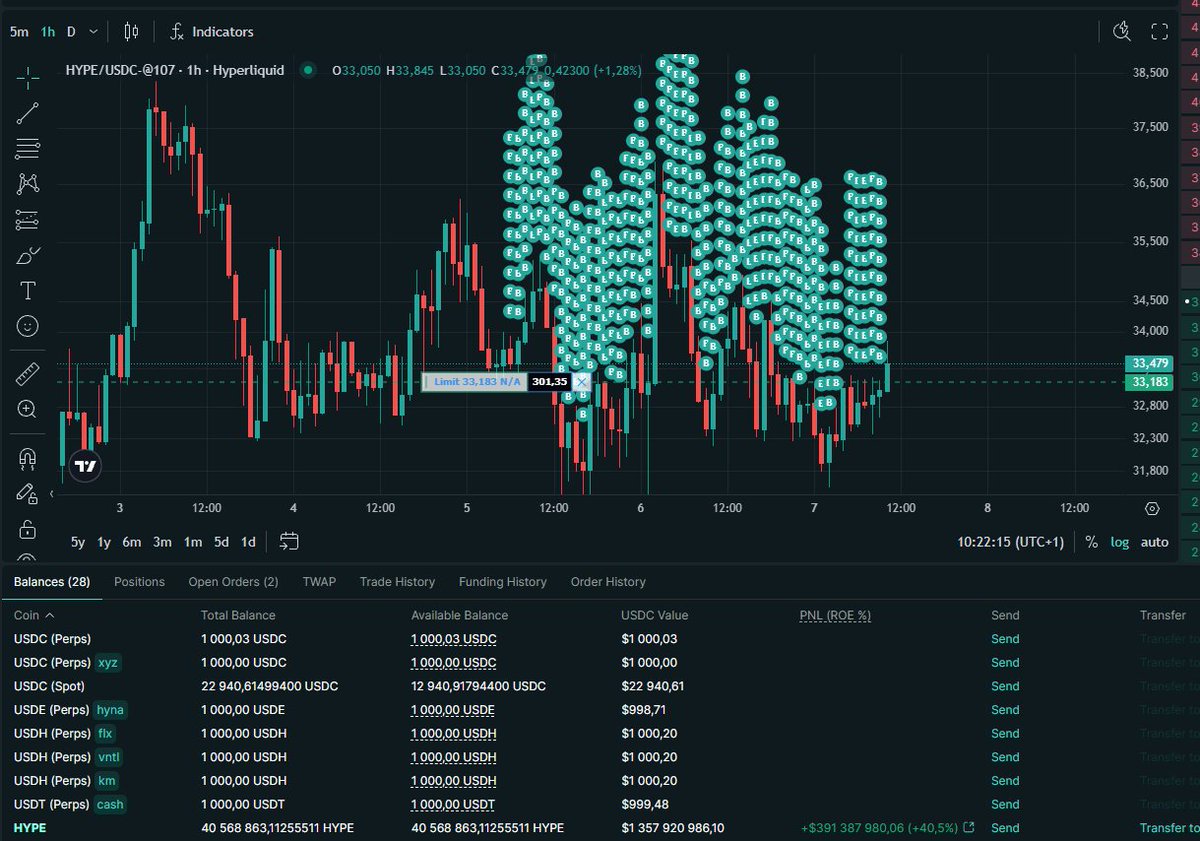
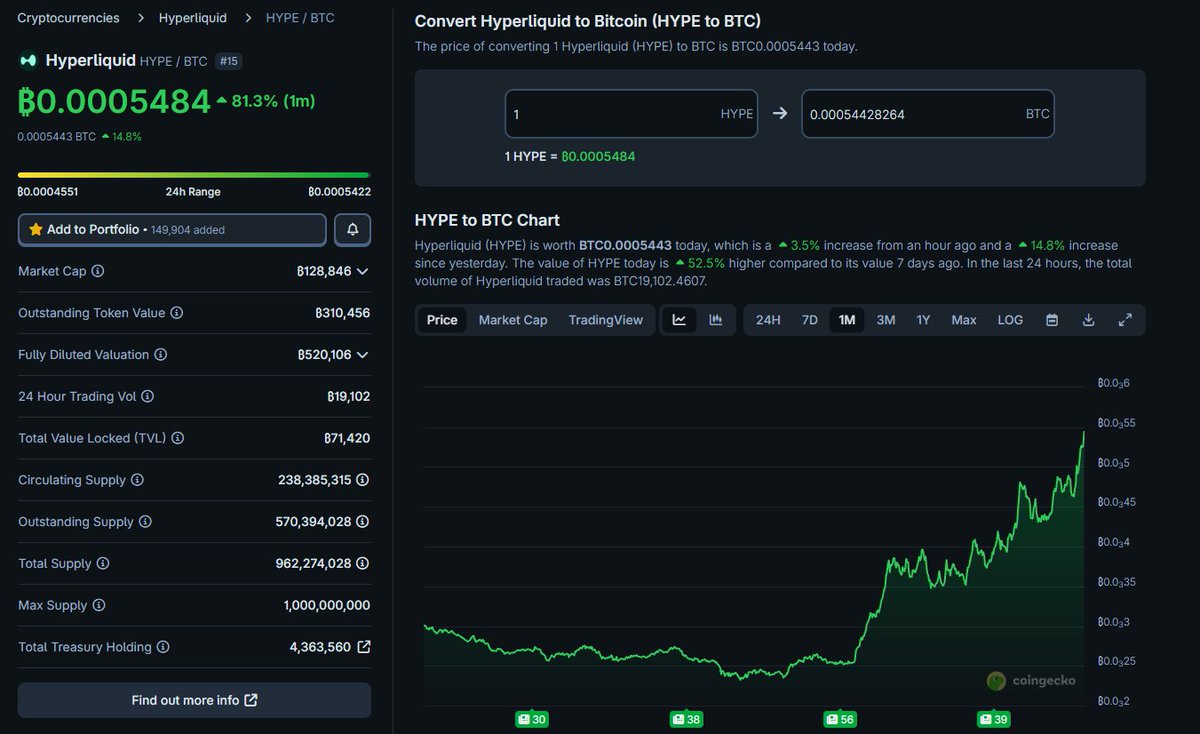
This is a rare sight. $HYPE is at an ATH, but its market cap is actually lower than the last time it traded at these levels. Deflation and sinks..
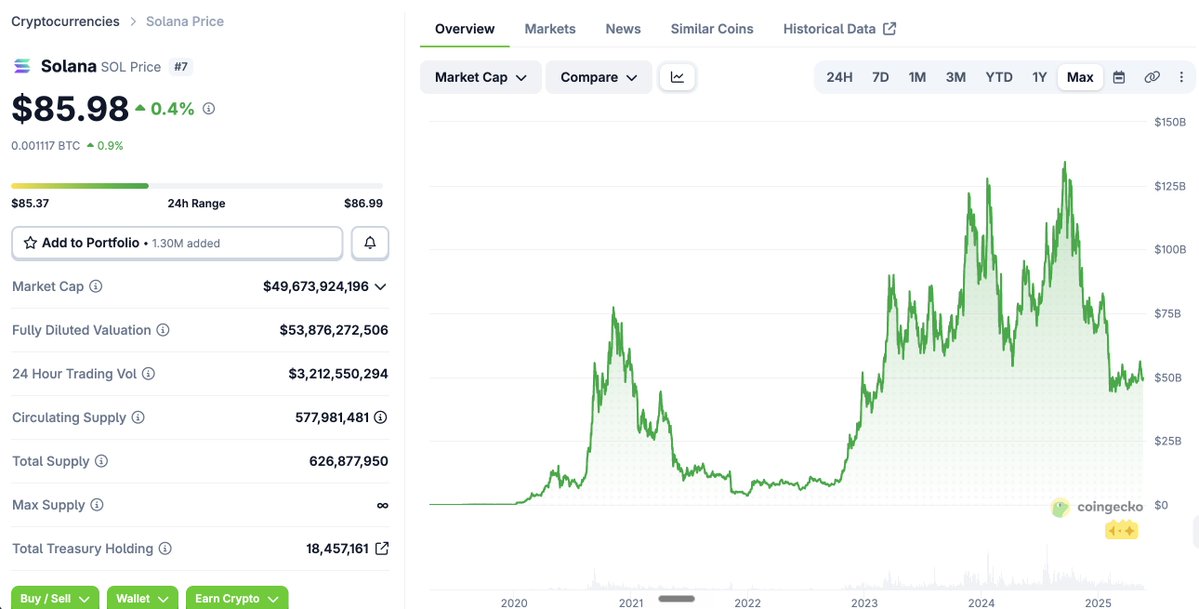
Compare this to $SOL, incredible 2025 run kudos to the ecosystem, but it needed a massively higher market cap just to touch the same level. Inflation kept diluting holders at every level.
February 16, Hyperliquid hires @Sterling_hl as BD. Previously onchain lead at @circle.
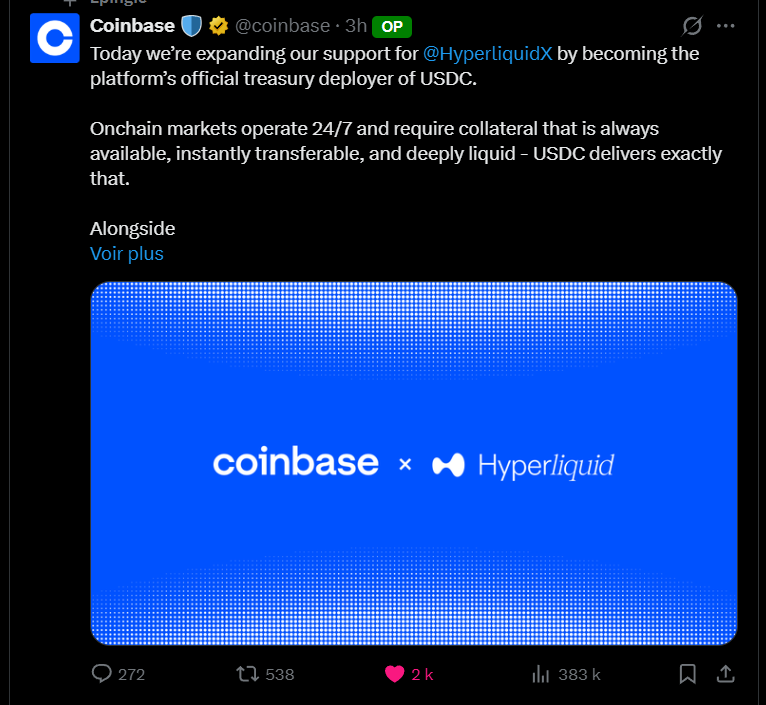
3 months later, Coinbase becomes USDC treasury deployer, Circle becomes technical deployer, both staking HYPE.
Connect the dots.
Hyperliquid.
Everyone is arguing about $USDH dying. They're missing the point entirely. What happened today is the single most important business move in Hyperliquid's history.
Let me explain. Revenue, liquidity, politics, lobby, and what it means for the USDH vote debate.
Coinbase is now the official treasury deployer of $USDC on Hyperliquid under AQAv2. Circle handles the technical side (CCTP, cross-chain infra). Both are staking hyperliquid:native. Native Markets agreed to sell the USDH brand assets to Coinbase.
$USDH is sunsetting. But the mechanics it pioneered are not. They just got applied to a $4.7B asset instead of a $100M one.
Let's break down why this is a win on every single front.
LIQUIDITY
The biggest complaint from traders and builders for months: fragmentation. $USDH had the alignment but not the liquidity. $USDC had the liquidity but not the alignment. You had to choose.
That choice is gone. One stablecoin. One orderbook per pair. No split liquidity. No confusion for HIP-3 deployers picking a quote asset. No friction for new users bridging in.
$4.7B in USDC on Hyperliquid, 2x year over year. That is the base generating yield now, not $100M.
REVENUE
Under AQAv2, the treasury deployer shares 90% of the reserve yield revenue with the protocol. Run the numbers on the current $USDC supply:
$4.7B at 3.8% interest rate, 90% shared with the Assistance Fund = $160M+ per year flowing directly into HYPE buybacks. That is $440K per day. Every day.
For context, USDH at peak supply was generating a fraction of this on $100M. The AQA model worked. It just needed to be applied at the right scale.
POLITICS AND LOBBYING
This is the angle most people are sleeping on. Coinbase is the largest publicly traded crypto company in the US. They spent over $100M on crypto lobbying and political action in the last cycle. They are the single most powerful voice for crypto regulation in Washington.
The CLARITY Act markup is happening today. Coinbase has been one of its strongest advocates. Having them financially aligned with Hyperliquid, staking HYPE, operating as treasury deployer, is not just a liquidity play. It is a regulatory shield.
Every conversation about "is Hyperliquid a US regulatory risk" just got a lot harder to make when Coinbase is literally staked into the network.
Circle staking 500K HYPE and moving toward becoming a validator. Jeremy Allaire posting "Hyperliquid." That is institutional endorsement at the highest level.
THE USDH QUESTION
"Was USDH a failure?" "Was the vote theater?" "Did Native Markets just flip an asset?"
No. USDH was a weapon. It was a credible threat that proved a protocol can demand yield sharing from stablecoin issuers. Before USDH, Hyperliquid had $5B+ in USDC generating $150-200M/year for Circle and Coinbase. The protocol saw none of it.
USDH launched. The AQA model proved that yield can be redirected onchain, transparently, back to the protocol. It only reached $100M in supply but that was never the point. The point was forcing incumbents to the table.
Basit said it best: the entire lifecycle of USDH from launch to sunset should be studied. Coinbase didn't come to Hyperliquid out of goodwill. They came because USDH proved they would lose the venue if they didn't align.
"But Paxos offered better economics during the vote." Maybe on paper. But 95-100% of a stablecoin that might have also struggled to reach $100M in supply is still less revenue than 90% of $4.7B. The vote was never about picking the best yield split on a small asset. It was about creating the leverage to capture yield on the dominant one.
WHAT THIS MEANS FOR BUILDERS
USDC becomes the canonical quote asset for HIP-4 outcome markets. No more guessing which stablecoin to build around. Hyper Foundation is issuing grants to HIP-3 and HIP-1 deployers who integrated USDH to cover migration costs. Feeless conversions from USDH to USDC during the transition.
For HIP-3 deployers running equity perps, commodity perps, outcome markets: one liquidity pool, one collateral asset, deeper books.
SECOND ORDER EFFECTS
Coinbase operating perps through Hyperliquid via builder codes? Not confirmed, but now structurally possible. Their existing perp product is weak. Hyperliquid's infrastructure is the best in crypto. The incentive alignment is there.
Tether now has a clear path to compete. AQAv2 is an open spec. Any stablecoin issuer can stake 500K HYPE and share yield to become an aligned quote asset. Competition is good.
AQAv2 becomes a blueprint for every other chain. Hyperliquid just proved that a protocol can force the largest stablecoin issuers in crypto to share revenue at the protocol level. No one has done this before.
Hyperliquid.
A useful mental exercise is to treat your current holdings as the only reference point that matters and ask yourself a simple question: if everything I hold were liquidated to USD today, would I reallocate the capital in exactly the same way?
This reframe strips away the psychological weight of where you entered, what you paid, or how far you are from some previous peak. It forces you to evaluate each position on its present merits rather than on the sunk costs or emotional attachments you've accumulated along the way. Look up reference dependence.
Your portfolio's all-time high is just one data point on a longer equity curve, an arbitrary high-water mark that offers no actionable insight. Benchmarking your decisions against that fleeting peak only anchors you to a past outcome you cannot change, and worse, it distorts your judgment going forward.
What matters is optimizing your decision framework for the hand you hold right now. So, are you positioned because you're biased, or are you biased because you're positioned?
HIP-3 open interest reached an all-time high of $790M, driven recently by a surge in commodities trading.
HIP-3 OI has been hitting new ATHs each week. A month ago, HIP-3 OI was $260M.
@vnovakovski@aaalexhl Platforms with "low cost" and "no fees" sounds very attractive to the inexperienced trader, but the caveat is that you’re actually indirectly paying way more fees because of shallower liquidity and worse spread.