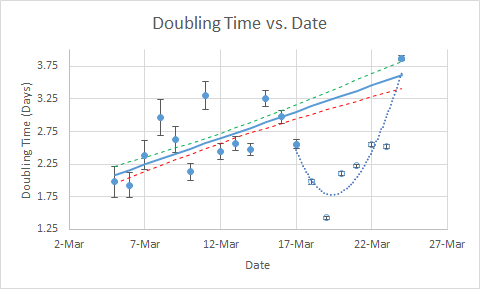
@mattkenworthy Really, these models are not that difficult, as long as you take an empirical approach to the doubling time; i.e., if we cannot increase the doubling time faster than what we are, they you get... https://t.co/YJrCJM0f2x
Yesterday was the longest single-day doubling time yet: 3.9 days. We appear to be past the most dramatic part of the testing ramp-up, which artificially suppresses these measurements. So we have resumed updating our model: https://t.co/IanuWcaHhy
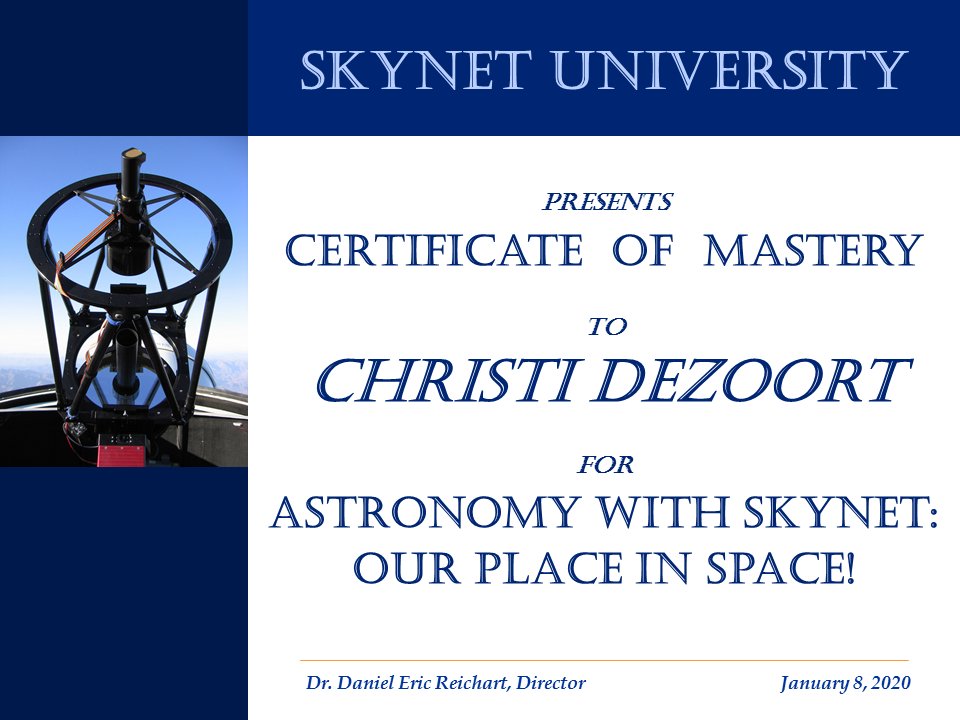
Congratulations to Christi DeZoort for completing Skynet University's "Astronomy with Skynet: Our Place In Space" observing course:
https://t.co/lrlE0jT5TT
This summer, consider taking:
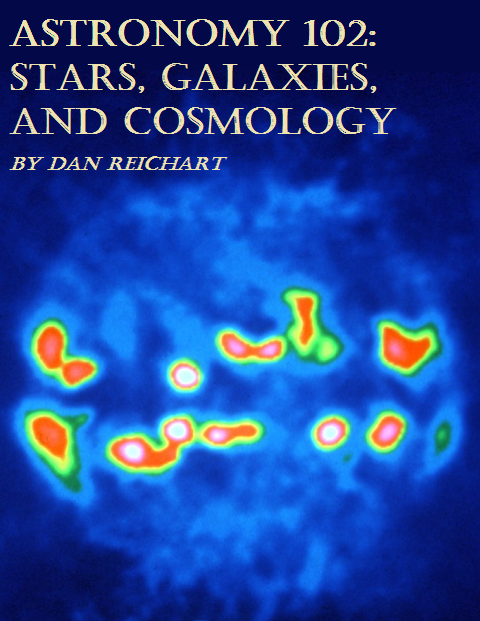
Astronomy 102: Stars, Galaxies, and Cosmology
for college credit through the University of North Carolina at Chapel Hill's Friday Center for Continuing Education.
Enrollment is now open:
https://t.co/OudEVIVHAf
Cheers!
DR
The Orion Complex. This optical — radio combination was achieved by tiling 15 130-minute exposures in H-alpha (from Steven and Tim Christensen), to which we added four 170-minute 1.4-GHz maps that we made with Skynet’s 20-meter at Green Bank Observatory.
@SkynetRTN is gearing up to hunt these again. Last run, our PROMPT-5 telescope in Chile was one of six telescopes to co-discover the first optical counterpart to a gravitational-wave event, caused by two merging neutron stars.
https://t.co/zHzds3hANH