We are hiring 2 new tenure track Assistant Professors of Political Science in the University of Arkansas at Little Rock School of Public Affairs: https://t.co/t9Ua76xncL
I will post both jobs as distinct links. If interested please apply to both jobs separately.
We are hiring 2 new tenure track Assistant Professors of Political Science in the University of Arkansas at Little Rock School of Public Affairs:
https://t.co/MeSnVccs4S
I will post both jobs as distinct links. If interested please apply to both jobs separately.
I am pleased to shared that for the third straight year the @UALR School of Public Affairs has been ranked in the top 100 of Public Affairs programs by US News and World Report: https://t.co/GqCmWH9ZEm
Come work with us at the @UALR School of Public Affairs. If you are interested in applied community research consider applying for the Survey Research Center Director: https://t.co/VynalkJPUz
#PAjobmarket
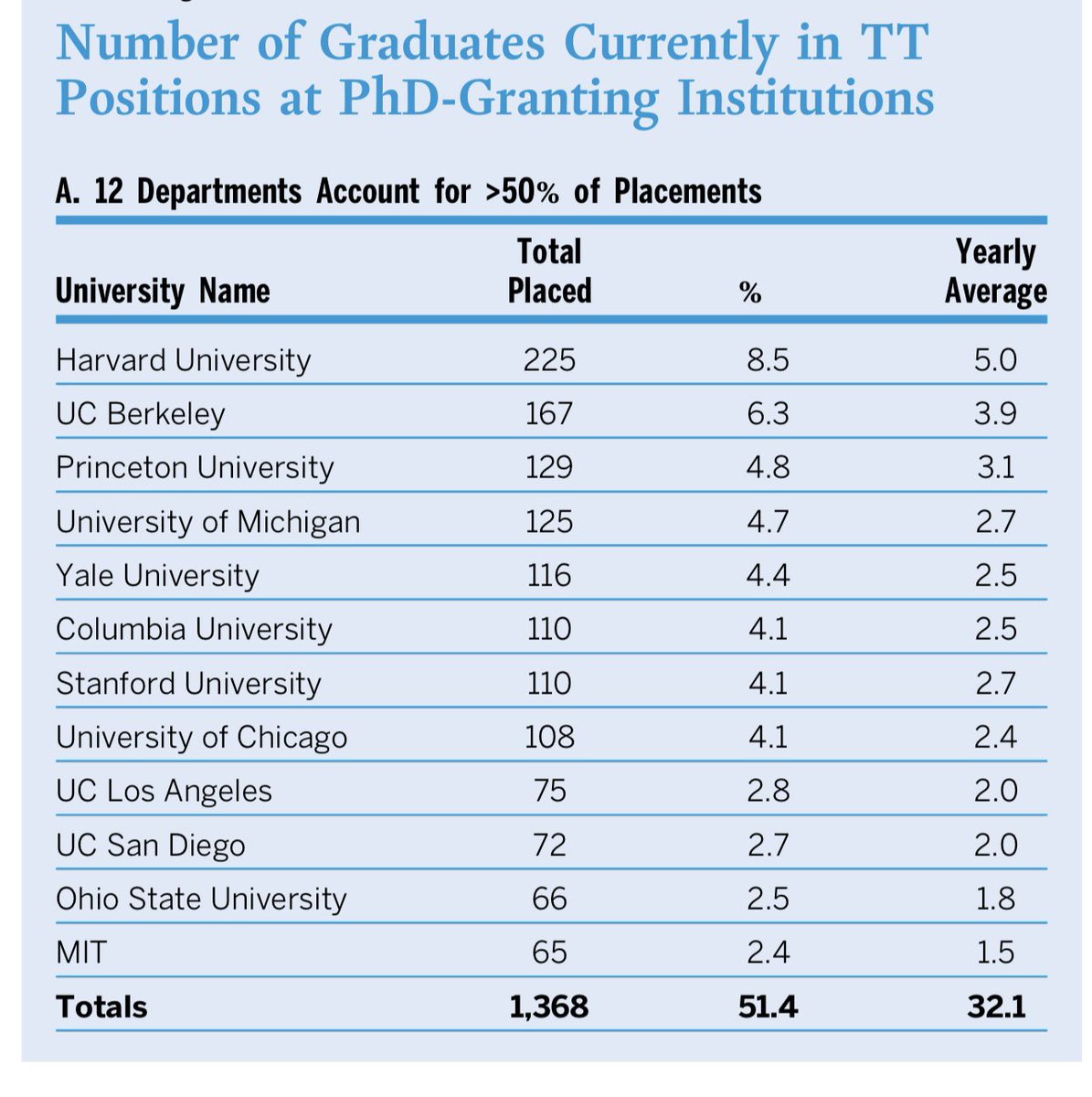
The top 20% of political science departments produced 75% of all tenure track research university faculty & the bottom 50% accounted for less than 5%
https://t.co/UNc2I0NrYP
Instead of listing my publications, as the year draws to an end, I want to put pressure on the commonplace assumption that productivity must always increase. Good research is disruptive and thinking time is central to high quality scholarship and necessary for disruptive research
Public trust in science is more important than ever. But what happens when scientists openly share their political opinions on social media?
Our updated paper with @EleAla & Francesco Capozza shows how academics’ political expression affects their credibility.
I am excited to share the first technical report (of multiple publications), I coauthored from the project on feral hog eradication/ trapping services programs in Arkansas.
https://t.co/BDO7HD1pme
We reposted the Director of the @UALR Survey Research Center Director. If you are interested in applied research then please apply: https://t.co/ivdsnMhqjz
As former director I was able to complete over 50 community based projects for public agencies and nonprofits
#pajobmarket
Let me take you back for a moment to 2018.
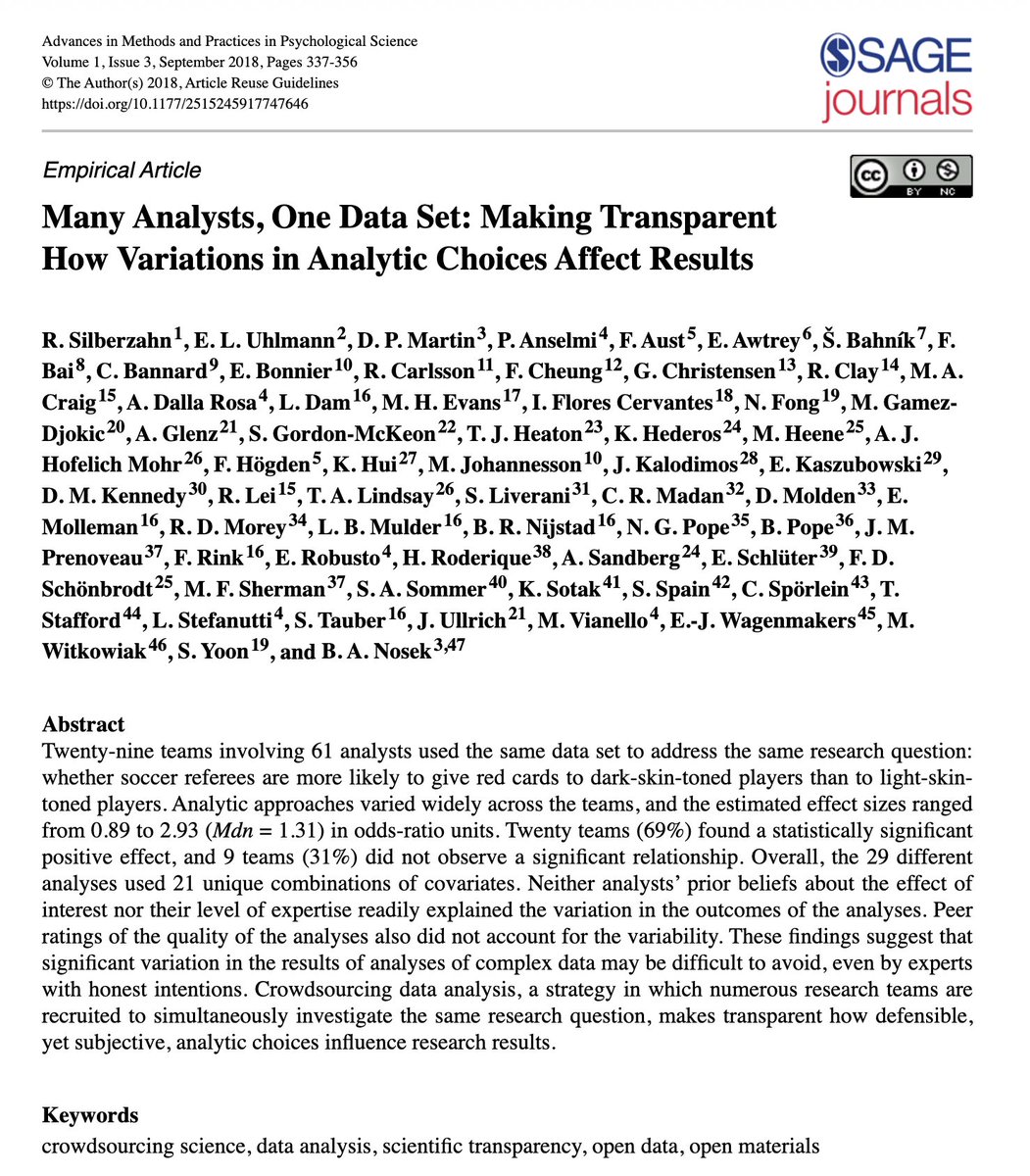
A team of powerhouse psychologists have just published a (seemingly) groundbreaking article.
The premise of the article was simple--give multiple research teams the same research question with the same dataset.
Would teams with the same research question and the same data come to the same conclusions?
The research question was: are soccer referees more likely to give red cards to players with dark skin tone than light skin tone?
The results obtained by the teams differed extensively.
Many concluded from this widely noted exercise that the social sciences are not rigorous enough to provide definitive answers.
This finding was widely shared in the popular press and on social media.
Fast forward a few years: a new (less covered) article comes out and shows that the main reason teams came to different answers was the original research question was unclear.
Teams differed in their interpretation of the research question and therefore used diverse research designs and model specifications.
When you reanalyze the data with a clear research question, a precise definition of the parameter of interest, and theory-guided causal reasoning, results across teams don't vary that much.
From the authors of the new study: "The broad conclusion of our reanalysis is that social science research needs to be more precise in its `estimands' to become credible."
Registration is open for the Arkansas Public Administration Consortium Workshop I am teaching on Program Evaluation:
https://t.co/DXD0H00L1V
December 4-5 in Little Rock