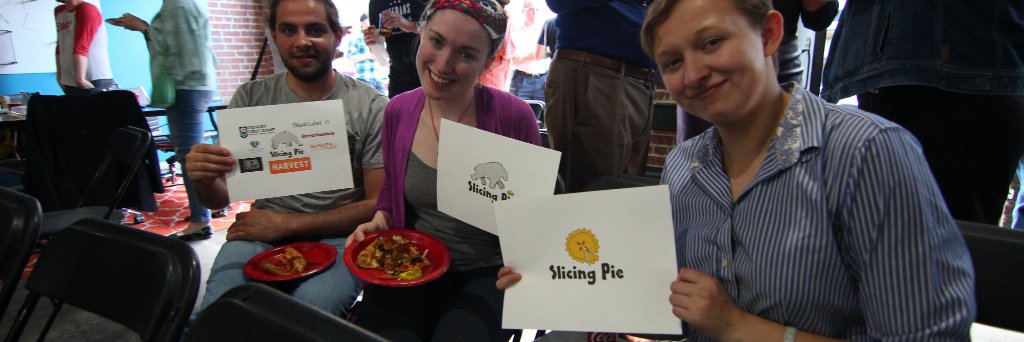
Struggling with startup equity splits?
The Slicing Pie model lets you divide equity fairly based on real contributions, time, money, effort & more.
Dynamic. Transparent. Fair.
Learn more 👉 https://t.co/pCe3GaPDQE
#StartupEquity#SlicingPie#FoundersLife https://t.co/TPT4UdTX7t
The Well feature allows the team to track cash investments in the company. When money is invested it is held in the Well.
Visit https://t.co/ItSKKtRb6n for a FREE sample of the Slicing Pie Handbook
Slicing Pie is a simple, dynamic equity split model based on fair contribution. It ensures each person's equity share matches their share of at-risk contributions—things like time, money, ideas, and resources provided without full payment.
Read more:
https://t.co/ItQa6o1Ott
Starting a company is like jumping out of a plane and building your parachute on the way down. The thrill? Unmatched. The risk? Sky-high.
https://t.co/S6lMEYV7GM
Sometimes people ask me if Slicing Pie is “legal.” The short answer is: yes, absolutely, Slicing Pie is completely legal and is never illegal. https://t.co/0c8DsYKw5h
Serial entrepreneur and social impact investor Terri Maxwell had an business concept that would require outside investment.
Read more: https://t.co/UwT6Q0K8U3
Berlin: thanks to the efforts of Stefanie Strümpfler, partner of dextrae Rechtsanwälte · Fachanwälte, who customised for German founders the Cofounder Agreement template.
Read more: https://t.co/9oRCrLYojx
Mike Moyer, the inventor of Slicing Pie, speaks with Dr. Pelè, host of the Big-Ticket Clients Podcast and Slicing Pie user. Hear more about the Slicing Pie backstory and some of Mike’s other books and ventures. https://t.co/QtS8iWukIN
Incubators and accelerators often request a fixed chunk of equity from the companies who participate in their programs.
Read more: https://t.co/PHuSdLIGaS
A common question that I receive from founders is “Can I make the S-Corporation election for my startup if I am using the Slicing Pie model?”
Read more: https://t.co/ND0u4eI7PE
Many potential clients and current clients have been asking us whether they should pursue their dreams and start their new business despite challenging economic conditions or put their plans on hold.
Read more: https://t.co/QS5KYaexoy
Finland joined as yet another country whose founders are able to use the dynamic equity split based on the slicing pie method, as developed by Mike Moyer.
Read more: https://t.co/MWj566M0St
This whitepaper outlines some of the common pitfalls of how student startup teams split equity between cofounders.
Conventional wisdom can be misleading and put students on a path towards equity disputes that can derail an otherwise promising startup.
https://t.co/O3rmZxHOaj
There are basically 3 types of investors with one type kind of in-between.
1. Grunts
2. Angels
3. Venture Capitalists
Read more: https://t.co/rAj9o7XpeY
The goal of Slicing Pie is to create a fair split and it is used by startup companies all over the world to do just that.
As a lawyer, you may not have heard of the Slicing Pie model or maybe you have, and you are skeptical. https://t.co/OXrICI3jpA
Great news to start the year - Poland joined as yet another country whose founders are able to use the dynamic equity split based on the slicing pie method, as developed by Mike Moyer. https://t.co/pzv3pnMzrJ
One of the most common mistakes that startup founders make, in my experience, is what it means to be profitable. Most startup founders—even rookies—understand that Revenue – Expenses = Profit. https://t.co/4sBNkNuh4P
The Recovery Logic of Slicing Pie outlines what happens to a person’s slices when they separate from the company. In a nutshell, if a person is terminated for cause or resigns without cause they will lose slices and forfeit their rights to future equity. https://t.co/dVPmWjW8R6