The Small Axe Project stands in support of public serving national cultural institutions such as the National Endowment for the Humanities which are now under threat of being defunded: https://t.co/ON9ifYEeLD
Happy to share my new article in @SmallAxeProject Keywords: Sexualities. I revisit the history of “kambrada” in the Dutch Caribbean, a term for same-sex loving women. Honored to be alongside @larrylafountain, @coutijacqueline, and Krystal Nandini Ghisyawan
Sexualities: patería/ makoumé/ kambrada/ friend and family
MARCH 7 at 12:00 PM (EST)
Virtual conversation with
@CoutiJacqueline
Krystal Ghisyawan
@julian_isenia@larrylafountain
Moderated by
@RyanCecilJobson and @VanessaYPerez
ZOOM REGISTRATION HERE:
https://t.co/qHL7kfLLPa
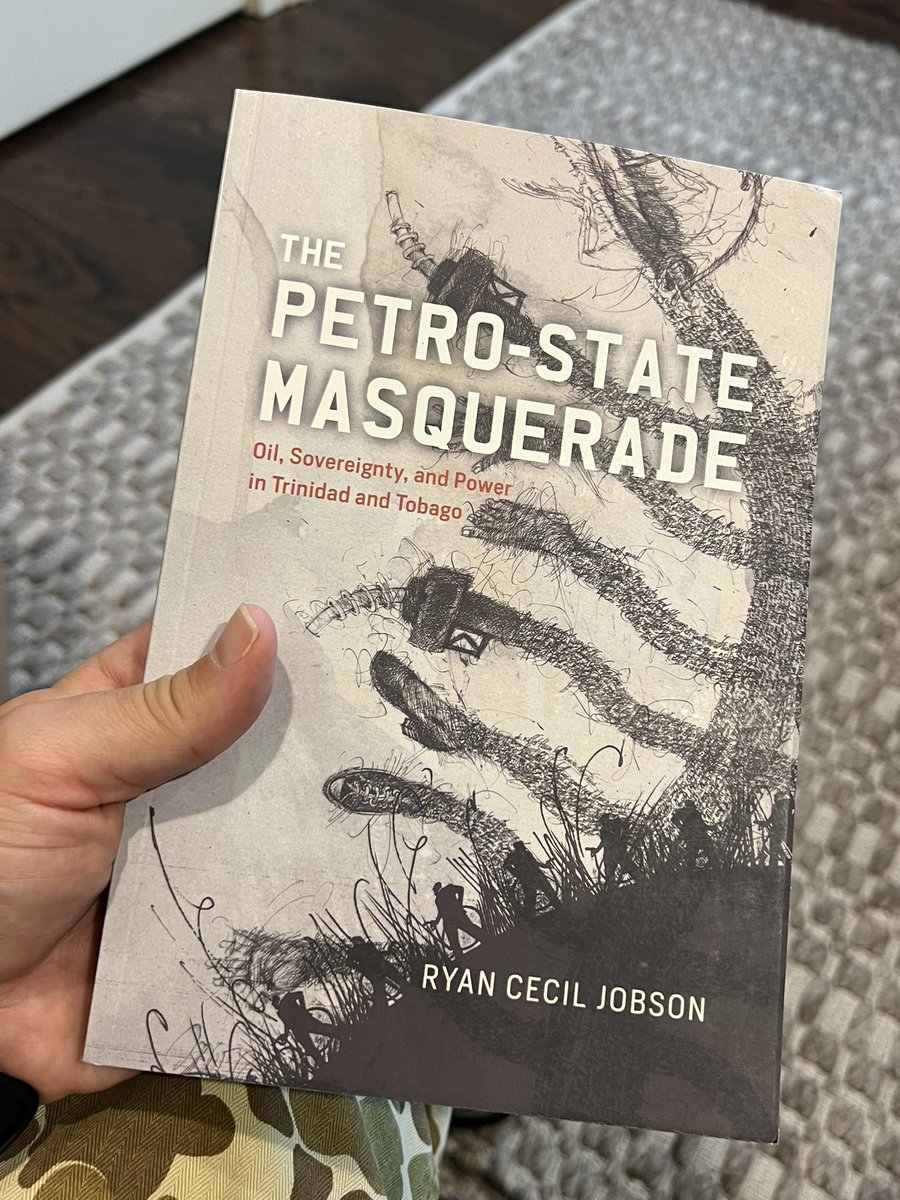
Happy publication day to this book! After working on this project for a decade plus, I’m grateful for the opportunity to share this work with the world (and with it the wisdom of working people in Trinidad and Tobago).
⛽️👑🎭🇹🇹
@UChicagoPress
https://t.co/OwLsi3t1FN
Engaging the discussions from Judy Rodríguez, Ernesto Blanes-Martinez, and Agustín Laó-Montes, this reply essay by Rocío Zambrana recounts and situates the main theses of Colonial Debts: The Case of Puerto Rico (2021).
#BookDiscussion#SmallAxe74
https://t.co/obmdXuLHiI
Read this review essay of Rocio Zambrana’s Colonial Debts: The Case of Puerto Rico (2021) by Agustín Laó-Montes where he argues that it is a book about contemporary Puerto Rico and its world-historical significance.
#BookDiscussion#SmallAxe74
https://t.co/9sTW3Vjeno
Ernesto Blanes-Martinez analyzes the problem of subjectivity in Rocío Zambrana’s Colonial Debts: The Case of Puerto Rico (2021) from a phenomenological perspective.
#BookDiscussion#SmallAxe74
https://t.co/3azkbUzfFM
This Natalie Wood’s visual essay is inspired by the late social justice activist and artist Colin Robinson and his love of carnival.
Follow the link: https://t.co/gZmXzgPrBK
In this keyword essay, @CoutiJacqueline asks, Could theorizing the term "makoumè" as a marker of difference, of lack, of excess, of gender disturbance, expose a very French malaise around questions of genre and issues destabilizing heterosexual norms?
https://t.co/Y3Xf8WPy2Q
The terms "friend" and "family" are at the core of this keyword essay by Krystal Nandini Ghisyawan that discusses how those terms are used by same-sex-desiring women in Trinidad to mask and facilitate queer becoming.
https://t.co/qeFYdLekEq
Wigbertson Julian Isenia traces in this essay the historical trajectory of the term kambrada, which is akin to mati in Suriname, and represents a spectrum of women’s relationships. The essay concludes with the 2021 Kambrada collective in Curaçao.
https://t.co/j8tbXvXLXM
In this essay, @larrylafountain engages a SPIT! manifesto, a column by Karla Claudio-Betancourt, and scholarly pieces on queer language around the term patería, a synonym for “queerness” as a sign of gender and sexual transgression.
https://t.co/nJXzbe2Dxn
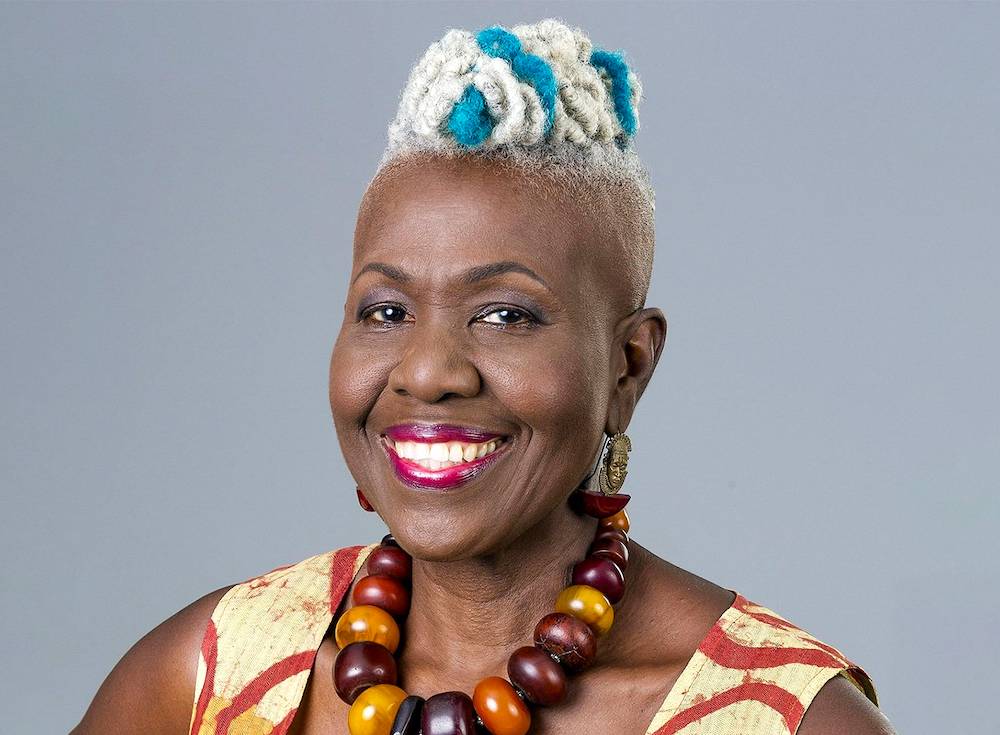
In this personal homage to Carolyn Cooper, Ananya Jahanara Kabir proposes that we see this convergence in historical continuity with the resistive potential of swag as manifested in Caribbean expressive performative traditions.
https://t.co/WZW88JC82x
This Njelle Hamilton’s essay pays homage to the influential scholarship and activism of Carolyn Cooper; it imitates Cooper’s code-switching newspaper columns and analysis of Sistren Theater Collective’s Lionheart Gal.
https://t.co/0KU1WaU4kF
A Jacqueline Bishop china plate is featured in the forthcoming memoir of @jallenpaisant, The Possibility of Tenderness. Read about her series "History at the Dinner Table" here:
https://t.co/TNgR1MMAJm
#DialoguesInCarbbeanModernisms@SmallAxeProject
Carolyn Cooper’s research on Afro-Jamaican feminisms via literary history, literary criticism, and cultural studies and her use of that research in various pedagogical spaces is the aim of this essay by Nadia Ellis:
https://t.co/BRZydrcazX
Read here the essay by Louis Chude-Sokei on Carolyn Cooper’s _Noises in the Blood: Orality, Gender, and the “Vulgar” Body of Jamaican Popular Culture_(1993), where the author discusses the book’s impact across and against the “Black Atlantic” paradigm
https://t.co/ZZZ9s2rs9c