Our programmes create enduring, positive improvements for workers through a combination of technical assessments, training, advocacy + research. EU funded.
🧵 1/9
The latest @eurochammyanmar#Myanmar Garment Sector Factsheet (v2.0), released this month, should be required reading for anyone interested in the country's post-coup labour situation. Incredibly well-researched, referenced and highly relevant.
#WhatsHappeningInMyanmar
@KhaingZarAung20 5) … All of this makes us really sad (on a very sad day anyhow) because we believe that you know fully well that what you are saying is not true.
@KhaingZarAung20 4) …one of many things we always teach is that in workplaces with both labour organizations and elected worker representatives, the employer cannot use the elected non-organized worker representatives to undermine the position of labour organizations and their representatives…
@KhaingZarAung20 3) …in general, our team met with the union leader you mentioned and encouraged her to stay involved as a union representative, just as we engaged, encouraged and worked with many other workers and management representatives in this factory…
@KhaingZarAung20 2)… here is a screenshot from the report. One of many, many approaches we use to educate and guide management of the factory on what their responsibilities are with regards to worker representatives….
@KhaingZarAung20 1) You are intentionally misrepresenting the facts. This is a long process involving worker representatives, labour rights defenders and, yes, management representatives. They have some say in the factory they built. Our team has a 46 page report of findings + recommendations…
In #Myanmar, the military coup and pandemic led 220,000 garment workers to lose their job. 95% are women and often the only source of revenues of their families. Responsible businesses have a significant impact to avoid extreme poverty.
Access to decent work is a human right.
The EU Myan Ku Fund has given out 14 billion MMK in direct cash support to over 90,000 garment workers in Myanmar since 2020. Most have reported it as essential for food security and housing.
Ma Shwe Yee left Yangon in mid-2021, a time of enormous difficulties for 100s of thousands of garment workers.
She received 2 cash transfers, once to help her after losing her job and again to help her reintegrate into the workforce when she was ready.
https://t.co/x6UZJWeyac
Ma Swe Zin participated in the nutritional programme of Myan Ku, received counselling from our doctors and delivered a healthy baby. As she was in the maternal programme she qualified for 400+ EUR in assistance, some of which she used to purchase a pig, as well as foods/medicine.
Here is another short video filmed by one of the more than 90,000 garment/textile factory worker beneficiaries of the EU Myan Ku Fund. This is her video, her story. https://t.co/HxZKVBdCY0
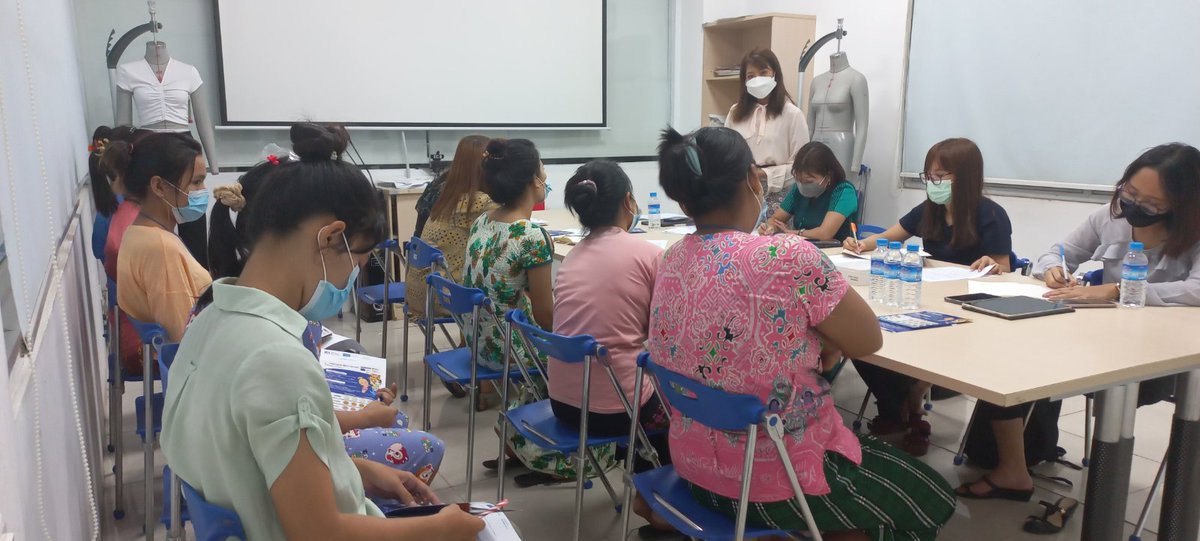
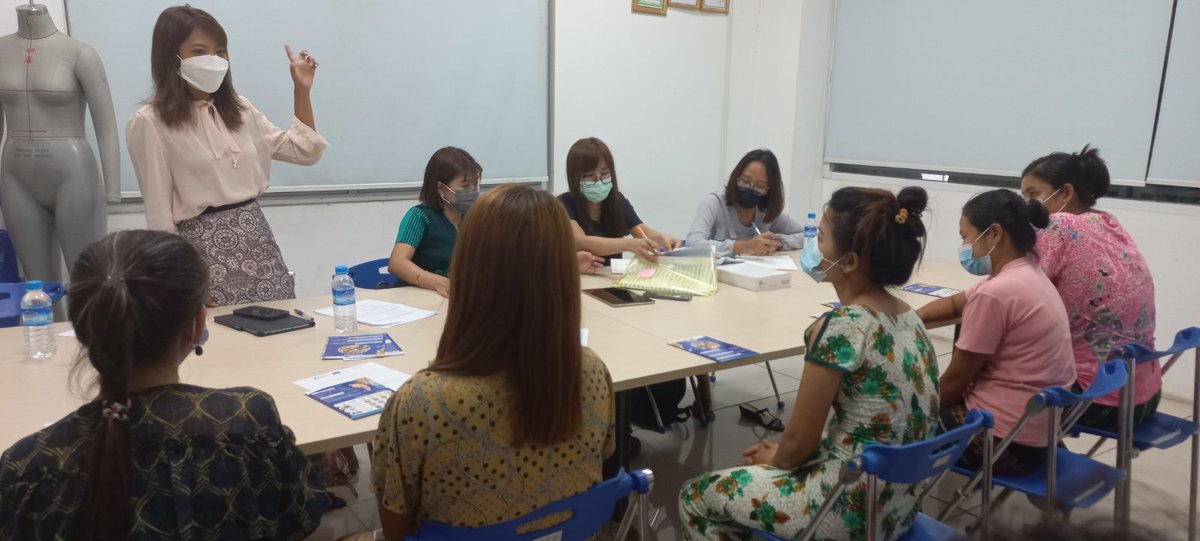
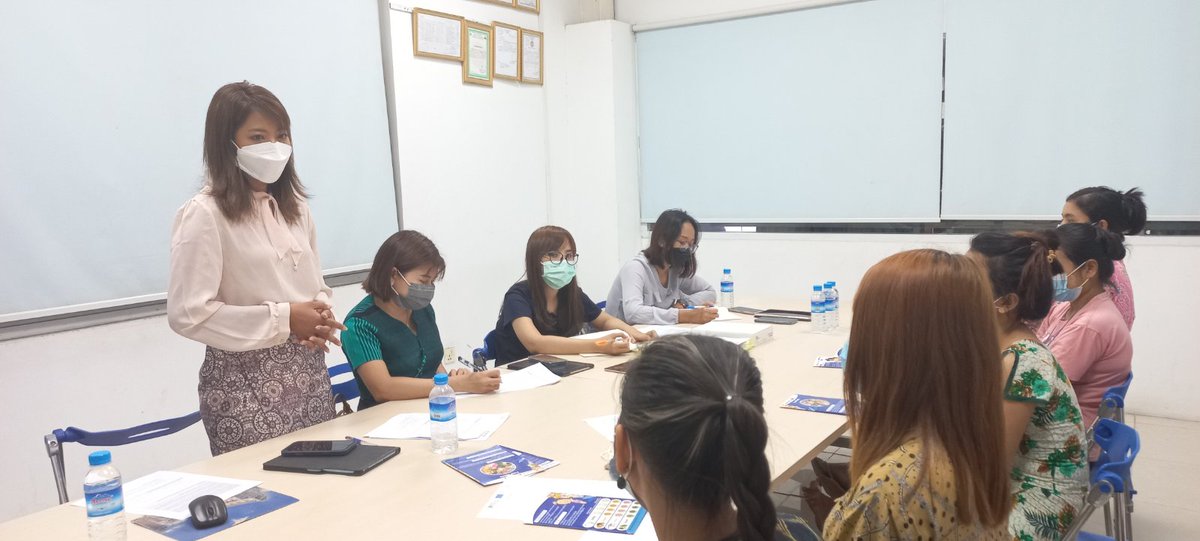
Ms. Zar Ni Win, one of several hundred young women to participate in our vocational and life skills trainings shares about her experience in the programme. https://t.co/xRwj3qPPZF
This video is a bit longer, but provides some interesting perspectives from a garment worker and from a factory manager, both trying to navigate the difficulties of the previous year. https://t.co/su53JrGHFn
Focus areas within this programme include: lunch & snack programmes and canteen capacities, clinic capacities, nursing and child care rooms and related policies.
Nutritionists from one of our factory assessment teams have recently been conducting focus groups with young mothers in several garment factories in Yangon and Mandalay, as they lead a new advisory programme focused on workplace nutrition.
We provided daily free meals and cash stipends of 90,000 MMK each to women who completed the training. We prioritised migrant workers, tens of thousands of whom had lost jobs in 2021.
Ms. Zar Ni Win, one of several hundred young women to participate in our vocational and life skills trainings shares about her experience in the programme. https://t.co/xRwj3qPPZF
Our training programme taught the importance of employment contracts and labour law compliance, in addition to technical skills. This is valuable not only for getting a new job, but a decent job.
This is all part of our effort to show the resilience of the apparel sector workers. There are about 150,000 fewer jobs in the apparel factories of Myanmar, end 2021 compared to early 2020. This economic decline presents real challenges for as many families as are affected.
Losing her job was a major worry. Garment factory worker Aye Hnin Soe shares how the EU Myan Ku Fund provided essential cash support for her family, especially during her pregnancy and the first months of her child’s life, giving them a chance to resettle. https://t.co/nfgAOYYRSK
They choose and curate what they want to share. We edit the final submissions and then added in some sound and lighting adjustments + translation subtitles.