Does imprecision bias value of treatment? @decisionshealth et al finds 20% more people understand/value greater precision described qualitatively vs quantitatively for benefits/harms, but communicating imprecision leads to greater decision uncertainty #TBT https://t.co/2j8hq3DuMV
Why do #Cancer screening if it doesn't reduce mortality? New study @MedDecMak by @marilyn_schap et al. on #Veterans find patients see some 'harms' like knowledge of body and health even if not actionable or improving lifespan, considered as benefits. #SMDM
https://t.co/ZbXhA9ZikQ
Do implementation outcomes of decision aids change for disparate demographics? Li et al, used prostate cancer shared decision tool in academic medical center vs LA county hospital. All settings had low decisional conflict, high treatment satisfaction #SMDM
https://t.co/xT5I6i6ACd
Can Shared Decision Making be measured ignoring confounding effects like satisfaction? @kd_valentine3 et al., developed the SDM Process scale, correlating w/ higher decision quality and lower regret, specifying actions easy for patients to understand #SMDM
https://t.co/XdIBn9msf5
Can audiovisual information and narratives improve risk processing in Patient Decision Aids? Nida Yilmaz et al. find AV info reduces cognitive load, increase perceived effectiveness of choices; narratives reduce uncertainty in younger patients only. #SMDM
https://t.co/IsBDgjgJYa
What visualizations work best at communicating personal risk? @ErikaWatersPhD et al. find risk ladders superior at gist communication than tables or lists across varying levels of graph literacy and numeracy in significantly African American sample. #SMDM
https://t.co/pKA2HXMYnO
I'm so excited to attend #SMDM20 Brown bag by @hwitteman@Dan_Matlock on funding your research. Both Dr. Witteman and Dr. Matlock are powerhouses, with a strong history of successfully funded projects.
https://t.co/nvogoR03uc
Hydroxychloroquine is in more demand than ever; do people understand the risks? #SMDM2020 abstract by @DMNGaravito #hydroxycholoroquine finds - details in risks that do not fit the 'gist' likely to be misremembered, in undergraduates and older patients.
https://t.co/KXOyjCuZoH
Excited to see what all questions people for our live Q&A on #SMDM symposia: How to fit diverse contributors into a decision making tool. The sheer variety of approaches to the issue and the interactions between all our panelists makes this a must see!
https://t.co/5NZYipsTfY
How should we collaborate? A symposia at #SMDM20 from @theNCI@ConVOIgroup@DARTHworkgroup@_DiabetesAction, believes participation in networks of peer researchers is best. Equity in recognition vital to promoting atmosphere of going 'above and beyond'!
https://t.co/DD98Gvw1oZ
How can we explain herd immunity easily? An #SMDM20 abstract by @ina9896@wittemanlab succeeded by creating an interactive web-application depicting the spread of various illnesses. Personalizing the avatars to represent your community improved engagement!
https://t.co/CDId3CdtYi
Looking forward to the live #SMDM20 Focused Chat: "Muddled Morale: Staying Motivated During a Pandemic". Personally, I feel like I have gotten near a tipping point for my own fighting spirit. Thus, I am excited to stoke my flame and get some inspiration!
https://t.co/foG17FWfZq
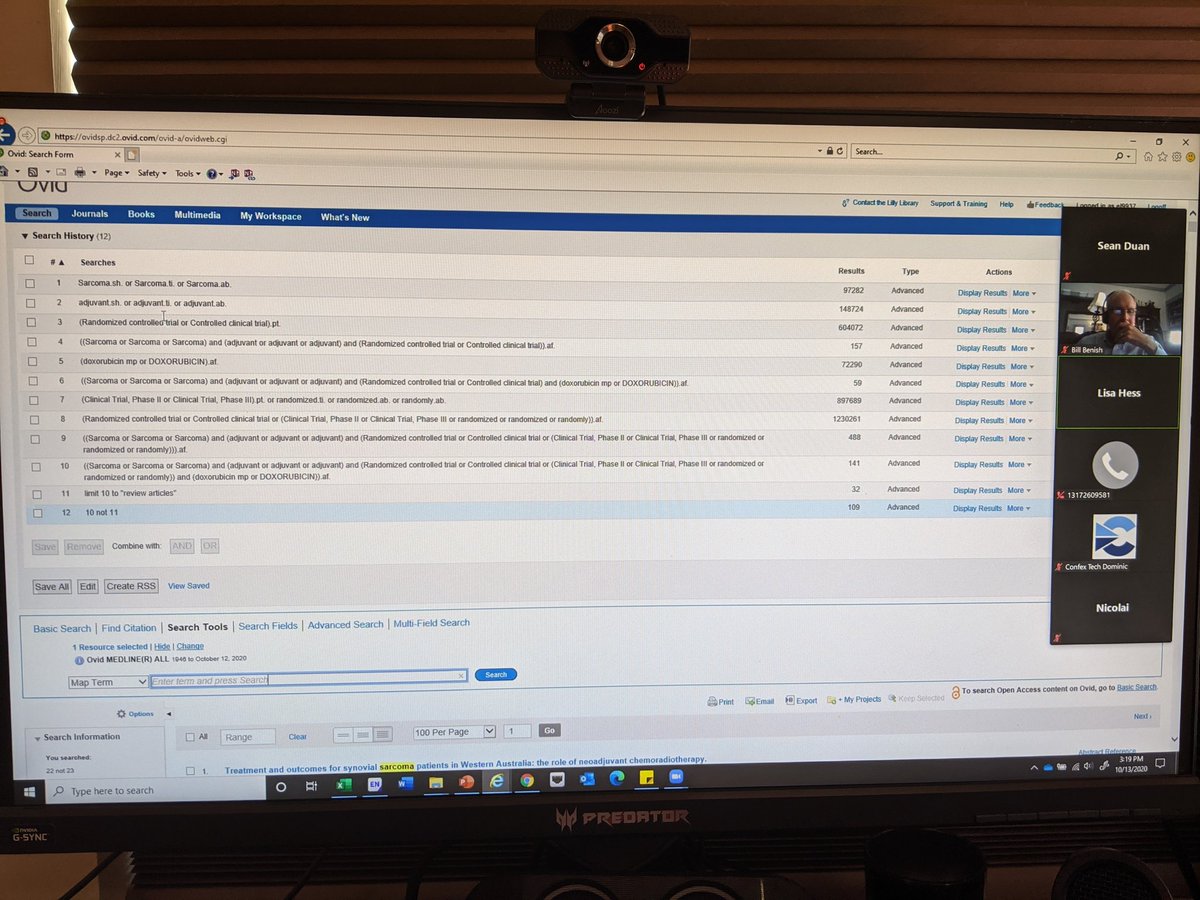
Favorite part of short course on meta analysis for #SMDM20 by Lisa Hess - A live walkthrough of the initial search for studies for systematic review. Very useful to see how other researchers approach this often idiosyncratic step
smdm.confex/smdm/2020/meetingapp.cgi/Session/3237
Nuggets of wisdom with @laprosser for #SMDM20 brown bag. Institutions need to be understanding for jr faculty reduced productivity from #COVID19 , OK to change your #healthcare research focus to covid19, but don't feel pressure to warp your core research!
https://t.co/gkm72szako
#SMDM20 Patient/Provider MDM usually thought of as 1 to 1. @evewittenberg, @ealipstein, Dr. Tay elaborate on considerations for intergenerational family units leading to increased quality of decisions. Patient testimonials added depth to the conversation!
https://t.co/C6uM7apzOV
How do different #COVID19 maps affect the public? Abstract by @AThorpe_ for #SMDM20: providing maps does not significantly improve public knowledge, risk perception, guideline adherence, and case information at state level more effective than county level.
https://t.co/LkvC1O05lj
Address by @laprosser is really touching. The call to action for all of us virtually attending #SMDM20 is very motivational, and I have seen firsthand how much collaboration happens right there when it's all in person. Very inspiring 🙏
#SMDM20 panels are excellent! @feralaes calibrates #COVID19 model for Mexico City. Effects of reducing social distancing, opening in person schools, or both, in deaths\time to reach hospital cap. No govt. pushback, govt. collects new data as needed for the model. Impressive!
#SMDM20 panel by @turgayayer for #COVID19 simulation tool at https://t.co/exxA867vEc. Really amazing tool that allows people to run models or 'what-if' scenarios in their local community, based on data that is updated in real time as it is gathered. Check it out, try it yourself!
Timely #SMDM20 panel by Lauren E. Cipriano on university reopening and #COVID19 risk for the local community. Finds 2/3 of new infections from opening occur in the general population. Once campus 'spillover' occurs, modifying student behavior isn't enough!
https://t.co/ygkfT5mbTf