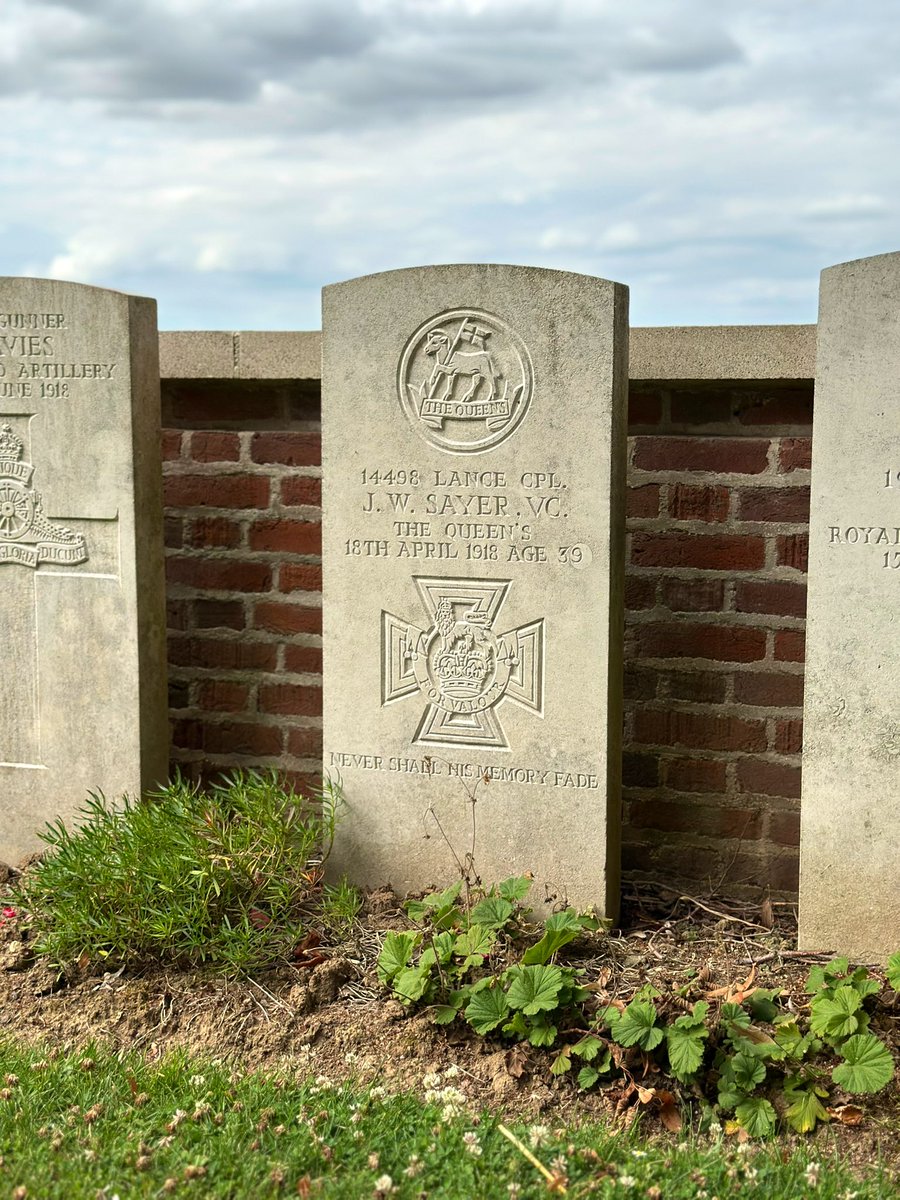
The new Brothers in Arms memorial at Polygon Wood and graves at @CWGC Buttes New British Cemetery, including that of 3504 Pte Jack Hunter AIF, whose story inspired the memorial.
@sommecourt History’s the human past & the best historians are those who best understand the human experience. By definition, AI can’t do this. It can construct, but can’t understand: it has no emotion, no empathy.
All in all, then, it’s the emperor’s new clothes - a fable for our times.
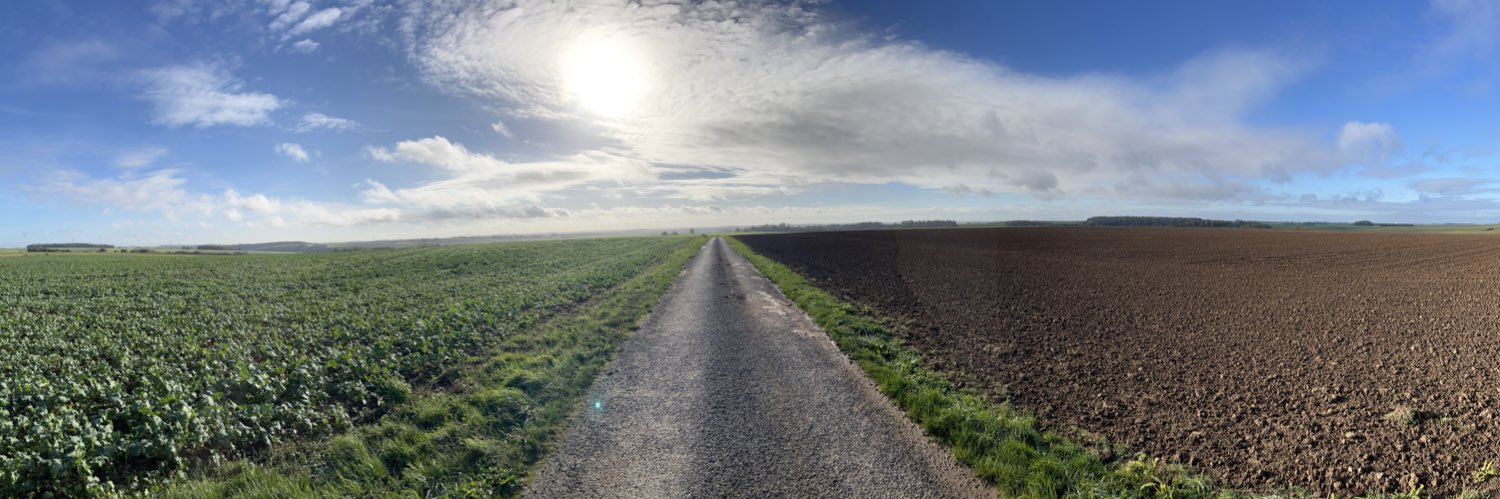
Today is the 110th anniversary of the start of the Battle of Loos. It’s a haunting battlefield, empty and exposed under big skies. A stiff wind and sudden sharp showers presented the only threats on our recent visit, but faint echoes of much worse seemed somehow to linger.
@HistoryandMoore Saw quite a few shells when we were out a couple of weeks ago, the first three at the Quadrilateral and the single shell at Cuckoo Passage.
@TheWFA@bj13johnson1 Rowland Vivian Pitchforth? He was a skilful water colourist who had begun to study at Leeds Art School before a break for war service with the Royal Garrison Artillery. This rendered him stone deaf according to my father, who was taught by him by at the Royal College of Art.
The British section of Le Cateau Military Cemetery is a real contrast with its German neighbour. Fewer trees and an abundance of vivid flowers give it a light, airy and characteristically country-churchyard feel.
The variety of commemorative practice in the German section of Le Cateau Military Cemetery adds interest. Headstones upright & flat, lines of stela, mass burials, & French-style crosses for Russian soldiers, all under a canopy of oak trees giving welcome shade on a hot July day.
@TheKnotUnites Yes, thank you, Andrew. I can only plead lack of characters for not including the other units which fought there, and as I had just one other photo left, I thought it invidious to choose just one other unit’s panel commemoration. Probably a mistake on my part.
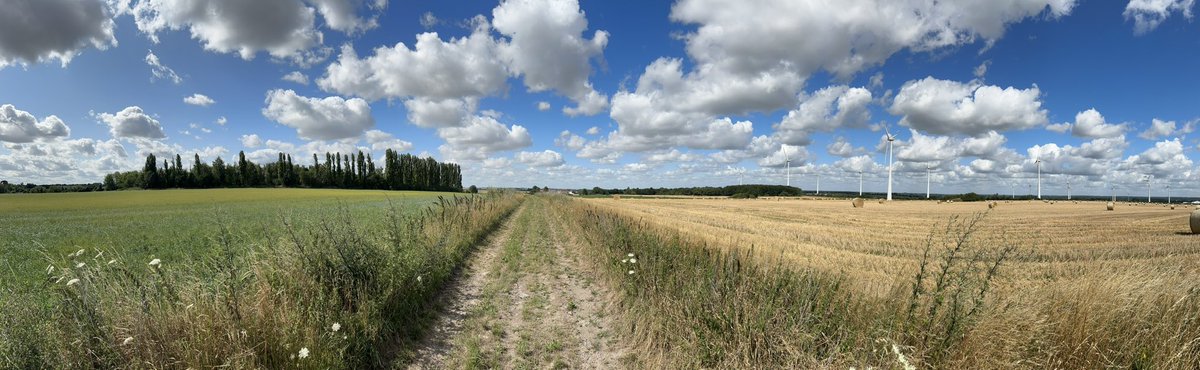
There was more mayhem - & more courage - on Suffolk Hill at Le Cateau in August 1914. The weathered memorial to the British fallen stands atop the hill defiant against the enemy advance from the high ground of Montay, now populated by nothing more threatening than wind turbines.
Apart from farmers inspecting crops, patiently waiting for us to get out of the way, all was quiet on the small Audregnies battlefield this week. So different from 1914 when for a short time there was mayhem: an artillery duel, a cavalry charge - & courage on both sides.
@sueellen305 @TerrierMcD We found the display of children’s artistic responses and possessions upstairs at the Pinkas Synagogue heart-rending. Have you read Ariana Neumann’s When Time Stopped?
Sad news on Facebook that Major Tonie Holt has passed away. Him and his wife Valmai authored so many books that have helped us understand the battlefields of the Great War, and they were part of those pioneers who brought visitors back to those battlefields from the 1970s.
@G7KVE Thanks. As far as I’m aware, a shell burst claimed his life in the early hours of the 14th July. I could check the more detailed notes I have somewhere, but I’d have to hunt!
Last stop of the day is Oosttaverne Wood Cemetery. Here we visit 2/Lt Henry Lester-Smith’s grave. His epitaph says, “Such as are gentle/Them shall He learn His way.” The lines are unfamiliar in a secular age but say so much about the man, dead 6 weeks after arriving at the front.
Walking into Ploegsteert Wood, its innocence disarms. We pass a local family & say hello. What this place was, what happened here goes unspoken. Then, going on, the astonishingly pretty cemeteries within are uncloaked piecemeal, desperately sad reminders of the Wood’s dark past.
@NeilPudney Completely agree, Neil. It’s right up there for me, too. I’d have said hello if I’d known about the St John’s boys; I must read your book. Lovely to hear from you.