Markets move. We explain why.
Real-time intelligence across stocks, futures, macro, crypto & more.
SNF Pulse™ | First to interpret. Selective by design.
🟨 THE MARKET DOESN’T WAIT. NEITHER DO WE.
Welcome to Sunday Night Futures.
Independent market intelligence built around one principle:
Understand what changed before deciding what comes next.
🌅 6:30 AM — Pre-Market Preview
☀️ 8:45 AM — Pre-Market Update
🟨 SNF Pulse™ — Real-time market intelligence
🔔 4:15 PM — Closing Brief
🌙 Sunday Night — The Week Ahead
Plus original research across stocks, futures, macro, crypto, options, sectors & collectibles.
We don’t recycle headlines. We interpret what matters.
SNF Pulse™ — First to interpret. Selective by design.
Follow @SNFuturesLive for daily market intelligence.
Explore the free briefings:
https://t.co/pzJ0yJut8O
📊 SNF COLLECTIBLES™
GRADED MARKET & AUCTION LIQUIDITY
A MILLION DOLLAR CHARIZARD STILL ATTRACTED BIDS. THE BIGGER COLLECTIBLES MARKET IS GETTING MORE SELECTIVE.
High-end collectible cards continue to command extraordinary prices.
But the latest major auction reveals a change beneath the headline results.
WHAT CHANGED
🔴 Fanatics Collect's November Premier Auction closed with $39.28 million across 604 lots, down approximately 15.5% from October.
🔴 Median lot value fell from $42,000 to $33,000.
🔴 Among 17 cards reoffered after purchases in recent Premier auctions, 13 closed lower, with a median decline of 16%.
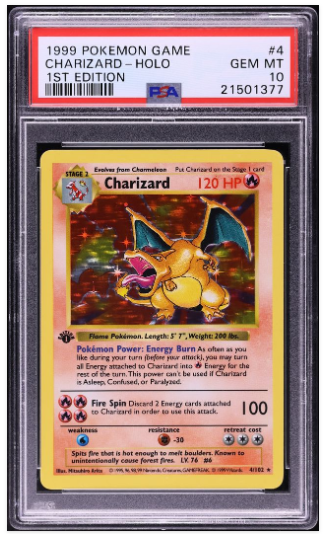
🟡 A 1999 First Edition Shadowless Charizard PSA 10 closed at $990,000, compared with $1.38 million for another PSA 10 example in October.
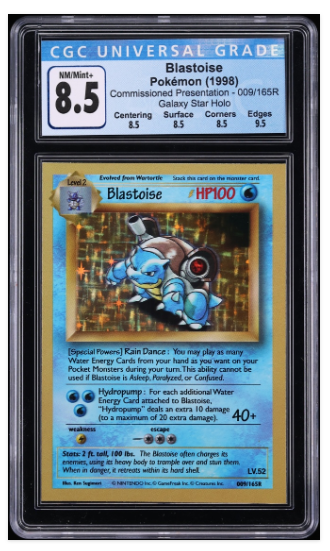
🟡 A rare 1998 Galaxy Blastoise CGC 8.5 closed at $630,000.
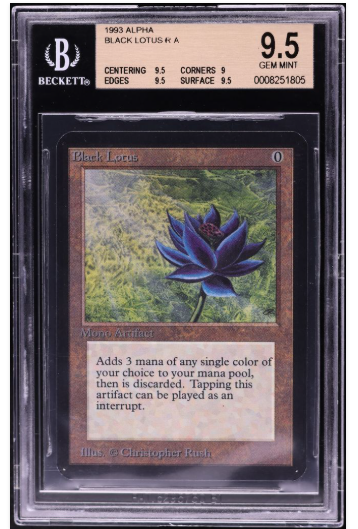
🟡 An Alpha Black Lotus BGS 9.5 closed at $384,000.
⚪ These are recorded auction closing results, including buyer's premiums, not asking prices. Final payment settlement for November's lots hasn’t yet been independently verified.
WHY IT MATTERS
The collectibles market isn’t experiencing a uniform disappearance of demand.
Exceptional cards continue to attract substantial bids.
But investors are becoming more selective about the prices they’ll pay.
The distinction is important.
A rare card achieving a six or seven figure auction result doesn’t establish that every comparable card has appreciated.
Different copies, even with identical numerical grades, can command different prices based on presentation, provenance and bidder competition.
And high auction prices don’t guarantee profitable resale.
The latest results show that some collectors who returned cards to auction after relatively short holding periods faced lower closing prices.
The 17 resale comparisons cover multiple collectible categories, not just Pokémon.
For graded card investors, this raises a critical question.
Are recent record prices sustainable when additional high-grade examples return to market?
The answer will depend on actual completed transactions, repeat bidding demand and the depth of buyers willing to absorb new supply.
WHAT SNF IS WATCHING
Payment confirmation on November's auction lots, repeated sales of comparable PSA and BGS grades, Goldin and Fanatics closing results, high-value consignment supply, Pokémon versus sports card participation and whether buyer demand stabilizes across upcoming auctions.
SNF COLLECTIBLES LENS™
🔴 Signal: Auction volume, median lot prices and short-term resale comparisons weakened.
⚪ Noise: A lower result for another copy of the same graded card isn’t proof that every holder has lost value.
🟡 Confirmation: Settled auction results, repeat comparable sales and improving demand across multiple auction houses.
🔴 Risk: Rising consignments, failed payments, thinner bidding competition and weaker resale liquidity.
BOTTOM LINE
The rarest collectible cards are still attracting significant capital.
But extraordinary headline prices are no longer enough to demonstrate broad market strength.
The next test is whether recent valuations can survive repeated sales.
For collectors and investors, realized liquidity matters more than the highest price someone once bid.
#SNFCollectibles #PokemonTCG #MTG
🚨SNF PULSE™
DIGITAL ASSET SECURITY
5.21 MILLION CYBER TOKENS WERE MINTED ON SOLANA. TWO MINUTES LATER, THE SAME AMOUNT LEFT AN ETHEREUM BRIDGE.
Another cross-chain security incident is raising questions about how digital assets move between blockchain networks.
This time, the issue begins with unexpected token creation.
WHAT CHANGED
🔴 Cyber reported unexpected minting of its CYBER token on Solana on November 21.
🔴 Blockchain records show approximately 5.21 million CYBER minted before an equivalent amount was transferred out of the protocol's Ethereum bridge lockbox.
🔴 Investigators traced subsequent token sales estimated at approximately $968,000 in ETH.
🔴 South Korean exchanges Upbit and Bithumb suspended CYBER deposits and withdrawals following indications of a security incident.
🟡 Cyber advised users to avoid the CYBER bridge and exchange deposits while the investigation continues.
⚪ The project has not confirmed the root cause, final financial loss or whether additional bridge routes are affected.
WHY IT MATTERS
Cross-chain bridges are designed to move value between separate blockchain networks.
When tokens move from one network to another, the receiving system must verify that the corresponding assets were legitimately deposited, locked or otherwise authorized.
That verification process is fundamental.
If unauthorized token creation leads to the release of assets held elsewhere, the bridge can transmit a security failure across networks.
The Cyber incident raises precisely that concern.
The observed sequence is significant.
Millions of CYBER tokens appeared on Solana.
Approximately two minutes later, a matching quantity left the Ethereum bridge contract.
Much of the transferred amount was subsequently exchanged for ETH.
But investigators have not established exactly how the activity was authorized.
And the approximately $968,000 in estimated sale proceeds shouldn’t be treated as the project's final confirmed loss.
The exchange response introduces another dimension.
Upbit and Bithumb restricted deposits and withdrawals while allowing trading to continue.
That creates a distinction between a token's displayed market price and investors' ability to move assets between platforms.
When transfers are restricted, market liquidity can become fragmented.
This is especially important when confidence in the assets supporting cross-chain transactions is uncertain.
The incident also follows a separate Chainflip vault security event earlier Saturday.
There’s no verified connection between the two.
But together, they underscore the operational risks surrounding cryptocurrency infrastructure that depends on cross-chain authorization and asset custody.
WHAT SNF IS WATCHING
Cyber's incident findings, bridge authorization controls, the status of affected Solana and Ethereum routes, verified asset reconciliation, recovery efforts, exchange transfer restrictions and any additional security disclosures.
SNF LENS™
🔴 Signal: Unexpected token minting was followed by a matching Ethereum bridge outflow and exchange transfer restrictions.
⚪ Noise: These observations don’t establish that Solana or Ethereum's underlying blockchain networks were compromised.
🟡 Confirmation: A verified root cause, asset reconciliation, independent security review and documented restoration of affected bridge services.
🔴 Risk: Additional unauthorized transfers, unrecovered assets, fragmented exchange liquidity and diminished confidence in cross-chain infrastructure.
BOTTOM LINE
The central question isn’t simply whether 5.21 million tokens were created.
It’s whether the system responsible for validating movement between blockchains can distinguish legitimate transfers from unauthorized activity.
Until Cyber establishes how the transactions occurred, the security question remains unresolved.
For digital asset markets, cross-chain verification isn’t a secondary technical detail.
It’s a fundamental part of protecting the assets that move through these systems.
#SNFPulse #CryptoSecurity #DeFi ethereum:native
⚡SNF PULSE™
CRYPTOCURRENCY & MARKET LIQUIDITY
BITCOIN HIT A TWO-YEAR LOW. THE REBOUND DOESN’T PROVE THE SELLING IS OVER.
The cryptocurrency market just experienced another significant test of liquidity.
And the most important signal may be what happened after the forced selling.
WHAT CHANGED
🔴 Bitcoin fell to approximately $55,252, its lowest level in two years.
🔴 CoinGlass recorded approximately $2.38 billion in liquidations across a rolling 24-hour period checked early Saturday.
🔴 More than 92% of those liquidations involved leveraged long positions.
🟡 Bitcoin subsequently rebounded more than 8% from its low, briefly moving back above $60,000.
⚪ Ethereum and Solana also stabilized from the broader selloff, but neither establishes a confirmed reversal in crypto market risk appetite.
WHY IT MATTERS
Friday's selloff in stocks, technology shares and digital assets demonstrated how quickly risk reduction can spread across markets.
Saturday added another dimension.
Forced liquidation.
When heavily leveraged positions lose sufficient collateral, exchanges can close those positions automatically.
That selling can accelerate price declines and trigger further liquidations.
The resulting moves aren’t necessarily driven by new fundamental information.
They can reflect the mechanical unwinding of borrowed exposure.
This distinction matters.
Bitcoin's rebound suggests the immediate selling pressure eased enough for buyers to return.
But recovering from a liquidation event isn’t the same as establishing sustained investment demand.
And reclaiming a widely watched price level doesn’t automatically repair the underlying liquidity environment.
The broader market remains exposed to several pressures.
Restrictive interest rates.
Weakening equity risk appetite.
Institutional cryptocurrency fund outflows.
And uncertainty surrounding technology valuations and economic growth.
Bitcoin is increasingly trading within that wider financial environment.
That makes the response to Saturday's volatility important for investors beyond cryptocurrency markets.
WHAT SNF IS WATCHING
Whether Bitcoin sustains its recovery, ETH and SOL participation, derivatives open interest, renewed liquidation activity, spot trading demand, stablecoin liquidity, the next confirmed ETF flows and the reaction across equities and Treasury yields when traditional markets reopen.
SNF LENS™
🔴 Signal: Bitcoin established a two year low during a substantial leveraged position unwind.
⚪ Noise: A sharp recovery from forced selling doesn’t independently establish a new bullish trend.
🟡 Confirmation: Sustained spot demand, improving cross asset participation and stabilization without another liquidation surge.
🔴 Risk: Renewed borrowing pressure, further forced sales and another leg of risk reduction across cryptocurrencies and equities.
BOTTOM LINE
Bitcoin survived an aggressive liquidation wave and recovered from its lows.
That’s important.
But the real test is whether buyers remain after the forced selling has ended.
For now, the market has demonstrated that it can rebound.
It hasn’t yet demonstrated that the broader liquidity problem is resolved.
#SNFPulse #Bitcoin #CryptoMarkets bitcoin:native
⚡SNF PULSE™
DIGITAL ASSET TREASURY & LIQUIDITY RISK
A PUBLICLY TRADED ETHEREUM TREASURY HAS $54 MILLION IN DEFI DEBT. FALLING COLLATERAL VALUES ARE TESTING THE MODEL.
The cryptocurrency selloff is exposing another source of financial pressure.
Not just falling token prices.
The debt secured against those tokens.
WHAT CHANGED
🔴 BTCS Inc. ($BTCS), a Nasdaq listed Ethereum treasury company, disclosed approximately $54 million in borrowing through the Aave decentralized lending protocol as of November 19.
🟡 That represents a reduction from roughly $64 million reported ten days earlier.
🔴 Despite the repayment progress, falling ETH prices continue to pressure the collateral supporting the borrowing.
🔴 BTCS acknowledged that it can’t guarantee liquidation will be avoided.
⚪ The company reported approximately $111 million in crypto assets and another $18 million in senior secured convertible note principal outstanding.
⚪ No liquidation of the reported Aave position has been confirmed.
WHY IT MATTERS
Ethereum treasury companies are often evaluated through the value of the cryptocurrency they hold.
But when those assets support borrowing, the investment structure becomes more complex.
BTCS uses ETH as collateral to borrow stablecoins on Aave.
Those borrowings primarily support liquidity pools operated through its Imperium business.
The company actively adjusts its exposure as market conditions change.
But DeFi lending introduces a critical distinction from conventional corporate financing.
Collateral requirements are enforced automatically.
If the health of a borrowing position deteriorates beyond the protocol's required threshold, liquidation can occur without a traditional margin negotiation.
That creates a potential feedback loop.
ETH prices fall.
Collateral coverage weakens.
A borrower must reduce debt, add collateral or accept the possibility of liquidation.
Asset sales intended to preserve the balance sheet can then become another source of selling pressure.
BTCS has already reduced its reported borrowing.
That demonstrates active management, not an absence of financial risk.
And the company's broader cryptocurrency holdings shouldn’t be confused with the specific collateral available to protect its Aave position.
The implications extend beyond one publicly traded company.
As more corporate treasury strategies incorporate staking, lending and decentralized liquidity arrangements, investors must distinguish between owning digital assets and borrowing against them.
Those are fundamentally different risk exposures.
WHAT SNF IS WATCHING
Changes in BTCS borrowing, verified Aave collateral health, additional ETH sales, corporate liquidity disclosures, broader Ethereum treasury financing stress and evidence of forced liquidations across decentralized lending markets.
SNF LENS™
🔴 Signal: A publicly traded Ethereum treasury has confirmed substantial DeFi borrowing and acknowledged ongoing liquidation risk.
⚪ Noise: A risk disclosure isn’t evidence that liquidation has occurred or that the company is insolvent.
🟡 Confirmation: Updated collateral disclosures, sustained improvements in borrowing health and evidence that exposure can be reduced without disorderly asset sales.
🔴 Risk: Further ETH weakness, automatic collateral liquidation, liquidity constraints and potential selling pressure across leveraged digital asset treasury strategies.
BOTTOM LINE
The question is no longer simply how much Ethereum a corporate treasury owns.
It’s how much financial flexibility remains when that Ethereum also supports debt.
BTCS has reduced its borrowing.
But the broader test remains unresolved.
When cryptocurrency collateral and corporate borrowing are connected, falling asset prices can become a balance sheet problem.
That distinction matters increasingly as digital asset treasury strategies face a prolonged market correction.
#SNFPulse #Ethereum $BTCS
⚡SNF PULSE™
GLOBAL TRADE & SUPPLY CHAINS
EUROPE JUST SIGNED A MAJOR TRADE DEAL WITH INDONESIA. THE REAL OPPORTUNITY EXTENDS BEYOND TARIFFS.
At a time when global trade barriers are rising, Europe is opening another commercial route into Southeast Asia.
And the agreement reaches directly into manufacturing, energy and critical mineral supply chains.
WHAT CHANGED
🟢 The European Union and Indonesia signed comprehensive trade and investment protection agreements on November 21.
🟢 The trade agreement provides for the eventual liberalization of up to 98.5% of tariff lines.
🟢 European authorities estimate approximately €600 million in annual customs duty savings once the agreement is implemented.
🟡 Indonesian tariffs reaching 50% on European vehicles are scheduled to disappear within five years.
🟡 The agreement also expands cooperation involving machinery, pharmaceuticals, chemicals, agriculture, energy and critical raw materials.
⚪ The agreements still require further approval and implementation procedures. Early 2027 application remains the objective.
WHY IT MATTERS
This isn’t simply a tariff reduction story.
It reflects Europe's effort to diversify trade relationships and reduce dependence on a narrower group of major markets.
Indonesia is Southeast Asia's largest economy and an important supplier of nickel and cobalt.
Those materials matter to electric vehicles, batteries and industrial supply chains.
For European manufacturers, the agreement could reduce export costs and improve access to a large consumer and industrial market.
For Indonesia, it could strengthen access to European customers while encouraging investment in manufacturing, processing and technology.
There’s also a strategic dimension.
European industry is navigating U.S. tariff barriers, Chinese competition and the continuing need to secure reliable sources of industrial inputs.
Building a broader commercial relationship with Indonesia addresses part of that challenge.
But the distinction between an agreement and actual economic results matters.
Lower tariffs don’t automatically create stronger demand.
And cooperation on critical minerals doesn’t guarantee new supply or remove all existing trade and environmental restrictions.
Companies still need competitive products, investment capital, workable supply chains and regulatory clarity.
WHAT SNF IS WATCHING
European Parliament approval, the provisional application timetable, implementation of automotive tariff reductions, EU manufacturing investment in Indonesia, nickel and cobalt supply agreements, and actual changes in bilateral trade flows.
SNF LENS™
🟢 Signal: Europe and Indonesia have formally signed a wide-ranging trade and investment agreement.
⚪ Noise: The projected customs savings are economic estimates, not revenue already realised by exporters.
🟡 Confirmation: Ratification, implementation dates, reduced effective tariffs and measurable investment commitments.
🔴 Risk: Ratification delays, trade compliance disputes, commodity restrictions and weaker global industrial demand could limit the agreement's benefits.
BOTTOM LINE
Europe is responding to a more fragmented trading environment by expanding its network of commercial partnerships.
Indonesia offers both a major export market and strategically important industrial resources.
Today's signature is a meaningful step toward reducing trade barriers.
The next test is whether the agreement translates into lower costs, stronger investment and more resilient supply chains.
In global trade, agreements establish the opportunity.
Implementation determines the economic value.
#SNFPulse #GlobalTrade #SupplyChains
⚡ SNF PULSE™
GLOBAL ENERGY & SHIPPING RISK
OIL TANKER TRAFFIC THROUGH HORMUZ IS FALLING. THE SHIPPING DISRUPTION IS BECOMING A MEASURABLE SUPPLY RISK.
The energy market is confronting a problem beyond the latest attack on a vessel.
New shipping data suggest the repeated disruption around the Strait of Hormuz is reducing the movement of oil through one of the world's most important energy corridors.
WHAT CHANGED
🔴 Total vessel crossings fell approximately 15% in the week ending November 18, to 263.
🔴 Oil tanker crossings declined from 52 to 37 over the same comparison period.
🔴 Preliminary Kpler estimates indicate oil flows in the second week of November were nearly half the first week's level.
🔴 British maritime authorities reported two additional tanker incident notifications near Oman on Saturday, involving projectile strikes.
🟡 It remains unclear whether those reports involved separate ships. No casualties were reported.
⚪ Oil flow estimates may be revised as additional untracked vessel movements are identified.
WHY IT MATTERS
The Strait of Hormuz is central to global oil and gas transportation.
Before the Iran conflict, roughly one fifth of global oil supplies moved through this corridor.
The market has already spent months adjusting to reduced shipping access, alternative transportation arrangements and elevated geopolitical risk.
But a new distinction is emerging.
The concern is no longer limited to whether another tanker could be attacked.
It’s whether repeated incidents are undermining the shipping capacity needed to maintain energy exports.
Fewer tanker crossings can create several pressures.
Shipping companies may become less willing to enter the region.
War risk insurance and freight costs can rise.
Damaged vessels require repairs, removing capacity from circulation.
And exporters may face increasing difficulty moving crude and petroleum products reliably.
Those consequences matter even without a complete shutdown.
For investors, the transmission extends beyond energy companies.
Higher transportation and insurance costs can affect delivered fuel prices, industrial margins, consumer inflation and monetary policy expectations.
That creates a potential conflict for markets already under pressure from weaker equities and restrictive interest rates.
But precision matters.
Fewer observed tanker movements do not automatically translate into an identical percentage decline in oil supply.
Cargo size, alternative routes, inventories and vessels operating without normal tracking signals can change the final calculation.
The shipping deterioration is verified.
The full economic consequence isn’t yet established.
WHAT SNF IS WATCHING
Updated Kpler shipment volumes, UKMTO incident reports, confirmed tanker damage, war risk insurance premiums, vessel availability, alternative export routes, Brent crude, refined product spreads and the market's response when futures reopen Sunday.
SNF LENS™
🔴 Signal: Observed tanker crossings are falling as attacks continue near a strategically important energy corridor.
⚪ Noise: An unverified mine claim or an individual incident doesn’t prove a new supply shutdown.
🟡 Confirmation: Continued declines in verified oil volumes, higher freight and insurance costs, and sustained pressure on delivered energy prices.
🔴 Risk: A prolonged disruption could reinforce inflation pressures just as weakening equity markets are raising concerns about economic growth.
BOTTOM LINE
The Strait of Hormuz has been under pressure for months.
What matters now is whether shipping disruption is becoming sustained physical supply deterioration.
The latest traffic figures make that possibility harder to dismiss.
For markets balancing growth concerns against persistent inflation, energy transportation may become another important test.
#SNFPulse #Oil #GlobalMarkets
🚨 SNF PULSE™
CRYPTOCURRENCY & DIGITAL ASSET SECURITY
CHAINFLIP LOST APPROXIMATELY $4.86 MILLION FROM ITS ETHEREUM VAULT. THE BIGGER QUESTION IS WHO CONTROLLED THE SIGNATURE.
Another cryptocurrency protocol has suffered a significant security incident.
But the most important issue may not be the amount stolen.
It’s how the transfer was authorized.
WHAT CHANGED
🔴 Blockchain investigators identified approximately $4.86 million in unauthorized transfers from Chainflip's Ethereum vault on November 21.
🔴 The transaction involved roughly 520 ETH, 3.25 million USDC and 758,000 USDT.
🔴 Chainflip placed its protocol into full safe mode, suspending deposits, withdrawals, swaps and quoting.
🔴 Its FLIP token declined approximately 34% following the incident.
🟡 Security investigators reported that the withdrawal carried a valid signature associated with the protocol's aggregate signing key.
⚪ Chainflip hasn’t confirmed whether that key was compromised or identified the definitive cause of the incident.
WHY IT MATTERS
Cross-chain protocols serve an important function in digital asset markets.
They allow investors and liquidity providers to move value between otherwise separate blockchain networks.
But that convenience introduces additional security dependencies.
Assets held in protocol vaults depend on systems that authorize transfers and enforce the rules governing those withdrawals.
Chainflip uses a validator based signing architecture.
The reported transaction passed the vault's signature verification process.
That’s the critical distinction.
Investigators suspect the signing infrastructure may have been compromised.
If confirmed, this would represent a failure of authorization controls rather than simply an exploited pricing mechanism or an ordinary smart contract accounting error.
The implications extend beyond the initial asset loss.
When a protocol enters full safe mode, existing users and liquidity providers may temporarily lose access to normal withdrawal and settlement functions.
Liquidity becomes unavailable precisely when confidence is under pressure.
There’s also an important market distinction.
This isn’t evidence that Bitcoin, Ethereum or Solana's underlying networks have been compromised.
The incident concerns infrastructure used to transfer assets between networks.
But the distinction doesn’t make the problem insignificant.
Digital asset adoption increasingly depends on bridges, custodians, decentralized exchanges and settlement services.
Their security controls are part of the industry's broader financial infrastructure.
And the market is already operating under heightened scrutiny following major exchange security incidents and a sharp decline in cryptocurrency valuations.
A separate protocol failure reinforces the need to distinguish underlying blockchain security from the risks introduced by applications built around it.
WHAT SNF IS WATCHING
Chainflip's official incident report, confirmation of the signing failure, the status of affected vaults, customer and liquidity provider exposure, recovery or reimbursement arrangements, independent security reviews and the conditions required to restart the protocol.
SNF LENS™
🔴 Signal: Approximately $4.86 million left a protocol vault in a transaction that reportedly passed signature verification.
⚪ Noise: The incident doesn’t establish that the underlying Ethereum blockchain was compromised.
��� Confirmation: Verified root cause, independently reviewed security controls, an asset reconciliation and a documented restart plan.
🔴 Risk: Further losses, prolonged withdrawal restrictions, unrecovered customer funds and declining confidence in cross-chain custody infrastructure.
BOTTOM LINE
The Chainflip incident illustrates a fundamental distinction in decentralized finance.
A transaction can be cryptographically valid without necessarily being legitimately authorized.
Until investigators establish how the vault approved the transfer, the central security question remains unresolved.
For digital asset infrastructure, protecting private keys and validator signing systems is as important as protecting smart contract code.
The next test is whether Chainflip can demonstrate that its custody controls are secure before normal operations resume.
#SNFPulse #CryptoSecurity #DeFi
⚡SNF PULSE™
BIOTECHNOLOGY & REGULATORY RISK
THE FDA REJECTED CAPRICOR'S DUCHENNE THERAPY. THE PROBLEM GOES BEYOND CLINICAL RESULTS.
A critical regulatory decision has turned into a larger question about the integrity of the evidence supporting a biotechnology company's lead therapy.
WHAT CHANGED
🔴 The FDA issued $CAPR a Complete Response Letter rejecting approval of deramiocel for Duchenne muscular dystrophy.
🔴 Regulators identified serious data integrity problems in the HOPE-3 trial, including unauthorized changes to the statistical analysis plan and violations of blinding procedures.
🔴 The FDA concluded that the affected study data couldn’t reliably establish the treatment's effectiveness.
🔴 Capricor shares declined approximately 77% in Friday's extended trading.
🟡 The company disputes the decision and maintains that its clinical program supports approval.
⚪ Capricor reported approximately $198.5 million in cash, restricted cash and marketable securities as of September 30.
WHY IT MATTERS
This isn’t another delayed FDA decision.
Capricor received a formal rejection of its application.
The distinction is important.
The company had attempted to strengthen its regulatory case with additional follow-up data and a revised indication focused on preserving upper limb function in Duchenne patients.
The FDA reviewed that additional evidence.
But its conclusion centered on problems it considered fundamental to the reliability of the pivotal clinical trial.
That changes the investment question.
When a regulator requests additional data, a company may have a clearer path toward addressing the remaining uncertainty.
When the reliability of the underlying evidence is challenged, the regulatory problem can become substantially more difficult.
Capricor strongly disagrees with the FDA.
Management maintains that its studies support the effectiveness of deramiocel.
But the therapy remains unapproved, and the company's commercial outlook now depends on how this dispute is resolved.
The financial implications also matter.
Capricor reported approximately $198.5 million in cash and securities at the end of September and believes it can fund planned operations for at least another 12 months.
That provides some financial flexibility.
It doesn’t eliminate the consequences of losing an anticipated approval pathway.
For biotechnology investors, the broader lesson extends beyond one company.
Promising clinical results and regulatory confidence are not interchangeable.
Trial design, data integrity and evidence quality ultimately determine whether regulators can accept a therapy's claimed benefits.
WHAT SNF IS WATCHING
Capricor's November 23 management call, the company's response to the FDA's findings, any formal regulatory dispute or resubmission strategy, potential additional clinical requirements, spending adjustments and the implications for its broader development pipeline.
SNF LENS™
🔴 Signal: The FDA formally rejected deramiocel after identifying serious clinical trial data integrity deficiencies.
⚪ Noise: A regulatory rejection doesn’t prove the therapy has no biological effect. It means the submitted evidence didn’t meet the approval standard.
🟡 Confirmation: A clearly defined regulatory resolution, reliable supporting evidence and an accepted path for further review.
🔴 Risk: A prolonged approval dispute, additional clinical development costs and uncertainty surrounding Capricor's lead asset.
BOTTOM LINE
Capricor's regulatory setback is more consequential than a missed approval date.
The FDA has challenged the reliability of evidence underlying the company's application.
Management disputes that conclusion.
The next test is whether Capricor can establish a credible path forward without exhausting the financial flexibility it currently holds.
For biotechnology investors, the distinction matters.
An encouraging clinical thesis doesn’t become an approved commercial product until the evidence survives regulatory scrutiny.
#SNFPulse #Biotechnology $CAPR
⚡SNF PULSE™
CYBERSECURITY & STRATEGIC CONSOLIDATION
CROWDSTRIKE IS IN TALKS TO BUY ZSCALER. THE CYBERSECURITY PLATFORM WAR COULD BE ENTERING A NEW PHASE.
Two of the largest cybersecurity companies are discussing a potential combination.
The implications extend well beyond the takeover itself.
WHAT CHANGED
🔴 $CRWD is reportedly in talks to acquire rival cybersecurity provider $ZS.
🔴 Zscaler shares surged approximately 17% in Friday's after-hours trading, while CrowdStrike fell about 8%.
🟡 The companies had a combined equity market value of roughly $265 billion before the announcement.
🟡 Any combination would unite CrowdStrike's endpoint security capabilities with Zscaler's cloud network and zero trust access technology.
⚪ No agreement has been announced. No purchase price or financing structure has been confirmed.
WHY IT MATTERS
Enterprise cybersecurity is moving toward consolidated platforms.
Companies increasingly want security providers that can protect devices, identities, networks, cloud environments and applications without requiring numerous separate systems.
CrowdStrike built its position around the Falcon endpoint security platform.
Zscaler built its business around securing access to enterprise applications and networks without relying on traditional perimeter defenses.
Their technologies address different but increasingly interconnected security problems.
And the companies already work together.
In September, CrowdStrike and Zscaler expanded their strategic partnership to connect threat detection, zero trust enforcement and automated incident response.
That existing relationship changes the interpretation of the reported acquisition talks.
This wouldn’t be two unfamiliar businesses trying to discover a strategic fit.
It could represent a transition from platform interoperability to common ownership.
For enterprise customers, the potential benefit would be tighter integration across security functions.
For CrowdStrike, acquiring Zscaler could strengthen its position in network and access security.
For competitors, including $PANW, it could intensify the battle to become the primary cybersecurity platform for large organizations.
But the proposed combination also raises difficult questions.
Cybersecurity platforms are complex.
Integrating products, retaining customers, preserving independent technology relationships and delivering financial returns are different challenges from identifying strategic overlap.
The potential transaction would also be large enough to invite substantial scrutiny over its structure, financing and competitive effects.
Friday's share reactions underline that distinction.
Investors immediately assigned value to Zscaler's takeover prospects while marking down CrowdStrike amid potential acquisition costs and execution risks.
Those market reactions aren’t proof that an agreement will follow.
WHAT SNF IS WATCHING
Formal announcements from either company, a confirmed transaction structure, financing and dilution implications, Zscaler shareholder support, customer retention, regulatory review and competitive responses across the cybersecurity industry.
SNF LENS™
🔴 Signal: Reported acquisition negotiations could reshape competition among major cybersecurity platforms.
⚪ Noise: The combined market capitalization isn’t an agreed transaction value, and discussions aren’t a completed acquisition.
🟡 Confirmation: A definitive agreement, disclosed consideration, financing terms and a credible integration plan.
🔴 Risk: Transaction failure, substantial acquisition costs, regulatory scrutiny and difficulty integrating large enterprise security platforms.
BOTTOM LINE
Cybersecurity companies are competing to control more of the enterprise security stack.
CrowdStrike and Zscaler already cooperate across important parts of that market.
Ownership would represent a much larger strategic commitment.
The deal remains uncertain.
But the discussions highlight an important industry shift.
Cybersecurity competition is increasingly about which platform can protect the entire enterprise, not simply which company offers the strongest individual product.
#SNFPulse #Cybersecurity $CRWD $ZS
⚡ SNF PULSE™
U.S. MARKET STRUCTURE & REGULATION
THE SEC WANTS DIRECT CONTROL OF WALL STREET'S TRADE SURVEILLANCE SYSTEM. THE FUNDING MODEL COULD CHANGE WITH IT.
A significant change to the infrastructure supporting oversight of U.S. equity and options markets is now under consideration.
The issue isn’t whether regulators should monitor trading.
It’s who should control and finance the system that makes that oversight possible.
WHAT CHANGED
🔴 The SEC proposed taking direct control of the Consolidated Audit Trail, or CAT.
🔴 The proposal would rescind Rule 613 and introduce Rule 17a-26, changing the system's governance and reporting framework.
🟡 Exchanges and broker-dealers would continue reporting substantially the same trading information to the SEC or its designee.
🟡 The agency intends to fund CAT operations through congressional appropriations.
⚪ This is a proposed rule, not a completed restructuring. A public comment period will precede any final decision.
WHY IT MATTERS
CAT tracks the lifecycle of orders and transactions across U.S. stock and options markets.
That information helps regulators investigate potentially abusive trading, reconstruct market activity and understand how orders move through increasingly complex market structures.
The SEC isn’t proposing to eliminate that surveillance capability.
Instead, it wants to change who controls the infrastructure.
The current system operates through an industry governed structure.
Under the proposal, the SEC would assume direct responsibility for its management and funding.
That distinction has important implications.
CAT's annual operating costs previously approached $250 million.
Regulatory reforms have since reduced those expenses substantially, with current annual costs reported near $137 million.
The SEC argues that direct oversight could improve accountability and cost discipline.
But shifting funding toward congressional appropriations introduces a different consideration.
Market surveillance infrastructure would become more directly exposed to federal budget decisions and potential funding disruptions.
The question is whether the new arrangement can preserve operational continuity while improving governance.
There’s also an important privacy dimension.
Earlier reforms eliminated the systematic reporting of personally identifiable information to CAT.
The proposed restructuring is intended to preserve those changes rather than restore the previous collection model.
For investors, this isn’t an immediate catalyst for stock prices.
It’s a potentially consequential change to the regulatory infrastructure behind U.S. capital markets.
WHAT SNF IS WATCHING
The final rule language, broker and exchange responses, congressional funding commitments, surveillance continuity safeguards, operating cost projections and whether the SEC adopts the proposal without weakening market oversight.
SNF LENS™
🔴 Signal: The SEC has formally proposed taking direct control of a central U.S. market surveillance system.
⚪ Noise: CAT isn’t being abolished, and existing trading information requirements are largely preserved under the proposal.
🟡 Confirmation: Adoption of final rules, a defined funding arrangement and an operational transition plan.
🔴 Risk: Funding uncertainty, implementation costs or interruptions to surveillance capabilities during the transition.
BOTTOM LINE
The SEC is proposing a fundamental change in how Wall Street's trading surveillance infrastructure is governed.
The agency wants direct accountability without sacrificing the data used to investigate market activity.
Whether that delivers better oversight at lower cost will depend on implementation and reliable funding.
The proposal changes the governance debate.
It doesn’t eliminate the need for comprehensive market surveillance.
#SNFPulse #MarketStructure #SEC
⚡SNF PULSE™
GLOBAL TECHNOLOGY & FISCAL POLICY
EUROPE JUST REVIVED A 3% DIGITAL TAX ON BIG TECH. THE NEXT RISK TO U.S. PLATFORMS MAY COME FROM BRUSSELS.
Global technology companies are already navigating a difficult period of valuation pressure and greater scrutiny over investment returns.
Now another policy risk is returning.
WHAT CHANGED
🔴 European Council President António Costa has proposed a 3% tax on qualifying digital revenue as part of a revised EU budget plan for 2028 through 2034.
🔴 The proposal covers online advertising, digital intermediation services and user-generated data activities.
🟡 It targets companies exceeding €750 million in global annual turnover and €50 million in EU digital turnover.
🔴 The revised seven-year budget totals €1.582 trillion, a €40 billion reduction from October's negotiating proposal.
⚪ The tax hasn’t been enacted. EU governments must reach unanimous agreement on the budget and its revenue sources.
WHY IT MATTERS
This isn’t simply another debate about European government spending.
It introduces the possibility of an additional revenue-based tax affecting major global digital businesses.
Companies such as $GOOGL, $META, $AMZN, $MSFT and $AAPL operate across markets that could face greater scrutiny under the proposed framework.
But exposure would depend on each company's qualifying activities and the final legislation.
The economic distinction matters.
A tax calculated on eligible revenue is different from a tax on corporate profit.
Its burden would not necessarily decline proportionally when margins weaken.
That creates potential consequences for operating profitability, platform pricing and investment decisions.
There’s also a geopolitical dimension.
European governments have previously resisted a common digital tax partly because of concerns about retaliation from Washington.
Costa's proposal reopens that disagreement at a time when transatlantic trade relations and technology regulation remain sensitive.
And the proposed spending reductions create another tension.
Europe wants to compete more effectively in technology and defense while simultaneously reducing portions of the budget intended to support those priorities.
The outcome is far from settled.
European Parliament negotiators have already challenged the spending cuts.
For investors, this is a policy risk entering negotiations, not an immediate earnings charge.
WHAT SNF IS WATCHING
The November 26–27 EU leaders' summit, member-state support for the tax, parliamentary resistance, final definitions of taxable revenue, potential U.S. trade responses and any changes to the competitiveness and defense allocations.
SNF LENS™
🔴 Signal: A 3% EU digital tax has returned to formal budget negotiations.
⚪ Noise: A proposal isn’t an enacted tax, and not all technology revenue would automatically qualify.
🟡 Confirmation: Unanimous political agreement, final tax definitions and an adopted implementation framework.
🔴 Risk: Additional operating costs, U.S.–EU trade friction and weaker investment incentives if the proposal survives negotiations.
BOTTOM LINE
Europe is searching for new revenue while trying to preserve strategic investment.
Major U.S. technology companies could become part of that financing debate.
Nothing has changed in their current tax obligations.
But the proposed rules introduce another potential pressure point for businesses already facing tighter investor expectations.
For Big Tech, the next challenge may extend beyond earnings and AI capital spending.
It may also involve how governments choose to tax the digital economy.
#SNFPulse #BigTech #EuropeanMarkets
⚡SNF COLLECTIBLES™
POKÉMON CENTER JAPAN
POKÉMON JUST REVEALED 13 PIKACHU FIGURES. YOU WON'T BE ABLE TO CHOOSE WHICH ONE YOU GET.
🟨 WHAT CHANGED
The Pokémon Company officially announced the Card Illustration Figure Collection: 30th CELEBRATION on November 20.
The Japanese anniversary product transforms 13 Pikachu card illustrations into collectible figures.
12 designs revealed.
1 secret design undisclosed.
Each ¥1,800 box includes:
• One randomly selected Pikachu figure
• One display base with a card frame
• One card from the Japanese 30th CELEBRATION expansion
The product will be sold through Pokémon Center Online Japan.
But access isn't first come, first served.
Lottery applications open November 27 and close November 30.
Most winning allocations are reserved for identity-verified Players Club participants.
Physical shipments are planned for February 2027.
🟨 WHY IT MATTERS
This introduces a different kind of anniversary collectible.
Collectors are purchasing both a physical interpretation of Pokémon card artwork and a randomized product.
That creates several distinct markets to monitor:
Sealed boxes.
Opened individual figures.
Complete figure collections.
And the undisclosed secret variant.
The purchase lottery also limits how buyers can access the initial allocation.
But restricted purchasing doesn’t automatically mean limited production.
And randomized contents don’t establish the rarity of any particular design.
Pokémon hasn’t disclosed individual pull probabilities or the total production quantity.
There are no verified completed resale transactions yet.
🟨 WHAT SNF IS WATCHING
The November 27–30 lottery and verified allocation results.
Official confirmation of the secret Pikachu design.
Production quantities and any additional sales rounds.
Completed transactions for sealed boxes versus individual opened figures.
Actual sale premiums after February fulfillment, rather than speculative presale asking prices.
🟨 COLLECTIBLES LENS™
🟢 SIGNAL: Official 13-design anniversary release, ¥1,800 retail price and controlled Pokémon Center distribution.
⚪ NOISE: Claims of guaranteed rarity or extraordinary secret-figure value before release.
🟡 CONFIRMATION: Verified allocations, actual fulfillment and comparable completed resale transactions.
🔴 RISK: Unknown production quantities, randomized contents, duplicate pulls and future restocks.
🟨 THE BOTTOM LINE
Pokémon has confirmed the product and its purchasing rules.
It hasn’t established the collectible premium.
For anniversary collectors, that distinction matters more than the mystery surrounding the thirteenth Pikachu.
SNF Collectibles™
First to interpret. Selective by design.
#SNFCollectibles #PokemonTCG
⚡SNF PULSE™
CRYPTO LIQUIDITY & POSITIONING
CRYPTO JUST ABSORBED $1.25 BILLION IN LIQUIDATIONS. 92% CAME FROM BULLISH POSITIONS.
Bitcoin's decline below $60,000 was only part of Friday's story.
The deeper development was a substantial unwind of leveraged positions across digital assets.
WHAT CHANGED
🔴 November 20 data from Liqwall show approximately $1.25 billion in crypto futures liquidations.
🔴 Long positions accounted for approximately $1.15 billion, or 92% of the total.
🔴 Bitcoin led with approximately $653 million in liquidations.
🔴 Ethereum followed at $378 million, while Solana recorded approximately $42 million.
🟡 Total liquidations were roughly 4.7 times the previous day's reported amount.
The selling extended well beyond a single token.
WHY IT MATTERS
Cryptocurrency markets entered Friday already facing pressure from weakening technology equities, falling risk appetite and institutional portfolio adjustments.
But the liquidation data reveal another layer.
Traders positioned for higher prices were forced out as markets declined.
That matters because leveraged liquidation is different from ordinary discretionary selling.
When collateral requirements are breached, positions can be closed automatically.
Those closures can reinforce a decline, especially when market depth is limited and buyers are unwilling to absorb additional supply.
The result is a potentially self-reinforcing sequence of falling prices, forced liquidations and weaker liquidity.
Bitcoin accounted for the largest dollar amount of liquidations.
Ethereum also experienced significant forced selling, while Solana participated in the broader deleveraging.
The distinction for investors is important.
A liquidation wave can accelerate a market decline without establishing that long term adoption, network activity or institutional demand has deteriorated by the same magnitude.
But the completion of forced selling doesn’t automatically mean a durable recovery has begun.
Positions can be cleared while underlying risk appetite remains weak.
That’s particularly relevant entering a weekend, when liquidity conditions can differ from the regular institutional trading week.
WHAT SNF IS WATCHING
Bitcoin, Ethereum and Solana spot market depth, futures open interest, funding rates, renewed liquidation clusters, stablecoin liquidity, confirmed ETF flows and whether digital assets continue moving in tandem with semiconductor and broader equity risk.
SNF LENS™
🔴 Signal: More than $1.2 billion in reported liquidations, overwhelmingly concentrated in bullish positions.
⚪ Noise: Liquidation totals aren’t equivalent to spot ETF redemptions or the total value of cryptocurrency sold by investors.
🟡 Confirmation: Stabilizing open interest, normalized funding and sustained spot buying without another major liquidation cascade.
🔴 Risk: Thin liquidity, renewed leverage buildup and further cross-asset selling could amplify weekend volatility.
BOTTOM LINE
Friday's cryptocurrency decline wasn’t simply a repricing of Bitcoin, Ethereum and Solana.
It also exposed substantial leveraged positioning.
The forced selling is measurable.
Whether genuine investor demand can absorb the resulting supply remains the next test.
For digital assets, the immediate question is no longer just how far prices fell.
It’s whether market liquidity can stabilize after the leverage has been cleared.
#SNFPulse #Bitcoin #CryptoMarkets
📖 Your weekend reading is ready.
The November SNF Emerging Watchlist™ is free for everyone.
26 companies. 18 pages. Three new Candidates: $ANT $CTY $BBTX.
Inside: company theses, key risks and the evidence that could change our view, including updates on $STDN $CRWV $CRCL.
Read online or download the free PDF:
https://t.co/dYifNNTEnE
⚡SNF PULSE™
PREDICTION MARKETS & REGULATORY JURISDICTION
THE CFTC JUST LOST AN EMERGENCY COURT FIGHT OVER KALSHI. NEW YORK'S ENFORCEMENT CASE CAN MOVE FORWARD.
The prediction market industry's legal conflict is expanding.
And the central question is becoming harder to avoid.
Who has the final authority to regulate event contracts?
WHAT CHANGED
🔴 A federal judge rejected the CFTC's emergency request to stop New York Attorney General Letitia James from pursuing enforcement against Kalshi.
🔴 The court found the regulator had not demonstrated a likelihood of succeeding on its argument that federal law preempts state gambling regulation.
🟡 The decision follows a separate ruling returning New York's lawsuit against Kalshi to state court.
🟡 Three federal appellate courts have ruled that states can regulate Kalshi, while another has ruled against New Jersey's authority.
⚪ Friday's decision doesn’t establish that Kalshi violated the law or require a nationwide shutdown.
WHY IT MATTERS
Prediction markets are challenging the boundaries between federally regulated derivatives and state regulated gambling.
Kalshi operates as a federally registered derivatives exchange.
The CFTC maintains that event contracts fall within its exclusive jurisdiction under federal commodities law.
New York argues that certain contracts require state gaming authorization.
Those positions are increasingly colliding in court.
Friday's ruling is significant because the federal regulator itself sought emergency protection against state enforcement and failed to obtain it.
That doesn’t settle the underlying legal dispute.
But it leaves New York's enforcement effort able to proceed without the federal emergency restriction the CFTC requested.
The broader implications extend beyond one company or state.
A nationally regulated event contract market becomes more complicated if individual states can impose different licensing requirements and restrictions.
Operators may face a fragmented regulatory environment even while maintaining federal exchange registration.
At the same time, state officials argue that federal registration shouldn’t automatically override laws governing gambling and consumer protection.
Both positions now face increasingly consequential judicial scrutiny.
The disagreement among federal appellate courts also raises the possibility that the Supreme Court will eventually have to resolve the jurisdictional question.
That remains a possibility, not a scheduled outcome.
WHAT SNF IS WATCHING
New York's next enforcement steps, any renewed emergency relief applications, additional appellate rulings, CFTC litigation across other states, platform operating restrictions and whether Congress addresses federal and state jurisdiction directly.
SNF LENS™
🔴 Signal: The CFTC failed to secure emergency protection against New York's Kalshi enforcement case.
⚪ Noise: The ruling isn’t a final determination that prediction markets are illegal.
🟡 Confirmation: Subsequent merits rulings, appellate decisions and enforceable changes to contract availability.
🔴 Risk: Conflicting state requirements could fragment access, complicate compliance and increase uncertainty for federally registered prediction market operators.
BOTTOM LINE
The prediction market boom is running into an unresolved question of regulatory authority.
Federal registration doesn’t automatically resolve every dispute over state gaming law.
Friday's ruling leaves that conflict active in New York.
For the industry, the next major test is not simply whether prediction markets can grow.
It’s whether they can operate under one consistent national regulatory framework.
#SNFPulse #PredictionMarkets #FinancialRegulation
🟨 SNF PULSE™
FRIDAY EVENING
TREASURIES FOUND BUYERS. STOCKS, GOLD AND BITCOIN DID NOT.
November 20, 2026
Wall Street ended one of its most punishing weeks in years with another major selloff.
The S&P 500 and Dow closed in correction territory.
The Nasdaq erased its gains for 2026. Nvidia suffered another extraordinary decline despite strong earnings earlier in the week.
But Friday's most revealing development was not simply how far stocks fell.
It was where investors sought protection.
Treasury bonds rallied as yields dropped sharply. Gold continued falling. Bitcoin traded below $60,000.
Volatility surged.
The market wasn't just selling expensive technology stocks. Investors were becoming increasingly selective about where they were willing to hold risk.
⚪ THE FRIDAY CLOSING TAPE
🔴 S&P 500: 6,910.39 | −3.70%
🔴 Nasdaq: 22,617.73 | −5.28%
🔴 Dow: 48,147.33 | −1.93%
🔴 Russell 2000: 2,581.79 | −2.76%
🔴 Semiconductor Index: −10.7%
🟠 VIX: Highest closing level since April 2025.
The weekly damage was even more significant.
🔴 Nasdaq: −10.0%
🔴 S&P 500: −8.6%
🔴 Dow: −8.0%
The closing breadth confirmed sustained selling pressure.
🔴 NYSE declining stocks outnumbered advancers approximately 3.8 to one.
🔴 Nasdaq decliners outnumbered advancers approximately 4.3 to one.
🔴 NYSE recorded 1,199 new 52-week lows against only 38 new highs.
Trading volume reached approximately 25.2 billion shares, substantially above its recent 20 session average of 19.5 billion.
This was heavy selling with unusually poor participation, not merely a headline index decline.
Elevated volume and extreme breadth can accompany selling exhaustion. Neither establishes a market bottom by itself.
🔴 THE LEADERSHIP BREAKDOWN
Nvidia fell approximately 13.8%.
AMD lost 13.3%. Micron declined 13.9%. Broadcom dropped 12.1%.
CoreWeave and Nebius also suffered double digit losses.
Anthropic declined approximately 9% in its second trading session, despite remaining above its $83 IPO offering price.
The semiconductor selloff was no longer confined to uncertainty about one company's earnings or management.
Pressure extended into memory, computing infrastructure, networking and the businesses supporting AI data center construction.
There were still selective winners.
General Mills gained approximately 3.7%. UnitedHealth advanced approximately 2.8%. Consumer staples and healthcare demonstrated relative resilience.
But this was defensive positioning, not a new broad market advance.
Investors continued rewarding selected cash generating and less economically sensitive businesses while reducing exposure to areas dependent on aggressive future growth assumptions.
🟠 THE CROSS-ASSET SIGNAL
🟢 U.S. 10-year Treasury yield: Near 4.93%, down from approximately 5.04% Thursday.
🔴 Gold: Near $3,500 per ounce after reaching a 14-month low.
🔴 Bitcoin: Below $60,000 during Friday's session.
🟠 Brent crude: $92.57, up approximately 0.6%.
🟠 WTI crude: $83.98, up approximately 0.9%.
🟠 Dollar: Remained firm amid defensive demand and expectations for tighter monetary policy.
The distinction is important.
Treasury yields declined because demand for government bonds increased as investors sought protection.
Gold didn’t provide comparable relief. The metal remained under pressure from higher interest rate expectations, the stronger dollar and possible liquidation of positions to raise cash.
Bitcoin's weakness reinforced the retreat from speculative exposure.
Oil rose modestly on renewed Middle East supply concerns, despite broader expectations of improving supply and weaker demand conditions.
Friday's bond rally was defensive. It was not proof that monetary policy had become easier or that risk appetite was recovering.
🟨 THE CONSUMER AND THE FED
Friday also delivered a noteworthy economic contradiction.
The University of Michigan's final November consumer sentiment reading increased to 51.5 from 48.0 in October.
Year ahead inflation expectations declined to 3.7% from 4.7%.
Those developments were constructive.
But sentiment remains historically subdued, and the Federal Reserve continues signaling concern about persistent inflation.
Governor Lisa Cook said Friday that the current policy rate remained insufficient to deal with inflation.
Markets continue assigning a high probability to another December rate increase.
Consumer expectations improved. Financial market confidence deteriorated.
That divergence will matter as investors enter the holiday shopping season.
🟨 WHAT SNF IS WATCHING
🟡 SUNDAY | FUTURES REOPEN
The first test is whether Friday's selling pressure carries into Sunday evening equity futures.
Watch S&P 500 and Nasdaq futures alongside Treasury yields, gold, Bitcoin and oil.
A futures rebound without improving cross asset stability would offer limited confirmation.
🟡 MONDAY, NOVEMBER 23 | 9:45 AM EST
U.S. flash manufacturing and services PMIs will provide another reading on economic activity.
Strong growth accompanied by renewed pricing pressure could reinforce Fed tightening concerns. Weaker activity could raise additional earnings and demand questions.
🟡 MONDAY | 2 YEAR TREASURY AUCTION
Demand for shorter maturity Treasuries will help assess whether Friday's flight toward government debt continues amid expectations for higher policy rates.
🟡 TUESDAY | TECHNOLOGY AND CONSUMER EARNINGS
Analog Devices, Dell Technologies and HP will offer new evidence about semiconductor demand, enterprise technology spending and consumer hardware markets.
🟡 WEDNESDAY, NOVEMBER 25 | 8:30 AM EST
October PCE inflation, consumer spending and the updated third quarter GDP estimate are scheduled alongside other economic releases.
These reports could materially influence expectations for the December Federal Reserve meeting.
🟡 THANKSGIVING WEEK
U.S. stock markets will close Thursday, November 26, and close early Friday, November 27.
Reduced holiday participation could amplify volatility if uncertainty persists.
🟨 THE TWO SCENARIOS
���� CONSTRUCTIVE
Futures stabilize, Treasury demand remains orderly, and selling pressure moderates across semiconductors and AI infrastructure.
Gold and Bitcoin stop weakening, defensive leadership broadens into additional sectors, and economic data supports growth without intensifying inflation concerns.
That would suggest investors are beginning to differentiate risks rather than indiscriminately reducing exposure.
🔴 RISK
Equity futures resume declining, technology leadership remains under pressure, and stabilization fails to spread beyond defensive companies.
Gold and Bitcoin continue weakening while inflation expectations or incoming data reinforce additional Federal Reserve tightening.
Under that scenario, lower long-term Treasury yields alone may not be enough to restore market confidence.
🟨 SNF LENS™
🟢 SIGNAL: Treasury demand strengthened substantially as equity breadth deteriorated. Defensive positioning, not broad accumulation, dominated Friday's closing tape.
⚪ NOISE: Treating lower Treasury yields as an automatic buying signal, or assuming extreme selling volume confirms a market bottom.
🟡 CONFIRMATION: Stabilizing semiconductor leadership, improving exchange breadth, orderly rates, reduced volatility and greater stability across gold and Bitcoin.
🔴 RISK: Persistent inflation, restrictive borrowing costs, concentrated technology exposure, continued liquidation and weakening confidence in AI infrastructure financing.
🟨 THE BOTTOM LINE
Friday's selloff delivered an important message about market confidence.
Strong Nvidia earnings didn’t restore leadership.
Anthropic's record public offering didn’t restore enthusiasm across the AI sector.
Improving consumer sentiment didn’t prevent another steep decline.
Even falling Treasury yields were unable to stabilize equities.
Investors found protection in government bonds. They didn't find it consistently in gold, Bitcoin or the stocks that had led much of the year's advance.
The next test begins with Sunday's futures reopen and continues through a compressed week of economic data, Treasury auctions and corporate earnings.
THE BOND MARKET FOUND A BID.
THE STOCK MARKET FOUND VERY LITTLE SUPPORT.
THE NEXT RECOVERY NEEDS MORE THAN LOWER YIELDS. IT NEEDS BUYERS WILLING TO RETURN ACROSS THE MARKET.
$SPY $QQQ $IWM $NVDA $AMD $BTC $GLD $TLT
#SNFPulse #Markets
⚡SNF PULSE™
NVIDIA & FINANCIAL REGULATION
NVIDIA'S SEC INVESTIGATION NOW HAS A REPORTED ACCOUNTING FOCUS. THE AI TRADE FACES ANOTHER TEST.
Nvidia's problems are moving beyond leadership turmoil and export restrictions.
New reporting has introduced another question for investors: the integrity and transparency of financial disclosures.
WHAT CHANGED
🔴 SEC enforcement staff are examining potential accounting issues at $NVDA, citing two people briefed on the investigation.
🟡 The SEC inquiry was previously reported, but its accounting focus wasn’t known.
🟡 Neither the specific practices under examination nor the investigation's timing has been established publicly.
⚪ The SEC declined comment, and Nvidia hasn’t responded to the report. No accounting violation has been established.
🔴 Nvidia shares closed down 13.8% Friday, alongside a 10.7% decline in the Philadelphia Semiconductor Index.
WHY IT MATTERS
Nvidia remains central to the global artificial intelligence investment cycle.
Its chips support enormous data center spending commitments, while its revenue and profitability have helped justify substantial valuations across the technology sector.
But investors are now weighing more than demand.
The company is facing several separate regulatory and governance questions.
Export compliance and potential China exposure are one part of the story.
Financial reporting scrutiny introduces another.
The distinction is important.
Last year, Nvidia changed how it reports geographic revenue, shifting toward customer headquarters rather than billing addresses.
That change has attracted renewed attention.
Investors have also questioned complex financing relationships across the AI infrastructure ecosystem.
But neither issue has been confirmed as the specific subject of the SEC inquiry.
An investigation isn’t proof of misconduct.
What matters immediately is the additional uncertainty around disclosures and how investors assess the quality of reported revenue.
Nvidia's Friday decline also came during a broader semiconductor selloff.
The entire move cannot be attributed to the SEC report.
Still, the market's reaction illustrates how quickly confidence can deteriorate when valuation, governance and regulatory concerns converge.
WHAT SNF IS WATCHING
Formal SEC or Nvidia disclosures, any identified accounting issues, geographic revenue reporting, AI financing commitments, independent audit developments, semiconductor breadth and institutional demand for AI infrastructure exposure.
SNF LENS™
🔴 Signal: The previously reported SEC investigation now has a newly identified potential accounting focus.
⚪ Noise: Neither an accounting violation nor a financial restatement has been established.
🟡 Confirmation: Official disclosure of the inquiry's scope, specific reporting concerns or findings.
🔴 Risk: Prolonged uncertainty over financial reporting could increase pressure on Nvidia's valuation and confidence across the AI infrastructure market.
BOTTOM LINE
Strong demand for artificial intelligence hardware doesn’t eliminate questions about corporate governance or financial reporting.
Nvidia now faces scrutiny on multiple fronts.
The accounting inquiry remains unresolved.
But for investors, the question has expanded beyond how much AI demand exists.
It now includes how confidently that demand, its financing and the associated revenue can be assessed.
#SNFPulse $NVDA #AIMarkets
⚡ SNF PULSE™
PREDICTION MARKETS & REGULATORY POLICY
THE SENATE JUST PASSED A BILL TARGETING WAR AND DEATH CONTRACTS. PREDICTION MARKETS FACE A NEW LEGISLATIVE TEST.
The rapid expansion of prediction markets is attracting a more direct response from Congress.
And lawmakers are beginning to draw explicit boundaries around what federally regulated exchanges should be permitted to trade.
WHAT CHANGED
🔴 The U.S. Senate passed the bipartisan DEATH BETS Act on November 19 by voice vote.
🔴 The bill would prohibit CFTC registered venues from listing or clearing contracts expressly referencing war, terrorism, assassination or U.S. military operations.
🔴 It would also prohibit contracts expected to resolve principally on an individual's death.
🟡 The legislation has not become law. House approval and presidential signature are still required.
🟢 Other event contract categories are not automatically banned by the proposal.
WHY IT MATTERS
Prediction markets are evolving from a niche financial product into an increasingly visible part of the broader trading ecosystem.
That expansion creates new questions about market integrity, regulatory jurisdiction and access to sensitive information.
The Senate's action moves one part of that debate from agency discretion toward a potential statutory prohibition.
There’s an important distinction.
Existing CFTC rules already restrict event contracts involving several of these activities.
The proposed legislation would make specific restrictions explicit in federal law.
That could strengthen the regulatory boundary for federally registered exchanges while reducing uncertainty over how those categories are treated.
But it doesn’t resolve the broader fight over prediction markets.
The legislation doesn’t impose a blanket prohibition on contracts covering elections, sports, economic releases or other events.
Nor does Senate passage establish that any platform has violated the law.
The immediate significance is the direction of legislative oversight.
Congress is signaling that financial innovation will not automatically justify every form of event-based trading.
For operators, investors and intermediaries, the next question is how narrowly or broadly Congress ultimately defines prohibited contracts.
WHAT SNF IS WATCHING
House action on S.4035, any amendments to the prohibited categories, CFTC rulemaking, litigation involving event contracts, platform compliance decisions and broader financial market regulation.
SNF LENS™
🔴 Signal: The Senate has advanced explicit restrictions on war and death related prediction contracts.
⚪ Noise: Senate passage is not final enactment and does not ban prediction markets generally.
🟡 Confirmation: House approval, final statutory language and subsequent regulatory implementation.
🔴 Risk: Legal uncertainty, contract eligibility disputes and additional restrictions if Congress expands the legislation.
BOTTOM LINE
Prediction markets are growing.
Congress is beginning to define their boundaries more directly.
The market opportunity remains, but the rules governing which events can be traded are becoming a central part of the investment and regulatory story.
#SNFPulse #PredictionMarkets #FinancialRegulation
🎴SNF COLLECTIBLES™
DISNEY LORCANA
DISNEY IS BRINGING NINE EXCLUSIVE LORCANA CARDS TO EPCOT. FIGMENT IS AT THE CENTER OF THE COLLECTIBLES STORY.
The next Disney Lorcana collectible release is taking shape outside traditional hobby stores.
And its distribution model matters as much as the cards themselves.
WHAT CHANGED
🟢 Disney confirmed a limited-quantity, six-card Curator's Collection for EPCOT's 2027 Festival of the Arts.
🟢 The collection includes an exclusive Creative Inspiration card featuring Figment, alongside Mickey Mouse, Little John, Powerline, Piglet and Tiana.
🟢 Three additional Magical Places promotional cards will be distributed through separate festival activities.
🟡 Minnie Mouse – Musical Artist requires completing a Collection Quest.
🟡 Belle – Reflective Writer requires finishing the Ink & Find Scavenger Hunt.
🟡 Alice – Tea Alchemist is tied to an in-store purchase of a qualifying Hyperia City Illumineer's Trove, limited to one promotional card per transaction.
🟢 The event runs January 15 through March 1, 2027.
WHY IT MATTERS
Disney is building multiple distribution channels inside a single collectible event.
The Curator's Collection has a defined six-card configuration and exclusive event availability.
The three promotional cards have different acquisition requirements.
That distinction matters.
Collectors cannot simply treat all nine cards as ordinary booster-pack pulls.
Some require participation. One requires a specific retail purchase. Others depend on limited festival inventory.
These conditions introduce access restrictions that can influence secondary-market supply.
Figment also creates a notable crossover between Disney Parks collecting and the Lorcana trading card market.
But event exclusivity is not the same as a documented low print run.
Disney has not disclosed production quantities, final sell-through or secondary-market values for these 2027 releases.
No completed sale can yet establish a realized premium.
WHAT SNF IS WATCHING
The Curator's Collection retail price, confirmed purchase limits, festival inventory, early sellouts, Alice promo availability, sealed versus opened collection pricing and eventual verified completed sales.
SNF COLLECTIBLES LENS™
🟢 Signal: Disney is introducing new event-exclusive Lorcana supply with distinct acquisition requirements.
⚪ Noise: Unverified resale asking prices and assumptions that every exclusive will become valuable.
🟡 Confirmation: Published quantities, actual sellouts and consistent completed sales above acquisition cost.
🔴 Risk: Larger-than-expected distribution, speculative presales, buyer fees and premiums that disappear once supply reaches the secondary market.
BOTTOM LINE
Disney has created a new, event-specific Lorcana collectible opportunity.
Figment gives the six-card collection a recognizable Disney Parks connection.
The distribution restrictions are confirmed.
The scarcity premium is not.
For collectors, that difference is everything.
#SNFCollectibles #DisneyLorcana #TCG
⚡SNF STOCK PULSE™
SEMICONDUCTORS & EXPORT CONTROLS
CONGRESS RELEASED THE AI CHIP LICENSE NUMBERS. APPROVAL IS NOT DELIVERY.
The U.S. House Foreign Affairs Committee has disclosed detailed export licensing records involving Nvidia and AMD advanced AI processors destined for Chinese companies.
The figures establish something important: substantial potential demand received government authorization.
They don’t establish that those chips were shipped or that the approvals became revenue.
WHAT CHANGED
Records disclosed November 19 show that, as of May 11, 2026, applications covered 3,444,160 Nvidia H200 and AMD MI325X processors for Chinese companies.
The Commerce Department's Bureau of Industry and Security had approved 879,868 chips across 21 applications.
Those included 75,000 for Alibaba, 150,000 for Tencent and subsidiaries, 43,000 for Baidu and 4,000 for BYD.
The committee raised concerns about applications involving companies identified by the Pentagon as Chinese Military Companies and about potential diversion through intermediaries.
But the records require careful interpretation.
The approved entries in the May 11 snapshot were marked as not yet shipped.
That’s a historical status, not proof that no deliveries occurred afterward.
A license is authorization for a potential transaction. It’s not a completed shipment, realized revenue or evidence of unlawful conduct.
Nvidia has said its approvals carried strict conditions and that it subsequently stopped shipping H200 chips to China.
AMD says it complies with applicable U.S. export control requirements.
WHAT SNF IS WATCHING
First, whether Congress and Commerce move toward tighter licensing standards, additional disclosure requirements or restrictions on specific recipients and intermediaries.
Second, how the approved license pipeline compares with actual shipments and recognized revenue.
The difference matters because investors cannot value an approved quantity of processors as guaranteed sales.
Third, whether new regulatory scrutiny changes the operating assumptions for Nvidia and AMD.
China represents substantial potential demand for advanced computing capacity. Access to that demand depends not only on customers and technology, but on U.S. government policy.
Fourth, whether documentation or enforcement findings establish actual diversion, improper conduct or violations.
Congressional concern warrants scrutiny. It doesn’t substitute for a formal finding.
SNF LENS™
🟢 SIGNAL: Newly public government records quantify 879,868 approved advanced AI chips across 21 licenses and show the scale of potential Chinese demand.
⚪ NOISE: Approved licenses are not completed sales. Broad semiconductor declines do not prove export violations or establish how many chips were delivered.
🟡 CONFIRMATION: Updated licensing decisions, verified shipment totals, Commerce Department actions, congressional findings and company disclosures quantifying revenue exposure.
🔴 RISK: Tighter export restrictions, suspended approvals, greater compliance costs, diversion investigations and assumptions about China revenue that fail to materialize.
BOTTOM LINE
The newly disclosed records reveal two competing realities.
American chipmakers have significant potential commercial demand from Chinese buyers.
But government approval doesn’t guarantee access to that market, and prior licensing decisions can face renewed scrutiny.
The distinction between demand, authorization, shipment and revenue is essential.
For Nvidia and AMD, China exposure is no longer simply a question of how many advanced chips customers want.
It’s also a question of what U.S. authorities will permit, what companies can actually deliver and what revenue can ultimately be recognized.
$NVDA $AMD #Semiconductors #AIInfrastructure