“If you like travelling to the village during the Christmas and New Year period, you might be the reason INEC scheduled the presidential election for January 16, 2027.
As Nigerians who are suffering, we must do everything possible to be close to our polling units during the election period. So, if possible, don’t travel this Christmas. If you miss this year’s trip, nobody will disown you. You can travel after the election.”
— Young Nigerian youth advises those planning to travel for Christmas
Nigeria signed over its own $750 billion mineral wealth to a foreign power. This is Economic Sovereignty. Can you see how important it is to have a president who is not compromised?
I bought fuel yesterday in Toronto, Canada, at $1.7999 CAD per litre, and it cost about $98.95 CAD to fill up my tank. This should ideally last me about a week or more.
Now, the minimum wage in Canada is $17.95 CAD per hour, which means someone who works an average of 8 hours a day will earn $143.60 CAD before tax. A day's salary is enough to fuel his or her car for 2–3 weeks. This means that even one of the lowest earners in Canada can afford to own and drive a car daily without the cost of fuel becoming an overwhelming burden. Public education for children is also free and of high quality.
In Nigeria, fuel is about ₦1,300 per litre. It would cost about ₦88,000 to fill up a similar tank. The minimum wage in Nigeria is ₦70,000 per month. This means that an entire month's minimum wage cannot even fill the tank once.
A minimum-wage earner in Nigeria cannot realistically afford to own, fuel, and maintain a car. The same person still has to afford food, rent, children's education, healthcare, electricity, transportation, and other basic necessities. The list goes on.
In fact, even a bank manager in Nigeria earning ₦1 million monthly could still struggle to maintain a decent standard of living after covering these basic expenses.
This is one reason poverty is so widespread in Nigeria. The cost of basic living is simply too high relative to what the average person earns.
You don't just have an income problem in Nigeria. You have an affordability problem.
For millions of Nigerians, simply living a decent life has become too expensive and increasingly impossible.
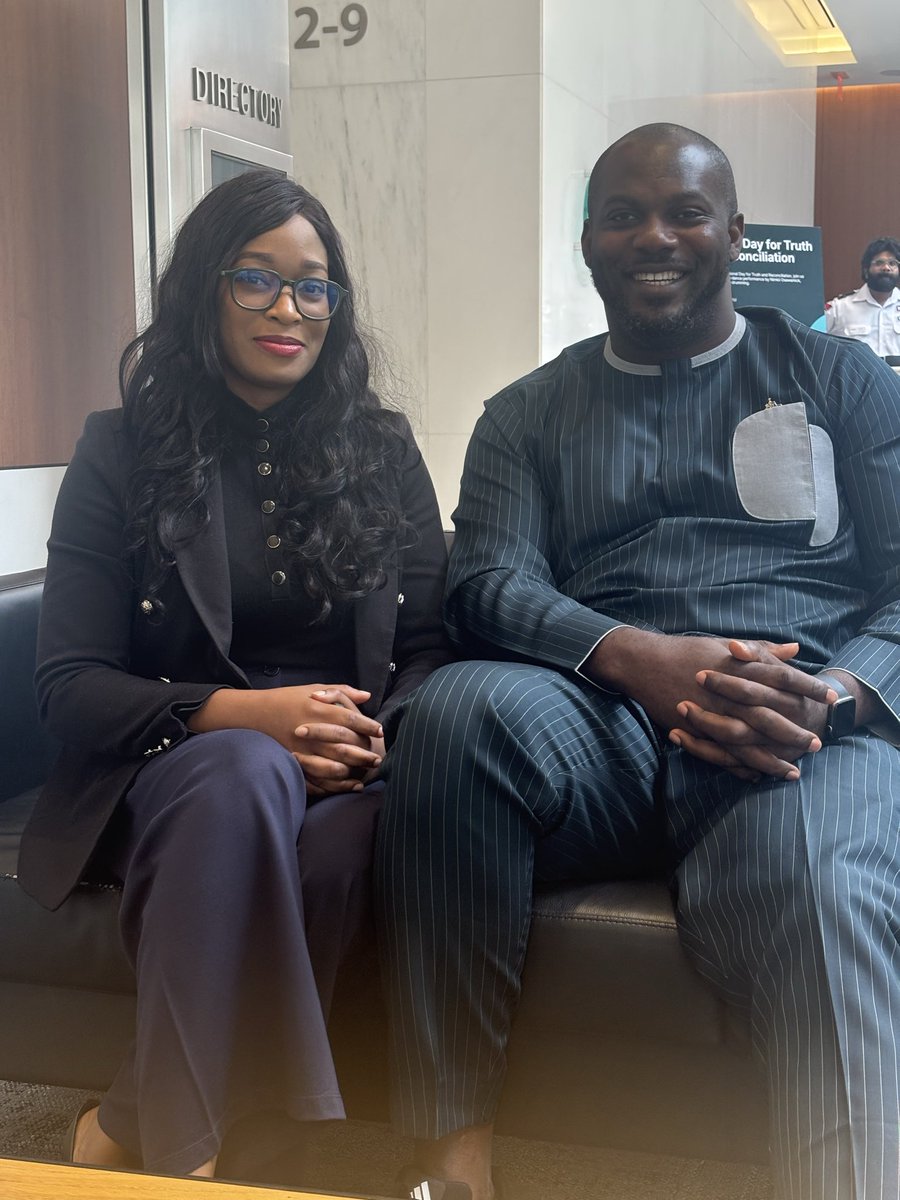
In 2016, Nina tried to facilitate the acquisition of Educare by GTBank for ₦600 million (about $2 million at the time). I declined the offer because I believed strongly in the potential of Educare.
She went on to introduce us to several schools, many of which became customers in our early days.
Since then, she has moved on to hold several senior positions at some of Nigeria’s top banks. Today, she is a Global Product Manager at Citi in Toronto, Canada, covering over 90 countries.
We have so many exceptional Nigerians like Nina leading major global institutions around the world.
Our problem has never been a lack of talent. We have the talent.
What we lack is the quality of leadership and the enabling environment needed to retain exceptional people, give them opportunities to thrive, and build world-class institutions here at home.
VIDEO📹; His Excellency Peter Obi And Sen. Rabiu Musa Kwankwaso In Sokoto 🇳🇬🔥
The Love Is Pure, The Energy Is Massive, And The Welcome Is Unforgettable! ❤️🙌
Sokoto Is OK! 🇳🇬
Nigeria Will Be OK! ✅🔥
Where Is Nigeria’s President?
The dynamic President of Ghana, John Dramani Mahama, delivered a remarkable address at the 81st United Nations General Assembly. The international community has commended his leadership and the substance of his address. It is a reminder of what leadership can produce when competence, capacity, compassion, commitment and character come together in the service of a nation.
Against this background, many are asking: Where is the President of Africa’s most populous nation, a country of more than 200 million people - more than Ghana - whose leader has been absent from the global stage for three consecutive UNGAs?
Nigeria’s President, who ought to be representing the country and providing leadership for Africa at the international level, has not attended any of these three global gatherings. Where is he, particularly at a time when the country faces significant challenges, both domestically and internationally?
Although our Vice President, Kashim Shettima, was present, the question remains: Where is the President? Let us continue to pray for his return and for his leadership in addressing the many challenges confronting the nation.
A new Nigeria is POssible. -PO
Check out this video, "ghana president at un" https://t.co/p4LsxEPiOq
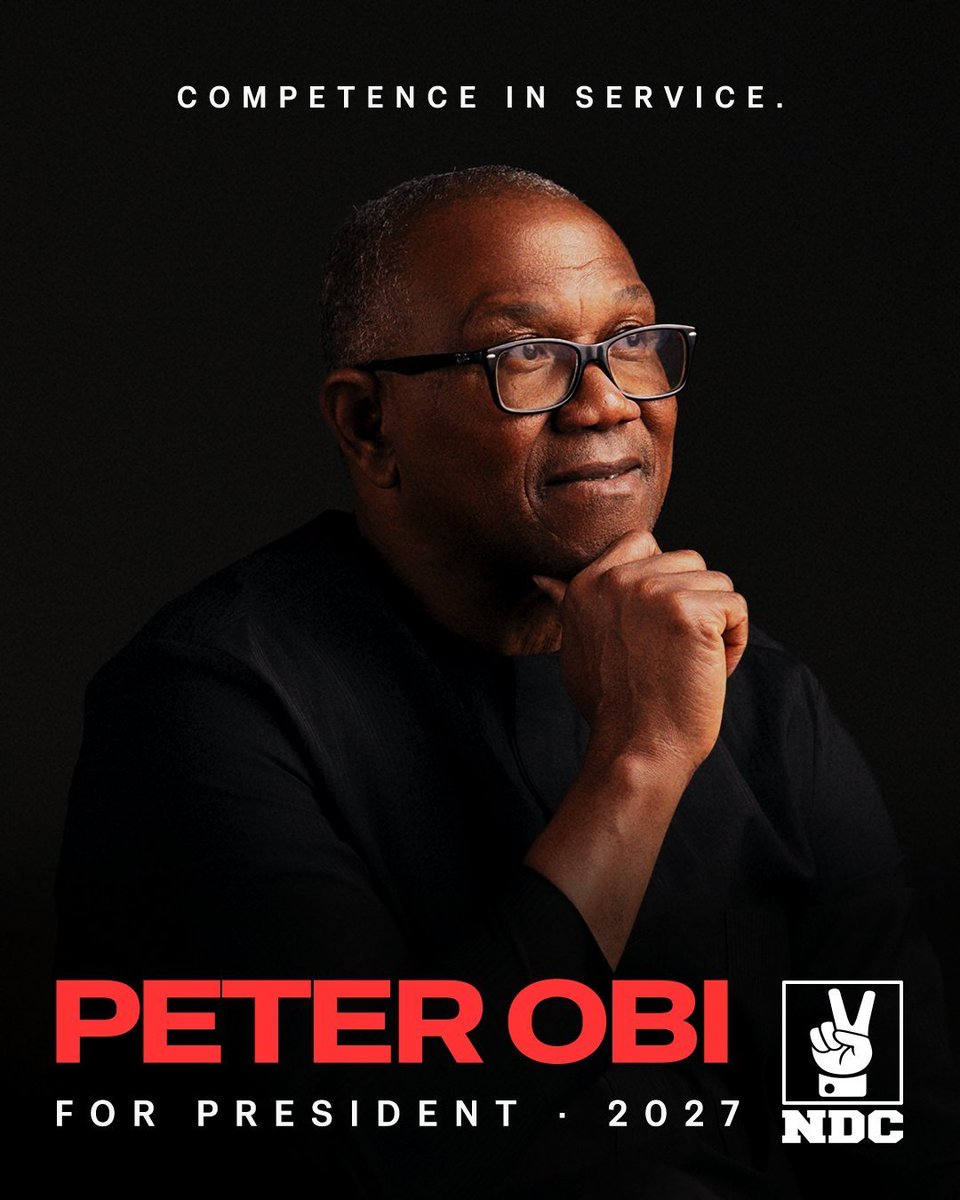
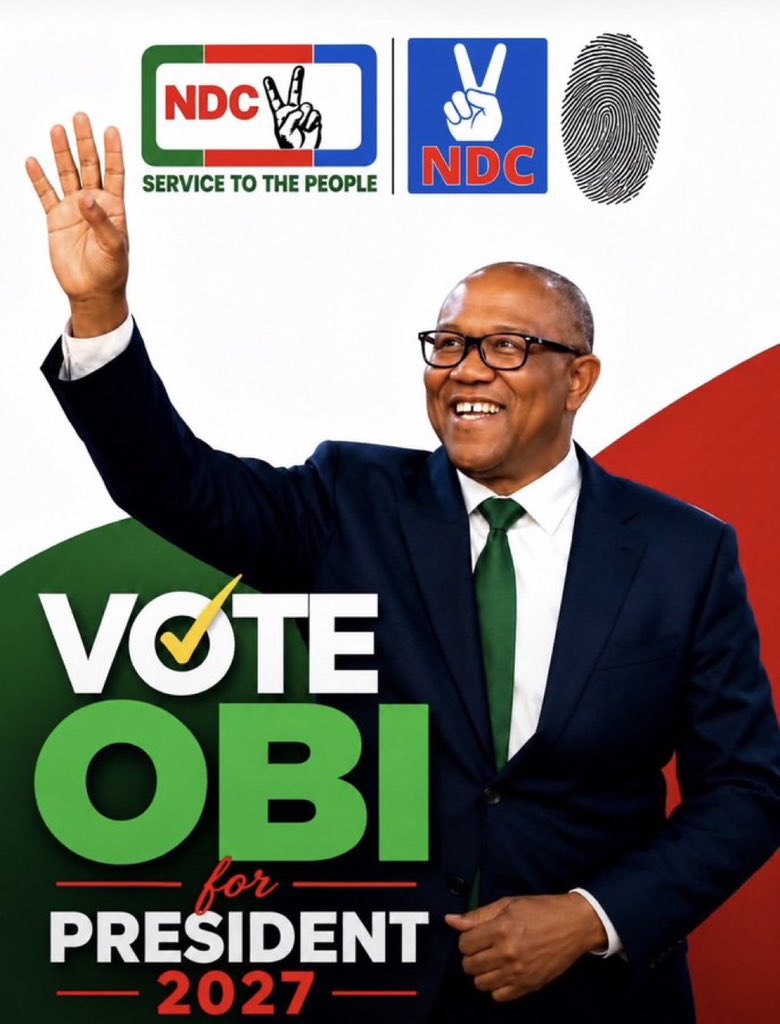
I want to see Peter Obi become Nigeria’s President.
What Soludo is doing today may seem politically convenient, but tomorrow may tell a very different story. History has a way of remembering those who stood on the right side of it.
Power is temporary, but history never forgets.
When we speak about the possibility of a new Nigeria, we must look beyond political slogans and examine the records of those seeking to lead.
Peter Obi demonstrated in Anambra state that the government can be deliberate about education, healthcare and the management of public resources.
Under Peter Obi's administration classroom blocks were constructed across the state’s 177 communities, mission schools were returned to their churches, and Anambra rose to a high position in NECO results between 2011 and 2013. It was also in Peter Obi's administration that a state-owned teaching hospital which is the Chukwuemeka Odumegwu Ojukwu University Teaching Hospital located at Awka was also established.
Alhaji Rabiu Musa Kwankwaso’s record in Kano tells another important story. His administration invested heavily in education too, including thousands of classrooms, free feeding and uniforms for primary pupils, technical and vocational institutions, laboratories and scholarship programmes that supported a lot of young people in Kano state.
Both men have experience translating public policy into programmes that affect the lives of Nigerians in positive ways.
Peter Obi and Alhaji Rabiu Kwankwaso have chosen to work together because they found substantial common ground in their vision and mission for the good of Nigeria.
I believe Nigeria needs leadership that understands production, human capital, fiscal responsibility, education and opportunity.
If we are serious about moving Nigeria from poverty to prosperity, we should pay close attention to the possibilities created when experience, competence and a shared national vision come together.
The task before us is to build a Nigeria where the government works for the people and where every young Nigerian has a genuine opportunity to achieve greatness.
Peter Obi and Rabiu Kwankwaso are the ones best suited to lead the way forward.
“It is not the duty of Governor Soludo or other governors to tell people who to vote for. They only have one vote. Elections are not rocket science; they can be conducted freely and fairly.
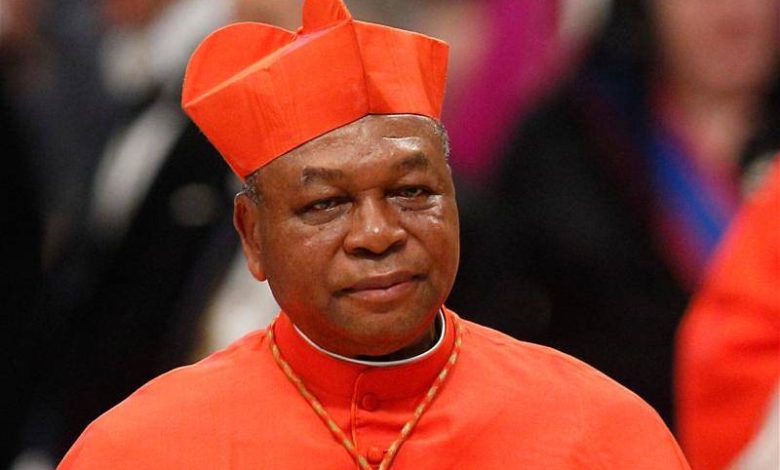
As far as I’m concerned, the elections we have had so far in Nigeria have not been serious. INEC Chairman, Joash Amupitan, came and said he would surprise us. When we bishops visited President Tinubu, we reminded him that the political space was shaking and that free and fair elections were being threatened.”
— Catholic Bishop, John Onaiyekan, speaking yesterday in Enugu.
Rev. Father Ebube Mmuonso has sent a strong message to those attacking Peter Obi in the South East. His message is clear: political differences should never become an excuse for intimidation, division, or attacks. The people deserve the freedom to support the leader they believe in. Obi has a right as a Nigerian.
Anambra Debt: I Stand by My Statement, Peter Obi Left $155m in Three Banks — Otti
In a piece I wrote over six years ago titled "Prudence Over Profligacy," I demonstrated, using the balance Peter Obi left in Anambra, that it is still possible to be prudent in government. As CEO of the bank at that time, I advised Peter Obi to leave the money in dollars, not naira. The Soludo administration’s allegations do not invalidate what I wrote nor the credit he left behind. If otherwise, the Anambra State Government should publish the debts.
Alex Otti, Governor of Abia State
I have said this before, and I believe it is important to remind Nigerians of my position as we approach 2027.
Peter Obi has my support for the presidency.
But my position is clear, I am not supporting the idea of Peter Obi becoming somebody else’s Vice President.
The day Peter Obi accepts a Vice Presidential position, I will walk away from his corner. I have said this plainly, and I stand by it.
My concern is not about personalities. It is about the kind of leadership Nigeria needs and the direction in which we want our country to go.
I have also argued that we should begin to rethink the age of those seeking executive office. The Nigerian presidency should not become a retirement home for politicians.
I believe there should be a serious national conversation about limiting presidential and gubernatorial candidates to those aged 70 or below.
Nigeria needs leadership that is focused on the future, not simply another cycle of political succession.
These are principles I have stated publicly, and Nigerians should judge them for themselves.
On the day I left office, I left more than US$150 million as the dollar component of my investment in Anambra State as governor. I hereby provide documents that can be verified with the various banks. Had it remained untouched, this investment was expected to provide Anambra State with approximately US$10 million in annual income.
Even if their assertion were accurate—which it is not—that Anambra owed US$123 million, the government could have used the US$10 million generated annually from my savings to reduce the debt. It has now been 13 years since I left office, which would amount to US$130 million. The debt should have been fully settled by now.
Had they retained the funds I left in the bank, including the compound interest on the principal and the additional income, the total would be approximately US$335 million today. If they had chosen to repay the US$92.35 million funding, the entire amount would have been covered, leaving approximately US$242 million to be reinvested. That sum would have generated about US$20 million annually for Anambra State.
Let me reiterate that, when I left office, I left Anambra State in a strong financial position—the strongest of any state in Nigeria—and I stand by that position.
Through this clarification, I wish to state categorically that I will neither engage nor trade words with anyone regarding my tenure in Anambra State. My focus will now be on issues affecting the suffering Nigerian masses, which is the reason for my presidential ambition.
A new Nigeria is POssible. -PO
ON THE ANAMBRA DEBT QUESTION
I have remained silent over the past few days because I have been grieving the loss of my very dear elder brother and friend, Chief Okey Ezeibe. However, the time has come for me to address some of the matters that have occupied public discussion in recent days.
I respectfully urge everyone to concentrate on the existential challenges confronting Nigeria and the hardships endured by its citizens, rather than on the needless distractions that have become widespread in our politics.
I wish to assure the public that I have no disagreement with my dear elder brother, Governor Soludo, or with any governor in Nigeria. I am not seeking the office of governor in any state, and I will not seek that position again, even if the Constitution is amended.
Accordingly, I appeal to governors to support whichever presidential candidate they choose while also permitting and assisting other presidential candidates and contenders for other offices to campaign freely and without interruption in their states. Ultimately, voters should be allowed to determine whom they wish to serve them.
Regarding the multilateral funding inaccurately described as “debt owed by Peter Obi” in Anambra State, I wish to state unequivocally:
As Governor of Anambra State, I did not approach any financial institution to borrow funds or issue a bond on behalf of the state. Indeed, at his farewell ceremony, the then Director-General of the DMO, Abraham Nwankwo, appointed me chairman and declared that, during his 10 years in office, I was the only state governor who had not approached him for a loan facility.
When I left office, the Anambra State Government owed no unpaid salaries, gratuities, or pensions. Neither did it owe any contractor or supplier who had completed work that the government had verified and certified.
Regarding development financing from the World Bank, these are concessionary development-support funds secured by the Federal Government for states selected by it to address specific needs. Repayment is spread over 25 to 30 years.
The Anambra State Government must therefore differentiate among three separate figures: the total amount approved for the multiyear development program; the amount Anambra State actually drew during my tenure; and the funding balance outstanding when I handed over on 17 March 2014.
The government has combined these distinct categories, added them together, and described the resulting US$123.77 million as “loans left by Peter Obi.” That is an incorrect application of public-sector accounting.
The eight facilities identified were primarily World Bank and IFAD development programs negotiated by the Federal Government, with participating states receiving access to the funds through subsidiary arrangements. They were not conventional commercial loans that I personally secured during my tenure.
This does not suggest that Anambra had no repayment responsibilities; rather, each facility must be examined in light of its approval, effectiveness, drawdown, and repayment record.
The clearest contradiction appears in the government’s own figures. It states that the original facilities amounted to approximately US$123.77 million and that US$92.35 million remained outstanding in June 2026. However, the DMO’s published records showed Anambra’s total external debt at approximately US$18 million when I began my tenure in March 2006, about US$30 million in March 2014, when I left office, and approximately US$45.15 million as of 31 December 2014, nine months after my departure.
The Anambra State Government must therefore clarify how a state whose recorded external debt was about US$30 million in March 2014 and US$45.15 million in December 2014 could supposedly have inherited US$123.77 million from Peter Obi, who left office in March of that same year.
Peter Obi came to the Arise TV studio well-prepared. He brought his handover notes & left them with the anchor, Mr. Charles Aniagolu.
He granted Arise the full permission to publish all the documents for the entire world to see.
He backed everything up with verifiable proof, he listed the specific bank names & account numbers where the funds were domiciled.
Then he went ahead & urged Charles Aniagolu & Arise studio to contact both the World Bank office in Abuja & the respective Nigerian banks to verify the contents of the documents.
This level of accountability is unprecedented in a place like Nigeria, where public trust is absent
In contrast, Asiwaju Bola Ahmed Tinubu has yet to account for the loan obligations & allocations he received during his tenure as the governor of Lagos State. He has never granted an interview to give account of his stewardship in Alausa.
He is yet to account for fuel subsidy savings & all the money he has borrowed since 2023.
He remains silent regarding Alpha Beta, the company used by the Lagos State Government for tax collection. Nigerians, the choice is clear.
Vote for trust & accountability, vote for Mr. Peter Obi & take your country back. 👏👏
My number one priority is getting this man to Aso Rock...
I do this everyday and all other distractions doesn't count at all...
The GOAL is Peter Obi...
Sugar ❤️ ❤️
I regret supporting Peter Obi the way I support him after seeing all evidence submitted against him by Soludo
I declare that my support for Peter Obi will increase by %10000000000000 henceforth
NIGERIA MUST BE OK ✅