@chstmorg Career Diversity Workshop: Join us Tuesday, March 5 for the next meeting of the Career Diversity working group. We will be discussing opportunities in the business community with Jeffrey Sturchio (AT&T, Merck & Co., Inc., Rabin Martin). #histSTM
https://t.co/bgt9zXuAP7
Recently @SocHistTech released on its website a newly expanded bibliography for an Anti-Racist History of Technology, compiled by the SHOT's REDI committee in partnership with IHPST @ejonesimhotep and Tola Ajao - Check out this valuable resource here: https://t.co/XjWpdUKtUf
What can a food documentary tell historians of technology? Barkha Kagliwal thinks A LOT, reflecting on gender, colonialism, and national identity in “A Historian of Technology Watches, A King, His Kitchen and Other Stories.” Read it here: https://t.co/DJOZV0B2Jd
Can a museum transcend traditional narratives on technological change? Read about the success of the Catalan Olive Oil Museum in avoiding top-down narratives and missed opportunities to address the complexity of concepts such as quality and subaltern knowledge.
What is "processed" food? "Unearthing Technology in Public Histories of Food" by Xaq Frohlich challenges historians to rethink food technology and innovation, using public histories to highlight invisible labor in food prep and tell object-centered stories that people hunger for.
‼️ No se olviden de subir sus propuestas de paneles y ponencias individuales para la Conferencia de SHOT [@SocHistTech] & @icohtec que tendrá lugar en Viña del Mar en julio. 🇨🇱
Hoy vence el plazo.
Link: https://t.co/Zb1c8bRnfe
What role did historical knowledge play for nineteenth-century hydraulic engineers? Giacomo Bonan's article, "Hydraulic Engineers and Antiquarians," analyses the management of Venetian waters through the porous boundary between scientific and humanistic cultures.
Another Technology & Culture article for you: In “Atomville: Architects, Planners and How to Survive the Bomb,” Arthur Molella and Robert Kargon examine architects and planners’ reactions to the threat to U.S. cities, looking at architect Paul Laszlo’s planned city, “Atomville.”
Happy New Year! There's one week left to submit proposals for the next SHOT/ICOHTEC meeting, get yours in by January 10!
#histsts#histSTM#histtech
https://t.co/PHXxTzrTyT
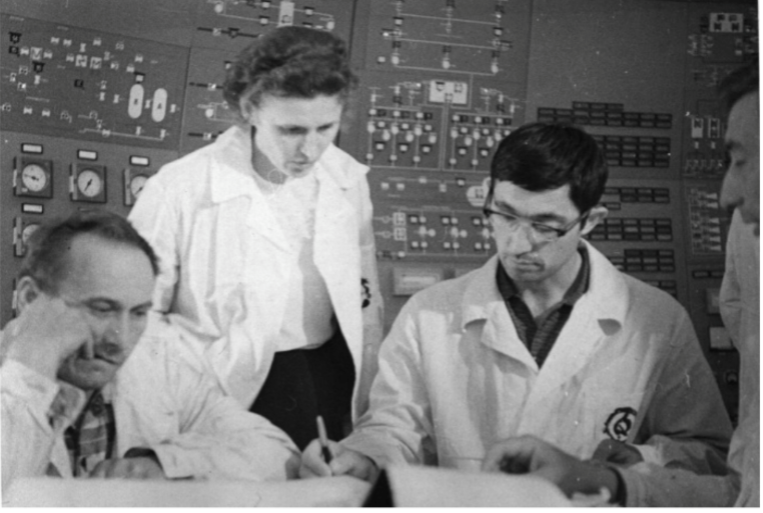
Find out more in "Women, Reactors, and Nuclear Weapons: From Revolutionary Liberation to the "Miss Atom" Pageant in (Post-)Soviet Russia" by Tatiana Kasperski and Paul Josephson in July's issue of Technology and Culture!
Full article here: https://t.co/JcWPG1D8EU
Some Soviet women gained fame as cosmonauts. Others worked on the atomic bomb project. Yet within a few years of the USSR’s collapse, Russia seemingly forgot the contribution women had made to national defense...
...with the nuclear industry introducing a “Miss Atom” beauty pageant in 2003. How did women’s position in the sciences evolve in the course of the Soviet and post-Soviet socialist experiment?
















![joseragas's tweet photo. ‼️ No se olviden de subir sus propuestas de paneles y ponencias individuales para la Conferencia de SHOT [@SocHistTech] & @icohtec que tendrá lugar en Viña del Mar en julio. 🇨🇱
Hoy vence el plazo.
Link: https://t.co/Zb1c8bRnfe https://t.co/EHhAaZbIhr](https://pbs.twimg.com/media/GDgDG82WsAA1JTk.jpg)