My only question to you....did you serve? 1995 to 1990, (Light Infantry) soldiers traveled in LPCs, no vehicles. We carried all of our own gear and the our assigned equipment. As an 11BC2, I carried all basic combat load plus, a dragon tube, day or night sight and a radio (PRC 77) plus spare ammo and batteries.
They said 120 pounds max... but dont let them fool you. 140 to 150 sometimes.
A mortarman probably closer to 140 to 150.
A 60 gunner and assistant gunner the same.
Marching long distances...
Airborne units other stresses.
On and on. Does not take into account the superfund sites we all lived on. Drinking water poisoned and causing cancer.
Loud noises damaging our hearing.
Combat operations, mental health issues on and on.
Give me a break. The number are climbing as combat veterans retire or separate.
Again, did you serve. If not. STFU. You have no clue what you are talking about.
Air Force One and the President of the United States are under constant threat. Protecting the Commander-in-Chief and Vice President must always take priority.
Media travel aboard Air Force One is a privilege, not a right. The press is free to use alternative transportation if they have concerns. There is no obligation to disclose security measures or movements designed to safeguard the President or Vice President—and it is not illegal to refrain from informing the press whether the President is or is not aboard Air Force One with them.National security is non-negotiable.
"Don't listen to those who only work to serve themselves. Their rhetoric clouds the truth with self-serving dialogue that does nothing for those who need help—or for the truth itself."
As someone who's spent over 30 years in public safety—I've seen how these cases unfold from the inside.
Not the flashy TV version, just the quiet, grinding reality of following leads, waiting on labs, and hoping the evidence points the right way before time runs out.
Right now, in the Nancy Guthrie case—day 14 since the 84-year-old went missing from her home in the Tucson area—things moved last night.
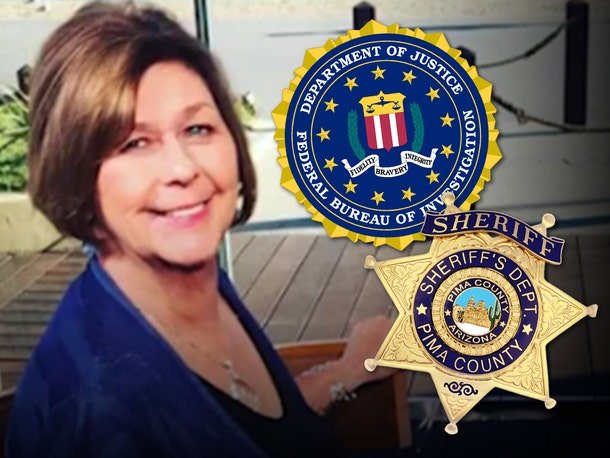
Law enforcement (Pima County Sheriff's folks and FBI) served a search warrant on a house about two miles from where she lived, near East Orange Grove Road and North First Avenue. SWAT was there, forensics teams, a command setup, aerial support. Roads got blocked for a few hours.
They detained a few people—reports say three at the house (maybe a woman and two men, possibly related) and another during a traffic stop nearby in a Culver's lot. No arrests, no charges announced. Nobody's been publicly named a suspect.
They focused hard on a gray or silver Range Rover in that same parking lot. Officers photographed every angle, pulled some items, covered the trunk area, then towed it away for more detailed work.
That's standard when a vehicle might hold trace evidence—DNA, fibers, prints, dirt that could link back to a scene.
On the forensics side, they still have that unknown DNA from her property (doesn't match her or family/close contacts) and several gloves picked up miles away, including a black one.
Labs are running those; results take time. The sheriff's pushing back on any talk of big agency friction, saying they're chasing solid leads.
No press conference unless something big breaks.
Reward's at $100,000. The description from her doorbell cam—male, around 5'9"–5'10", average build, masked, armed, with a black Ozark Trail backpack—keeps getting pushed out, along with calls for old surveillance video.
It's active work: warrants, detentions, vehicle processing, tip sifting (over 13,000 now). But no resolution yet. That's often how it goes in the middle stretch—momentum without headlines.
This kind of intensity reminds me of another case I was part of back in the 90s: the kidnapping of 12-year-old McKay Everett in Conroe, Texas.
Hilton Crawford—a former deputy, family friend they called "Uncle Hilty"—used that trust to get inside the house one evening in September 1995 while the parents were out.
He took the boy, made ransom calls (around $500,000), but it ended tragically. McKay was found murdered days later. Crawford's associate got convicted on kidnapping charges; Crawford himself went to death row and was executed in 2003.
What stuck with me wasn't the drama—it was how fast things came together once the right pieces clicked: a neighbor spotting the car, trace evidence in the trunk (blood, hair, swamp mud), phone records, the accomplice talking.
We didn't speculate; we just kept grinding the evidence until it narrowed the field.
In Guthrie's situation, it looks different—no obvious insider angle from what's public, more like a stranger entry caught on camera.
But the principle's the same: evidence over assumption. Detaining people doesn't mean guilt; it means checking boxes to rule folks in or out.
A towed vehicle doesn't prove anything yet; it means there's a reason to look closer. Jumping ahead—whether online or in conversations—can steer tips wrong, pressure innocents, or complicate things down the line if it ever hits court.
Most folks reading this won't have sat in those briefing rooms or walked those scenes, and that's fine. What matters is understanding it's methodical, not instant.
The teams out there are doing the slow, careful work because an elderly woman who needs daily meds is still missing. If you've got something real—video, a sighting, anything odd from late January—pass it to the tip line.
Otherwise, the best support is letting them follow where the facts lead without adding noise.
Hoping for good news soon. These cases stay with you long after they're closed.