The USDA has kept raccoon rabies out of the central United States for over 30 years by air-dropping fish-flavored ravioli from helicopters.
Each one is a small packet coated in fishmeal with an oral rabies vaccine inside. Raccoons, foxes, coyotes, and skunks find them by smell, bite through, and swallow.
Many animals that consume the bait develop immunity, helping build a protective barrier across populations.
The bait is generally considered safe for pets and tested in many non-target species.
The USDA's Wildlife Services has been running this since 1995. Without the bait program, raccoon rabies very likely would have spread much further west.
A federal program you've probably never heard of is protecting your pets and your kids by feeding wild animals ravioli from a helicopter.
🎉Today we are excited to share our new preprint describing the Global Leafhopper Microbiome Catalog (GLMC), the largest genome-resolved microbiome resource developed for leafhoppers to date. A massive task led by @TPellegrinetti 💪
Using metagenomics across 171 leafhopper species from 13 countries, we reconstructed 337 high-quality microbial genomes and revealed how these important insect vectors maintain complex microbiomes composed of ancient obligate symbionts and dynamic environmentally acquired bacteria.
The study includes original data allowing us to present the first microbiomes characterized from Arctic leafhoppers, opening new perspectives on insect adaptation to extreme environments and climate change. We also report microbiomes from economically important vector species such as the cotton leafhopper (Amrasca biguttula biguttula) and the corn leafhopper (Dalbulus maidis), providing valuable resources for future studies on pathogen transmission, insect ecology, and sustainable pest management.
A huge thank you to all collaborators, students, technicians, field teams, and international partners who contributed samples, analyses, ideas, and support to make this possible. This project truly reflects the power of collaborative science across disciplines and continents.
Preprint available here:
https://t.co/8BMFPYnKm7
Excited to see the structurally conserved nucleoside hydrolase like fold that we found to be conserved among biotrophs now being experimentally validated to target EDS1 !! @Edel_PLopez
https://t.co/gyo2bGr8Ep
Excellent work by @Mushara15129611 👏
Thank you sincerely for this honour 👏
I am deeply grateful and moved because this award comes from my home, l' @universitelaval , but this award is not only about me. It is first and foremost about my team, everyone who has been part of the lab, past and present: more than 80 undergraduate, graduate, and PhD students, postdoctoral fellows, research professionals, and visiting scholars who have helped build what we are today.
Thank you to my department, my faculty, and to all those who have supported this journey, from Cuba to Mexico, from the United States to Canada, and to my collaborators around the world.
Thank you to the funding agencies that have believed in our ideas and our passion, and to the agricultural community in Québec and across Canada, with whom we work every day.
In the end, the EdeLab serves one purpose: contributing to a better society and a more sustainable environment.
Thank you 💚
@NSERC_CRSNG , @canolacouncil, @CanolaGrowers, @AlbertaCanola, @SaskOilseeds, @westerngrains, @RqradQc, @CIFAR_News, @Genomequebec, @InnovationCA, @ulcriv
News: https://t.co/D56ha2CZff
Claude Code leaked their source map, effectively giving you a look into the codebase.
I immediately went for the one thing that mattered: spinner verbs
There are 187
New work out in Nature now shows all of the nucleobases of our DNA And RNA being found in asteroid Ryugu as well!
While nucleobases aren't the same thing as nucleosides or nucleotides and this finding in no way suggests that DNA or RNA molecules exist beyond Earth, it's still incredible to keep finding more of the basic building blocks of life as we know it well beyond our home.
https://t.co/D7hX8jaq0g
🚨 New from the lab!
In this preprint, we show how the clubroot pathogen Plasmodiophora brassicae uses a PBS3-like effector (PbGH3) to hijack plant hormone signalling and reshape root development during infection 👏
We found that PbGH3 acts as a structural and functional mimic of the immune enzyme AtPBS3 (GH3.12), evidence of the evolutionary relationship between the clubroot pathogen and Brassicas 🥦
This study is now under review 🤞
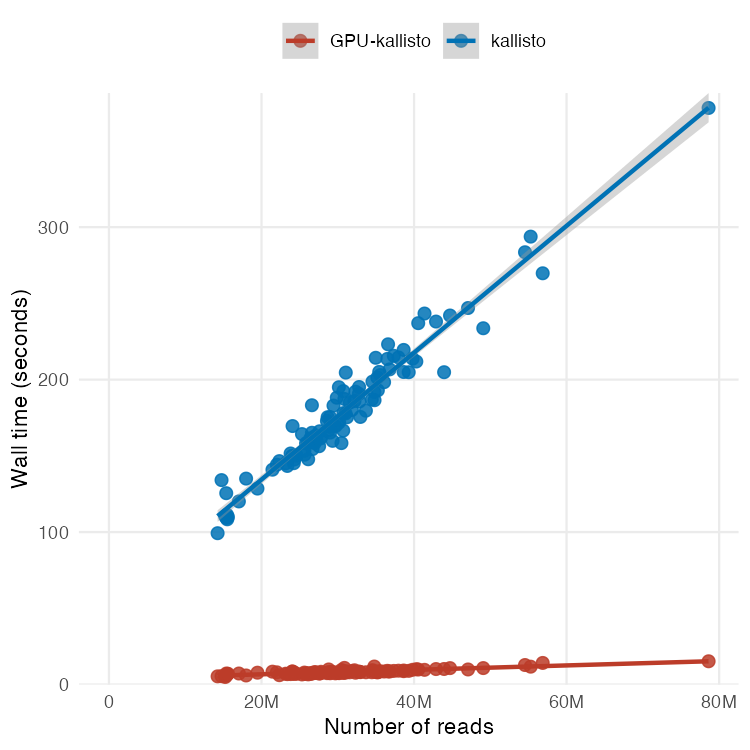
Excited to share this preprint that describes my latest work on using GPUs to accelerate processing of RNA-seq data.
The title says it all: "RNA-seq analysis in seconds using GPUs" now on biorxiv https://t.co/2JrOfsxNFV
Figure 1 shows they key result
@ancornman1 That's fast! 👍 Can it take two FASTA files as input and screen one against the other, or is it all-vs-all for now? Secondly, what is the minimum GPU power it needs - A100 level or a local RTX 4000 series? Thanks!
Predicting protein-protein interactions (PPIs) at proteome scale can take months with co-folding models due to massive all-vs-all comparisons required.
We are excited to announce FlashPPI, a contrastive model that predicts proteome wide physical interfaces in minutes. 1/🧵
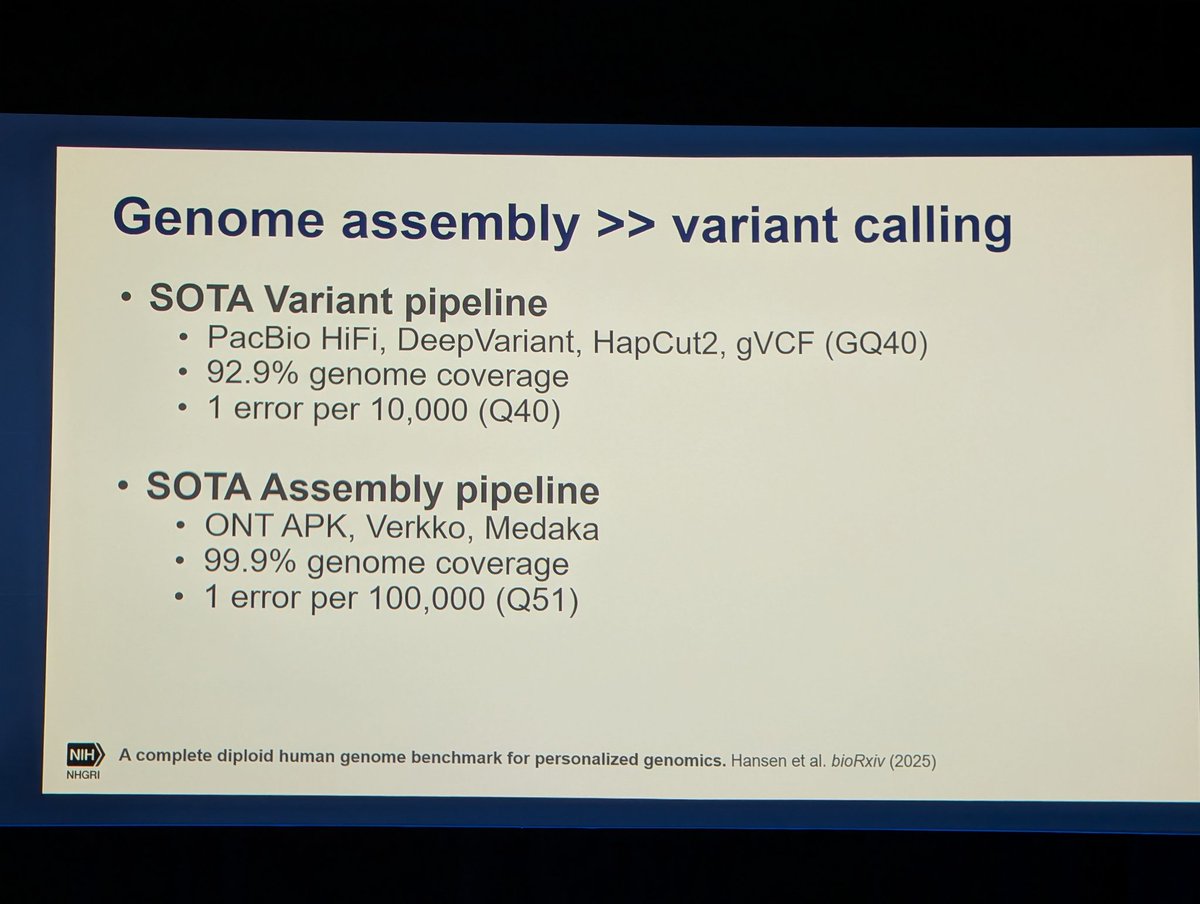
The future is complete genomes. Is it now time to move from variant calling to directly use genome assemblies? Assemblies 10x more accurate than SOTA var calling. Impressive! Advances in pangenomes / assembly pipeline opening a new way of working in genomics. #AGBTGM26
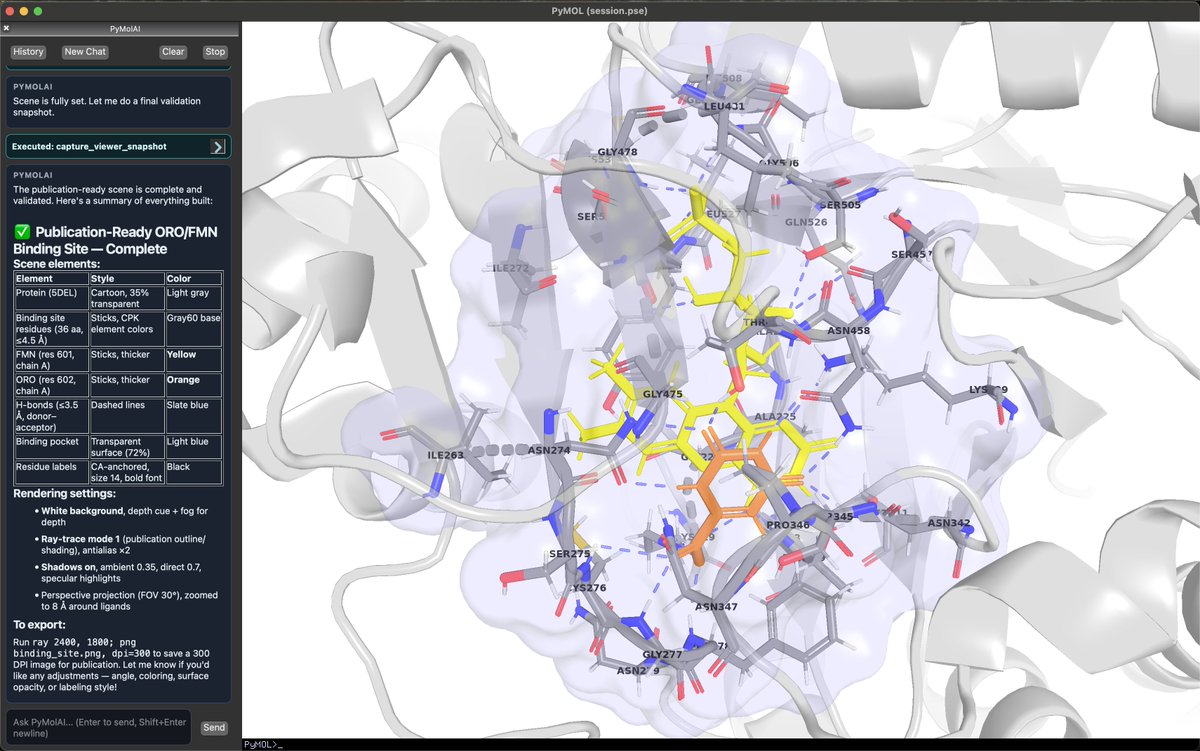
I tested models from @AnthropicAI@OpenAI@Google@Zai_org@MiniMax_AI and @Kimi_Moonshot on whether they can create a publication-level view of a protein-ligand binding site and the results were surprising.
TL;DR: Anthropic models did the best and Gemini models did the worst.
Task was simple:
"Load 5DEL and create a publication ready view of the ORO and FMN binding site"
Here are the results:
1. Sonnet 4.6 from @AnthropicAI:
- Fast
- Used the tools pretty well
- Created the best view with clear labelling and color choices
- always felt in control of what it was going for
- very impressed
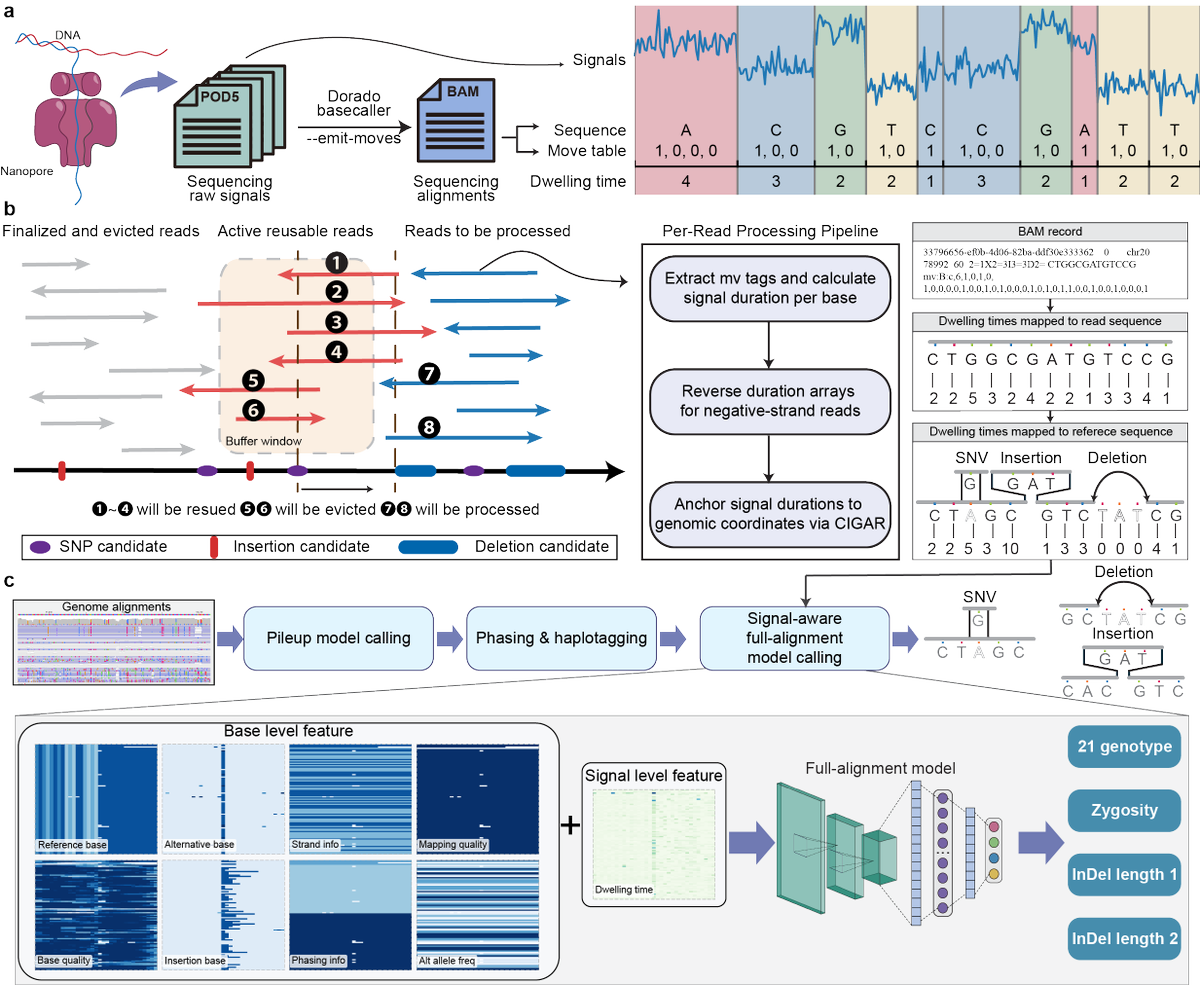
Introducing Clair3 v2 - signal-aware variant calling for ONT long reads. It uses move table dwelling times to dramatically boost indel detection performance. Also now fully migrated to using PyTorch for better usability. (1/)
🔗https://t.co/QoZCysLuOy
📄https://t.co/b20LhagyAt