Big movement on my portflio. New PFP. New Member of
@TheSixNineO 🫡
I will always trust solana builders, that's why I choose this team.
I have made a list of reasons why I spent +50k $ on a JPEG 🤓
Thread (1/2) 🧵
For all of you starting to farm $POLY now, don't believe all you see there.
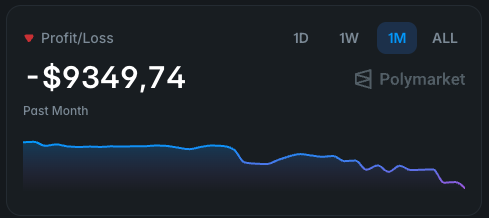
It's much easier to lose money than what people say. 🙃
I'l be giving back all the fees earned by me if you use my referral link. Comment or DM me if you are interested. 📥
Dubai real estate down 20%. 📉
Saturated market
Crowded trade
Less room for upside
Oversupply risk
That’s exactly why I prefer looking at Lombok right now.🌴
Earlier market, lower entry, growing tourism, and 13–17% projected ROI.
Reply “Lombok” and I’ll send more info. 📩
🚨NEW: Polymarkets Adds Sponsored Rewards to Liquidity Rewards Section.
If you want to start with $POLY farming it's the best time to learn & focush on being a market maker in @Polymarket
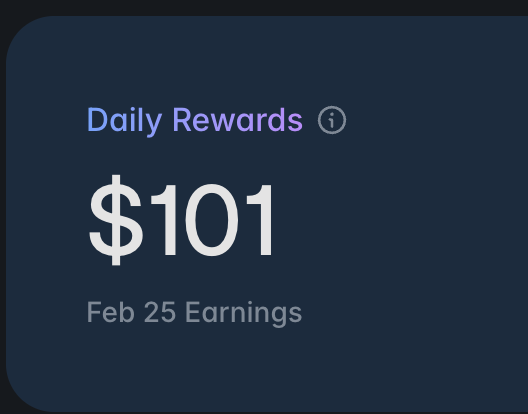
How many rewards did you earn today? 💸
One of the most important Rules for Liquidty Reward in @Polymarket ✍️
Most Polymarket markets are binary: Will X happen before date Y?
Example: “Will the US strike Iran before Feb 25?”
Two sides:
✅YES — Strike happens
❌NO — Strike does not happen
(Assume YES is trading at 20c and NO at 80c.)
Instead of buying at market, you place limit bids.
This is where the asymmetry appears.
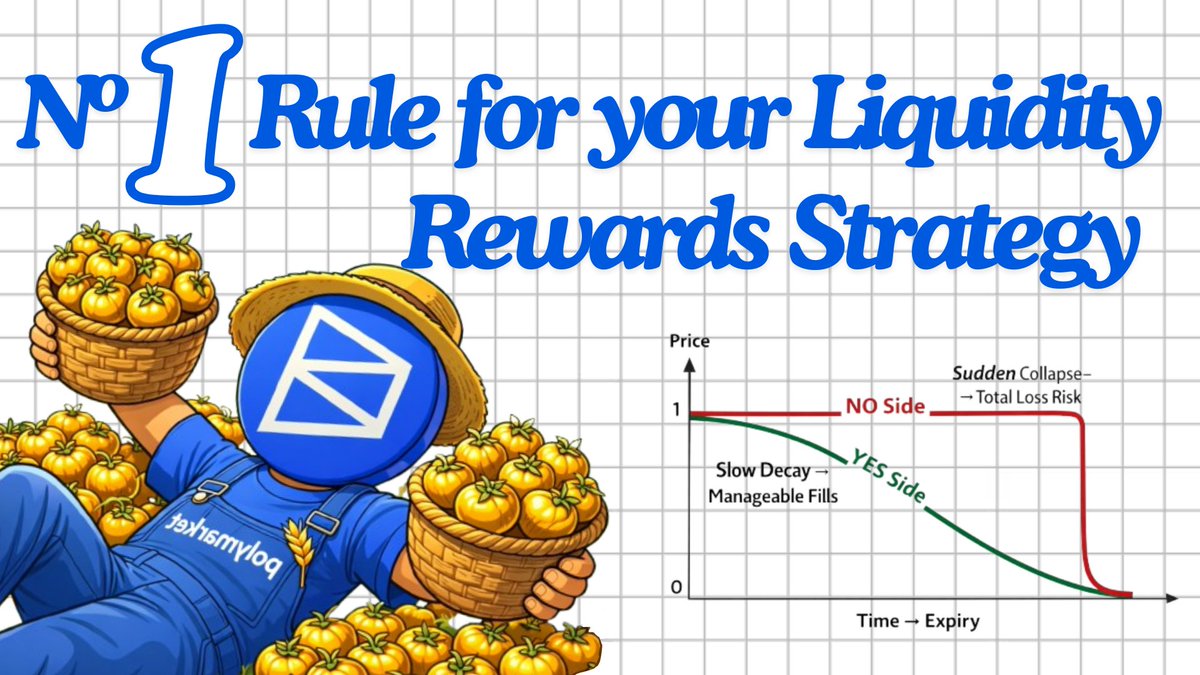
Theory: Time decay in event markets. Event markets have a natural time-based decay. If a specific event has not happened yet, its probability tends to decrease as the deadline approaches.
So in many markets:
YES prices often drift downward over time
This drift is usually gradual and predictable. The side betting on the event is the one that tends toward 0. This creates a very specific dynamic for liquidity providers using bids.
Case 1 — Bidding on YES (the event side)
Suppose YES is at 20c and you place bids at 17c.
Two things can happen:
SCENARIO A — Nothing happens
Time passes, no bombing occurs.
YES slowly declines:
20c → 19c → 18c → 17c
Your bids may get filled.
Now you hold YES shares around 17c.
Because the movement is typically smooth and time-driven, you can often sell around your entry price or slightly below. Losses are usually small and controllable.
You also collect liquidity rewards while your bids sit in the book.
SCENARIO B — The event happens
The US bombs Iran.
YES jumps instantly:
20c → 90c - 99c
Your 15c bids never get touched. You receive no fills.
The market moves without you.
Result:
No profit, but no loss.
Being wrong means no execution, NOT CAPITAL DESTRUCTION.
When bidding on the event side, the market moving against your assumption often means:
Price goes up → your bids stay unfilled → capital stays safe
This is a structural protection that comes from using limit orders on the side trending to 0. Losses occur mainly through slow decay fills, not sudden shocks.
Case 2 — Bidding on NO (the non-event side)
Now assume NO trades at 80c, and you place bids at 77c.
Most of the time:
NO stays stable or slowly rises. Your bids get filled. This feels safe. But the risk structure is different.
SCENARIO A — Nothing happens
NO stays high:
80c → 85c → 90c
You might get filled or not and possible to profit slightly.
Everything works normally.
SCENARIO B — The event happens
The US bombs Iran.
NO shares collapses instantly:
80c → 5c - 0c
Your filled bids become nearly worthless.
Loss:
Close to 100%.
The key difference is what happens when you're wrong.
✅Bidding YES
Wrong scenario: Price goes up. Orders don't fill
No loss
Losses only happen through gradual fills during decay.
❌Bidding NO
Wrong scenario: Price collapses. Orders fill before or during collapse
Full loss possible
Always prefer the side where being wrong means not getting filled. In most Polymarket markets, that side is:
The event-happens side — the side that trends toward 0.
Why this works especially well for liquidity rewards. Liquidity rewards pay you for resting bids, not just filled trades. So the ideal situation is when your bids sit in the book & you earn rewards. And if price moves away = No fills = No losses
This outcome happens naturally when bidding the event side.
This is not an edge from prediction.
It's an edge from RISK MANAGEMENT: Market structure + time decay + limit order behavior.
What i want you to know with this post is if that if you are doing liquidity rewards you should focush on that. You are not trying to get profits by buyinf cheaper and selling 1c over. All you need to have in your mind is to exposse your bank to almos 0 risk. Long term is the only way of being profitable in LPing Polymarket.
You dont know when is $POLY dropping and probably is not soon. You need to save your balance the longer as possible. This is a long distance run, dont try to sprint your rewards in 1 week risking all your portfolio.