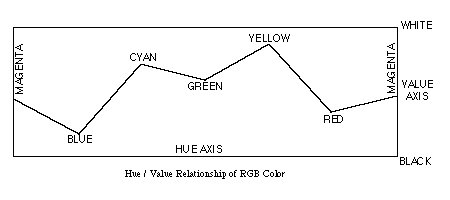
This is why a lot of artists suggest blueshifting your colours as your get darker, and yellowshifting as you get brighter.
These are the darkest and brightest hues, and will show up more at each end of the brightness scale
Each colour saturates to a different brightness.
This means you can use brighter colours to hide the hue's that are beneath them in value
For example the brightest part of a candle is yellow and as it darkens it progressively slides into the valley of orange and redder hues
@Vivianfag1488 Exactly why it works. these extra steps help you think of a vanishing point when it's off screen or not possible to put it on the page.
Thinking of rotating the same line you've already drawn is a lot easier than drawing a different line out from a faraway point each time
without relying on intuition alone.
The most important part of letting skills build on top of eachother overtime is knowing the “why” things work, not just that they work 2/2
Always put your mistakes into words, drawing is very easy to leave in the land of “somethings off but I can’t tell what”
Its the same for things that went unexpectedly good, try to find out *why* it worked and how to reproduce it reliably so you can use it in the future - 1/2
If you’re struggling to get into that loop, do this:
- Identify the real reason in one sentence
- Pinpoint the exact moment it shows up
- Pick one tiny action to remedy it
- Do it for 7 days
- Keep it or change it
Example: Studies feel pointless → Share each one to help others
A super overlooked part of learning to draw is naming techniques you come up with as you find them.
You'll remember and understand something 10 times more when you can give it name