Most homes doing this work aren't under-resourced.
They're under-connected — and the instinct is to fix it by buying one more well-chosen thing.
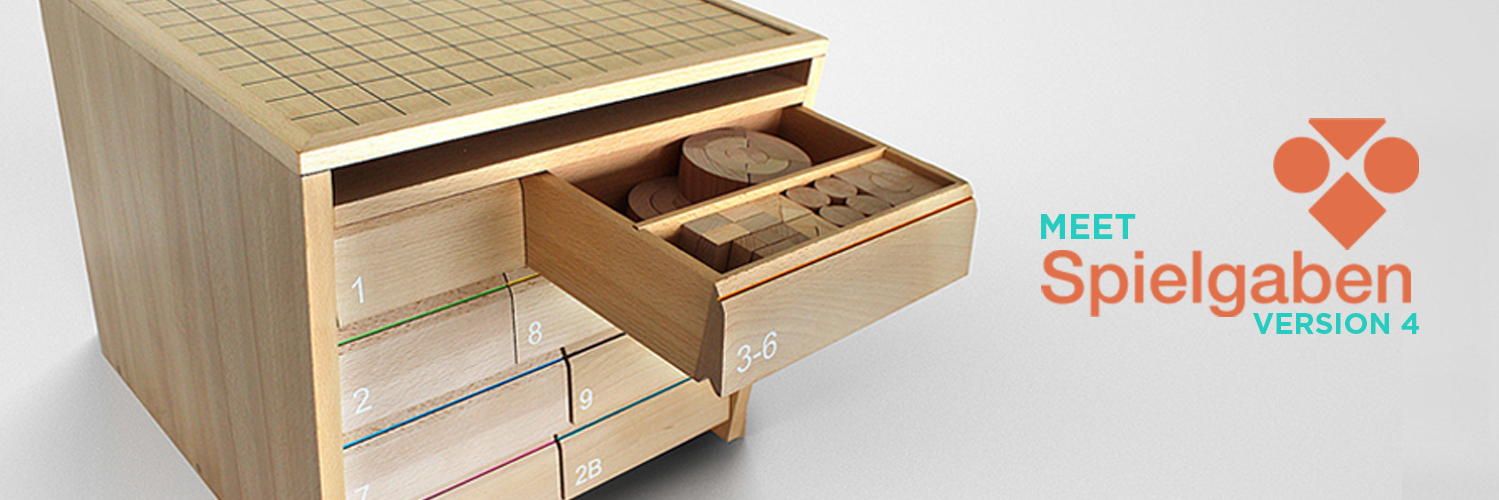
Fröbel's Unity runs the other way: the whole is what makes the parts legible.
Full framework Here.
https://t.co/LsccKiZ9v2
You say one helpful thing — "see how the bottom's a bit narrow?" — and your child stops reading the blocks and starts reading you.
The tower is still telling the truth. She's just not listening to it anymore.
This week's full age-by-age guide.
https://t.co/KC7d37YCqx
Your child ignores the beautiful tray for a reason, and it isn't beauty — and it isn't screens.
It's that nothing in it answers her back when she acts on it. The Montessori fix (and a one-minute test for your own shelves).
https://t.co/qVtnMS8lTf
Most parents build their homeschool piece by piece, trusting the parts to add up to a whole.
Fröbel's concept of Unity runs the exact opposite way — the whole has to come first.
This week's framework for reordering how you plan the week https://t.co/YjbV9vbBXm
Most parents think the collapse is the activity failing. With Fröbel's blocks, the collapse is the activity working — the tower is telling your child the truth, so you don't have to. This week's full age-by-age guide Here.
https://t.co/XrAwv8x4Fw
Most parents think their kid is addicted to the tablet. She's not. She's addicted to being answered — and the tablet is the only thing in her day that reliably does it. The Fröbel concept that explains why https://t.co/rklt9yEqMf
You probably judge a good learning week by how many new things your child did.
Try counting the opposite: how many times they went back to one.
That number — returns, not firsts — is the one that predicts whether anything took root:
https://t.co/fNaVUbLjaJ
You can't make a child repeat something.
Try, and you'll get compliance — never a loop.
There's a two-part recipe that invites one instead.
And the day they walk away from a loop they loved?
That's the part almost everyone reads wrong:
https://t.co/aPEmHZJxzy
Your child begs to read the same book for the ninth time tonight.
Meanwhile the screen never shows them the same thing twice.
We keep trying to stop the wrong loop.
Why "again" is the most important word your child says:
https://t.co/6VVnwL6nDU
The urge to help your child is almost always the exact signal that you should stop.
The moment your hand twitches toward blocks is usually the moment they were about to do the work themselves. We've just been taught our whole lives to read it backwards.
https://t.co/SyD3vTZDaP
For years I owned the right toys and ruined them anyway — one helpful sentence at a time.
My daughter would look up, lost, and I'd rescue her with an idea. She'd build it dutifully, then drift off.
Today: the exact words to use instead. Ages 3–12.
https://t.co/VqOiu91TlM
The $47 toy lasted twenty minutes.
The cardboard box it came in has been a boat, a fort, and a shop for three days running.
That's not luck. It's the one quality that makes any material worth keeping — and it's the opposite of what the toy aisle sells.
https://t.co/JyuYxns6TB
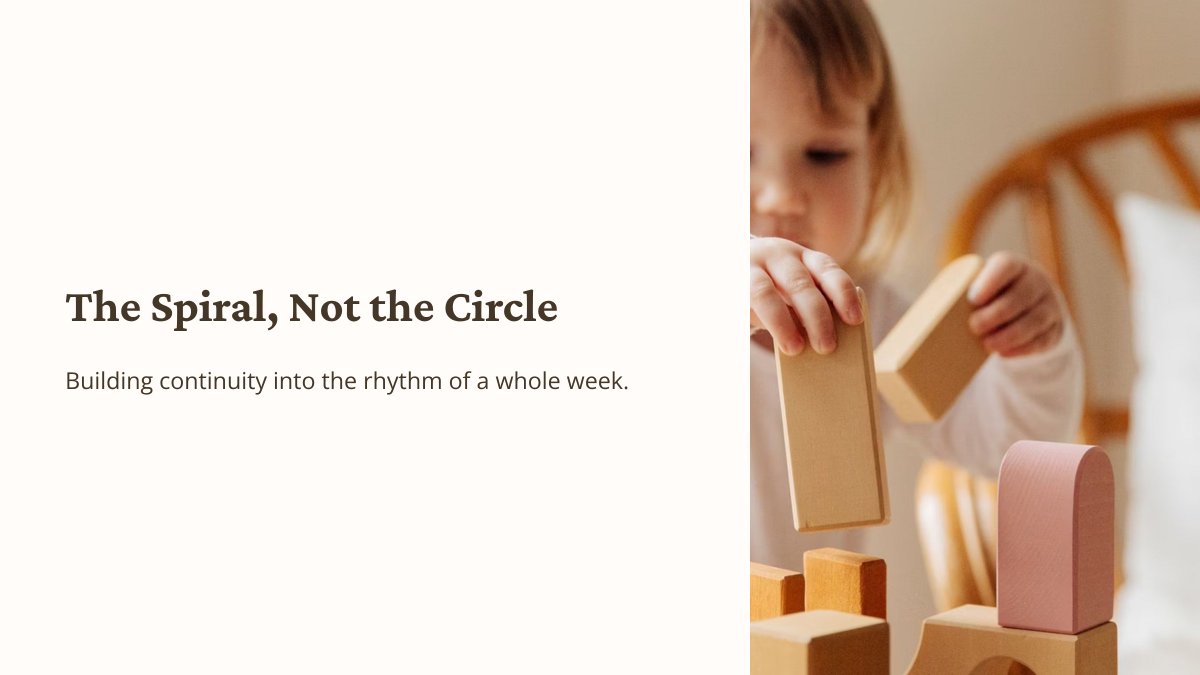
Most homeschool routines run on a circle:
Same slot. Same effort. Back to zero each morning
Fröbel wanted something else — a spiral. Same position in the week but one level up. Tomorrow begins where today left off
The difference isn't your timetable
→ https://t.co/itGcgTiPqT
You'll know it's working by the morning after.
Your child walks past the half-built thing you left out overnight. Slows down. And without a word, crouches to add one more piece.
No prompt. No reminder. Just the pull of the unfinished.
→ https://t.co/pbs55uK1zo
It's the end of the day. Your child's half-built fort is still in the middle of the floor. It's been in the way for hours.
So you start to tidy it.
And you feel it — that small hesitation: they were really into this.
Listen to it. It's protecting something
https://t.co/l0olY1sCdx
Your child gets stuck on a worksheet.
You know the answer. It takes three seconds to say.
So you say it.
Here's what just happened: you filled in a symbol with nothing underneath it.
Fröbel had a name for what was missing. So do we now. https://t.co/oL9JtmxftF
Give a child 24 identical objects.
Ask them to find every rectangle they can make. No gaps. No leftovers.
Don't mention multiplication. Don't mention factors. Don't mention anything.
Then watch what their hands figure out on their own. https://t.co/5UXyO0qNEW
A child recites "16 ÷ 4 = 4" every time.
Then you hand them 16 blocks and 4 containers. One block per container.
Around and around.
The answer was memorised. The understanding wasn't there.
Fröbel called this the central problem of education. In 1826.
https://t.co/KqFD6QYLrW
A child arranging tiles says: "It looks like a window."
In one sentence they've moved through all three of Fröbel's Forms:
Beauty — the symmetry felt right. Knowledge — the geometry was real. Life — it connected to the world they know.
https://t.co/WL1CrxbL9D
Ask a 9-year-old to describe how they made their pattern symmetrical.
They'll say: "I did the same thing on both sides." "I flipped this part."
That's reflection, reflection, and translation.
They named the geometry before anyone taught it to them.
→ https://t.co/hJIgAV9mcN