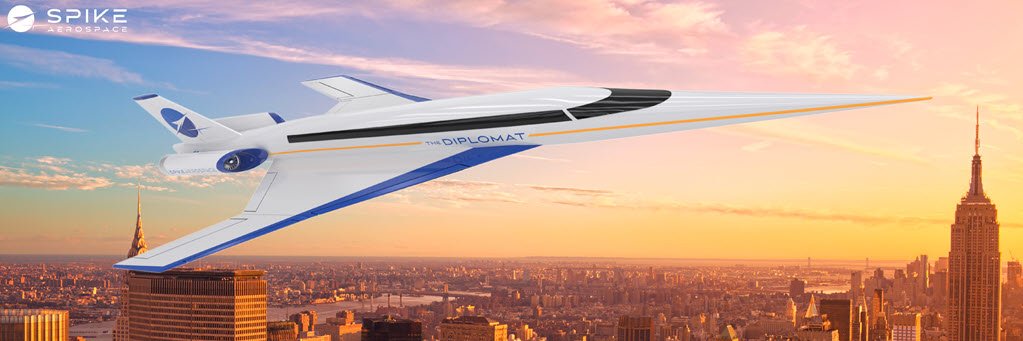
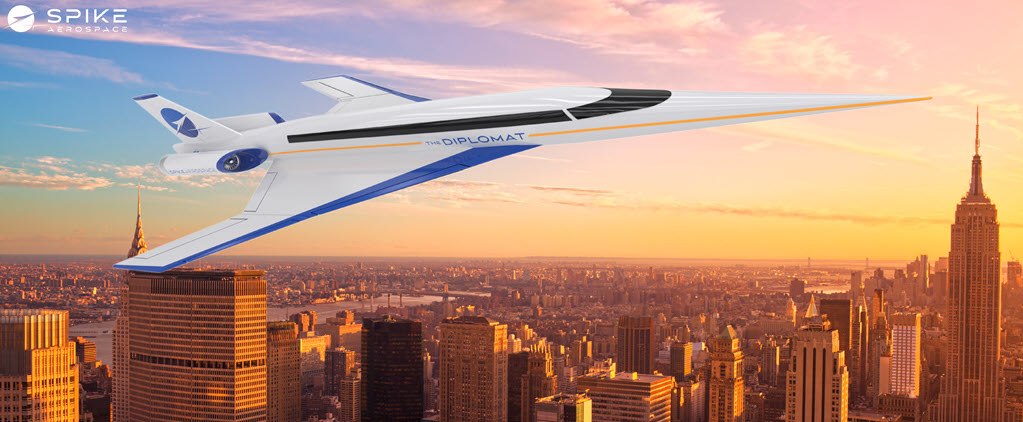
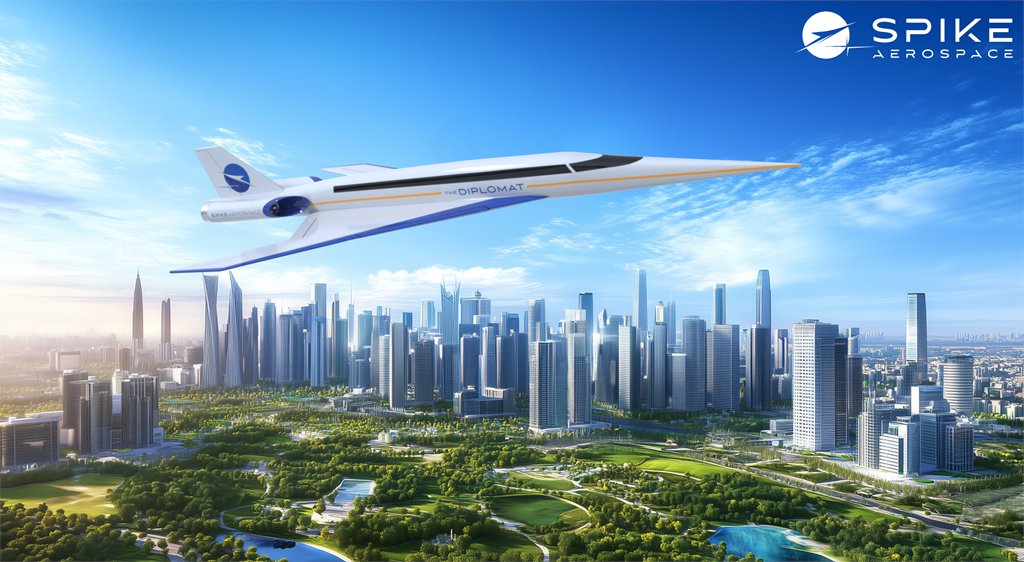
The future of supersonic flight depends on far more than aircraft alone.
Propulsion, materials, software, manufacturing, certification, infrastructure, and investment capital will all shape the next era of high-speed aviation.
Our latest AeroSigma analysis explores:
Boom, Spike & Destinus
Public vs private investment exposure
The enabling technology ecosystem
Global competition
Risk vs liquidity
The realities shaping commercial supersonic flight
“Building a supersonic aircraft is difficult. Building a profitable supersonic business may be even harder.”
Read:
https://t.co/l8gvgjY3IT
#Supersonic #Aerospace #Aviation #FutureOfFlight
Watching global air traffic in real time is a powerful reminder of how interconnected the world has become.
At any given moment:
✈ 12,000–20,000 aircraft are airborne
✈ 100,000+ flights operate daily
✈ billions of dollars in economic activity are moving through the skies
Modern aviation is one of humanity’s most sophisticated systems — blending aerospace engineering, infrastructure, software, logistics, energy, and finance at planetary scale.
And the system is only getting larger.
As demand for global mobility continues to increase, the need for next-generation aerospace innovation becomes even more important:
• greater efficiency
• reduced emissions
• smarter operations
• advanced aircraft design
• higher-speed transportation
The future of aviation will be shaped by companies willing to rethink what flight can become.
New article from AeroSigma:
https://t.co/tPAwExbWkz
#SpikeAerospace #Aerospace #FutureOfFlight #Supersonic #Innovation #Mobility
Aviation has advanced in almost every way over the past 70 years—except speed.
NY–London still takes ~7 hours.
Supersonic worked. It just didn’t scale.
That may be changing.
We explore what failed, what’s different now, and what still needs to be solved:
https://t.co/lUqhdfRe62
At Spike, we’re focused on quiet supersonic flight at Mach 1.6—including overland.
What matters most: economics, regulation, or tech?
Pretty darn spectacular! This is like going to the moon in the 1970s all over again. Maybe this time, we can find a way to create a permanent moon base.
If it wasn't for the Earth's magnetic field and the van Allen belts we would all be ionized. Actually life probably wouldn't have started in the first place, or we would all be little green men/women.
Really amazing how far solar energy has come in the past 40 or 50 years. I hand assembled solar panels in the 80s, now I see the automation if not just the panels but the entire system in the field. You can almost see how solar, nuclear and other energy technologies are, or should, replace at least all coal plants.
⚡ Building solar faster with robotics.
Maximo’s AI-powered robots have installed over 100MW of solar panels—bringing automation to energy projects.
Using autonomous systems, this solution is helping scale infrastructure faster, safer and more efficiently.
📖 https://t.co/dU4EnA9Cl4
@TheAESCorp #NationalRoboticsWeek
At 3,300 meters in Sichuan’s Liangshan Yi Prefecture, a solar-powered robot remotely travels transmission lines, removing ice buildup. Designed for extreme winter conditions, the robot improves grid reliability, reduces outage risks, and ensures stable electricity supply during heavy snow and freezing weather across mountainous regions in Southwest China high-altitude areas.
Someday, in the not so distant future, there will be Walmarts and shopping centers on this beautiful surface. We can't have a whole satellite looking like the Grand canyon, there has to be a liquor store somewhere. How will we celebrate?
"We aren't going to the Moon, but rather meeting it at an exact point in space.
And it isn't necessary to spend fuel, either; the calculations are made so that everything works through pure physics and gravity.
It is flawless."
If we abandoned every technology because it was “too hard,” we’d still be traveling by horse.
Supersonic flight is challenging. That doesn’t make it impossible—or unworthy of pursuit.
Hard problems are where progress lives.
https://t.co/MprDyY870J
No afterburners.
No roar.
No wasted fuel.
Spike Aerospace is building clean, quiet supersonic propulsion — ready for tomorrow’s airports and regulations.
https://t.co/CJHyKLKXOp
#Supersonic#AviationTech#CleanFlight#SpikeAerospace
“Most jets are designed for one flight regime.
Ours is engineered for all of them.”
Learn how we’re building precision control from takeoff to Mach 1.6
https://t.co/h8E04i3d9U
#supersonic#aviation#spikeaerospace
Scientists at the Korea Institute of Science and Technology (KIST) have developed a new class of lightweight, highly conductive carbon nanotube (CNT) wiring that does away with copper and aluminum entirely. Using a process called Lyotropic Liquid Crystal-Assisted Surface Texturing (LAST), they've created core-sheath composite electric cables (CSCEC) that don't just conduct electricity, but are flexible and, most importantly, are super lightweight.
https://t.co/aL4BgakGi6
#CarbonNanotubeWiring #LightweightElectricity #FlexibleConductors #SuperLightElectricity