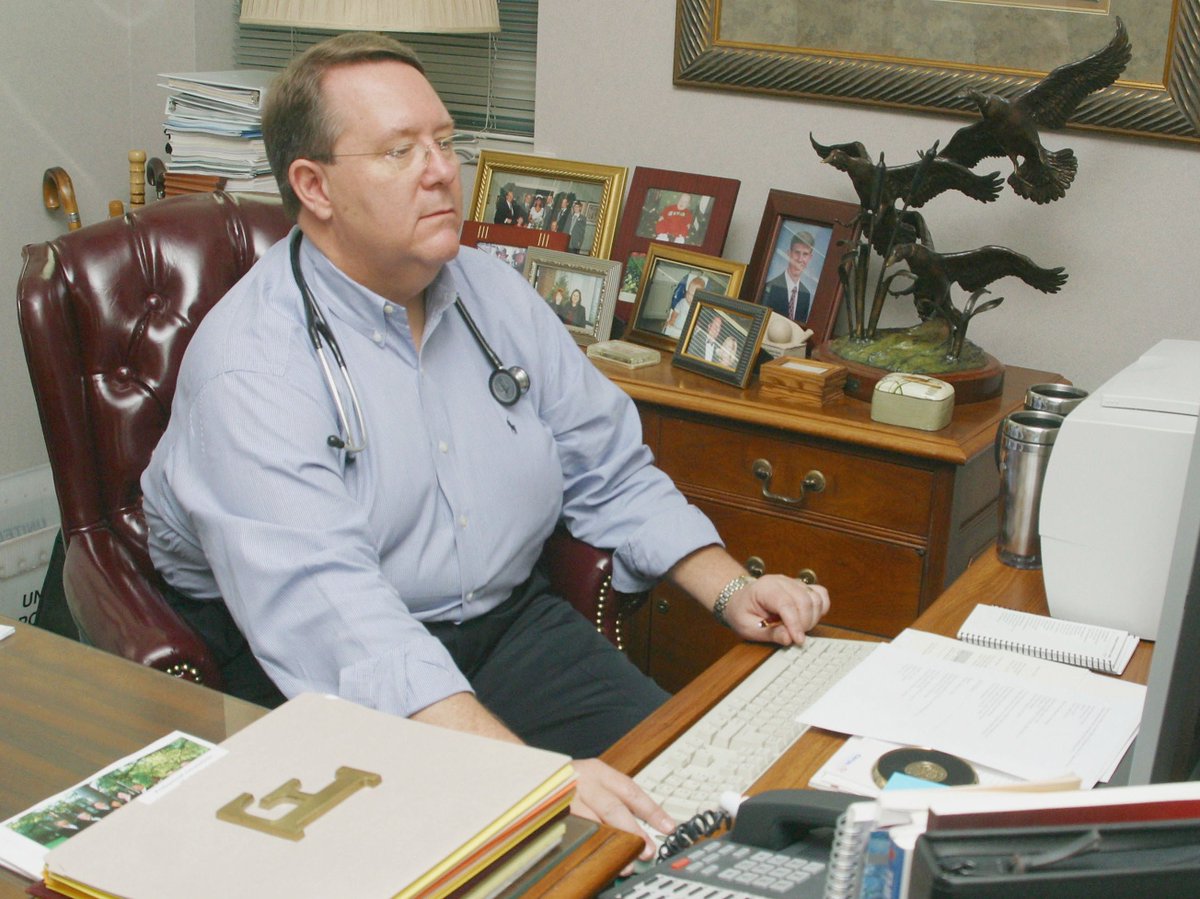
Doctors and obesity:
1825: "Cut the bread, sugar, and starch. Eat meat, fish, and butter. The patient becomes lean."
1860s: "Refined carbohydrate is the cause of corpulence. Restrict it."
1920s: "Carbohydrate restriction reverses obesity. The mechanism is metabolic."
1950s: "High fat, low carb. The clinic results are remarkable."
1977: "Actually, eat less fat. Eat more bread, pasta, rice, and cereal."
1990s: "Drink fruit juice. Eat low-fat yoghurt. Avoid butter."
2000s: "Calories in, calories out. The population needs more willpower."
2010s: "Everything in moderation. The patient is non-compliant."
2020s: "Obesity is a chronic disease. Try Ozempic. £200 a month, indefinitely."
2026: "Reversal through diet is not realistic for most patients. Please collect your repeat prescription."
You: noticing that the cure was understood a century before it was buried, and that the burial coincided exactly with the moment the food industry took a seat at the table.
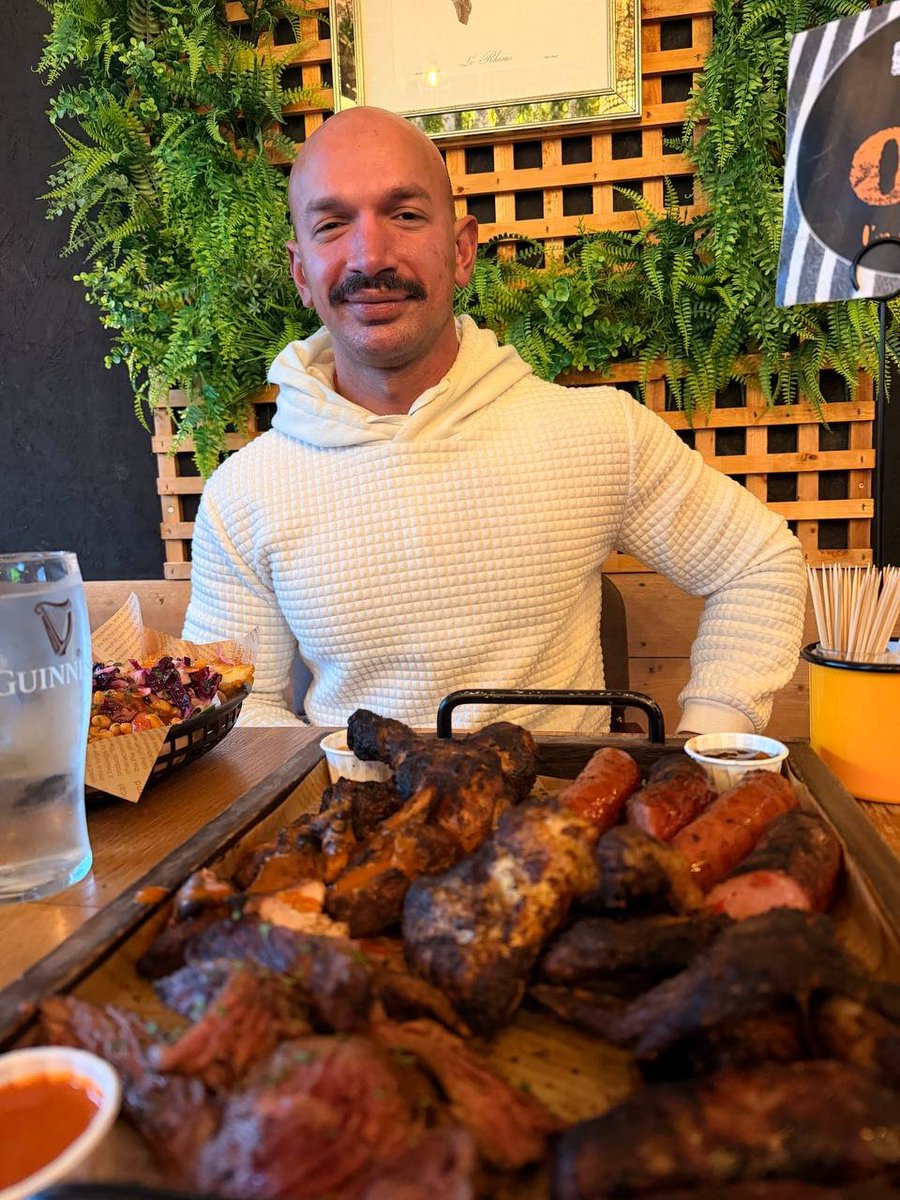
Today marks 2 years since I gave up carbs and started the carnivore diet.
I was always into healthy living, anti-aging, and nutrition research. I took care of myself and honestly looked pretty good for my age. But my body composition never matched the effort. I constantly carried fat around my stomach, and people would sometimes ask when I was expecting a baby.🙃
At the same time, I dealt with years of undiagnosed anxiety and panic attacks. Random intrusive thoughts would appear out of nowhere and mentally drain me for hours.
I originally started carnivore after becoming inspired by Sama’s posts. Pretty quickly, I realized this way of eating works best hand-in-hand with proper weight training, so I bought one of his lifting programs too — and never regretted it.
Two years later: My anxiety and panic attacks are gone. I built muscle. My body composition dramatically improved. My energy became stable. My relationship with food became simple. And for the first time in my life, I genuinely feel physically and mentally strong.
People can debate carnivore online all day long. That’s fine.
But when something noticeably improves your quality of life, confidence, mental clarity, and overall health — you know it very quickly.
As you can see, I basically turned into a radical meat head at this point… and honestly, it would be very hard to convince me otherwise. 🥩
Just sharing my personal experience.
I have completed the heretic's bodybuilding checklist:
- I don't eat before training
- I do not exceed 6 reps
- I rest 3 minutes
- I leave one rep in the tank
- I do five exercises
- I am out in under 50 minutes
- I do not deload
- I do not chase the pump
- I eat meat afterwards
- I skip the carbs
- I sleep
I will be excommunicated from the bodybuilding orthodoxy. The muscle does not seem to care.
Doctor: I'm concerned about this carnivore diet you've lost two stone on.
Patient: How concerned.
Doctor: Your LDL is elevated.
Patient: Triglycerides?
Doctor: Low.
Patient: HDL?
Doctor: High.
Patient: Inflammatory markers?
Doctor: Pristine.
Patient: Blood pressure?
Doctor: Textbook.
Patient: Resting heart rate?
Doctor: 52.
Patient: Body fat?
Doctor: 12%.
Patient: A1C?
Doctor: 5.0.
Patient: So what's the problem.
Doctor: The LDL is elevated.
Patient: I see.
Patient: Have you considered that your single marker is failing to capture the situation.
Doctor: We don't really go in for that sort of thinking.
Standard oncology advice to cancer patients: "Eat whatever you can keep down. Calories matter most. Don't worry about what's in it."
So cancer patients are blessed with:
- Ensure shakes (corn syrup solids, seed oils, maltodextrin)
- Hospital trays of refined carbs and margarine
- "Easy" comfort foods (crackers, pasta, white bread, jelly)
- Sugary drinks to "keep weight on"
Cancer cells preferentially run on glucose. They thrive in inflamed environments. Omega-6 from seed oils is one of the most inflammatory fuels in the food supply.
The advice is to feed the patient exactly what the tumour wants, in industrial quantities, while the chemo tries to kill it from the other side.
The metabolic literature on cancer has been growing for decades. Otto Warburg won the Nobel Prize in 1931 for the foundational observation. Modern research has built on it consistently.
Yet the nutritional protocol on the ward looks like the menu at a primary school in 1995.
The disconnect between what oncology knows about cancer metabolism and what oncology hands the patient on a tray is criminal.
A cancer diagnosis deserves better than a vanilla Ensure and a slice of toast.
Let's check in on Beatrice.
Beatrice is a four-year-old Light Sussex hen in the back garden of a retired widower in a Yorkshire village. She arrived three years ago with three other hens, brought by his daughter to "give him something to look after." It worked. He talks to them. He pretends, to himself, that he doesn't.
Beatrice has been busy this morning.
5.42am. Beatrice exits the coop first. She is always first. The other three hens, by long arrangement, wait. The arrangement was not agreed in writing. The arrangement is, by every working measure, in force.
5.51am. Beatrice locates a slug on the lower lavender. She eats the slug. The label on a supermarket egg box would describe Beatrice as "vegetarian-fed." Beatrice has not read the label. The slug, by 5.52am, is no longer the slug.
6.18am. Beatrice eats a worm turned up by the man's spade in the vegetable bed. The man is digging the bed because Beatrice has, by long observation, taught him that digging the bed at 6.15am produces worms, which produces hens nearby, which produces a small social arrangement that the man has come to look forward to.
7.04am. Beatrice eats a beetle. She eats it with the considered focus of a hen who knows that beetle protein is, by every measure, the highest-quality protein available to her, and that the beetles do not, on the whole, last long once identified.
8.30am. Beatrice lays an egg. The egg weighs 64 grams. It contains, by every available analysis: a complete amino acid profile, choline, lutein, zeaxanthin, B12, vitamin D, vitamin A, selenium, iodine, and cholesterol of the kind that the human body, contrary to forty years of dietary advice, regulates by itself. The egg is, by every honest nutritional measure, one of the most complete single foods on earth. The man eats it for breakfast at 8.45am.
10.00am. Beatrice eats the man's vegetable peelings. Carrot tops. Cabbage stalk. The end of a leek. A small piece of stale bread. This is, in industrial poultry terms, an unauthorised diet. In actual hen terms, it is the diet hens evolved on for several thousand years before anyone thought to feed them only one thing.
11.30am. Beatrice kills a rat. It is the second rat she has killed this year. She does not eat the rat (rats are too large) but she does, with great commitment, prevent it from getting near the feed. Beatrice is, by quiet local agreement, the most effective pest-control system in the village.
1.15pm. Beatrice naps in a dust bath of her own construction. The dust bath has been positioned, by Beatrice, in the precise spot in the garden that gets afternoon sun for the longest. She did not ask the man's permission. She did not need to.
3.40pm. The man, in the kitchen, calls her name.
Beatrice comes.
She does not come for the daughter. She does not come for the postman. She comes for the man.
Things Beatrice has, in one ordinary day, debunked:
That hens are vegetarian. They are not. They are obligate omnivores, and the supermarket "vegetarian-fed" label is, by every honest reading, a deficiency diet sold at premium prices.
That eggs are bad for you. Forty years of dietary advice, substantially walked back since 2015. Eggs are now, in most modern guidelines, considered one of the most nutrient-dense foods available.
That chicken farming is, by definition, cruel. Industrial poultry, in many cases, is. Beatrice's life is not. The honest argument targets the system, not the species.
That backyard hens spread disease. The disease vector data points overwhelmingly at intensive operations. Beatrice's three companions and the half a million UK households who keep small flocks are not the problem.
That eggs are a luxury. The man pays approximately £15 a year per hen in feed. He gets, in return, around 280 eggs, two dead rats, a worked vegetable bed, a dust bath in the right spot, and a small quiet relationship with a creature who comes when he calls.
Beatrice is, by every honest measure, the smallest unit of working agriculture in Britain.
She is also, by quiet local consensus, the reason the man still cooks a proper breakfast.
Eat the egg.
Be the hen.
Resource the backyard.
1900: The egg is described in nutrition texts as nature's most complete food. Doctors recommend it for invalids, infants, and the elderly. A growing child is given one or two a day. A working man eats four for breakfast.
1950: The egg is implicated in a hypothesis about cholesterol and heart disease. The hypothesis is unproven. The egg is told it must wait.
1968: The American Heart Association issues an official recommendation to limit egg consumption to three per week. The recommendation is based on a single observational study and the personal opinion of Ancel Keys.
1973: The first egg-substitute product is launched. It is composed of egg whites with added preservatives, gums, and synthetic colour. It is sold as the heart-healthy alternative to the egg, which has been on the human breakfast table for ten thousand years.
1980 to 2010: The British and American populations consume billions of fewer eggs per year than they did in 1950. Cardiovascular disease continues to rise. Obesity rises sharply. Type 2 diabetes triples.
2015: The United States Dietary Guidelines Advisory Committee, after reviewing the entirety of the available evidence, removes the recommendation to limit dietary cholesterol. The egg is, the committee states, no longer a nutrient of concern.
2025: The egg is back in fashion. The egg is on the breakfast menu of the trendy restaurant. The egg is in the protein-focused cookbook. The egg is in the influencer's morning routine.
During the fifty-five years the egg was banned, the egg did not change.
The egg has been the egg the entire time.
The advice has changed. The egg has not.
The advice was wrong. Nobody has apologised.
The grandmothers who kept feeding their grandchildren eggs through the entire 1980s, against the explicit advice of every health authority in the Western world, were correct.
The grandmothers should be on the committee.
I don't eat salad, because I'm not a rabbit.
I don't eat grass, because I'm not a cow.
I don't eat seeds, because I'm not a sparrow.
I don't eat oats, because I'm not a racehorse.
I don't eat lentils, because I'm not surviving the siege of a medieval village.
I don't eat fruit smoothies, because I'm not a toddler being bribed into the car seat.
I don't eat soy, because I'm not a vat in an industrial oil press.
I don't eat seed oils, because I'm not a paint thinner.
I don't eat margarine, because I'm not a science experiment that escaped the lab in 1911.
I don't eat fortified breakfast cereal, because I'm not a marketing department's quarterly target.
I eat fatty red meat, because I'm a human being, and that is what we have always been.
X family: We’re GIVING AWAY a full beef box this weekend!!!
USDA prime, grass-fed & finished, dry-aged beef— raised right here in Lampasas, Texas
What’s included:
– 2 ribeyes
– 2 flat irons
– 8 wagyu burger patties
– 2 lb ground beef
– king sized picanha
– cross cut bone-in short ribs
We’ll ship it straight to your door!!
to enter:
• follow @ElkinsCattleCo
• repost this
• comment your all-time favorite beef cut
must be in the U.S. (AK/HI not included)
Winner announced monday 04/27 at noon CT
ships out Tuesday 04/28
1 winner will be announced + DM’d from this account only. Good luck! 🙏🥩🇺🇸