Founded in 1882, the SPR aims to advance the understanding of events and abilities commonly described as psychic or paranormal. Tweets are not endorsements.
You can find the Society for Psychical Research on Facebook - Society for Psychical Research (SPR), and also where, to quote Irving Berlin, nothing but blue skies do I see: https://t.co/Scq5LlpWw0
Unconventional Research in USSR and Russia 1917-2003
#ufotwitter
This is the introductory page of a fascinating paper by Serge Kernbach titled "Unconventional research in USSR and Russia: short overview." It outlines the history, funding, and scope of Soviet and Russian state-sponsored research into fields that Western science often categorized as parapsychology or fringe physics, but which the Soviet state approached through a highly formalized, materialist lens.
Here is a breakdown of the key themes, historical context, and technical lines of inquiry established on this first page:
1. The Core Areas of Investigation
The paper categorizes Soviet unconventional research into three distinct macro-areas:
Area 1: Long-Distance Biological Signal Transmission
Focuses on mind-matter phenomena, extra-sensory perception (ESP), and biological communication networks involving plants, animals, and humans.
Area 2: Electromagnetic Emissions in Biological Organisms
Investigates how weak electromagnetic fields influence metabolism, biochemistry, and the cognitive/functional mechanics of the brain.
Area 3: Generation and Detection of Non-Ionizing, Biologically-Active Emissions
This is what Kernbach calls the "instrumental line of research," often referred to in Soviet literature as psychotronics or torsion fields. It explores alternative physical descriptions of space and matter under names like microlepton, axion, spin-spin, or non-electromagnetic penetrating interactions.
2. Institutional Framework & Funding
Unlike the West, where unconventional research was frequently driven by private capital or isolated university groups, the Soviet framework treated these studies as an integrated state program.
Funding Scale: The paper estimates maximal cumulative funding for these programs over a 40-year period reached $0.5 to $1 billion, putting it on a financial par with parallel U.S. classified initiatives (such as Project STARGATE).
The Paradigm of "Non-Classical" Weapons: These technologies were not viewed simply as academic curiosities. They were developed under the strategic umbrella of nuclear deterrence and non-lethal warfare, creating the framework for what the author calls a biological "quantum arms race."
Prominent Outlier Scientists: While state programs existed, independent pioneers like A.L. Chizhevsky (solar-biology connections) and N.A. Kozyrev (causal mechanics/time experiments) worked outside official state channels and faced immense institutional resistance.
3. Timeline of Development
Kernbach divides the trajectory of Soviet and Russian unconventional research into three distinct operational eras:
1917 ��� 1937 - Early ideological and materialist exploration; early brain/telepathy experiments before the Stalinist purges restricted academic deviation.
1955 – 1980 - The "Golden Era" of psychotronics and cybernetics revival. Broad institutional backing across various secret institutes and military frameworks.
1980 – 2003 - Late Soviet consolidation followed by post-Soviet chaos, leading to a brief period where classified data leaked into the open press before state control tightened again.
4. The Challenge of Secrecy & Censorship
A crucial point raised in the introduction is the systemic erasure and locking away of this scientific history:
The original archives of the OGPU and NKVD (predecessors to the KGB) regarding these topics remain classified even after 80+ years.
Modern Censorship: The text highlights a specific trend where open-source materials published during the 1990s and early 2000s began to systematically disappear from public access after 2014, correlated with shifting modern geopolitical realities.
Detailed chronological look at how Russia's approach to unconventional research evolved from late-19th-century vitalism into highly structured, state-funded military and intelligence programs.
Here is an analysis of the historical trajectory, technical methodologies, and official declassified documents shown across these pages:
1. Pre-1917: The Electromagnetic & Vitalistic Phase
The research began in the late tsarist era, heavily influenced by the global boom in radio technology.
The "Radio-Wave" Analogy: Early European and Russian researchers (like W. Crookes and Albert Abrams) hypothesized that the human brain operated like a radio transceiver, emitting high-frequency electromagnetic waves.
Alexander Barchenko (Figure 1): A key figure who published on "mental suggestion" and "distant transfer of thoughts" as early as 1911. Barchenko would later be absorbed directly into the Soviet state apparatus, running highly sensitive research under the OGPU (the early KGB) from 1921 to 1937.
The Materialist Shift: Even before the revolution, premier Russian neurophysiologists like V.M. Bechterev (founder of the St. Petersburg Research Institute of Psychoneurology) began studying mental suggestion scientifically. They attempted to strip the mysticism away from phenomena like "hysteria, spoilage, and possession," recontextualizing them as involuntary psychic suggestions influenced by environmental and social conditions.
2. 1917–1937: The Birth of the Coordinated Soviet Program
Following the October Revolution, the state began consolidating isolated psychic and psychological groups into institutional frameworks, driven largely by A.V. Lunacharskiy (Commissar of Education), who established the Russian Committee for Psychical Research.
Division of Labor: To crack the physical mechanics of biological transmission, the state split the work between two primary hubs:
Leningrad (Bechterev Brain Institute, led by L.L. Vasilyev): Focused on the psychological and behavioral aspects of suggestion, including transferring visual images to a recipient.
Moscow (Laboratory of Biophysics, Academy of Sciences, led by P.P. Lazarev and S.Y. Turlygin): Tasked strictly with uncovering the physical nature of telepathy.
B.B. Kazhinskiy’s Biological Circuitry (Figure 2): Kazhinskiy treated the human nervous system as a literal analog electrical circuit. His schematics attempted to map the electrical components of organs to identify transmitting and receiving bio-circuitry.
3. The 1927 Paradigm Shift: Abandoning Radio Waves
A massive turning point occurred in 1927, which fundamentally altered Soviet physics and military research for the next 70 years:
The Faraday Cage Experiments: Researchers placed human subjects inside heavily shielded metal Faraday cages. If telepathy relied on standard electromagnetic radio waves, the metal walls should have blocked the signal. Instead, the telepathic effects manifested equally inside and outside the chamber.
This led Soviet scientists to two diverging conclusions:
The Non-EM Path: The phenomenon relies on a "high-penetrating," completely "non-electromagnetic" field (which laid the groundwork for later torsion field or axion field theories).
The High-Frequency EM Path: Scientists like S.Y. Turlygin argued that while standard radio waves were blocked, the nervous system might interact with ultra-high-frequency microwave bands. Turlygin discovered that modulating medium/short electromagnetic waves with low-frequency signals could directly alter the emotional state and organ functionality of a subject.
4. 1990s Post-Soviet Hardware: Torsion & Telecom
The third image (Figure 16) moves straight into declassified state documents from the 1990s, showcasing the physical realization of these theories into experimental hardware for the military.
Formal contract between the Russian Ministry of Defense, JSC "Inteltech," and the International Institute of Theoretical and Applied Physics (led by Anatoly Akimov).
Code Name: "Wave-6PF" (St. Petersburg, 1996).
Objective: "Creation of quantum communication channels on new physical principles, studying their effects on operators/servicemen, and manufacturing equipment for a torsion communication link."
An official testing protocol conducted at the Air Force Academy in Monino (signed by the Director of MNIPP "Altair").
Objective: Testing a computer-registered hardware matrix called "KRAU-Ch" designed to register highly penetrating non-ionizing components of human emission.
The Setup: The hardware suite utilized an automated sensor block, a processing unit running on an IBM 286 PC/AT, and a "Г-shaped biolocation frame." The experiment explicitly tested an operator's ability to remotely influence the sensors from various distances, including from adjacent, completely shielded rooms.
Technical Context:
This contract explicitly links three powerful entities:
The MoD Directorate of Ecology and Special Defense Means: The branch tasked with non-lethal weapons, biological defense, and unconventional physical hazards.
JSC Inteltech: A massive, highly secure Russian state enterprise specializing in military telecommunications and automated command-and-control systems.
MITPF AEN: The International Institute of Theoretical and Applied Physics, led by Anatoly Akimov—the primary institutional champion of torsion field theory in Russia.
The code name "Wave-6PF" hints at the physical mechanism they claimed to be exploiting: "PF" stands for Psychophysical/Psychotronic Factors or Physical Fields of an unconventional nature. The goal was not just to see if a psychic could move a sensor, but to systematically build manufactured, repeatable "torsion quantum communication links" for military command infrastructure that could bypass normal radio jamming or Faraday shielding.
The introduction explicitly mentions linking historical Soviet research paradigms to modern phenomena, including macroscopic entanglement, quantum biology, and investigations into the "Havana Syndrome" incidents between 2016 and 2022.
https://t.co/ok7WGryA4S
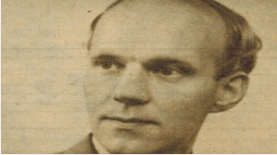
John Björkhem (1910–1963), a Swedish priest, physician, hypnotist, psychical researcher. Known for experiments with hypnosis, psychometry, & travelling clairvoyance, helped establish Swedish parapsychology’s postwar profile. https://t.co/bTGT9jjjcr
Writer: Nemo C Mörck, 1 June.
A person in Victoria is charging thousands for 'exorcisms' & has a monetised YouTube channel where they 'solve' kid's cold cases with a spirit box. When families express their outrage they get blocked. It is on A Current Affair tonight. This is where we are as a field now!
Just 30 MINS TO GO now until we head back to a small coastal town where a family seems under siege from something they can’t see…let me know if you'll be watching from behind the sofa 👻
Watch Case 9: The South Shields Poltergeist Part Two on YouTube at 7:30pm: https://t.co/EyIhpyPiqW
Joining us live this week; Patti Keane. @JefferyParsnip Artist and farmer who found herself the centre of anomalous and paranormal activity at Tanfield House in 1985. Her account, vividly documented, was featured in the debut season of Uncanny.
NOW AVAILABLE ONLINE
The Online version of the June 2026 issue of Psychic News magazine is now available to read or download at: https://t.co/ON6yKJISuF
Available Worldwide - BONUS: FREE access to some past issues
Just £18 for 6 months. 12 months for £32
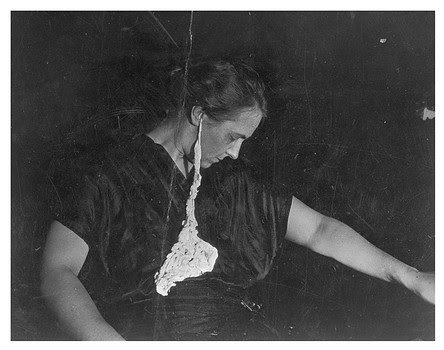
Ninel Kulagina in another documentary–"Journey into the Beyond" (1975, US 1977) narrated by actor John Carradine. Note the experimental safeguards of close-proximity witnesses & filming her at two table locations. In other footage she was hand waved to show there were no threads.
A Metaphysical Articles noncommercial blog article about medium Margery Crandon (1888-1941) is "A Medium Whose Work was 'Beyond Belief' Among People Ignorant about Spiritualism" at https://t.co/BA2Dcfujas.
Booking forms for attending the 49th SPR International Annual Conference (Stratford-upon-Avon, 27-29 November) are now on the website: https://t.co/9b3J3Rh7FF
Formed in 1925 after conflict within the American Society for Psychical Research over the medium ‘Margery’, under Walter Franklin Prince the Boston SPR produced influential bulletins and monographs before reuniting with the ASPR in 1941: https://t.co/FRUIeAaaDj
Marcello Truzzi was an American sociologist and sceptic of psi phenomena, a major advocate of “zetetic” inquiry into paranormal and anomalous claims. Known for distinguishing open-minded scepticism from debunking, he edited Zetetic Scholar: https://t.co/3Ez1uHarPK
#UncannyColdCases Case 8: The South Shields Poltergeist is OUT NOW on @BBCSounds!! 😱👻
On a hot day like this, join us for this chilling case by the beach 🏖️ listen here: https://t.co/mBFXlRbZc2
Available across the podcasting hubs and Youtube. Historian Stephen Miller of The Poltergeist Project brings everyone into the case of The Haunted Mill Girl Gwen Morley. The Keighley Poltergeist.
I found Alan Murdie's article on Dr Clay 's ghostly encounters; utterly fascinating, in the latest @forteantimes. 👻
I've re-read it three times!
This issue is a wonder. 📚