شرکت cloudflare مرورگر kitesurf که مخصوص ایجنتها طراحی کرده بود رو اُپن سورس کرده!
کایت سِرف در واقع یه headless browser هست که با rust و webAssembly نوشته شده که از موتور chromium استفاده نمیکنه و به راحتی روی workerها بالا میاد!
خوبیش اینه که تا ۷ برابر cpu و رم کمتری از کروم مصرف میکنه، ولی خُب حدود ۲ برابر کندتره و کپچا رو هم نمیتونه رد کنه :)
در کل واسه کارهای سبک عالیه و میتونه واسه ایجنتها در کنار chrome استفاده بشه مثلا گرفتن اسکرینشات، scrape سبک، web search و اینا :)
https://t.co/98thevNISg
If you really want to learn or achieve something, you will find a way. If not, you will likely find an excuse.
- "don't have the time."
- "job keeps me occupied."
- "will start when things settle down."
- "don't have the right resources."
- or the classic - "education system ruined me"
These are understandable, but if it truly matters to you, you will find time, energy, and resources. Simple.
Shruti Telugu is 29.7 MB AI model by @udgamlabs. On real Telugu conversations with English mixed in, it makes fewer mistakes than Telugu models five and thirty times its size on speech to text.
One file that writes Telugu and English, offline, on your phone, laptop or browser. The English words stay in English, the way people actually speak Telugu.
If you're curious about how exactly Claude is making these incredible animated videos, I had Claude make a video explaining the process and what tools it's using...
Vibe coding a sub-task or feature worked surprisingly well for me with Opus 5.5 and GPT 6.1 Sol.
So I thought: Why not take it a step further? 🤔
What if I vibe-code an entire module or application using /loop or /goal with a list of tasks in spec.md?
Here's what I learned:
❌ DON'T DO IT 🙅♂️
👉 You get an application that almost works, but isn't what you actually expected.
👉 It can easily become over-engineered.
👉 Changing one behaviour can have a ripple effect across the codebase.
👉 You end up spending significant time understanding the code the AI generated.
My takeaway:
Don't ask AI to build everything in one go.
Go step by step, iteratively.
Smaller chunks of work make the code easier to understand, review, debug, and reason about.
the problem is no longer execution ,
it is thinking and visualising ,
if you are good at that , have some few dollars , you can build anything in todays world
Seamlessly share your app's capabilities with your own agent or system agents using Android MCP.
Officially in beta, the AppFunctions API is opening up powerful new ways to integrate your functionality.
https://t.co/clDeZ6FHiD
Maya-2 voice model weights are officially live! 🇮🇳🇮🇳
The frontier voice model for India is now completely open-weight.
• Outperforms ElevenLabs v3, Sarvam Bulbul v3, and Cartesia Sonic 3.5
• 1.5B+ people covered across all 28 states and 8 union territories
• SOTA voice synthesis across 11 official languages
• 20 native speakers pre-loaded, ready out of the box
• Best-in-class zero-shot voice cloning
Built by a team of five from the land of languages.
Go build and have fun!
Vemana is out. It's a 278M Telugu model we trained from scratch, live, on one GPU, for about $69.
And I think the result surprised even me: on new Telugu Wikipedia pages it beats every open base model under 1B that we tested, including nanochat-telugu-560M, which is twice its size.
The weights, every checkpoint and the eval code are public. And you can run it right in your browser, on your own device, nothing gets sent anywhere.
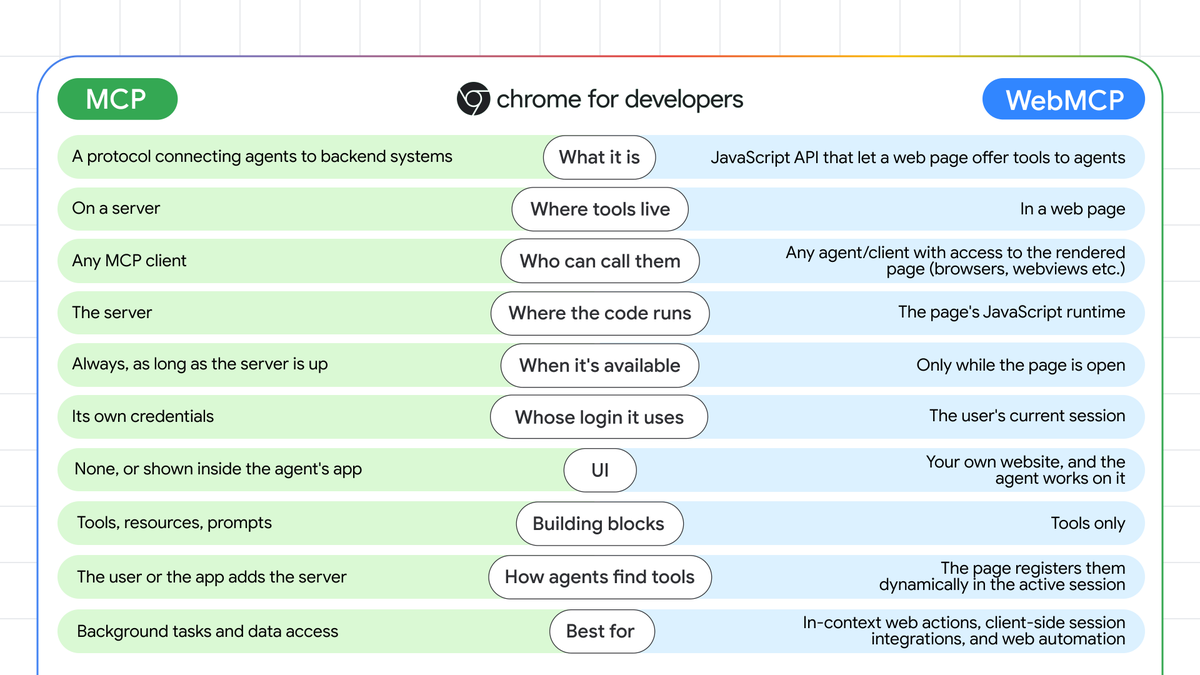
No, WebMCP isn't replacing MCP.
MCP connects agents to your services.
WebMCP connects agents to your website while it's open and the user's in the loop.
Here's how they fit together ⤵️