Infection, delirium, and risk of dementia in patients with and without white matter disease on previous brain imagi… https://t.co/Cricc3L563
WMD impacts the infection-dementia association but not the delirium-dementia association: implications for mechanisms and VaD prevention
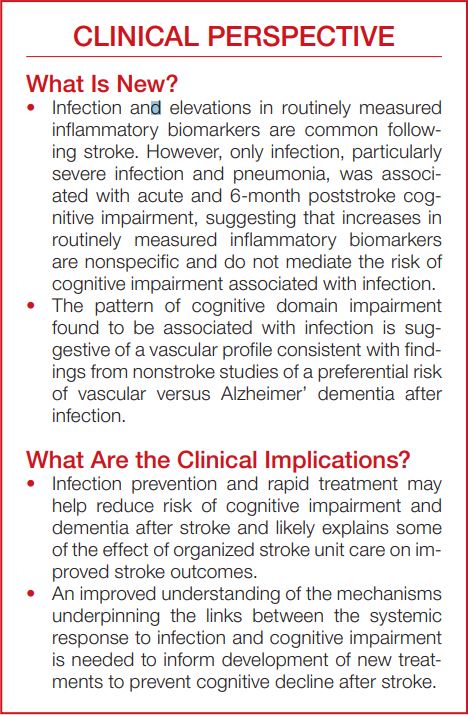
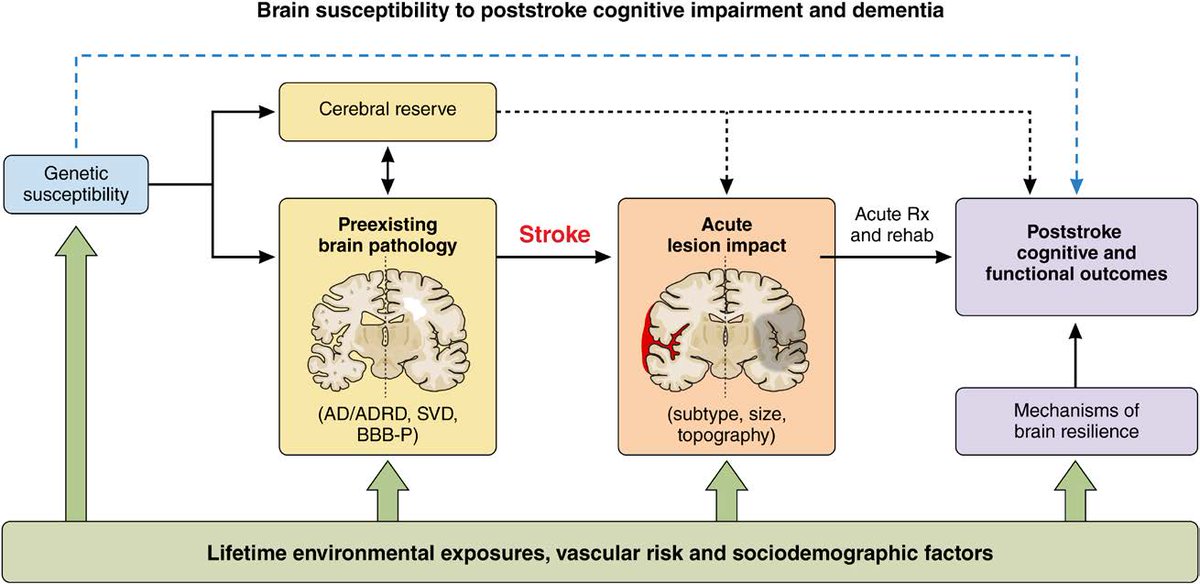
Infection, but not acute inflammatory biomarkers, is linked to post-stroke cognitive impairment. Infection may be a potential therapeutic target. #AHAJournals@EliseMilosevich @NeleDemeyere @ST_Pendlebury https://t.co/x2cQ7ENMSO
Fantastic to see this important study out now in BRAIN. Leiv Otto Watne's Delirium research group in Oslo: Impaired glucose utilization in the brain of patients with delirium following hip fracture https://t.co/zwm9BRxUXv
Cognitive Impairment After Ischemic and Hemorrhagic Stroke: A Scientific Statement From the American Heart Association/American Stroke Association https://t.co/YWNHZVaXnl
@nsanar @ST_Pendlebury@hugoapariciomd @gottesman_lab @VCI_EricSmith@AHAScience
With thanks to Emily Boucher, Rhodes Scholar for her great work on our study on the prevalence and prognostic value of frailty in the acute setting. The Clinical Frailty Scale performed at least as well as more complex measures supporting current guidance @Krockdoc@RagnhildKaas
We are currently recruiting to a large multidisciplinary team working on an exciting and innovative 5-year NIHR funded dementia research programme:
https://t.co/0SMHzgCJCk
https://t.co/SDBGYGlSWH
https://t.co/VDR43BisHh
https://t.co/enlUEABfEq
Pleased to share our recent OXVASC paper showing how routinely acquired brain imaging informs delirium risk (and possibly mechanisms)
Utility of white matter disease and atrophy on routinely acquired brain imaging for prediction of long-term deliriu… https://t.co/gWk6uEs0ct
Agreed- very informative contribution to an understudied and yet prevalent issue in #dementia. Again, acute pressures and competing demands were cited as a factor impacting staff responses as seen elsewhere in #dementia and #delirium.
Really interesting analysis of causes of 'calling out repetitively' in people with #dementia.
Occurs commonly in people who also have #delirium.
Pubmed link: https://t.co/Cj3Qy0eizc
Chairing at WSC with Eric E Smith on World Stroke Day: Great state-of-the-art talks on screening for VCI, predicting dementia after stroke, bio markers and mixed dementia from Natalia Rost @nsanar, Geert Jan Biessels, Suda Seshadri&Chris Chen. On demand at https://t.co/5m5Tqkr8Ev
Useful review showing that frailty interventions in hospital are likely effective. More trials are needed but the big challenge is how to identify frailty in real time at scale and to implement interventions across the acute hospital, not just in “specialist” areas.
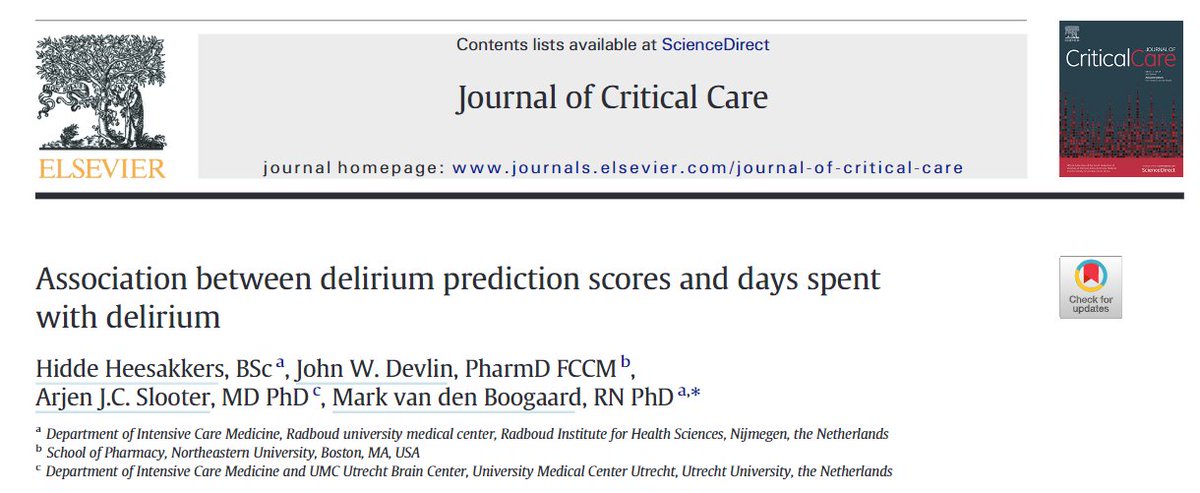
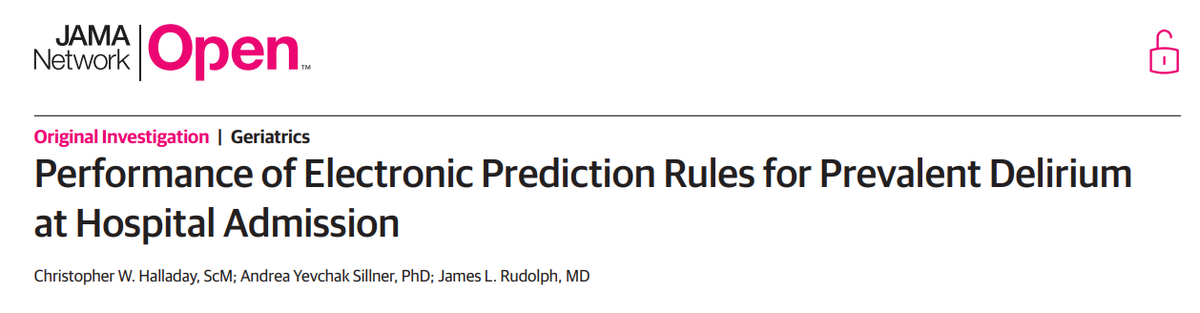
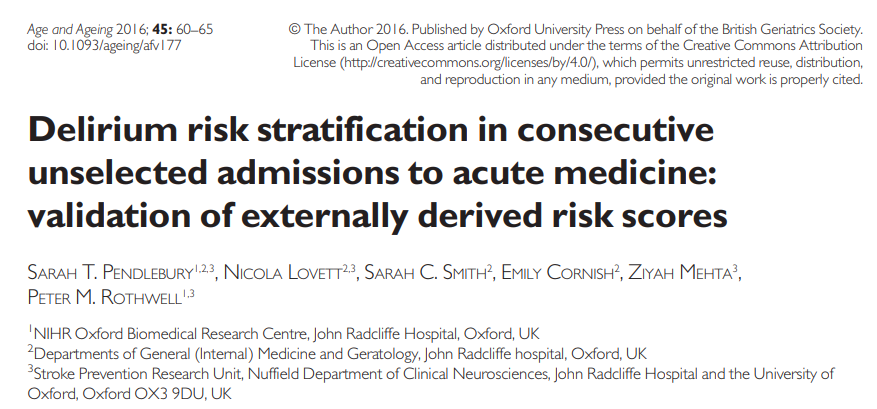
We are building ours into the electronic patient record. The risk level (high vs not) will then be displayed in real time. The idea is that the patient can be managed according to the risk (of both unrecognised prevalent delirium and risk of incident delirium).
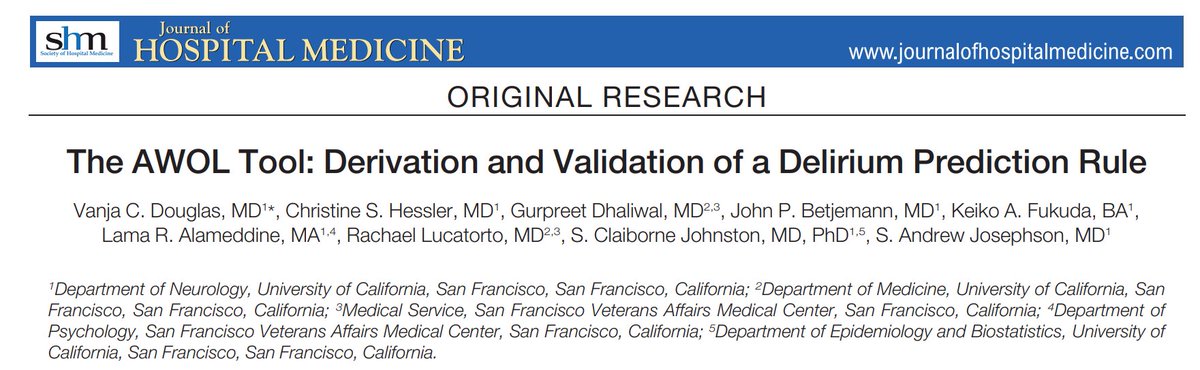
❓ Does anyone use #delirium prediction models in clinical practice? Eg. E-PRE-DELIRIC/?
❓ Or are they more a research tool?
💎 If you do use them in practice - can you describe how?
Agreed. This is an important consideration in using the CFS in the acute context. We’ve recently introduced routine CFS in acute medicine but some clinicians are clearly guestimating whether patient can do the shopping from an acute hospital bed...
When using clinical frailty score (CFS) on the acute take, score patients on how they were *2 weeks ago*, not on how they are today. Otherwise you will ‘overscore’ them - this false score bleeds into clinical decision-making in the remainder of their care
@ClaireDow1#SAMLondon
❓ When should patients with #delirium be followed-up?
🟡 Concerns about underlying dementia
🟡 Persisting symptoms on discharge
🟡 Risk of post-traumatic stress symptoms
ℹ️ More info: https://t.co/GqgddYm69h
Older people living with frailty or who lack a caregiver to attend assessments with them may not have equitable access to videoconference-based virtual care
It’s not all rosy in the blooming new digital garden..
👇
OK, so we @Brain1878 definitely thought we need to celebrate this: 50 years since the advent of CT with the first brain scan performed at Atkinson Morley Hospital, Wimbledon. Find out more https://t.co/dzmQg2524u
Yes, a great overview of existing protocols. Agree that next step is to determine the impact on actual rates of assessment.
Then whether the assessments result in actions...
Encouraging to see high levels of of #delirium assessment processes & pathways in UK hospitals.
Now we need more info on real world use levels, & rates of delirium detection.