If Ethereum were built from scratch today, with the quantum threat in mind, it would probably have:
→ Quantum-resistant STARK proofs
→ Native account abstraction
→ Upgradeable signatures without hard forks
→ Programmable privacy
→ Cryptographic agility by design
That's exactly the architecture we've been building toward since 2018.
That's Starknet today.
11/ Note: this is NFA and is provided for informational purposes only.
Stay SAFU and always DYOR.
For a complete recap of last week’s news, check it out here:
https://t.co/AmepGaCPud
Only 4 monthly unlocks left for investors and early contributors.
For perspective:
→ ~78% of the total STRK supply is now circulating.
→ Over 22.5% of the circulating supply is staked.
→ The remaining 4 unlocks total 508M STRK, representing just ~6.6% of the current circulating supply.
→ More than 3x that amount is already staked.
Interesting time for ethereum:0xca14007eff0db1f8135f4c25b34de49ab0d42766: https://t.co/I7pqyu3NYy
This is exactly why we're exploring the possibility of Starknet becoming an L1.
It would allow Starknet to become fully post-quantum secure as early as 2027.
Blockchains don't have the luxury of waiting.
https://t.co/42TVX7XGCl
🚨 ALERT: The International Organization of Securities Commissions warns that sufficiently powerful quantum computers could break public-key cryptography used across financial markets.
The securities watchdog will make quantum computing a priority in 2027.
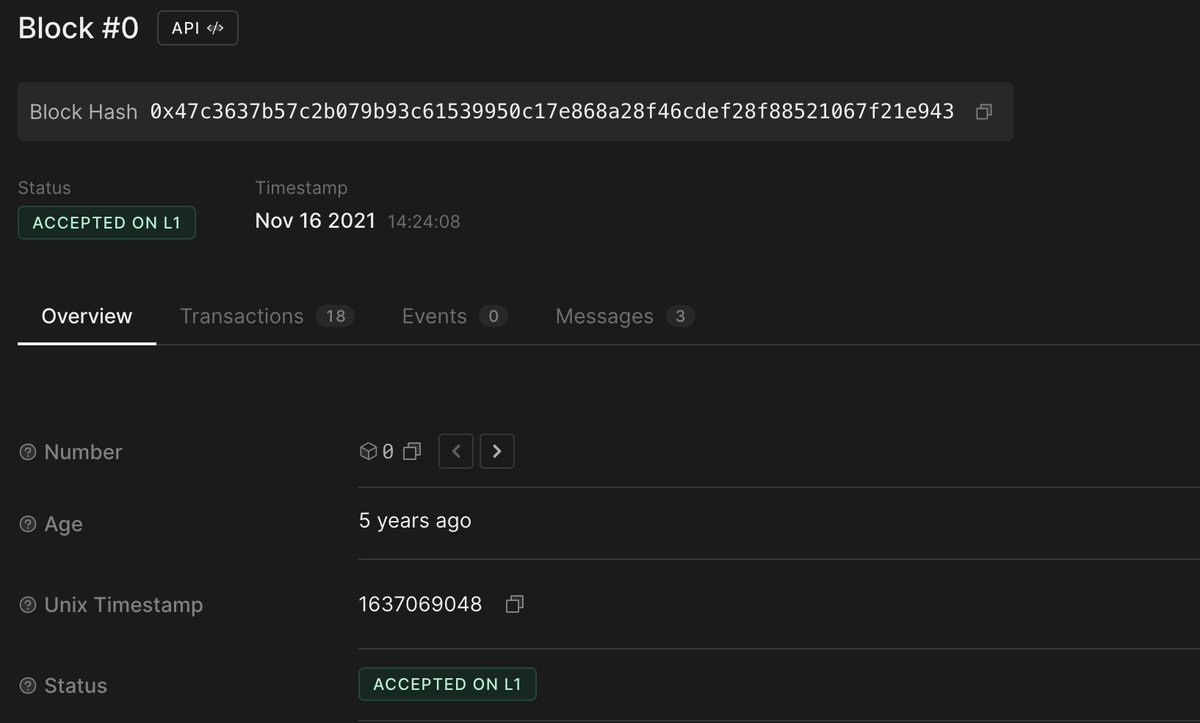
Starknet turned five this week.
Five years ago, the challenge was making blockchain computation scalable and verifiable. The next decade will ask even more of us.
As AI takes on a larger role, we’ll need ways to verify what systems actually computed. As quantum computing advances, blockchains will need cryptography that can adapt.
That’s what we’re building toward with Starknet: STARK-powered verification and the crypto-agility to evolve with the challenges ahead.
Building for the next decade.