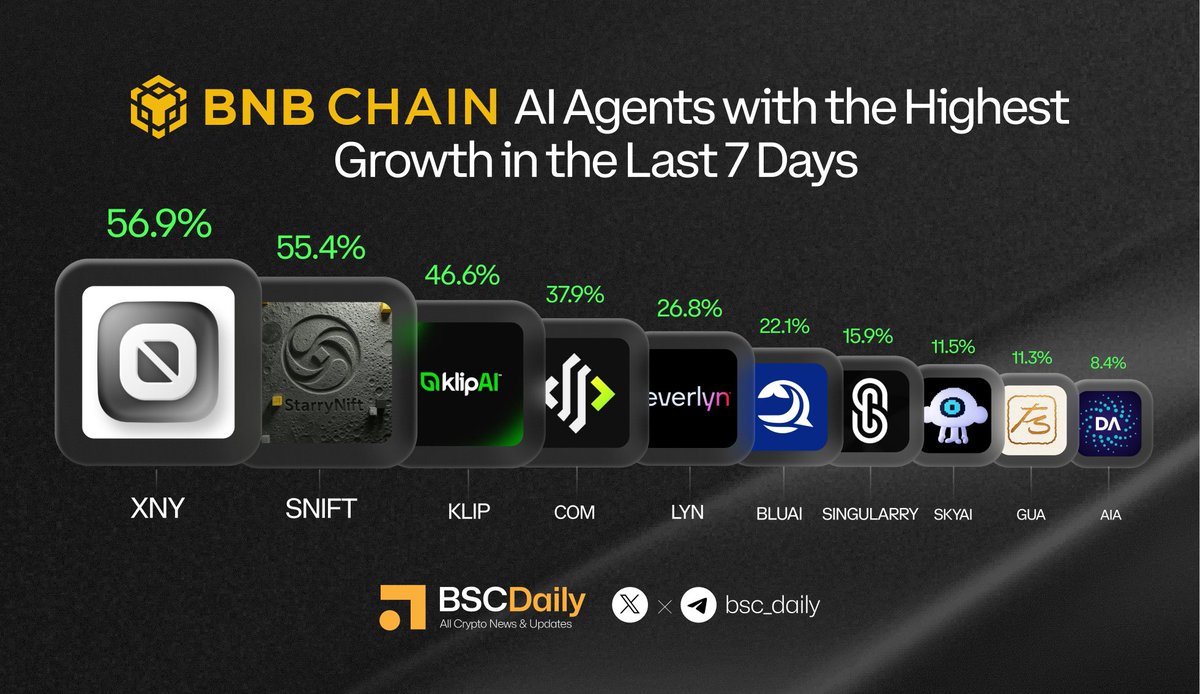
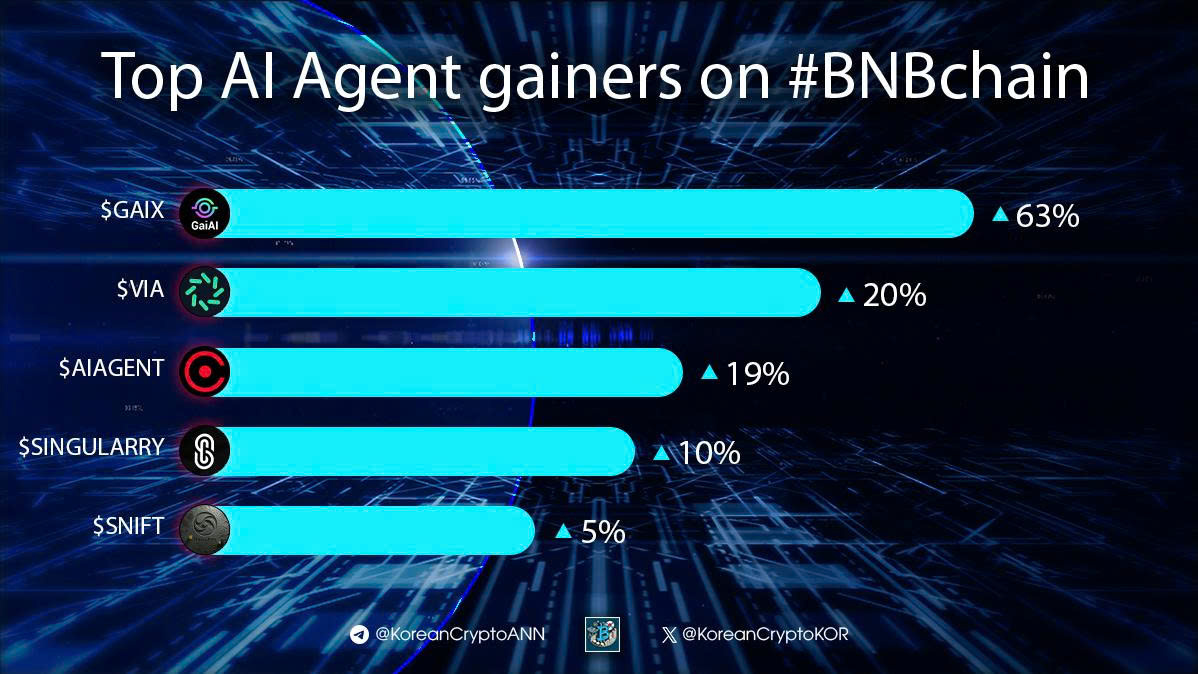
✨Why Hold $SNIFT? Uncover the True Value✨
📈Whether you're looking for short-term or long-term value, #SNIFT offers exclusive benefits. We keep building to unlock unlimited potential.
💎Secure your $SNIFT today and be part of our bright future!🌈https://t.co/OFEONge0jJ
Now, the quantum resistance roadmap.
Today, four things in Ethereum are quantum-vulnerable:
* consensus-layer BLS signatures
* data availability (KZG commitments+proofs)
* EOA signatures (ECDSA)
* Application-layer ZK proofs (KZG or groth16)
We can tackle these step by step:
## Consensus-layer signatures
Lean consensus includes fully replacing BLS signatures with hash-based signatures (some variant of Winternitz), and using STARKs to do aggregation.
Before lean finality, we stand a good chance of getting the Lean available chain. This also involves hash-based signatures, but there are much fewer signatures (eg. 256-1024 per slot), so we do not need STARKs for aggregation.
One important thing upstream of this is choosing the hash function. This may be "Ethereum's last hash function", so it's important to choose wisely. Conventional hashes are too slow, and the most aggressive forms of Poseidon have taken hits on their security analysis recently. Likely options are:
* Poseidon2 plus extra rounds, potentially non-arithmetic layers (eg. Monolith) mixed in
* Poseidon1 (the older version of Poseidon, not vulnerable to any of the recent attacks on Poseidon2, but 2x slower)
* BLAKE3 or similar (take the most efficient conventional hash we know)
## Data availability
Today, we rely pretty heavily on KZG for erasure coding. We could move to STARKs, but this has two problems:
1. If we want to do 2D DAS, then our current setup for this relies on the "linearity" property of KZG commitments; with STARKs we don't have that. However, our current thinking is that it should be sufficient given our scale targets to just max out 1D DAS (ie. PeerDAS). Ethereum is taking a more conservative posture, it's not trying to be a high-scale data layer for the world.
2. We need proofs that erasure coded blobs are correctly constructed. KZG does this "for free". STARKs can substitute, but a STARK is ... bigger than a blob. So you need recursive starks (though there's also alternative techniques, that have their own tradeoffs). This is okay, but the logistics of this get harder if you want to support distributed blob selection.
Summary: it's manageable, but there's a lot of engineering work to do.
## EOA signatures
Here, the answer is clear: we add native AA (see https://t.co/YD9nIpsxcC ), so that we get first-class accounts that can use any signature algorithm.
However, to make this work, we also need quantum-resistant signature algorithms to actually be viable. ECDSA signature verification costs 3000 gas. Quantum-resistant signatures are ... much much larger and heavier to verify.
We know of quantum-resistant hash-based signatures that are in the ~200k gas range to verify.
We also know of lattice-based quantum-resistant signatures. Today, these are extremely inefficient to verify. However, there is work on vectorized math precompiles, that let you perform operations (+, *, %, dot product, also NTT / butterfly permutations) that are at the core of lattice math, and also STARKs. This could greatly reduce the gas cost of lattice-based signatures to a similar range, and potentially go even lower.
The long-term fix is protocol-layer recursive signature and proof aggregation, which could reduce these gas overheads to near-zero.
## Proofs
Today, a ZK-SNARK costs ~300-500k gas. A quantum-resistant STARK is more like 10m gas. The latter is unacceptable for privacy protocols, L2s, and other users of proofs.
The solution again is protocol-layer recursive signature and proof aggregation. So let's talk about what this is.
In EIP-8141, transactions have the ability to include a "validation frame", during which signature verifications and similar operations are supposed to happen. Validation frames cannot access the outside world, they can only look at their calldata and return a value, and nothing else can look at their calldata. This is designed so that it's possible to replace any validation frame (and its calldata) with a STARK that verifies it (potentially a single STARK for all the validation frames in a block).
This way, a block could "contain" a thousand validation frames, each of which contains either a 3 kB signature or even a 256 kB proof, but that 3-256 MB (and the computation needed to verify it) would never come onchain. Instead, it would all get replaced by a proof verifying that the computation is correct.
Potentially, this proving does not even need to be done by the block builder. Instead, I envision that it happens at mempool layer: every 500ms, each node could pass along the new valid transactions that it has seen, along with a proof verifying that they are all valid (including having validation frames that match their stated effects). The overhead is static: only one proof per 500ms. Here's a post where I talk about this:
https://t.co/rAUSJjW7WL
https://t.co/EtXpkaDll5
“All of the prerequisites for the original web3 vision are here, in full force, and are continuing to get stronger over the next few years. Hence, it's time to buidl, and buidl decentralized.” https://t.co/2ow58EGuoh
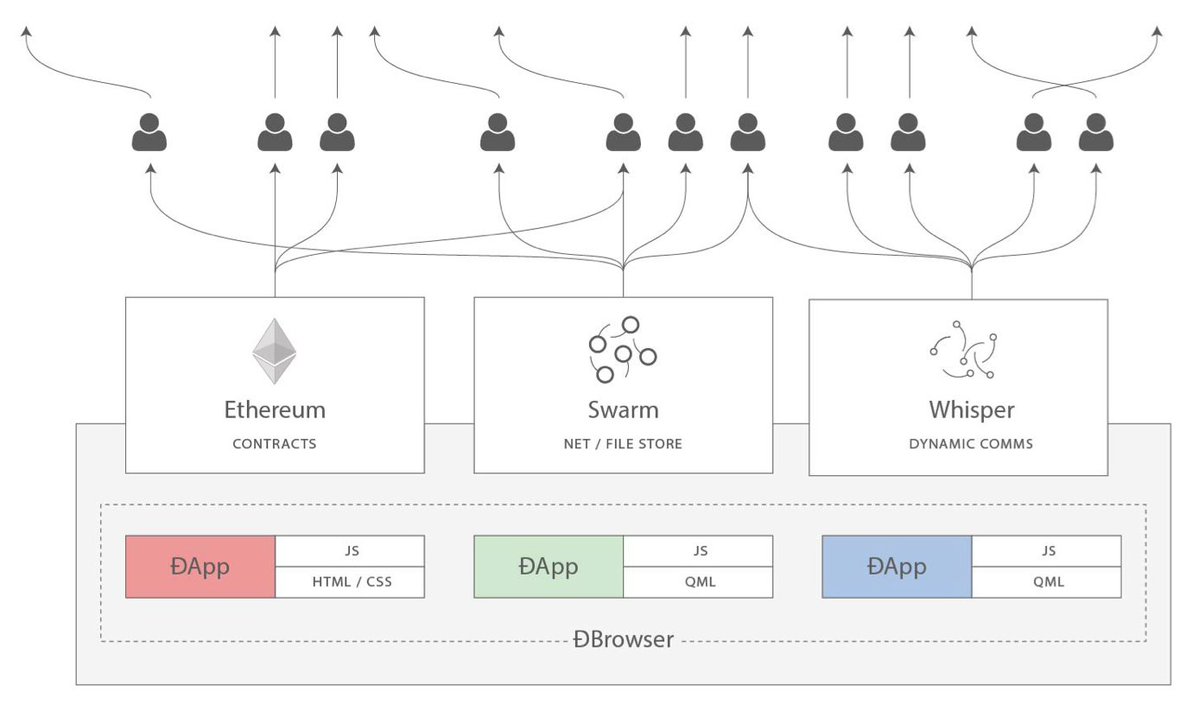
In 2014, there was a vision: you can have permissionless, decentralized applications that could support finance, social media, ride sharing, governing organizations, crowdfunding, potentially create an entire alternative web, all on the backs of a suite of technologies.
Ethereum: the blockchain. The world computer that could give any application its shared memory.
Whisper: the data layer. Messages too expensive for a blockchain, that do no need consensus.
Swarm: the storage layer. Store files for long-term access.
Over the last five years, this core vision has at times become obscured, with various "metas" and "narratives" at various times taking center stage. But the core vision has never died. And in fact, the core technologies behind it are only growing stronger.
Ethereum is now proof of stake. Ethereum is now scaling, it is now cheap, and it is on track to get more scalable and cheaper thanks to the power of ZK-EVMs. Thanks to ZK-EVM + PeerDAS, the "sharding" vision is effectively being realized. And L2s can give additional and different kinds of gains in speed on top.
Whisper is now Waku ( https://t.co/uj5h9iSpIL ), and already powers many applications (eg. https://t.co/owlo5yoS68, https://t.co/hDizYCFjuq just to name two I use). Even outside of Waku, the quality of decentralized messaging has increased. Fileverse (decentralized Google Docs and Sheets alternative: https://t.co/ZIKj4U5pQe ) has seen massive gains in usability over the past year.
IPFS is now highly performant and robust as a decentralized way of retrieving files, though IPFS alone does not solve the storage problem. Hence, there is still room to improve there.
All of the prerequisites for the original web3 vision are here, in full force, and are continuing to get stronger over the next few years. Hence, it's time to buidl, and buidl decentralized.
Fileverse is an excellent example of the right way to do things:
* It uses Ethereum and Gnosis Chain for what they are good for: names, accounts and permissioning, document registration
* It uses decentralized messaging and file storage to store documents and propagate changes to documents
* The application passes the walkaway test: https://t.co/xO1dNLlnhf (even if Fileverse disappears, you can still retrieve them and even keep editing them with the open source UI)
This is what we mean by "build a hammer that is a tool you buy once and it's yours, not a corposlop AI dishwasher that requires you to register for a google account and charges a subscription fee per month for extra washing modes, and probably spies on you and stops working if you get politically disfavored by a foreign country".
If you think this criticism of corposlop is hyperbolic, well turns out, it's literally a concatenation of these three:
* https://t.co/GBNaXOa454
* https://t.co/saD3cNp4Ae
* https://t.co/skoJ58vbqz
In 2014, decentralized applications were toys, hundreds of times more difficult to use in web2. In 2026, fileverse is now usable enough that I regularly write documents in it and send them to other people to collaborate. The decentralized renaissance is coming, and you can be part of making it happen.
LATEST: ⚡ Michael Saylor says Strategy will initiate a Bitcoin security program to coordinate with the global cyber, crypto and BTC security community around blockchain quantum resilience.
Ethereum is for AI.
ERC-8004, a new standard by the @ethereumfndn dAI Team, @MetaMask, @Google, @Coinbase, and others, provides a blueprint for how AI agents find and review each other, request and pay for jobs, and verify the work done.
What builders need to know.
@ClassicFilmTV Merry Christmas & Happy New Year —may your season be filled with that same unwavering affection, no matter how "less vibrant" this year might be🎄
Quantum computing and blockchains: Let's match the urgency with the actual threats.
But first, where are we on timelines to an cryptographically relevant quantum computer?
Lately, the timelines are being overstated — leading to calls for urgent, wholesale transitions to post-quantum crypto.
This is a problem because it overlooks the costs and risks of premature migration, and ignores more salient security risks.
More from @SuccinctJT below.
⤵️
We're giving our all, but it may still fall short of your expectations. You might not care about the setbacks we've faced, the steps we've taken to fix things, the reasoned responses to your question, or our 5-year commitment. You seem focused on gains as a taker, not the struggles of building as a maker. If there's no respect or trust in what we say—why keep asking? Why not save your time to dig your own GEM? #DYOR rather than stick to no unfounded accusations. BW & GBU
🚀 StarryNift AMA runs Sept 27 - Nov 2, 9 AM UTC! Join our Discord channel https://t.co/arjoMloQsl
🌟 Share your ideas & questions in "StarryNift-Questions-Proposals" to get rewards
🏆 10 winners as SNIFT holders snag 10 USDT each at AMA’s end! Shine on!
#Giveaway#SNIFT#AMA
Mutual Support Program has concluded 🙏 Sent small gifts as thanks—modest, but heartfelt for your support. Life’s path has challenges, but we persist🌿 Wishing you safety & health!
1. We have never collaborated with CoinEx since TGE. They listed SNIFT on their own and later chose to delist it, which is unrelated to the team.
2. Gate, MEXC, HashKey, and Bitmart have been CEX partners since TGE, and the token remains listed on all of them. Why not use other CEX?
3. Beyond CEXs, more liquidity will soon be added to DEX pools.
4. Even the screenshot about the team is false—reorganized 4 years ago, so CoinEx info is outdated. Why trust CoinEX?
🎃 Halloween’s coming… are you ready for AI-lloween?
👻 If you’re near Wallich Street, come say hi to our crew!
🧚♀️ Whisper “code green” for a lil’ spooky surprise
🤖 Join the fun & register here 👉 https://t.co/KucRbd51r2