Starting from ₦7,500 a month, you can support our mission to keep Nigerian history alive and at everyone’s fingertips.
Scan the code or tap the link to become a member today.
https://t.co/mW6Br0mYbz
On the morning of January 30, 1977, as Nigerians celebrated FESTAC ‘77 with the rest of the world in Lagos, 35-year-old Regina Musili went missing from her family home in Yaba.
This is the story of her disappearance.
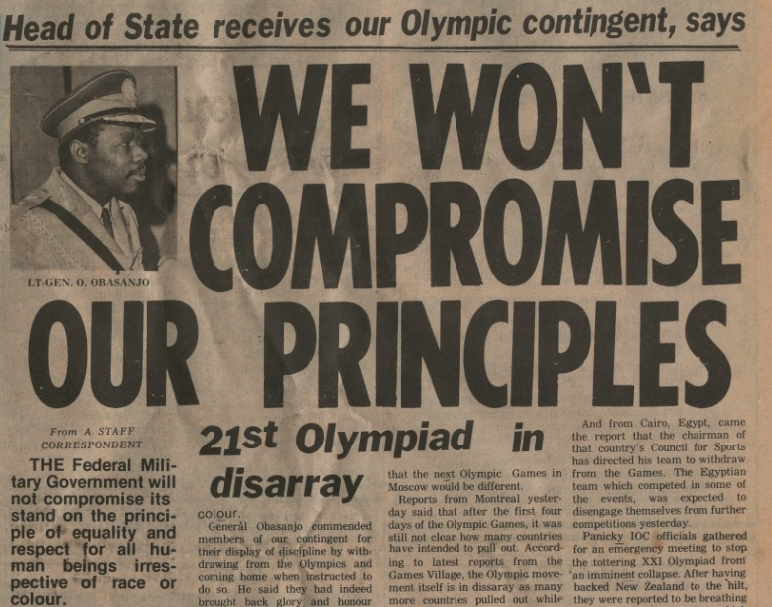
After the athletes returned home, Head of State Olusegun Obasanjo said Nigeria’s decision was guided by its “principle of equality and respect for all human beings,” values denied to millions of Black South Africans living under apartheid.
Every day for the rest of June, we’re revisiting the issues Nigerians debated in newspapers and magazines this month around 60 years ago.
Today, we travel back to June 1966, when Nigerians engaged in an intense debate over bride price.
What I've come to realise as an archivist is you get to understand more about Nigerian history from observing the lives of ordinary people, compared to the usual headliners in politics.
This time, it's the turn of a young woman who went missing in Lagos 49 years ago.
On the morning of January 30, 1977, as Nigerians celebrated FESTAC ‘77 with the rest of the world in Lagos, 35-year-old Regina Musili went missing from her family home in Yaba.
This is the story of her disappearance.
Tomorrow at 10 am, we’ll travel to 1977 to revisit the story of a missing woman whose disappearance became one of the most unsettling mysteries Lagos had ever seen.
@iDJBishop The original story didn't have her exact house address, so that was impossible to determine, and we couldn't find anyone in the area who'd lived there that long.
On the morning of January 30, 1977, as Nigerians celebrated FESTAC ‘77 with the rest of the world in Lagos, 35-year-old Regina Musili went missing from her family home in Yaba.
This is the story of her disappearance.
A lot of new laws in sports are meant to prevent things like this from happening.
Problem is, they're not meant to serve justice, just to weaken the ability of nations to take a principled stand against issues.
Tomorrow at 10 am, we’ll travel to 1977 to revisit the story of a missing woman whose disappearance became one of the most unsettling mysteries Lagos had ever seen.
Every day for the rest of June, we’re revisiting the issues Nigerians debated in newspapers and magazines this month around 60 years ago.
Today, we travel back to June 1966 for Okafor's take on Nigeria's frustrated graduates.