Help you become published bestselling author. Communication strategist & facilitator. Passionate about L&D.
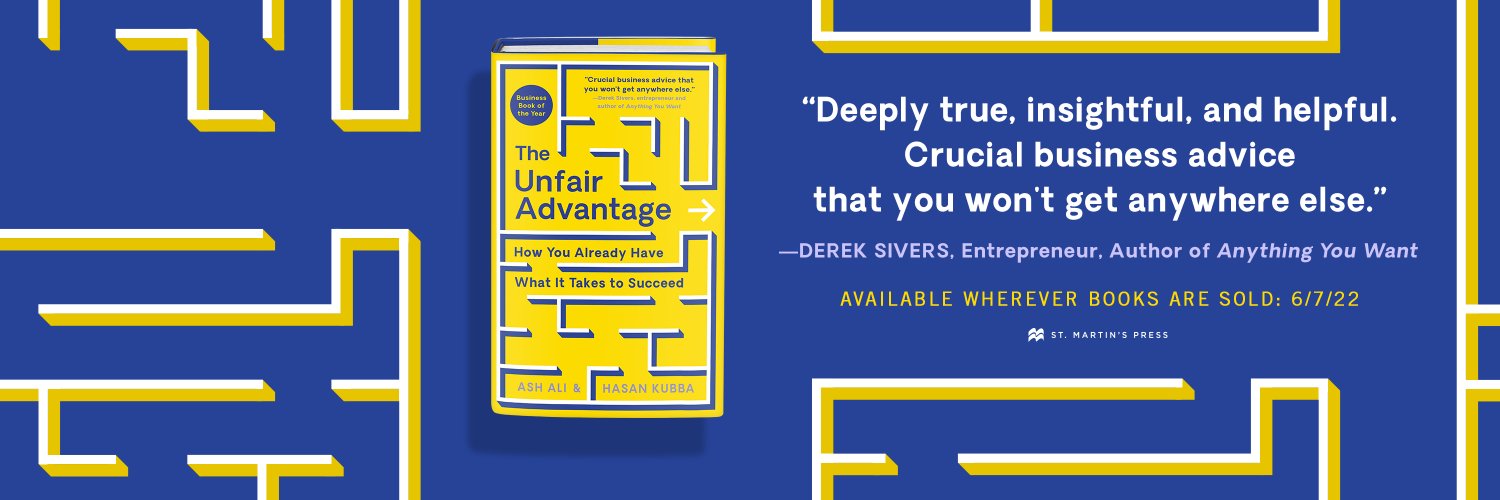
Author of business bestseller 'The Unfair Advantage'
One of the lifelong journeys I’m on as an entrepreneur is to focus on offense rather than defense.
Not to be penny smart pound foolish as we say in the UK
Fired my accountant. Using Astra at extra high effort to do my taxes.
Seems great so far but I’m making sure to understand it well.
But I expected it to work better agentically - instead it just keeps stopping even when not finished with a task.
Do I have to use openclaw or something like that? I thought they’d folded in most of those capabilities into the big models tbh
@p_millerd Completely agree. I really think straight “how to” nonfiction has extremely weak prospects in the AI era. A book needs to take you on an intellectual and/or emotional journey in some way, and the easiest way to do that is through story
Feels good to nail a book concept, complete the proposal, and meet with the client to show them and they love it 🥰
Honestly concept development and persuasive writing is my fav thing
@JacksonZheng_@dvassallo Yes I like it. It’s about just doing it when the urge strikes. And extra tip to start off with ask what could I have shared today at the end of the day
I wrote a book about working to your strengths… then went against my own advice.
I tried to systemise posting and put myself off it for over a year.
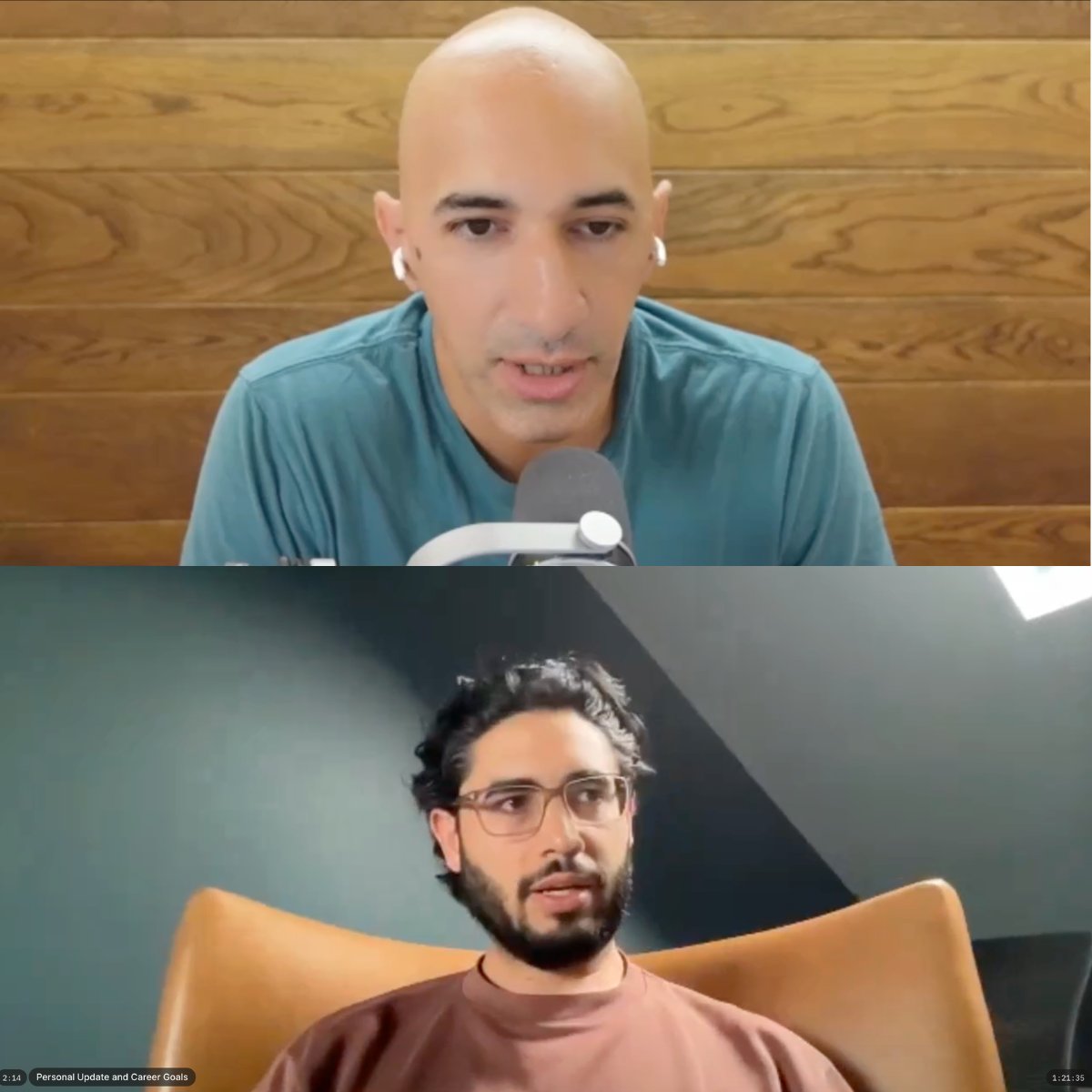
On a call yesterday, @dvassallo helped me see what I was doing:
Trying to grow a palm tree in Alaska.
You can do it, but you need a greenhouse, artificial heat and constant attention. Anything goes wrong and the tree dies.
Or you can plant it in Florida, where it will naturally thrive.
For me, it was schedules, content pillars and all that crap. I thought I was making posting easier. Instead, I’d taken out all the fun.
Daniel was saying that even setting himself a Friday newsletter deadline makes him want to rebel against it. Even though it was his own idea.
So rather than force himself into a schedule, he lets posting fit into the gaps in his day.
He shares something he’s doing or thinking about, gets into conversations, enjoys it. It doesn’t feel like another job.
I’ve got that same rebellious streak. Apparently I don’t like being told what to do (even by myself).
I’ve never really built a habit of posting here, but I’d like to start.
Daniel’s practical tip:
Share a thought while it’s fresh, chat to people, have some fun with it.
Don’t turn it into homework.
principles I'm revisiting in 2026 with my work (I wrote these down 4.5 years ago)
#1 Coming alive over getting ahead: Choose what feels interesting and life-giving, even if it is costly in terms of what "makes sense"
#2 Don’t be attached: Don't identity with any sort of persona (creator, author, solopreneur). It's just work. Find work and money-making pursuits downstream of life
#3 Build an income floor and optimize for diverse income streams: Build base level of "less than grind" passive income. Look for new experiments to earn in new and interesting ways.
#4 Start slow and keep trying things: Favor small bets, incremental yeses, and experimentation over big irreversible leaps.
#5 Make friends, be helpful: Prioritize generosity and relationships as a core part of a good life and a sustainable creative path. Always tell people when you find their work or presence inspiring. Don't align & support people's work that doesnt align with this vision even if it "makes sense"
I think a few I'd add
1. Creative sovereignty: The work is art first, not commercial products. Don't sell that priority out cheaply
2. Create not creator: Don't confuse the favor trading and status game of being a creator for the creative work itself. Let others win that game.
Unfair Advantages build one on top of another and have a SNOWBALLING effect.
They don’t just add together, they multiply together.
The more Unfair Advantages you can stack up in life, and the earlier in life you can develop them, the stronger they will be.
Malcolm Gladwell refers to this kind of virtuous circle in his seminal book Outliers. In it, one of the examples he looks at is that of Canadian hockey players, who are registered in youth leagues based on their birth year.
Those born in the earlier months of the year tend to do better because they are older and more developed, so tend to be bigger and stronger than those born in the later months of the year.
This leads them to get selected for more coaching and practice, purely based on the luck of which month of the year they were born in. This has been shown to have continued effects and has led to more people born in the first three months of the year becoming professional hockey players. It is also an observed effect in football and baseball players.
This is referred to as the ‘relative age effect’ and has been shown to be true in academic success as well.
[excerpt from The Unfair Advantage book]
Just one small example of an Unfair Advantage which you're likely to have never thought about.
Do any others come to mind for you? Please share in the comments below 👇
In an ideal world, I should only be doing one of two things:
1. What I’m great at and enjoy doing, something which creates value for others, and for which I am financially rewarded. Being totally immersed in it.
For me that’s writing and teaching.
2. Unplugging completely from that work, and not consciously thinking about it. Time for leisure, family and friends, and overall rejuvenation and relaxation.
The closer I get to this ideal in my life, of separating these two distinct times, the happier I would be.
And of course it’s one of those ideal things that’s not practically strictly possible. But the closer I get the better. I’m not going to let perfectionism ruin this for me.
Mixing the two is a recipe for stress and anxiety, plus a lack of real progress in the work, and a lack of real rejuvenation and relaxation.
A reminder to myself:
Be either on or off.
Don't be half working half relaxing.
Time management is nonsense.
You can’t ‘manage’ time… it’s ticking away regardless.
You can only manage what you do during that time.
So rather than thinking ‘I need to manage my time better’, try managing your attention and your energy better.
Where you are in your career or business a year from now is all based on how you spend your attention and energy each day.
Beware of:
1. Distractions – they hijack your attention.
2. Wallowing in negative thoughts and emotions – they sap away your energy.
3. Negative people (‘Energy Vampires’) – they’ll sap away both.
(By the way, don’t automatically ignore negative emotions, they’re often a signal that something is not quite right. Figure out what it is and take action to solve it.)
Ultimately, ‘time management’ is really about managing ourselves.