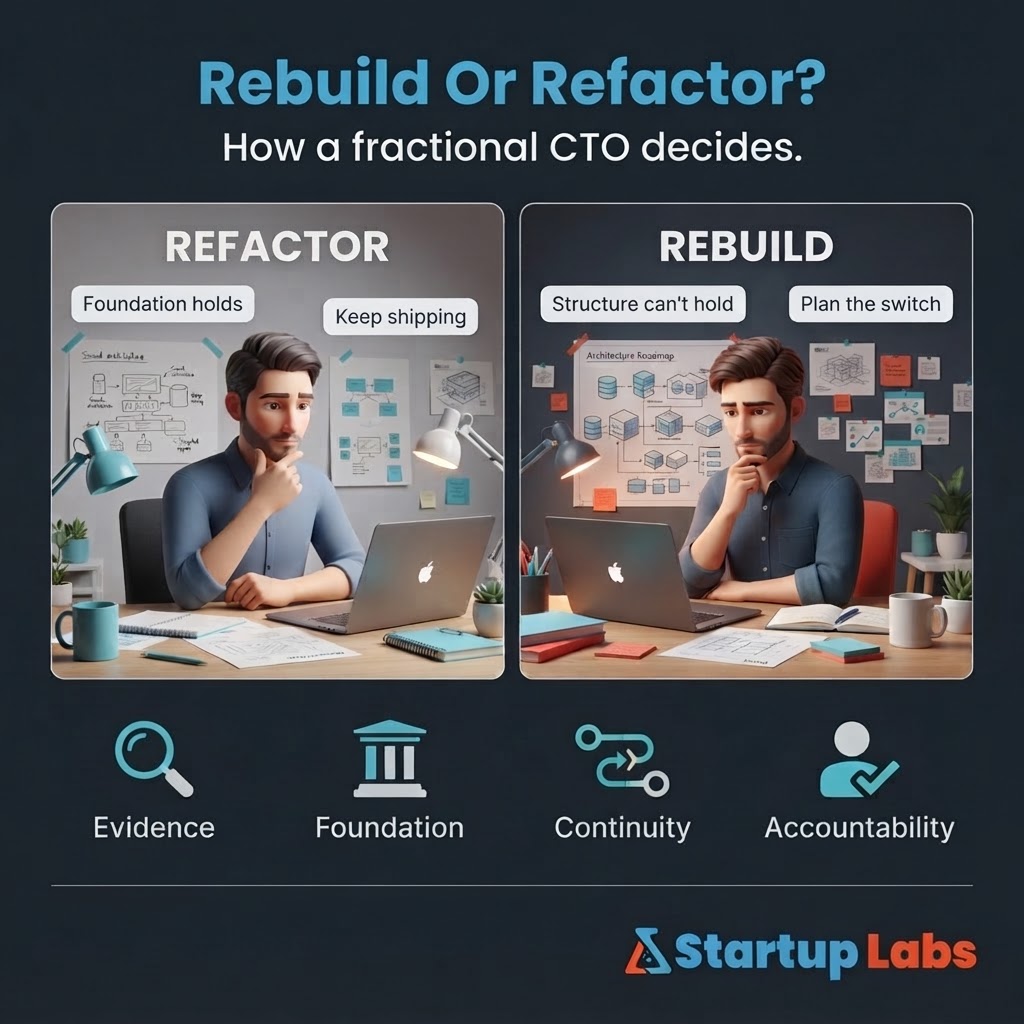
The wrong choice can be expensive.
When a codebase starts fighting back, “start over” and “just clean it up” can both sound convincing. Neither is a strategy on its own.
That call needs clear judgment and someone accountable for making it.
#BuildInPublic#SoftwareDevelopment
SaaS founders: what’s sitting in your backlog because your team doesn’t have enough engineering bandwidth?
A feature? Integration? Mobile app? Complete MVP?
#StartupFounder#BuildInPublic#SoftwareDevelopment
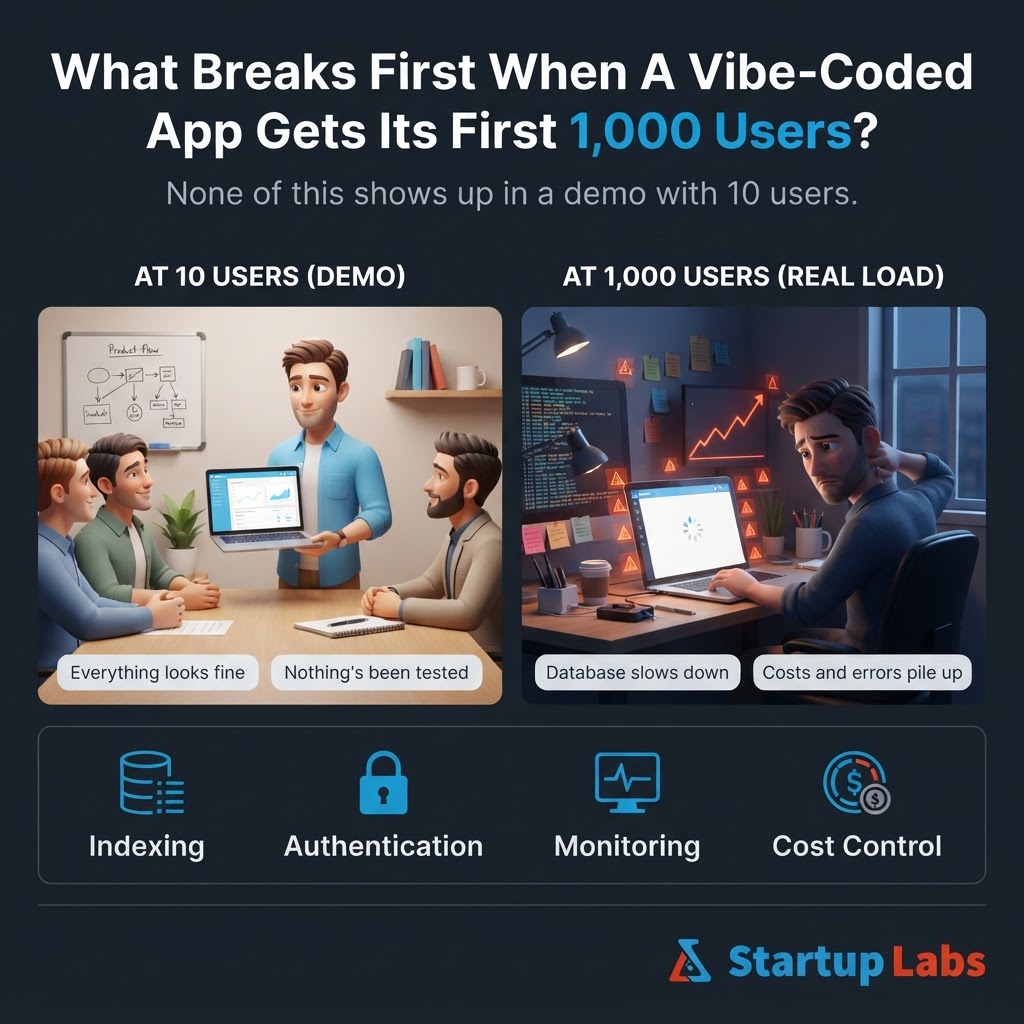
What breaks first when a vibe-coded app gets its first 1,000 users?
None of it shows up in a demo with 10. No indexes. Auth that holds up until someone actually tries to break it. No monitoring.
A demo proves the idea. It doesn't prove operations.
#VibeCoding#BuildInPublic
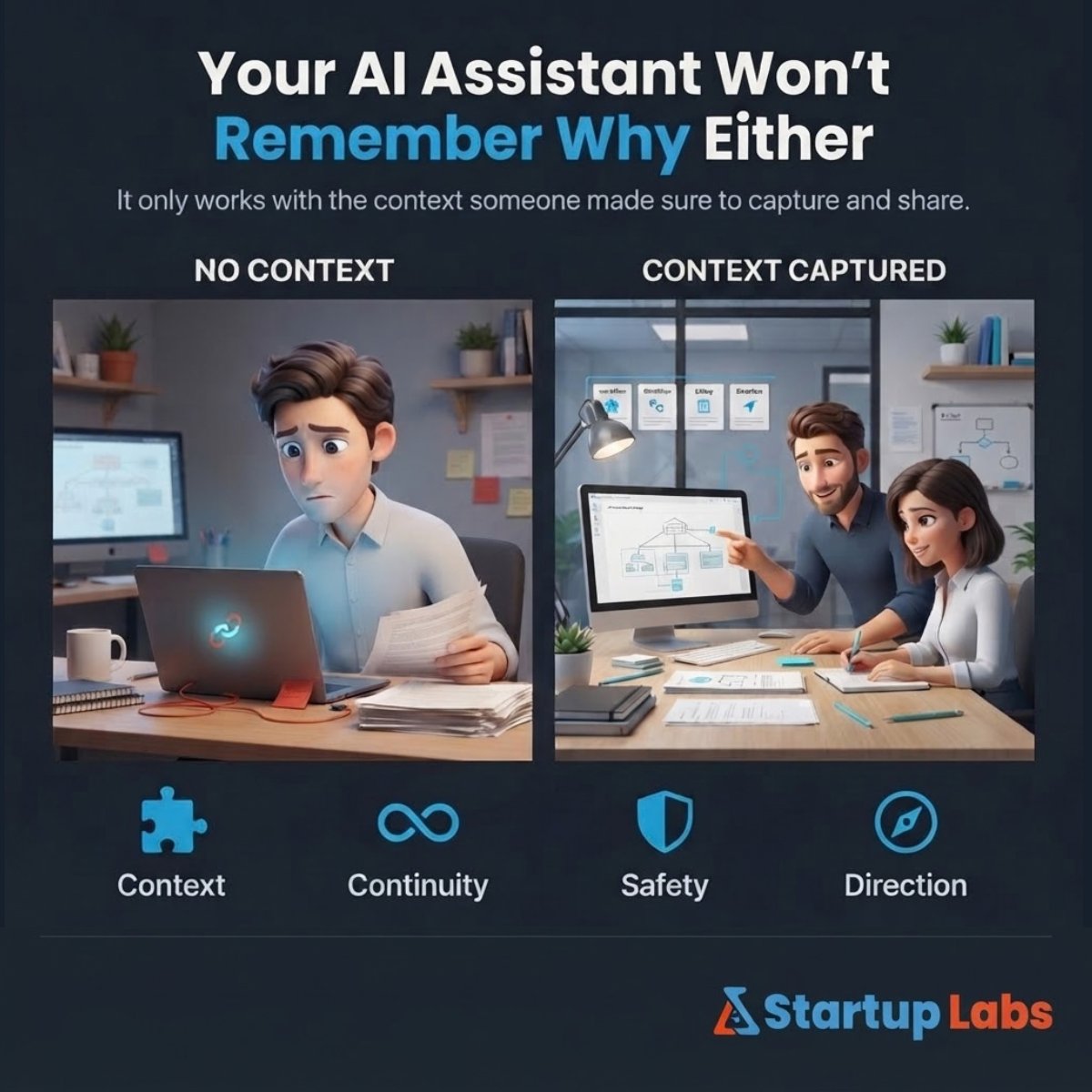
A dev leaves. Three months later someone asks "why is this built this way?" Nobody knows anymore.
Your AI tool won't know either. It only trusts what it sees in the code — not the reasoning that got erased when the person did.
#FractionalCTO#AIEngineering#BuildInPublic
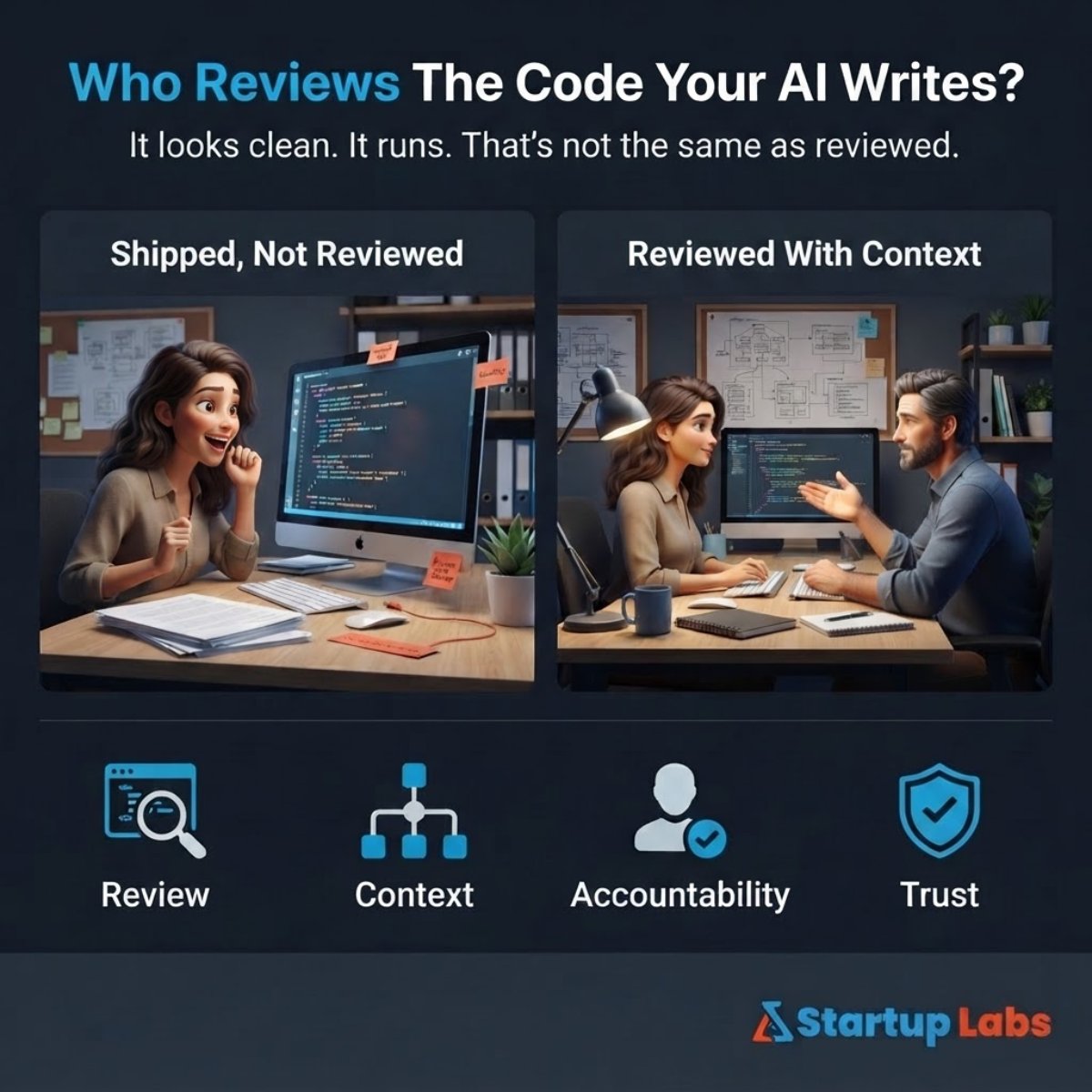
Who reviews the code your AI writes?
It looks clean. It runs. That's not the same as reviewed.
AI can't tell you if a shortcut quietly reintroduces a risk someone fixed six months ago. Speed isn't the problem. Speed without anyone checking is.
#BuildInPublic#AI#Founder
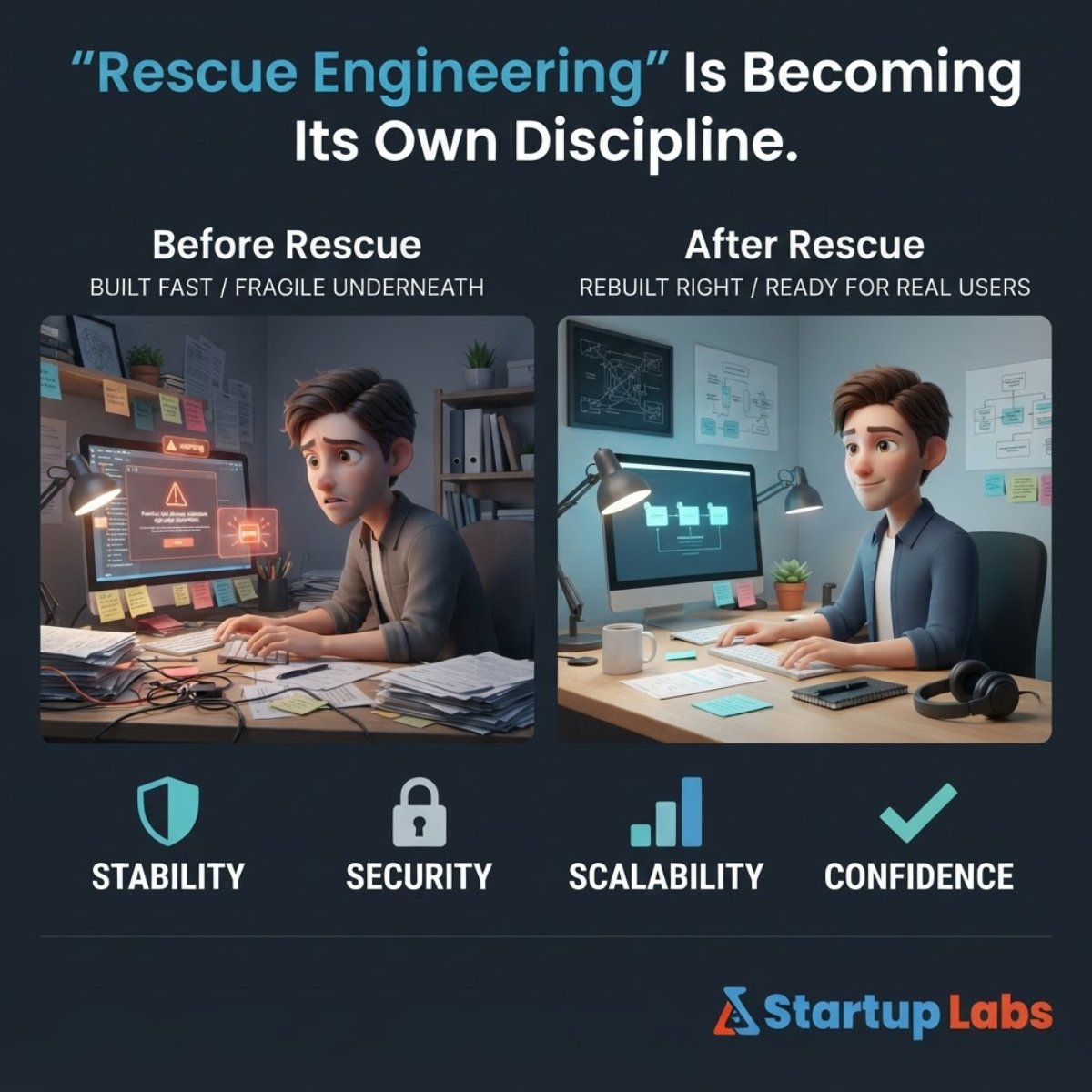
Rescue engineering is becoming its own discipline.
Taking an app built fast with AI and making it something real users can depend on.
Built fast gets you to a demo. Built right gets you to production.
#AIProduct#SaaS#StartupFounder#BuildInPublic#MVP#FractionalCTO
The gap AI doesn't solve:
AI can generate a schema, an auth flow, a payment integration. It can't tell you which shortcuts will compound into risk.
What's the last AI-built thing you had to double-check?
#MVP#StartupFounder#SaaS#AIProduct
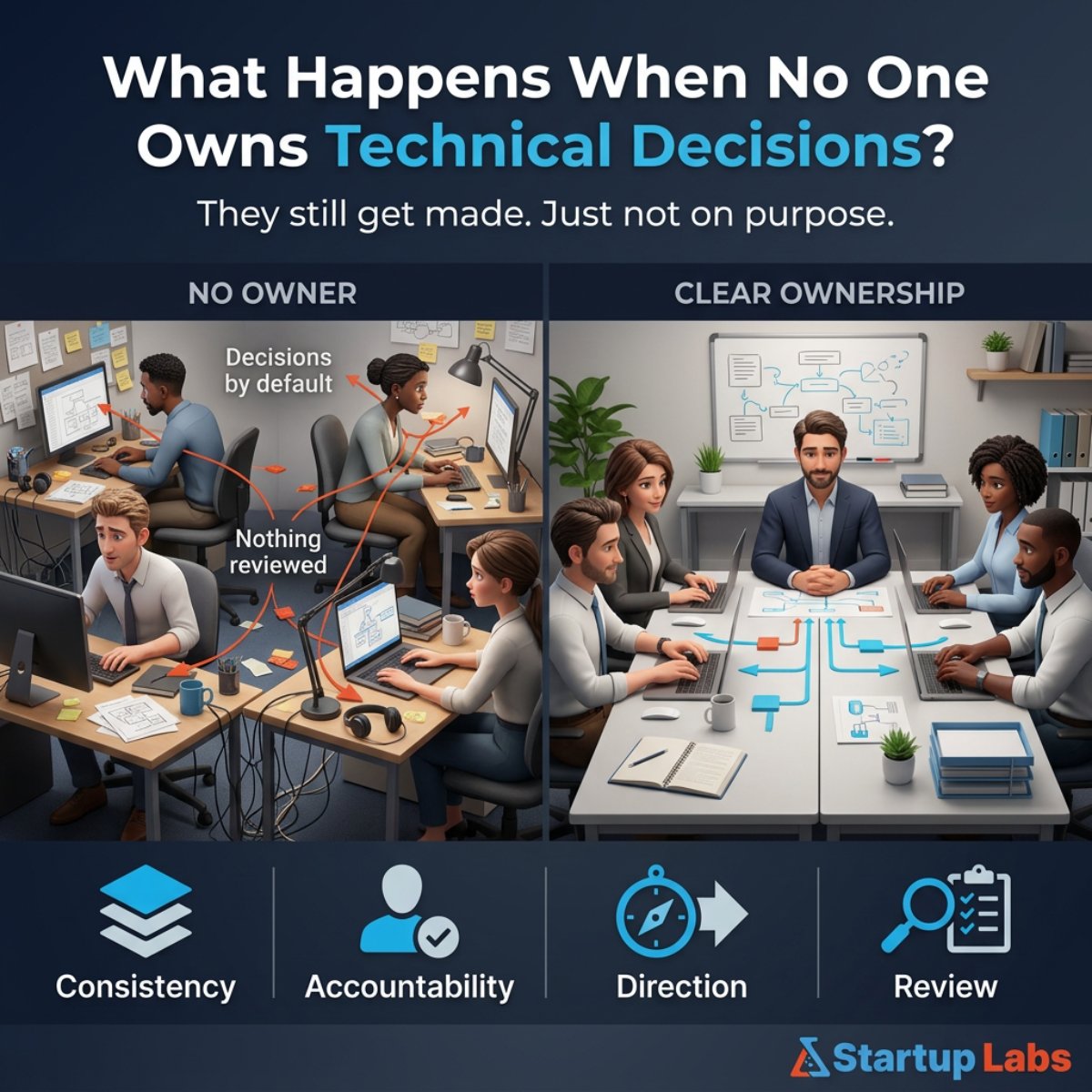
What happens when no one owns technical decisions?
Not one big failure. A slow accumulation of small ones — features that complicate tomorrow's roadmap, quality bars that shift release to release.
Who owns technical direction on your team right now?
#StartupFounder#SaaS#MVP
Faster code isn't a better product.
AI can generate working code faster than teams can review it — but it can't evaluate what's worth building or whether it's ready to ship.
Speed gets you code. Oversight gets you a product.
#AI#TechnicalLeadership#SaaS#MVP#Founder
Your launch shortcut might be today's bottleneck.
The question isn't "was this bad engineering?" It's "is this trade-off still worth it?"
Keep what works. Fix what blocks. Defer what can wait — with an owner and a trigger to revisit.
#StartupFounders#FractionalCTO#MVP
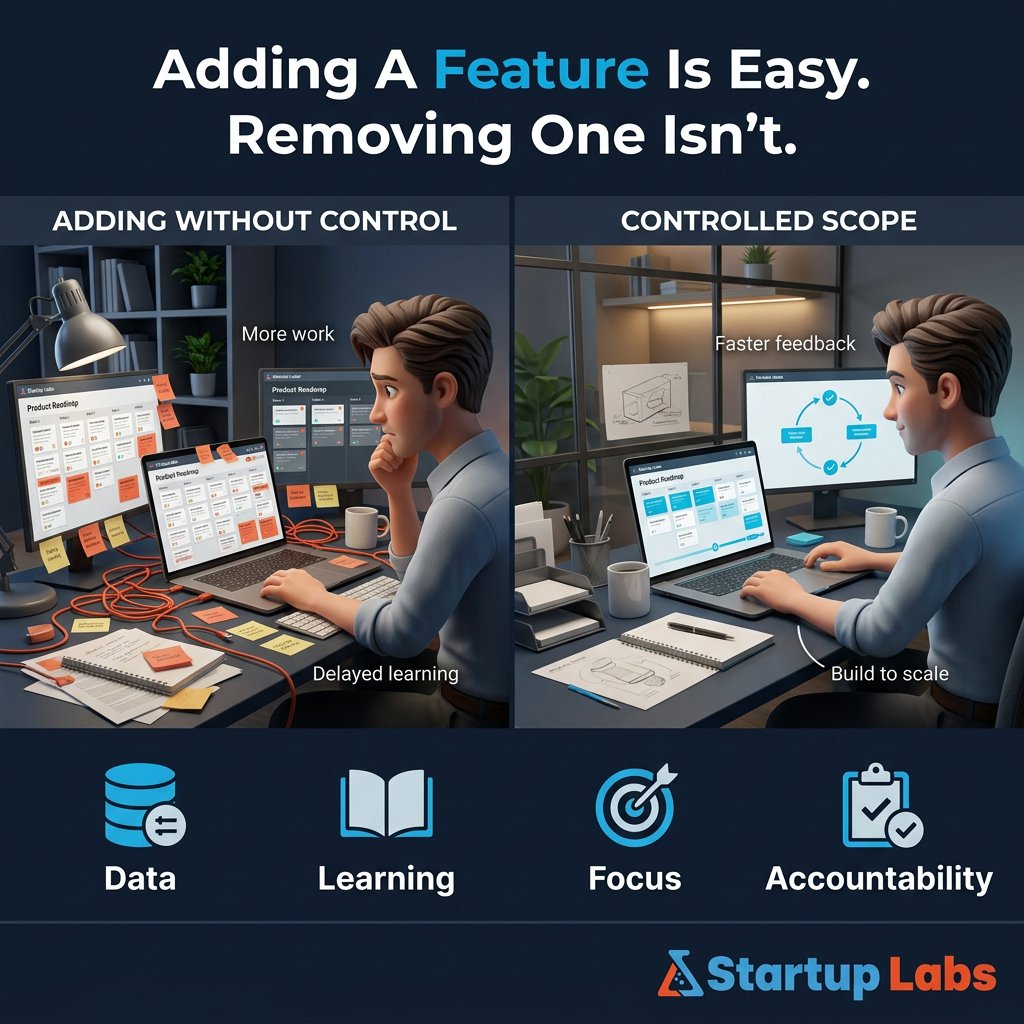
Adding a feature is easy. Removing one isn't.
Controlled scope isn't about building less — it's making sure each feature earns its place through data, not assumptions.
#MVP#ProductStrategy#StartupBuilding#Founder#SaaS
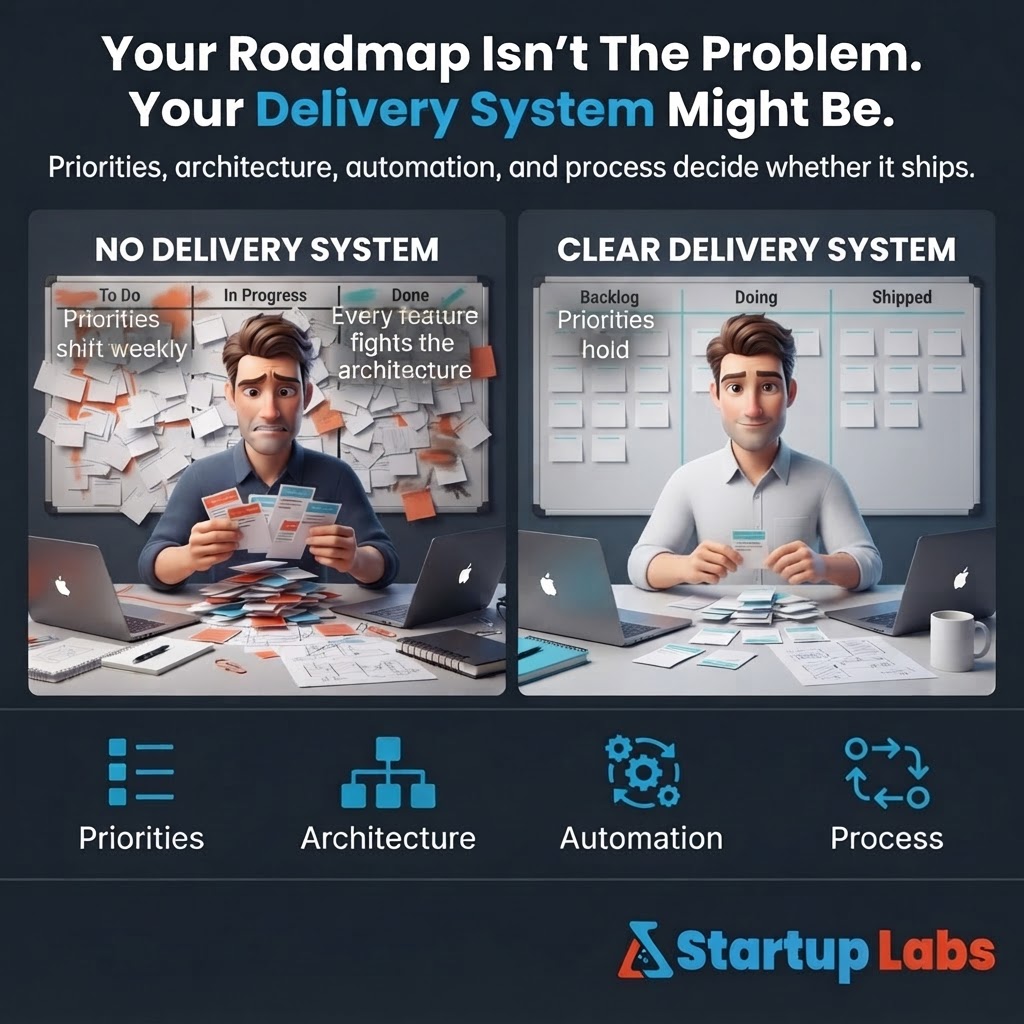
Every founder has been in this meeting.
The roadmap is on the screen. But is it being built in the right order, on a foundation that will hold?
Isolated decisions add up fast.
#Startup#FractionalCTO#SoftwareDevelopment#MVP
Founders don't always need a full-time CTO.
They do need someone accountable for architecture, tradeoffs, and launch readiness — or decisions quietly drift.
#Founder#MVP#Startup#ProductDevelopment
Your AI-built app looks finished. That's the problem.
A demo proves it looks ready. It doesn't prove the backend scales, security holds, or real users won't break it.
AI gets you to the demo faster. Judgment gets you to production.
#AIDevelopment#Founder#MVP
The smartest founders aren't hiring headcount. They're hiring a system.
Early-stage founders don't need a "team of devs", they need a fractional CTO-led pod. Hiring developers without a strategy is just a faster way to burn your runway.
Build with a system, not just staff.
The smartest founders are ditching the traditional C-Suite.
A mid-six-figure CTO salary is a capital trap for early-stage startups. You can get the same senior leadership for the price of a junior dev, and increase the runway.
Scale the product, not the C-Suite.
Hope is the fastest way to build a disaster project. Your competitors aren’t "luckier" than you, they just have better direction. Building on the hope that your architecture will hold or your security is handled is a gamble, not a strategy. Precision beats luck every time.