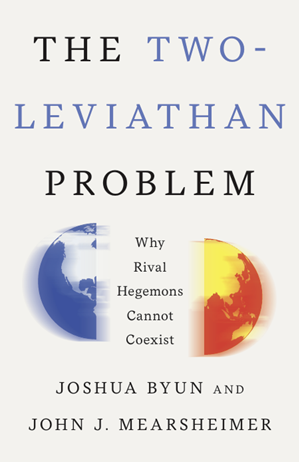
The “post-Shenzhen” world will not be tripolar, but it has already taken an important step toward multipolarity. Dmitriy Trenin on the meeting of the leaders of #Russia, #China, and the #UnitedStates on the sidelines of the #APEC2026 summit in #Shenzhen https://t.co/UXMSLVdV0q
Pakistan Acts More Loyal to China Than China Does to Itself
The most hilarious story recently was Pakistan’s sudden, brief ban, in the name of the “One China” policy, on Taiwanese airlines using its airspace — and its equally swift U-turn just a day later after Beijing expressed surprise at the Pakistani action. China itself allows Taiwanese carriers such as China Airlines and EVA Air to use its airspace because global civil aviation, routing efficiency and reciprocal overflight rights operate under international technical frameworks.
The Pakistani move immediately exposed a glaring contradiction: Islamabad was attempting to be more uncompromising on Beijing’s behalf than Beijing itself.
Pakistan relies so heavily on Chinese strategic assistance and diplomatic protection against international isolation and pressure that it often feels compelled to outdo everyone else in demonstrating its loyalty to Beijing.
While China approaches its partnership with Pakistan through a calculated lens of statecraft and grand strategy, including balancing India, Pakistan views the alliance through an existential lens, elevating it to an “all-weather strategic partnership” or “iron brotherhood.” Indeed, Pakistan routinely resorts to panegyrics, traditionally describing its ties with China as “higher than the mountains, deeper than the oceans.”
The ban on Taiwanese carriers was a case of anticipatory obedience. Pakistani authorities were apparently seeking to score geopolitical brownie points in Beijing by demonstrating hyper-vigilance over China's core sensitivities.
“Over the last few years, India has been stuck between a rock and a hard place, between Beijing and Washington. Both have used different tools of economic statecraft — export controls and tariffs — impacting India’s security.” 1/4
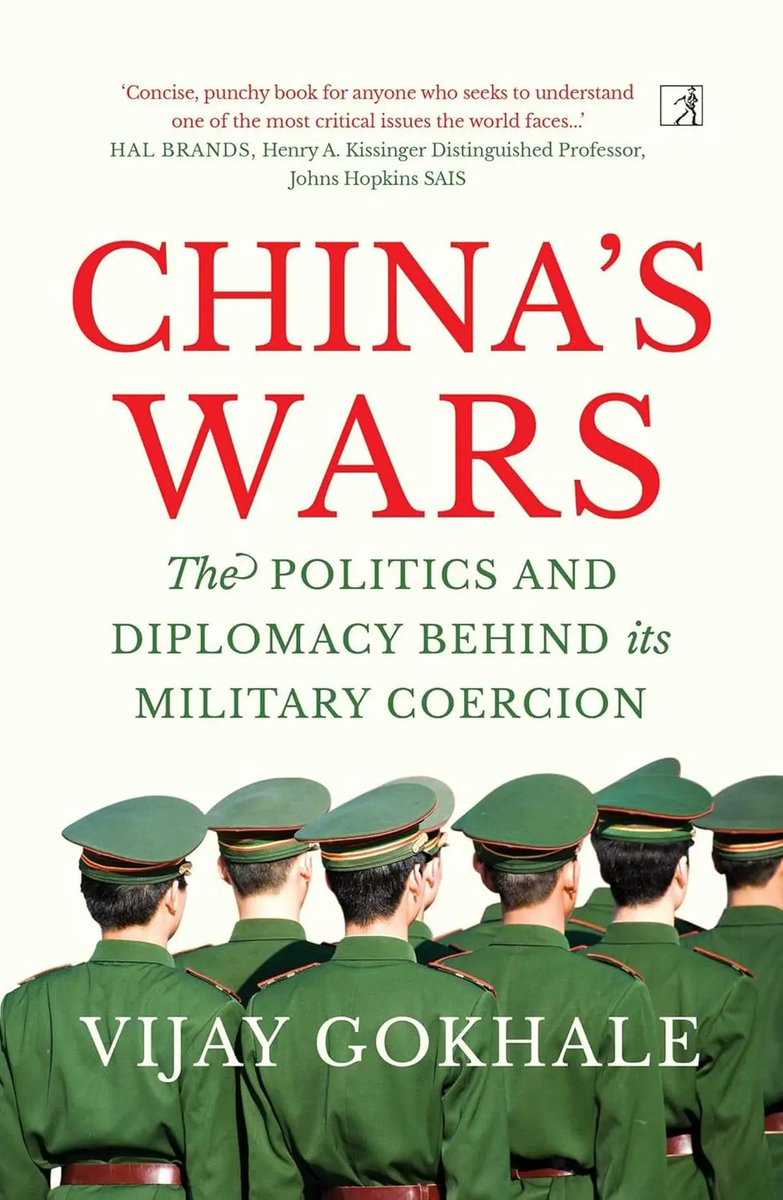
🧵 ‘China’s Wars’ (2026) by @VGokhale59, India’s former Foreign Secretary (2018-20) and former ambassador to China (2016-17), has excellent coverage of China and its wars / crises of 1958, 1962, 1969 and 1979 but the real value is in his concluding lessons for India. (1/23)
U.S. intelligence agencies have long acknowledged that U.S.-supplied F-16 fighter jets form part of Pakistan’s strategic nuclear arsenal. Pakistan is believed to have adapted some of its F-16s to carry miniaturized nuclear warheads. Yet at a time when the Trump administration is waging war on Iran supposedly to prevent it from acquiring a nuclear bomb, Washington is simultaneously modernizing and upgrading Pakistan’s F-16 fleet, which is primarily directed at India.
Under a $686-million upgrade package for Pakistan’s F-16 fleet, the U.S. is modernizing the jets’ avionics, operational flight program software, electronic-warfare systems and cryptographic hardware, while installing tactical data-link systems to enable real-time, jam-resistant communications across air and ground assets and enhance network-centric capabilities. The upgrades would extend the jets’ operational life through 2040.
The contradiction is hard to miss: Washington is waging war over Iran’s hypothetical nuclear bomb while effectively giving Pakistan a free pass as it expands and modernizes its nuclear arsenal. For more than 22 years, Pakistan has retained its designation as America’s Major Non-NATO Ally (MNNA).
My article in @LowyInstitute ‘The Interpreter’ argues that #India-#US relations needs to go beyond episodic achievements. Rather than dealmaking or platitudes, the strategic rationale of the relationship needs to be revived. See comments. @CHAsiaPacific https://t.co/Qy5eYaKiv5
The chokepoint trap: How the search for economic security will end in geopolitical calamity. A very good and highly recommended read... https://t.co/Kzb6ATDmKd
Once more, India has dodged a bullet.
Perhaps it's instructive to recall Dr S. Radhakrishnan's witty but farsighted remark to former Canadian PM Lester Pearson: "In the end, diplomacy is neither an art nor a science. It is merely a dodge."