TL;DR onsite #solar and #storage are becoming core financial tools for #logistics and industrial #realestate portfolios, not sustainability sidequests.
@wayfair's post underscores this shift. Their projects with @prologis were among the earliest to run through our marketplace.
https://t.co/5f3V3KiDQB
#cleanenergy #marketplace
📍 Incentive Spotlight: Rhode Island
Rhode Island Energy's REG Program is active and most C&I property owners don't know they qualify.
Rhode Island Energy's Renewable Energy Growth (REG) Program pays a fixed, state-backed incentive for solar generation and the structure couldn't be simpler for property owners:
→ A developer finances and builds the system
→ You lease them the roof or land
→ You collect payments for 20 years
No capital. No operations. No changes to how your buildings run.
The 2024–2027 tariff window is active now — and program capacity fills on a first-come basis.
🔗 Learn more about the incentive and find out if your sites qualify: https://t.co/gwICDefX5V
Three things changed in the last five years that made your parking lot worth $30,000 to $50,000 per MW per year.
1. Batteries dropped 40% in cost.
2. Utilities ran out of transmission capacity.
3. The deal structure matured enough that competitive bids are now the norm, not the exception.
The result: battery developers will lease 6 parking spaces, own all the equipment, handle all the operations, and pay you recurring rent, for 20 years.
Learn more about the market factors changing the way you look at your real estate and which sites qualify: https://t.co/W8khuJuz15
Your feasibility says go. Your sustainability team is ready. The IRR clears the hurdle. So why is the project still stalled six months later?
It's not the economics. It's the room the decision has to pass through.
Learn More: https://t.co/0P4mBQ89lN
🎤 The clean energy transition is one of the biggest stories of our time, but most of it gets told in the wrong language. Caity is joining us as Head of Marketing to change that.
She brings deep passion for renewable energy and climate impact, plus the rare ability to turn complex ideas into stories that move people to act. At a moment when scale, speed, and transparency matter more than ever, she's exactly who we want telling the Station A story.
Onwards!
👏 We are welcoming Danny to Station A as our Enterprise Sales Lead! After years developing C&I solar projects, Danny knows exactly where institutional portfolios get stuck: inconsistent developer quality, opaque bidding, and execution risk nobody priced in.
He's joining us to help REITs and enterprise owners move faster and close with more confidence.
Great to have you, Danny.
🕰️ Eleven years ago, we started building software to answer one question for a California utility: which buildings should host distributed energy to help replace a retiring power plant?
The lesson we learned then is the lesson the grid is learning now. Deploying distributed energy isn't a technology problem. It's a siting and stakeholder problem.
Today the grid is constrained almost everywhere. VPPs are scaling. Interconnection queues are stuck for years. The narrow question we started with in 2015 has become the central question of the grid.
Kevin Berkemeyer on how Station A's origin story became the grid's future.
https://t.co/U1Xkeq9qT7
💵 The real ROI of your first wave of clean energy projects isn't the kWh. It's the process. Templates, decision criteria, provider relationships, internal approvals, interconnection playbooks. All of it transfers to wave two. That's how 12-month timelines become 6-8 month timelines, and how teams go from 3 sites under contract to 10 without doubling headcount.
https://t.co/cnwCAhRLGq
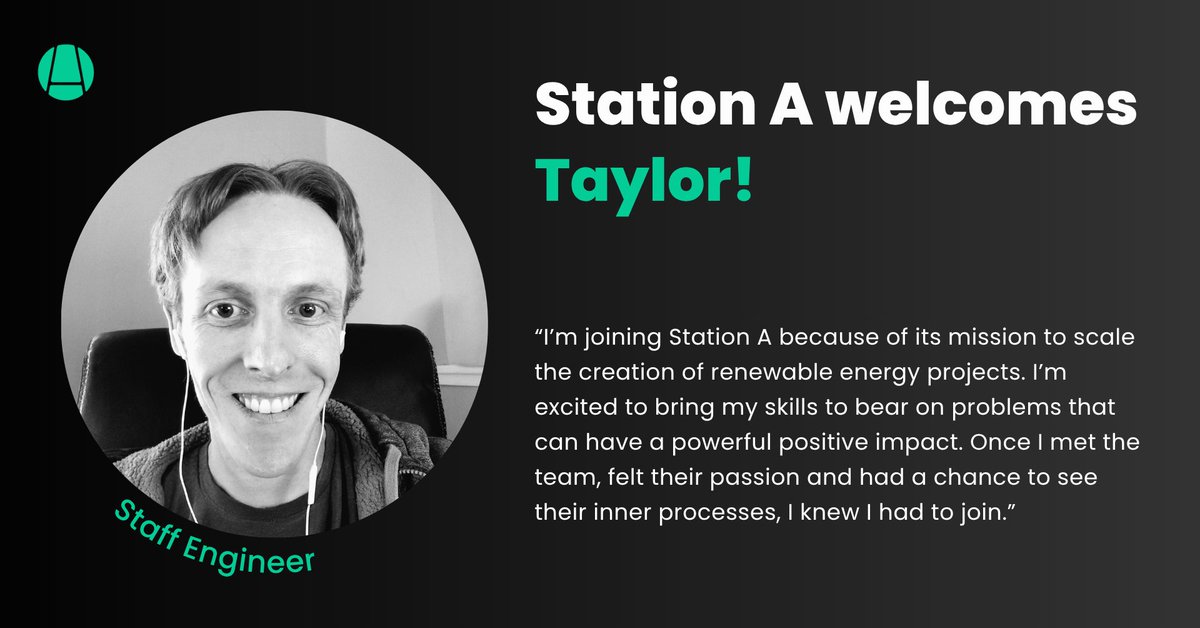
💻 We're excited to share that Taylor Ritenour has joined Station A as our newest Staff Engineer!
Taylor brings experience building products across startups in ads, agriculture, and AI. He'll be leading the development of Station A's marketplace transactions, the systems that turn qualified opportunities into signed contracts. His focus will be on accelerating RFPs, bidding, provider selection, and contracting as we drive toward faster cycles across the platform.
🚥 Your feasibility study says go. So why is the project still sitting in someone's inbox 6 months later?
Because modeling success ≠ delivery success. Interconnection delays, scope misalignment, contracting friction, unclear ownership. The economics aren't the hard part anymore.
https://t.co/2iWvPF90Nh
📚 If you're managing clean energy projects across multiple properties, you've probably lived this: RFP details scattered across emails, proposal presentations buried in threads, and no single place to see where everything stands.
We just shipped My Projects, a centralized view where buyers can see every active project, open RFP details and proposal presentations, and give their whole team visibility.
One page, no hunting. Available now for all buyers on Station A!
https://t.co/yaCZzJZBum
📉 Global corporate clean energy procurement fell in 2025 for the first time in nearly a decade.
But the decline wasn't evenly distributed. Meta, Amazon, Google, and Microsoft accounted for nearly half of all deal volume. They have repeatable procurement programs, while everyone else is still doing projects one at a time.
The gap between companies with real energy programs and companies running on spreadsheets and institutional memory is getting harder to ignore.
Read on to learn how Station A can help you run a program that scales.
https://t.co/XFSPnJw6LH
⭐️ You shouldn’t have to become the technical person in the room to defend a solar or storage deal.
Most internal pricing debates aren’t actually about price. They’re about whether the bids are comparable, and whether the process holds up under scrutiny.
Read on to understand why competitive bidding changes that.
https://t.co/sOZ8j3cBUq
💥 Big news: Please join us in welcoming Vishal Kapadia to the Station A Board of Directors.
Vishal brings rare, buyer-side experience from one of the most demanding real estate and energy portfolios in the world. From his time at Walmart, he understands what it takes to procure, deploy, and manage onsite energy across hundreds (or thousands) of sites, where reliability, speed, and economics all have to pencil.
That perspective matters right now, because commercial portfolio owners are dealing with a new reality: more load, more grid constraints, and more urgency to act.
In Vishal’s words: “Commercial real estate owners face unprecedented challenges regarding the availability, affordability, and reliability of power… I’m thrilled to join the board and support the team in enabling smarter, faster deployment where and when it’s needed most.”
Welcome, Vishal! Excited to build together.
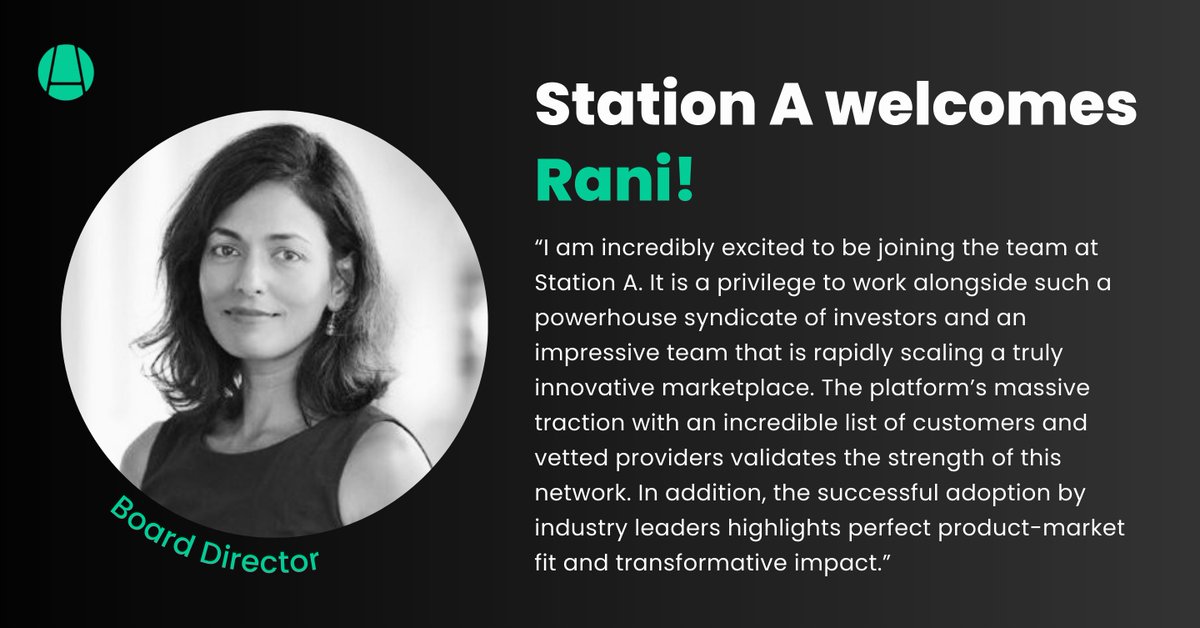
🤝 We’re excited to welcome Rani Urbas to the Station A Board of Directors.
Rani has spent her career backing and building companies that sit at the intersection of infrastructure, real assets, and climate. She understands what it takes to scale in markets where credibility, execution, and outcomes matter more than hype, and that’s exactly where Station A plays.
As Rani shared: “It is a privilege to work alongside such a powerhouse syndicate of investors and an impressive team that is rapidly scaling a truly innovative marketplace… The platform’s massive traction validates the strength of this network.”
Rani, we’re lucky to have you onboard, let’s build!
👀 Most buyers run an RFP to get a better price.
The ones who do it well get something far more valuable. A competitive procurement process does three things that a single-vendor negotiation almost never does:
👍 Forces scope clarity before you're committed
🛑 Surfaces how providers actually allocate risk (not just what they charge)
🍎 Creates apples-to-apples comparisons that make the right decision obvious
The projects that fail aren't usually the most expensive ones. They're the ones where the buyer didn't fully understand what they were buying. We wrote about why competitive RFPs are a decision-quality tool, not just a cost-reduction tool. Read on!
https://t.co/J7Za8Qzktp
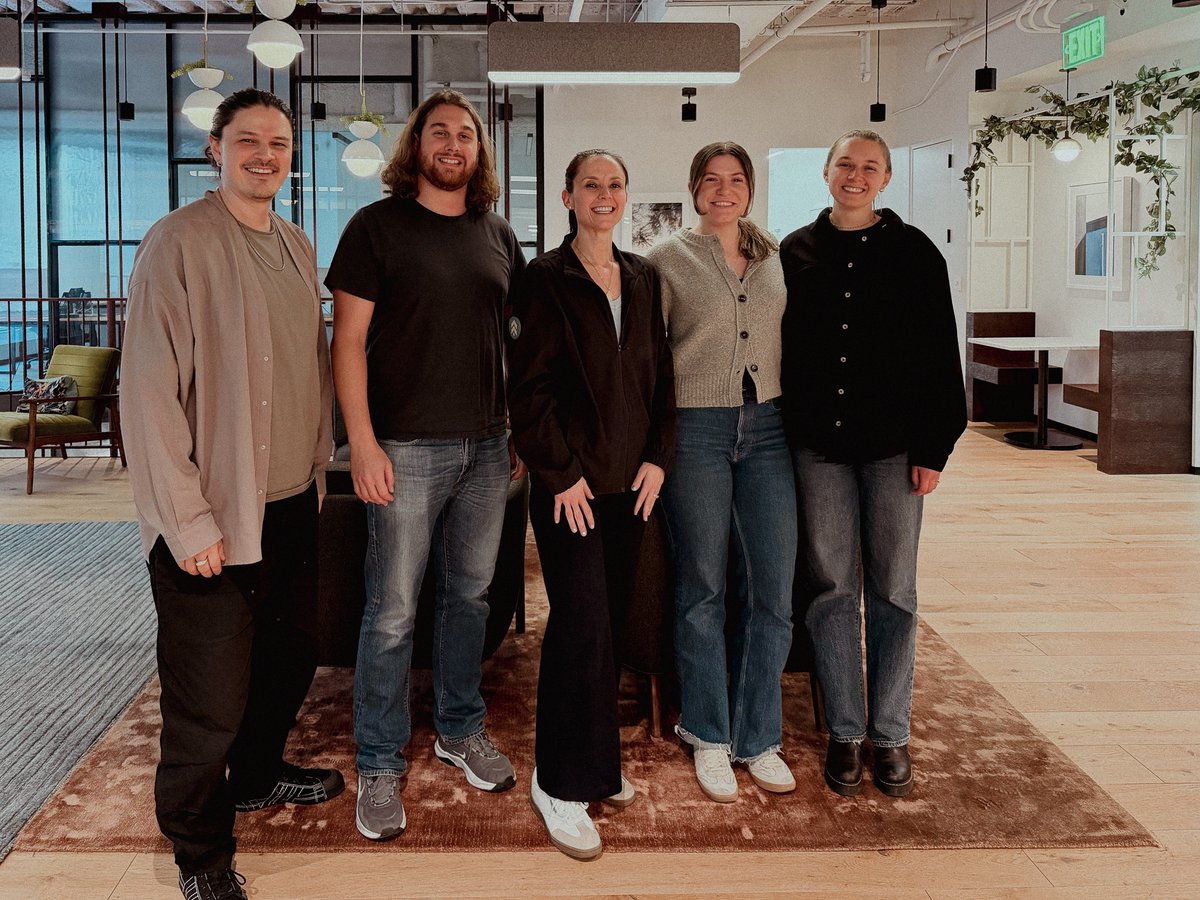
🤝 Working fully remote is pretty great.
But last week was a reminder that remote-first doesn’t mean remote-only.
A bunch of us flew into San Francisco for team meetings, brainstorms, and our board meeting, and the energy was incredible! Faster decisions, sharper ideas, stronger alignment.
Turns out the magic is in the mix. Want in on the fun? Join our team by applying for one of our open roles.
✋ “We already have a developer.”
That can work for a project. It rarely scales across a portfolio. Competition doesn’t replace trust, it validates it.
Read on to understand how structured procurement improves outcomes.
https://t.co/XQV6sqHWy4
⌛️ “This makes sense, we just don’t have the bandwidth right now.”
That’s the sentence we hear right before projects quietly stall. The problem isn’t economics. It’s time. Here’s what changes when time to value drops.
https://t.co/eE51OPEZdh
🔑 The most expensive input in energy procurement isn’t capital.
It’s time.
Ad hoc processes quietly drain momentum, attention, and internal confidence, even when projects pencil.
Read on to understand why it matters.
https://t.co/jW8eOqUmTc
🧱 Think of your portfolio as infrastructure, not a collection of one-off projects. The teams making real progress are portfolio-first: trading “perfect” projects for repeatable systems that actually get built.
https://t.co/mSRDqledJJ