Ahmed Abubakar is from Zakka, a small, quiet village in Safana LGA, Katsina State. He only just earned his Bachelor's degree in 2024. Before that certificate ever came, he was already hustling to build a life - teaching in his community, trading fairly in used cars and household appliances to put food on the table.
On September 28, 2019, he married the love of his life, Nafisa Musa. Their love story just reached its most beautiful chapter: on March 20th, 2026, God blessed them with a baby girl.
She is only 7 months old.
Right now, as you read this, Nafisa is still nursing that infant. She is still healing. Ahmed is still trying to figure out how to secure a future for a child who hasn't even learned to walk.
And then evil came knocking.
Armed terrorists stormed their home in Kaduna and dragged them away - a young father, a nursing mother, and a naked 7-month-old baby girl clutched to her mother's chest. No mercy. No clothes for the baby. They drove them like animals through thick bushes and unforgiving hills into captivity.
Now they are demanding N300 million. That's $225,394.
Let that sink in.
At Nigeria's current minimum wage of N70,000 a month, an honest Nigerian would have to work for 357 YEARS and 2 months - 4,286 months straight - saving every single kobo, not eating, not paying rent, not paying transport, just to make what these gunmen are demanding in one night.
A young family that has harmed no one, that was only trying to raise their baby in peace, now has an AK-47 pointed at them.
A father who spent his life teaching other people's children.
A mother whose arms have never known anything but love and care for her baby.
And a 7-month-old girl who has not even lived long enough to know what the world is, now facing a world at its cruelest.
How does a family like this raise N300 million in one night? Where are they supposed to find it?
How?
From day one, the Coastal Highway has evolved based on field realities—from avoiding critical subsea cables to rerouting sections along the first 37 km in Lagos to protect key infrastructure.
In mega-projects of this scale, multiple realignments and redesigns aren't flaws; they are standard engineering practice.
The route adapts as ground data emerges.
The real question isn't whether the route adjusts; it’s whether construction continues.
I posted that the new coastal road would end in the Lagos sector, and I was right.
I also reminded everyone that an East–West Road already existed; thus, the new coastal road was a duplication, or just a ploy to build really good coastal infrastructure in the Lagos sector, which is good for the economy of Nigeria.
A pattern is emerging; only the foolish will not see it.
I want to congratulate President Bola Ahmed Tinubu and say; well played Sir.
Dear Nigerians. Pls Read Very Carefully.
A Total of 9 Toll gates were agreed upon for the Lagos Calabar Coastal Highway. Each Toll Unit will charge N3,000 for cars and N5k for Trucks. Nigerians are expected to Pay this Tolls on that Road OVER A 15 year TOLLING PERIOD.
A $1.87 billion loan was borrowed by the Tinubu administration from Deutche Bank, Afrexim Bank and First Abu Dhabi group for that Highway. Every Investor in that Room knew that A whole new Lagos to Calabar route CAN NEVER BE AS LUCRATIVE as the current East West Legacy Corridor filled with Travelers, Transporters, Goods & Traders plus a huge December travel Upsurge season.
The Devil works Hard but APC works harder. Umahi knew what he was doing from Day 1. THEY WERE NEVER BUILDING ANY ROAD TO CALABAR. Thats why the EIA never Fucking mattered to start with. Intelligent Nigerians were doing Geography and Topography maths for our Govt. Explaining to them that the Highway will need over 70 bridges to navigate the swamps of the Naija Delta alone etc. It didn’t matter. The Road was Never going to go tru the original Map Umahi posted publicly. 🤣 The Lagos end is completed and has boosted their Eko Atlantic phase 2 project. Zero Toll Gates were erected.
This people actually planned to put the 9 toll Gates along the East West Corridor.
The EAST will be the ones made to Pay for that 15 year Loan eventually. The Lagos end is clearly Untolled. Any investor looking to recoup an almost $2 billion Loan is not waiting for Umahi’s ridiculous 8 Yr Construction Timeline to build that new Road when a profitable route already exists. They sold Nigerians a smoke screen from Day 1. A very Unfair and diabolical plan if you ask me.
Just to Prove my Conspiracy theory right. Any Journalist that gets to Interview Minister Dave Umahi moving forward Pls ask him a simple question. Where does he Exactly plan to place the 15 year loaned 9 TOLL GATES along that Route? and I will be proven Right. I bet you he will answer Benin Bypass, Agbor, Asaba, Onitsha, Oba/Nnewi junction and 9th mile. If he even answers you at all. 😎
I know this party like the back of my Hand. APC has taught me to Ignore what they are Saying Publicly and Look for the actual Scam that they are Running underneath. They can’t help themselves.
#GoAndVerify 🧐🤬🇳🇬
@TrafficChiefNG Wonderful! So, the condition of the East-West road was an afterthought?
"Nobody envisaged the climate change"?? Didn't the Environmental Impact Assessment countenance these issues?
What was the initial plan? Why this apparent change amidst construction? Cost implications?
“You comrade Adams Oshiomole led a number of significant pro-people protest under President Obasanjo administration, but under President Buhari and Tinubu, you are supporting astronomical pump price increases of fuel, what changed sir?”
Oshiomole:
STATEHOUSE PRESS RELEASE
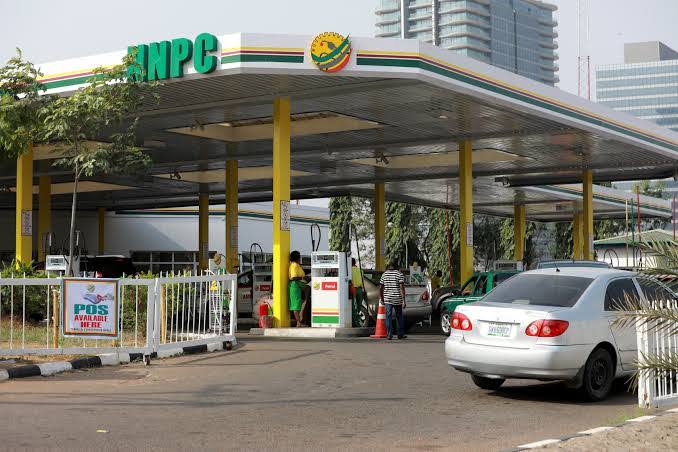
NNPC RETAIL FORGOES PETROL PROFIT MARGIN TO OFFER SOME SUPPORT TO NIGERIAN HOUSEHOLDS AMID GLOBAL PETROL CRISIS; FG ANNOUNCES ADDITIONAL MEASURES
The Nigerian National Petroleum Company (NNPC) agreed today to forgo its petrol retail profit margin and sell to Nigerians at cost to cushion the impact of global crude oil price shocks and volatility on vulnerable households.
NNPC Retail, which already sells petrol at the lowest price in the market, will offer this new deal within the next 30 days. This means if NNPC's landing cost is N1300, it will sell fuel to Nigerians, especially commercial vehicles, at the same price.
The company's discount gesture, backed by President Bola Ahmed Tinubu, was among the raft of measures the Finance Minister and Coordinating Minister of the Economy, Taiwo Oyedele, announced today.
Oyedele said he hoped other marketers would take a cue from the NNPC, as the sharp rise in crude and petrol prices is not expected to last long.
Oyedele was emphatic that NNPC agreeing to sell at a discount must not be misinterpreted as the restoration of petrol subsidy, which ended on May 29, 2023.
In addition, Oyedele announced forward sales of crude to domestic refineries. As production rises and previously committed crude is freed up, this is expected to shield pump prices from global market volatility.
Oyedele also said the Federal Government is negotiating a ceiling of N1,350 a litre on the ex-gantry or landing cost of petrol, to keep pump prices stable. Where costs rise above the ceiling, refiners and importers will carry the shortfall and recover it later, when crude prices or the exchange rate allow, without breaching the ceiling.
"This is neither a subsidy nor a price control: it is designed to smooth prices over time rather than suppressing them. The reasoning is simple. 1,400 naira a litre today and 1,400 tomorrow is better than 1,500 today and 1,300 tomorrow, because volatility itself adds to uncertainty and cost. And when fares rise sharply, they rarely fall as fast. The ceiling will be reviewed monthly, reset as costs require, and the figures published for transparency," Oyedele said.
Oyedele also said that, under the 2025 tax reform laws, the Federal government, in collaboration with the states and security agencies, is reining in the collection of road taxes and levies that inflate fares and logistics costs.
The Federal government is also increasing funding for cash transfers to the most vulnerable households and subsidised credit for small businesses and consumers.
Other measures announced:
A faster CNG rollout:
The federal government is scaling up CNG deployment with the states. The government expects transporters to pass the savings on to passengers in lower fares. CNG is 60-70 per cent cheaper than petrol.
An excess profit tax:
This will be considered for operators who take undue advantage of consumers, anywhere along the energy value chain. The government said it will use proceeds from taxes on price gouging exclusively to cushion the impact of fuel prices through transport support or vouchers for urban minimum-wage earners, who are most vulnerable. The Federal Government will also work with the National Assembly to consider enhanced tax relief for low-income earners under the 2027 Finance Bill.
Less red tape: The Federal Government is cutting regulatory costs that feed into the cost of doing business and, indirectly, into higher prices of goods and services.
National Strategic Fuel Reserve:
To protect households and businesses from future energy shocks, the Federal Government is investing in a National Strategic Fuel Reserve. The government will release refined products into the market under clear, published rules whenever a global disruption or hoarding threatens supply and price stability. This is not a subsidy, and it does not fix prices; rather, it secures supply and reduces price volatility. It will prevent artificial scarcity, deter market manipulation, and anchor long-term energy security, so a deregulated market delivers stable growth rather than sudden price shocks.
Better traffic and logistics management:
Traffic management agencies will improve traffic flow, especially in major urban centres, to reduce fuel consumption. Also, NIPOST’s newly launched address codes will help make logistics more efficient and cheaper.
To be clear, none of these measures restores a blanket subsidy. Doing so would create longer-term harm for a short-term cure. Each measure is designed to reach the people who need help, without putting the wider economy at risk.
The Presidency acknowledged the challenges the people face over the high cost of fuel.
"Removing the fuel subsidy came at a price. But the alternative has been tried. Nigeria has already lived through that cycle: scarcity, smuggling, a collapsing currency and a fiscal crisis. We cannot afford to live through it again, least of all in response to a temporary disruption, and at the very moment the results of reform are gathering pace."
"Government is not out to reverse a necessary reform designed to set our country on the path towards sustained prosperity. It is to ensure its gains reach more Nigerians, faster and in more tangible ways. That is our work, and we are committed to doing it.
"The Federal Government is also working on a comprehensive package of fiscal measures to bring inflation down to single digits sustainably in the near term."
Bayo Onanuga
Special Adviser to the President
(Information & Strategy)
October 8, 2026
Lagosians cry out as flood submerges Isheri Oshun Road in the Ijegun community area of Lagos State due to a blocked drainage system, leaving residents struggling to navigate.
Lagos Reporters
Residents cry out over stagnant flooding affecting Ansarudeen Mosque, Alakoro, and major markets around Oke Arin and Sanusi Olusi Street area of Lagos State due to blocked drainage channels.
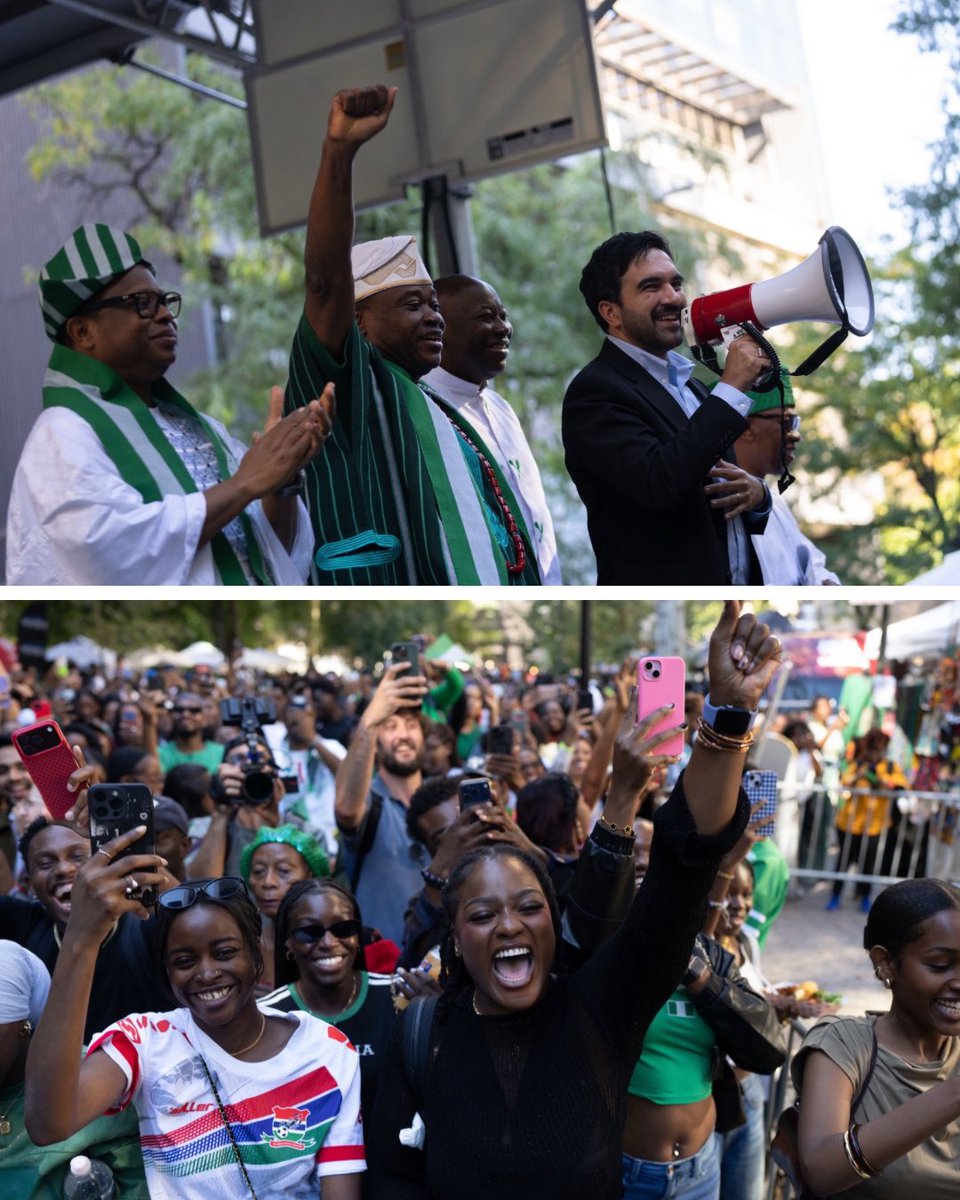
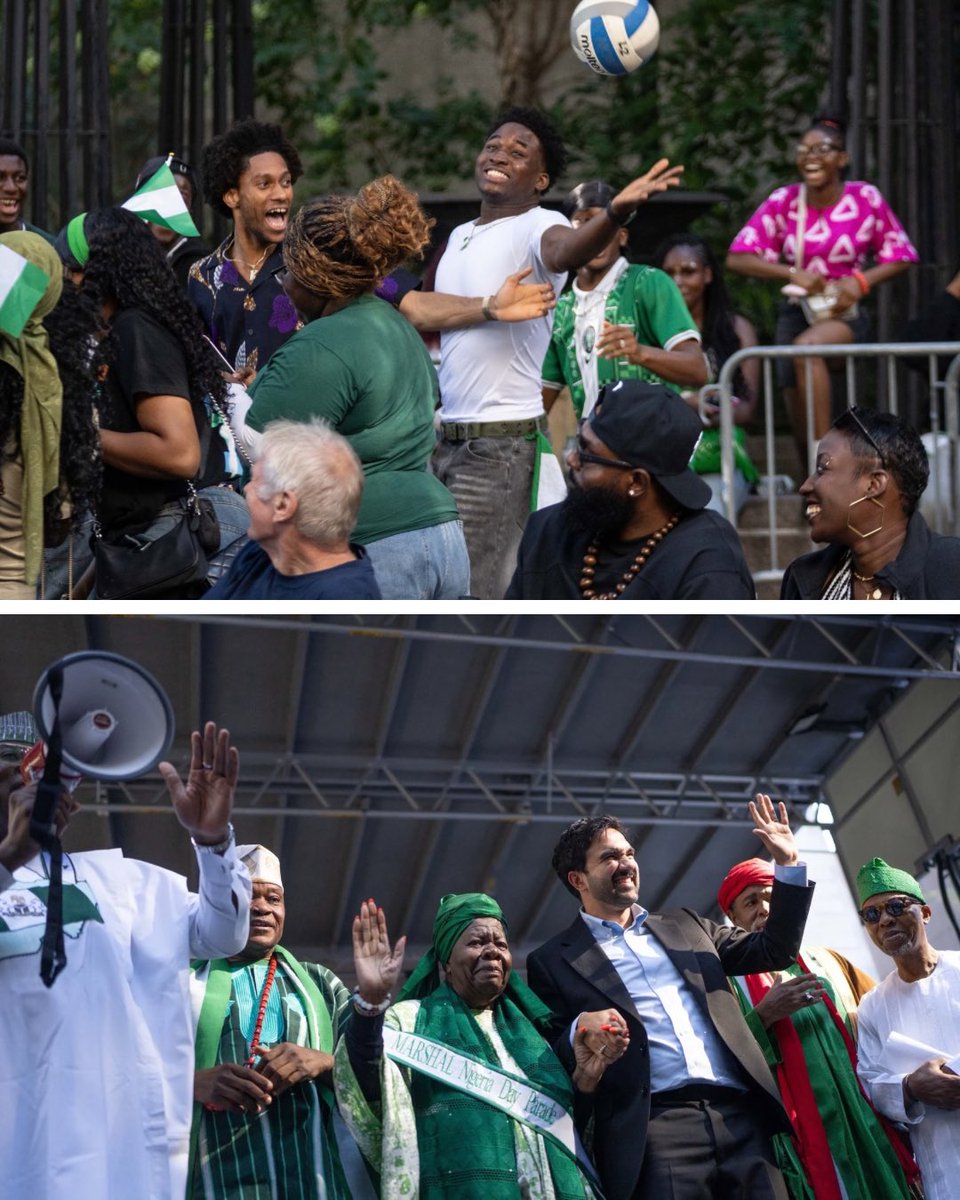
New York City, wetin dey sup? It was a joy to commemorate 34 years of the Nigerian Day Parade alongside the many Nigerian New Yorkers who fill our city with life.
From the entrepreneurs whose businesses strengthen our neighborhoods, to the sounds of Afrobeats pouring out of graduation parties in Southeast Queens, and the aroma of Agege bread calling out to passersby in Brooklyn — the impact of Nigerian New Yorkers is felt across the five boroughs.
Our city is richer in culture, stronger in community, and more vibrant because of your contributions.