He had been one of the most recognizable child actors of the 1950s. By 1980, he was lying on a Los Angeles sidewalk with bullets in his bulletproof vest, bleeding from at least one wound that had gotten through. The name on the Los Angeles Police Department's roster was Officer Ken Osmond. The name on his old television contracts was Eddie Haskell, the slick two-faced kid from Leave It to Beaver who had become cultural shorthand in America for fake politeness. He had been a cop for ten years. Most of his old industry had no idea where he had gone.
Ken Osmond had played Eddie Haskell on Leave It to Beaver from 1957 to 1963. The character had been the slick, two-faced neighbor kid, the one who was sickly polite to Mrs. Cleaver in the kitchen and cruel to the other kids the moment the adults left the room. Eddie Haskell became so culturally specific that the name itself turned into American shorthand. Calling someone an Eddie Haskell, in 1965 or 1985 or last week, meant they were performing for authority and probably lying about something. Ken Osmond had been the face of that performance for six seasons.
The show ended in 1963. Osmond was about twenty years old. He had been working as an actor since he was nine, and famous since he was fourteen. By any reasonable measure, he should have been ready to keep working in Hollywood for the rest of his life. There were a lot of doors potentially open to him.
Almost all of them were the same door.
Casting directors could not see past Eddie Haskell. He auditioned. He got small parts. Each one was, in some way, a variation on the same character he had aged out of. The kid he had been on television had become a brand he could not put down. He could have spent the next forty years playing different versions of Eddie Haskell. Plenty of former child actors did exactly that. Some of them made a comfortable living from it.
Ken Osmond decided he was not going to do that.
In 1970, he joined the Los Angeles Police Department. There was no press release. There were no former-child-star-becomes-cop magazine spreads. There was no carefully orchestrated rebrand. He went through the academy, like every other recruit. He came out the other side and started working patrol, like every other rookie. His fellow officers knew who he was. Some of them had grown up watching Leave It to Beaver. On the job, he was just Osmond.
He worked patrol in Los Angeles during the 1970s and 1980s, in a city that was, at the time, in the middle of one of the most violent periods in its history. Gangs. Drugs. Rising crime. A police force that buried its own officers far too often. Osmond was on the street. He responded to domestic disturbances and traffic accidents and burglaries and assaults. He did the work patrol officers do. He did not give interviews about it.
On September 20, 1980, he was working a foot pursuit when the suspect turned and fired. Osmond went down. He was wearing body armor, and the vest stopped at least two of the rounds. Another bullet hit his belt buckle and deflected. One round got through and lodged in his body. He survived because the armor worked, because the buckle worked, and because the bullet that got through missed anything immediately fatal. He was rushed to the hospital. He recovered. He went back to work.
Asked later about the experience, in the few moments anyone got him to comment on it at all, he gave the kind of answer cops give to journalists who do not understand the job. I knew I'd been hit, he said. I just didn't know how bad.
That was the full Ken Osmond statement on getting shot in the line of duty. No book. No movie rights. No press tour. No carefully crafted memoir. He had been within inches of dying on a Los Angeles street, and he had nothing in particular to say about it.
He kept working for the LAPD until 1988. Eighteen years of service in total. He retired on a disability that had been accumulating for years. He went home, mostly quietly, and lived the rest of his life out of the spotlight.
He did a handful of Leave It to Beaver reunion projects in the decades after, because the show was important to people and he was a generous man about that. He made occasional appearances at fan events. He sometimes signed autographs. He almost never led with the LAPD story when he sat down with interviewers, even though by that point a fair number of his fans already knew about it. He had not done the police work in order to have a story to tell about it.
Ken Osmond died on May 18, 2020, at the age of seventy-six. The obituaries led, naturally, with Eddie Haskell. They were not wrong to do so. He had been Eddie Haskell. But almost all of them, somewhere in the middle, added a paragraph about the eighteen years he had spent as a Los Angeles patrol officer, and the day in 1980 when he had been shot, and the body armor that had kept him alive.
A paragraph. That was the recognition.
It was probably exactly the amount of recognition he had wanted.
Eddie Haskell was the most famous fake politeness in twentieth century American television. The man who had played him had spent the second half of his life doing the opposite. He had walked into a uniform without making a press event of it. He had bled on a sidewalk without selling the story. He had retired quietly. He had refused, for fifty years, to make a thing of the fact that he was a thing.
He had played a phony. He turned out to be the real version of the character's exact opposite. The most honest piece of casting against type in the history of his profession.
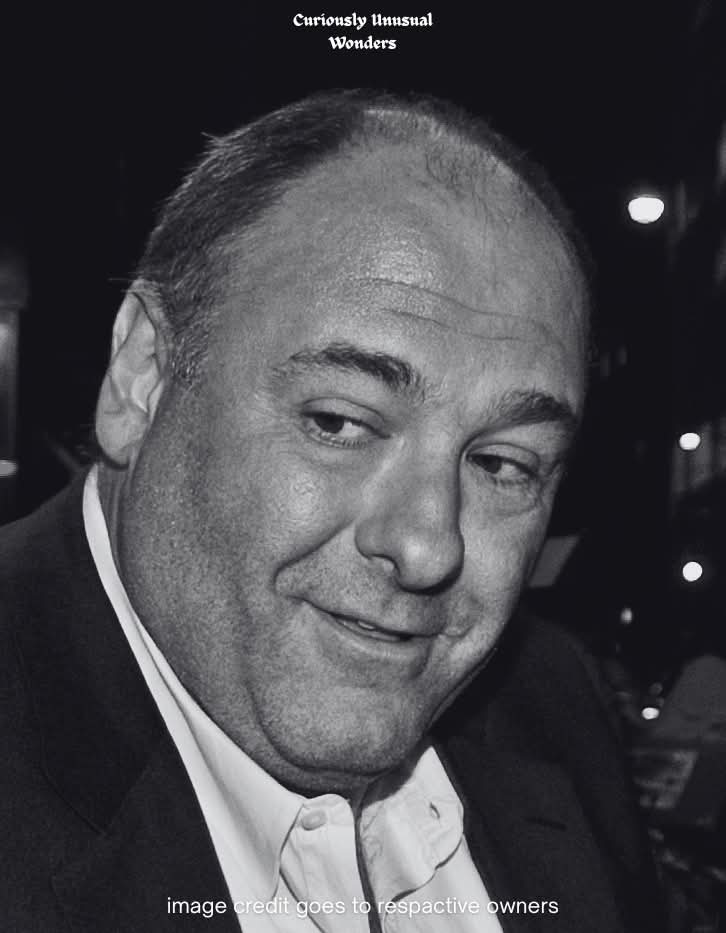
By Season 4 of The Sopranos, Gandolfini was earning $400,000 per episode. HBO wanted Season 5 on the fast track, and the offer was staggering: roughly $1 million per episode across 13 episodes. Agents celebrated. Lawyers drafted. But something stopped him cold.
His co-stars were earning a fraction of what he made. Edie Falco, the woman who carried every scene as Carmela Soprano, wasn't close. The supporting cast earned even less. Gandolfini looked at his contract and saw something executives didn't want him to see — a gap that felt deeply unfair.
So he did something that shocked Hollywood. He walked away.
Production stalled in early 2003. HBO filed a lawsuit seeking around $100 million in damages. Headlines called him difficult. Columnists called him unstable. "They think I'm a wild animal," he reportedly told a friend that spring. The easy move would have been to sign, cash the check, and disappear into Tony Soprano's shadow — the character who made him a household name and quietly trapped him inside it.
Instead, Gandolfini made a different choice.
He eventually returned to the negotiating table and signed the deal. But what he did next became legend. Gandolfini reached into his own pocket and personally gave approximately $33,000 to each of 16 supporting cast members — roughly $500,000 of his own money — as a thank-you for standing by him during the shutdown.
No press release. No cameras. No announcement. Just quiet envelopes handed out privately.
Crew members remembered other moments too. Gandolfini would show up early at Silvercup Studios in Queens, sit in a folding chair, chain-smoke, and ask grips and lighting technicians about their kids by name. He remembered birthdays. He remembered losses. When a crew member's family member fell ill, he quietly helped with expenses. When writers pulled all-nighters rewriting scenes, he fought to protect their words on screen.
The turning point wasn't the signing. It was the pause — the refusal that cost him his reputation, invited a massive lawsuit, and risked killing the biggest show on television. He bet everything on a principle most people would have quietly swallowed.
Season 5 aired in 2004. Ratings climbed. Awards followed. Critics called it one of the greatest seasons of television ever made. But behind the numbers was a quieter truth: James Gandolfini used his leverage not just to lift himself — but to lift everyone standing beside him.
He played a man who ruled through fear on screen. Off screen, he led through loyalty.
When he died suddenly in 2013 at age 51, cast and crew members told the same stories over and over — not about his Emmy wins or his iconic performance, but about the envelopes, the folding chair, the questions about their kids. A legacy built not on what he earned, but on what he shared.
Power doesn't always roar. Sometimes it whispers through a quiet envelope, handed over with no cameras watching.
I just got a burger from @Chilis. It was less than $13 with tax—in California.
The burger tastes better than a McDonalds burger. Way better. It’s also much bigger. The seasoned fries are better, too. The serving size is way bigger than McDonalds.
I also got a full bag of tortilla chips and 3 containers of salsa for no extra cost. The chips are warm. The salsa is tasty.
At the grocery store, chips and salsa might cost me up to $10 dollars.
I got all of this for under $13.
It’s crazy how many big companies like @McDonalds and @netflix will price gauge you to death under the shield of “inflation” while other brands, like @Chilis, will provide consistent value over time—and even improve.
The fiat world is a tricky place. Don’t fall for the scams. They’re everywhere.
The next time you’re considering a quick bite, drive the extra 5 minutes and get your lazy butt out of the car and pick up some Chilis.
No, they don’t have a drive through window or a sketchy kid area laced with germs.
They simply offer a 10X better product for considerably lower prices.
These are my thoughts on AI generated music. We are preparing to fight for the rights of American creators all the way to the DC if necessary. Please repost and leave a comment👇@FLOTUS45