Clonogenicity is the ability of a cell to clone itself and grow into a full colony of cloned cells. Stem cells are well-known for their ability to grow and differentiate into different types of cells.
@NeurosciScience Alzheimer's disease (AD), also referred to simply as Alzheimer's, is a chronic neurodegenerative disease that usually starts slowly and worsens over time.[1][2] It is the cause of 60��70% of cases of dementia.
@NeurosciScience Neurology is the branch of doctors that deals with the disorders of the nervous system. Neurology is about the medical diagnosis and treatment of conditions and illnesses of the nervous system.
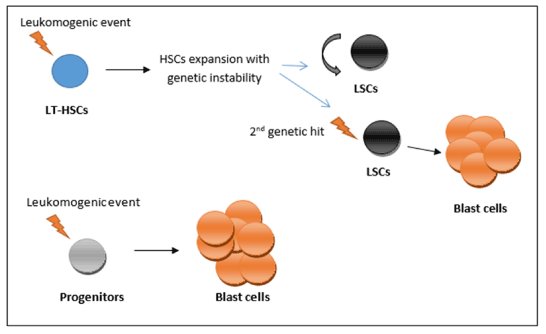
Cancer Stem Cells (CSCs)
Cells with stem cell like abilities have been observed breast cancer, colon cancer, leukemia, melanoma, prostate cancer which can form new cells and lead to tumorigenesis.
A neurologist is a medical doctor who specializes in treating diseases of the nervous system. The nervous system is made of two parts: the central and peripheral nervous system. It includes the brain and spinal cord.
Hematopoietic Stem Cells (HSCs)
They are the multipotent stem cells derived from mesoderm and located in red bone marrow. They are responsible for production of red blood cells, white blood cells and platelets.
Adult Stem Cell
An adult stem cell is thought to be an undifferentiated cell, found among differentiated cells in a tissue or organ. The adult stem cell can renew itself and can differentiate to yield some or all of the major specialized cell types of the tissue or organ.
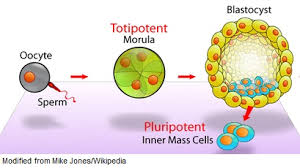
Totipotent Stem Cells
They can develop into any cell type or organ in the body. A single totipotent stem cell can give rise to an entire organism. Fertilized egg or a zygote is the best example. Zygote divides and produces more totipotent cells.
Stem Cell
It is an undifferentiated cell which is capable of transforming into more cells of same type or multiple other types. They are found in multicellular organisms. They can differentiate into cells of blood, skin, heart, muscles, brain etc.
Cells in the body have specific purposes, but stem cells are cells that do not yet have a specific role and can become almost any cell that is required.
#journal_of_Stem_cell_Biology_and_transplantation
#Scientists Create #Human Eggs Using Stem Cells from #Blood for the First Time
In a monumental new breakthrough, scientists have created an immature human egg using #stem#cells that were created from blood cells...
Absent #forebrain replaced by #embryonic#stemcells A new technique in which forebrain-precursor cells are ablated from early-stage mouse embryos and replaced with embryonic stem cells, central nervous system.. https://t.co/OYsM95TyRi
#Stem cells will 'change medicine forever,'
The potential is #infinite with stem cells. It's regenerative medicine. Nearly all #chronic disease in medicine could be addressed by stem cells.
https://t.co/OYsM95TyRi
#Stem cell transplantation for treatment of #Parkinson disease is complex and requires both surgery and acquisition of stem cells. Research using stem cells in the context of Parkinson disease began in #rats almost 40 years ago




![StemTransplant's tweet photo. @NeurosciScience Alzheimer's disease (AD), also referred to simply as Alzheimer's, is a chronic neurodegenerative disease that usually starts slowly and worsens over time.[1][2] It is the cause of 60��70% of cases of dementia. https://t.co/MD8PUoG4xr](https://pbs.twimg.com/media/DvKSgY3WsAISzBa.jpg)