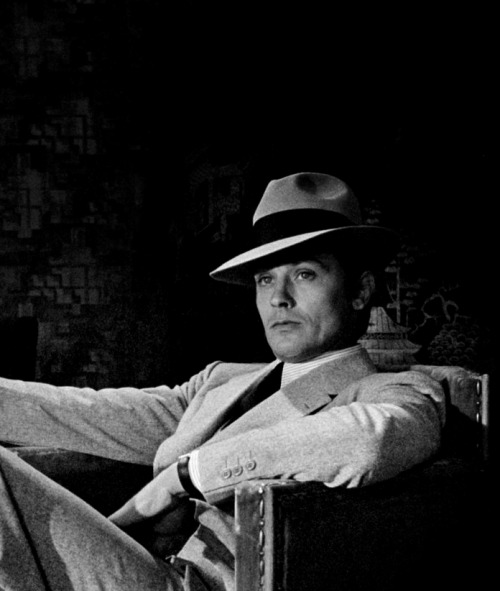
"It's a shallow, worthless era soured by money. We no longer film with a moving camera but a digital thing stuck on the end of your fist. No one gives a shit about anything any more."
- Alain Delon
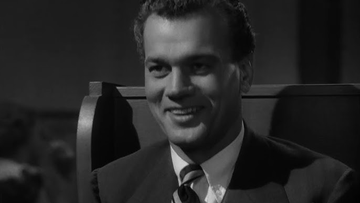
“Orson Welles lists Citizen Kane as his best film, Alfred Hitchcock opts for Shadow of a Doubt, and Sir Carol Reed chose The Third Man — and I’m in all of them.”
— Joseph Cotten
William Friedkin on the most important part of directing a movie:
"It changes at different points in the making of the film. Initially, the most important decision you make is to decide what story you're going to tell. There's no decision more important than that. Because the commercial cinema, in which I work, is a storytelling medium.
It's not necessarily a medium for... well, it isn't at all a medium for documentary purposes, for educational purposes, for experimental purposes. It's strictly a medium of entertainment. And the other aspects of it, if there are any, come as a kind of by-product of the audience experiencing the story. So, the most important decision I make as a filmmaker is to decide what story I'm going to do. There's nothing more important than that...ever.
Once the story is decided, it then becomes a matter of translating the story into details; it becomes a matter of how I'm going to tell it. And the next most important elements are the casting and the people who are going to work on the film."
(William Friedkin's interview with Gerald R. Barrett, 1975)
Clip from:
Sorcerer (1977)
Director: William Friedkin
@BeSaintly He’s making money man. Making great entertainment and art. Knows his fan base and market. And enjoys his life. You don’t seem to be enjoying yours. You should be more focused on that. Then whatever it is you’re doing here.
"A long-playing full shot is what always separates the men from the boys. Anybody can make movies with a pair of scissors and a two-inch lens."
- Orson Welles
With Rita Hayworth
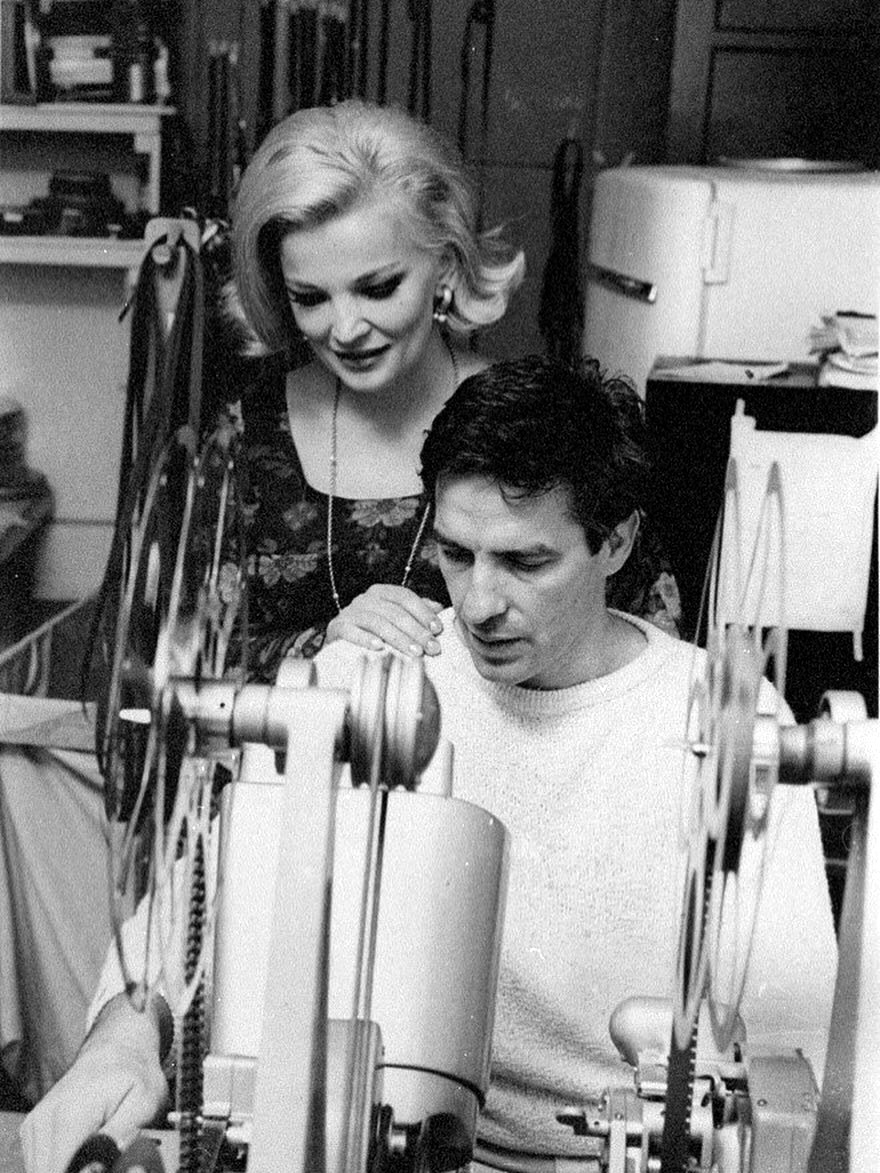
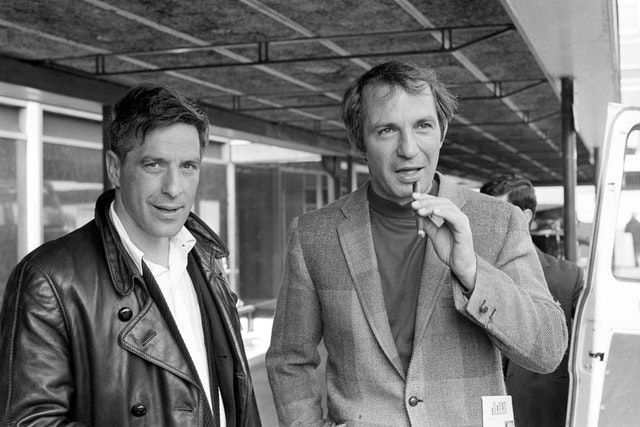
"I've always been able to work with anybody that doesn't want success. Jazz musicians don't want success... They have these little tin weapons - they don't shoot. They don't go anywhere. The jazz musician doesn't deal with the structured life - he just wants that night, like a kid."
- John Cassavetes
With Ben Gazzara .. .
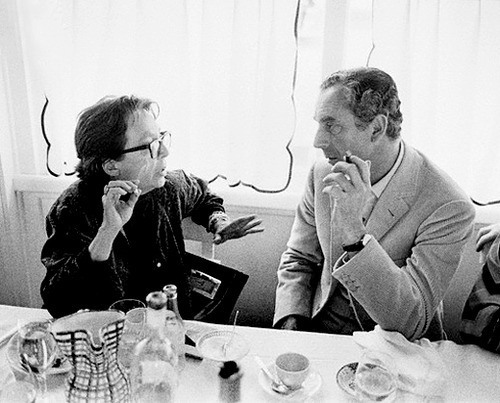
“I make films to fill my time. If I had the strength to do nothing, I would do nothing. It is only because I haven’t the strength to do nothing that I make films. For no other reason.”
- Marguerite Duras
Duras here with Antonioni....
“To be an artist is to fail, as no other dare fail, that failure is his world and the shrink from it desertion, art and craft, good housekeeping, living.”
Happy birthday Samuel Beckett! 🎂
James Cameron is the mind behind the movie The Terminator. He says what’s taking place with AI is scarier than his movie script
“AGI will not emerge from a government funded program. It will emerge from one of the tech giants currently funding this multi-billion dollar research, so then you'll be living in a world that you didn't agree to, didn't vote for that you are co-inhabiting with a super intelligent alien species that answers to the goals and rules of a corporation.
An entity which has access to the comms beliefs, everything you ever said, and the whereabouts of every person in the country via your personal data.
Surveillance capitalism can toggle pretty quickly into digital totalitarianism. At best, these tech giants become the self-appointed arbiters of human good, which is the fox guarding the hen house. They would never, ever think of using that power against us and strip mining us for our last drop of cash.
That's a scarier scenario than what I presented in the Terminator 40 years ago. If for no other reason, then it's no longer science fiction.”
“Most people don't know what they want or feel. And for everyone, myself included, it's very difficult to say what you mean when what you mean is painful.”
- John Cassavetes
With Ben Gazzara.
An excellent quote from Steven Sorderbergh in Slate:
"The hardest thing in the world is to be good and clear, because sometimes in order to be clear, you become obvious. And when you’re obvious, you’re not good. So that is a lifelong sort of process, figuring out on each project, given its intentions and its demands, how to make it good and clear. Being obscure is easy. It’s easy to make something that is elliptical and sort of difficult to grasp and sort of fob it off on being artistic, and if you don’t understand it, that’s your problem."
Anyone writing genre deals with this every day-- especially if it's trying to be more. Very well put.