🚨 Harvard just made its AI course free.
No tuition.
No application.
Just world-class AI education.
Harvard University just released 6 high-quality lectures on AI + Prompt Engineering— and anyone can access them.
If you're serious about AI in 2026, start here:
🎓 Harvard University LECTURES
1. Introduction to Generative AI
A step-by-step guide to how GenAI actually works.
Link: https://t.co/Mbh9PzwB8J
2. Prompt Engineering
Real tips for improving output quality from any LLM.
Link: https://t.co/zLnhwbNBR1
3. Beyond Chatbots: System Prompts, RAG
Move past surface use cases into scalable applications.
Link: https://t.co/bOszFzbRvG
4. Generative AI in Teaching & Learning
How educators can adapt and lead with AI.
Playlist: https://t.co/IHi4EDaJru
5. Teaching with AI in the Classroom
Frameworks for trainers and educators.
Link: https://t.co/IRlTE4vmD1
6. The Basics of Generative AI
No jargon. Just clarity.
Link: https://t.co/KoL1SQNh0y
BONUS
🟩 CS50x 2025 – Artificial Intelligence Lecture
LLMs, neural nets, and real-world use cases
Link: https://t.co/PzA0dW60Xl
🟩 CS50 Extension – AI / Prompt Engineering
Design prompts that think with you
Link: https://t.co/g1IEspxlJ8
🟩 GPT-4: How it works + how to build with it
Behind the curtain on GPT-4
Video: https://t.co/wshBHUTH71
🟩 LLMs and the End of Programming
Why prompting is the new coding
Video: https://t.co/DxoJhBekl1
---
💡 REALITY CHECK
✅ Harvard-level AI knowledge is now free
✅ Prompting = career acceleration
✅ 2 lectures can put you ahead of 90% of professionals
✅ The future belongs to people who can “talk to machines” strategically
Don’t just consume AI. Learn how to control it.
👇 Which lecture are you starting with?
♻️ Repost to help others learn AI
🔖 Save this (you’ll need it later)
🔔 Follow @JayBisen473370 for more AI insights
🚨 52 websites that can teach you more than a 4-year degree.
No tuition.
No student debt.
Just free knowledge and real-world skills.
Bookmark this. You'll thank yourself later. 👇
1. Coursera — Free university courses
2. Brilliant — Interactive math & science
3. Wolfram Alpha — Instant problem solving
4. GitHub — Learn from real code
5. Investopedia — Master finance & investing
6. https://t.co/vfMH0bHhmh — Millions of free books
7. Project Gutenberg — 70,000+ free classics
8. Duolingo — Learn new languages
9. Notion — Organize everything
10. Our World in Data — Visual global insights
11. Statista — Statistics on almost anything
12. Open Library — Borrow books online
13. Hemingway Editor — Improve your writing
14. NASA — Space research & discoveries
15. PubMed — Scientific research papers
16. edX — Courses from top universities
17. TED — Ideas worth spreading
18. Anki — Learn with spaced repetition
19. Canva — Professional design made easy
20. Skillshare — Creative skills
21. Readwise — Remember what you read
22. Google Scholar — Academic research
23. Codecademy — Learn to code
24. ChatGPT — Your AI tutor
25. Figma — UI/UX design
26. Replit — Code in your browser
27. Huberman Lab — Science-backed health
28. MindMeister — Mind mapping
29. NerdWallet — Personal finance
30. Quizlet — Smarter studying
31. Gapminder — Understand the world
32. PhET Simulations — Interactive science
33. Numbeo — Compare living costs
34. 23andMe — Genetics insights
35. Zapier — Automate your work
36. LessWrong — Better thinking
37. Documentary Heaven — Free documentaries
38. Trading Economics — Economic data
39. Perplexity — AI research assistant
40. Stanford Encyclopedia of Philosophy — Philosophy explained
41. LibriVox — Free audiobooks
42. Zooniverse — Contribute to science
43. FutureLearn — University-backed learning
44. https://t.co/fi8vTOXSqb — Improve typing speed
45. DrawABox — Learn drawing
46. Grammarly — Better writing
47. Khan Academy — Free world-class education
48. Desmos — Graphing calculator
49. Stellarium — Explore the night sky
50. Psychology Today — Psychology resources
51. Worldometer — Live global statistics
52. Notion Templates — Ready-made productivity systems
🎓 Degrees are valuable.
But learning doesn't have to be expensive.
🔖 Save this thread.
♻️ Repost to help others.
👥 Follow for more AI tools, websites, and productivity hacks.
Russian mobile fire group training goes wrong while using a YakB-12.7 rotary machine gun developed for a Mi-24 helicopter mount
This is what happens when an aircraft rotary gun with brutal angular recoil is treated like a regular ground weapon.
They ignored that fact, slapped it onto a ground setup for a mobile fire group, and assumed it would work like a regular stationary machine gun.
(Full version, no watermarks)
A French dad got tired of watching his kids get tracked by Google before they could even talk.
His name is Gaël Duval.
He built Mandrake Linux back in the 90s, one of the first desktop Linux systems a regular person could actually install and use. He wasn't new to building alternatives to the tech giants.
But the thing that pushed him into his next project wasn't a business plan. It was watching his own children grow up holding phones before they could hold a pencil.
Every tap and every app was building a permanent record of who they were, years before they were old enough to understand what a record even is.
He has said the phrase "this is just how things are" stopped being an acceptable answer the moment he was watching it happen to his own kids.
In 2017 he started a project on Kickstarter called Eelo, named after eels, because they're fish that know how to hide in the sea.
A trademark dispute forced a rename a year later. It became /e/OS.
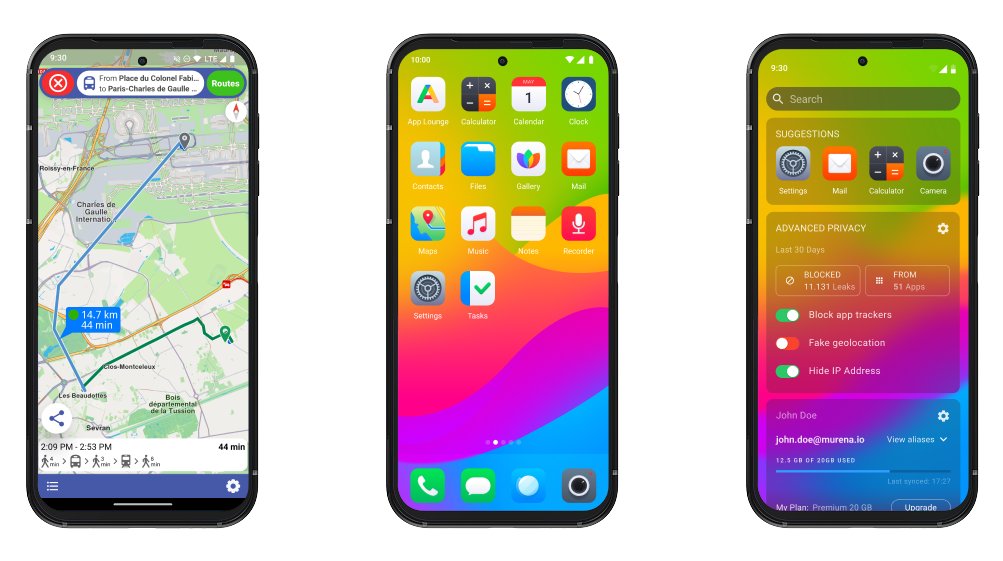
The idea is a full strip-down of Android.
Every call the phone makes back to Google, from the operating system itself, gets physically removed. Not opted out of. Removed.
A stand-in called MicroG answers the requests apps still expect, so your banking app or your maps still work, just without a single byte reaching Google's servers.
It ships with an ad blocker on by default, a scanner that shows you exactly which trackers are hiding inside any app before you install it, and a widget that can fake your location or hide your IP whenever you want.
It now runs on 271 phone models. User numbers have climbed from around 30,000 a few years ago to nearly 800,000 today, one household at a time, starting with his own.
10 free tools built by academic researchers that are better than most paid SaaS.
1. Zotero
Built at George Mason University. Saves and organizes every paper you read.
Beats EndNote ($275).
Site → https://t.co/Hpytdn1mVL
2. PostgreSQL
Built at UC Berkeley in 1986. The database behind Instagram, Reddit, and Spotify.
Beats Oracle at $47,500 a year.
Site → https://t.co/8gGai9kdoG
3. Apache Spark
Built at UC Berkeley in 2009. Crunches huge datasets fast. Used by 80% of Fortune 500.
Beats Databricks paid plans.
Site → https://t.co/exyj7iSWsw
4. NumPy and SciPy
Built by Travis Oliphant and academic researchers. The math engine behind every AI tool you use.
Beats MATLAB at $2,150 a year.
Site → https://t.co/CGVlrRsxnr
5. scikit-learn
Built at INRIA, France's national research institute. The easiest way to train a machine learning model.
Beats commercial ML platforms.
Site → https://t.co/YnqWOM9TCj
6. LaTeX
Built by Leslie Lamport on top of Donald Knuth's work at Stanford. Makes any document look like a real research paper.
Beats Microsoft Word for technical writing.
Site → https://t.co/pY5s6lnLqc
7. Open edX
Built by Harvard and MIT in 2012. Lets anyone run an online university.
Beats LMS platforms charging $10 to $25 per learner.
Site → https://t.co/dMqjXbB5Ur
8. Moodle
Built by Martin Dougiamas during his PhD at Curtin University. Runs the online classrooms at Cambridge, Oxford, and Caltech.
Beats Canvas and Blackboard.
Site → https://t.co/jJMoe6CELv
9. Stanford CoreNLP
Built by the Stanford NLP Group. Reads, tags, and understands any block of text.
Beats Google Cloud Natural Language API.
Site → https://t.co/um0DRKNNYs
10. R
Built at the University of Auckland. The language every scientist, biotech lab, and government uses to do statistics.
Beats SAS at $9,000 a year.
Site → https://t.co/35ilqHO6G1
UC Berkeley built PostgreSQL. Half the internet runs on it.
UC Berkeley built Apache Spark. Half the Fortune 500 runs on it.
MIT and Harvard built Open edX. Governments run their education systems on it.
Stanford built CoreNLP. Every NLP paper used it for a decade.
Весьма интересно проводит время под домашним арестом экс-президент АФК «Система», бывший замгендиректора «Фосагро» Евгений Новицкий – близкий друг половины российских олигархов и членов правительства. Источни��и ВЧК-ОГПУ и https://t.co/2RapCOV1dZ, встретили его вчера днем в ресторане Maya на Большой Никитской улице (вот фото, правда, со спины-в серой кофте) и говорят, что Новицкий постоянный гость этого заведения. Напомним, что срок домашнего ареста при приговоре засчитывается за срок наказания. Новицкий под домашним арестом уже два года, окончания расследования пока и не предвидеться, поэтому может так получиться, что к приговору он свой срок «отсидит» в ресторанах. Впрочем, будет ли приговор и каким он будет тоже под большим вопросов. Сроки окончания преступлений по инкриминируемым ему эпизодам – 2016, 2017, 2018 и 2019 годы. Поэтому вскоре эти эпизоды начнут отпадать по истечению 10-летнего срока давности.
Напомним, Новицкий обвиняется в хищении 10 млрд рублей средств пенсионных фондов: «Урал ФД», «Церих» , «Мечел-фонд», НПФ металлургов, Первого национального пенсионного фонда и торгово-промышленного пенсионного фонда.
Как рассказывал наш проект, когда Новицкий был задержан, на спасение кинулась большая группа его друзей: владелец АФК Система Владимир Евтушенков; депутат ГД РФ и влиятельный решальщик Глеб Хор; Владимир Плигин; тогдашний заместитель руководителя Администрации президента РФ Дмитрий Козак, глава Сбера Герман Греф и т.д. Именн�� благодаря их хлопотам, Новицкого отправили под домашний арест.
Это далеко не весь список.
В свое время именно стараниями Новицкого, когда он работал бок о бок с Лужковым, ему удалось отжать Серебряный бор, незаконно приватизировав государственную структуру «Мосдачтрест». Именно с помощью «раздачи» нужным чиновником, руководителям ФСБ РФ участков в Серебряном Бору Новицкий смог выстроить отношения со многими высокопоставленными чиновниками и представителями силового блока.
GOOGLE QUIETLY BUILT THE MOST POWERFUL LEARNING TOOL ON THE INTERNET.
And almost nobody is using it to its full potential.
Google's NotebookLM has been free for months.
It's faster than most tutors.
Smarter than most study guides.
And it can turn any document into a personalized learning system.
Yet 90% of people use it like a glorified PDF reader.
Here are 10 NotebookLM prompts that can help you learn almost anything in record time:
If Google locked your account tomorrow, you could lose your:
- Gmail
- Google Drive
- Photos
- YouTube
- Calendar
- Every "Sign in with Google" login
One account controls your entire internet life.
Here's the backup system nobody sets up until it's too late ↓
@neti_jp Мне очень жаль что на твоей земле война, поверь, если бы это было в моих силах. Я бы её остановил немедленно, да пр��сто бы не начинал. Мне стыдно за свою страну.
Part 3. A honeybee has fewer than one million neurons in her entire brain. A human has 86 billion. And yet a 2018 study published in the journal Science showed that bees understand the concept of zero, a piece of math so hard that it took human civilization until roughly the 7th century to invent. Most children do not grasp it until age 4.
Researchers at RMIT University in Australia trained bees to pick the card with fewer dots on it. When they showed bees a card with one dot next to a card with no dots, the bees flew to the blank one. They understood that empty meant less than one. The same team then taught 14 bees that the color blue meant "add 1" and yellow meant "subtract 1." Shown a math problem in flowers, the bees got the right answer 63 to 72 percent of the time, well above chance. They were doing real arithmetic with a brain about 20,000 times smaller than yours.
This is not even the most impressive thing they do. When a forager finds food, she flies back to the hive (which is pitch dark inside) and performs a figure-eight dance on the vertical wax comb. The angle of her straight-line waggle, measured against gravity, tells the other bees exactly what angle to fly relative to the sun. If she waggles 60 degrees to the left of straight up, the food is 60 degrees to the left of the sun. She updates her dance as the sun moves across the sky, even though she cannot see it from inside the hive. The duration of each waggle tells distance. Roughly 1 second of waggling equals 1 kilometer of flight. Karl von Frisch decoded all of this in the 1940s and won a Nobel Prize for it in 1973.
She is performing a real-time geometric calculation, converting a horizontal angle from the sun into a vertical angle against gravity, on a surface she cannot see, in complete darkness, with a brain the size of a sesame seed. The other bees watch by feeling the vibrations through the comb and then fly directly to the food. They do not get lost.
The bee colony is also a working direct democracy. When a hive gets overcrowded, about 10,000 bees leave with the old queen and cluster on a tree branch while around 100 scout bees fly off to find a new home. Each scout returns and dances about her favorite cavity. The better the site, the longer and more energetic the dance. Other scouts go check out the contenders. Slowly, the scouts converge on the best option through what biologist Thomas Seeley at Cornell calls a "quorum," meaning a threshold number of scouts agreeing on the same site. There is no leader and no vote count, just thousands of insects independently arriving at the same correct answer, and they pick the optimal cavity almost every single time.
Bees also recognize individual human faces, count up to four, and learn complex tasks by watching other bees. A 2018 review in the journal Science Advances suggested the architecture of their brain may help researchers build more efficient artificial intelligence, because a system that does symbolic math with a million neurons obviously knows something our current AI models (which use trillions of parameters) do not.