AI is unlikely to speed up science by multiples acting solely as a co-pilot to humans.
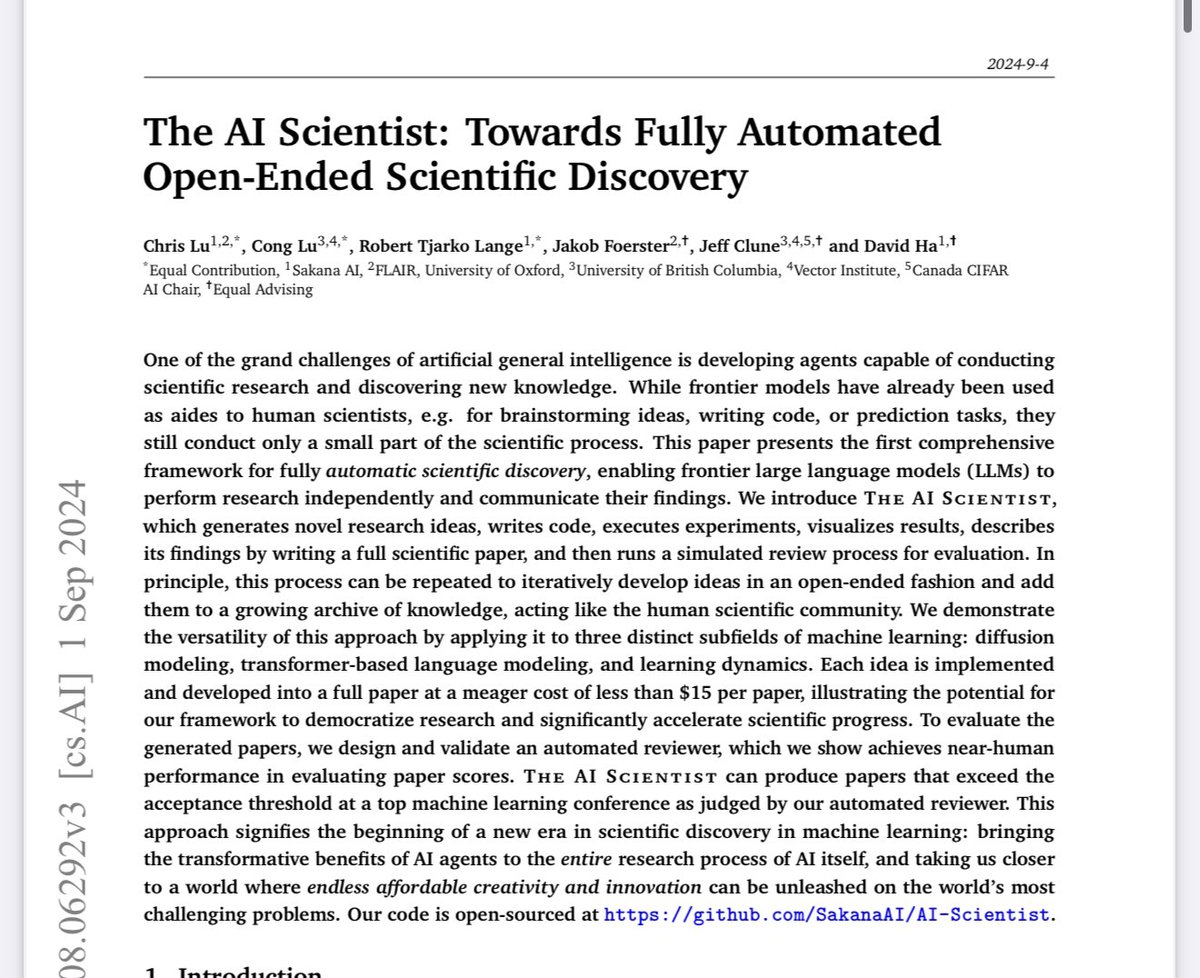
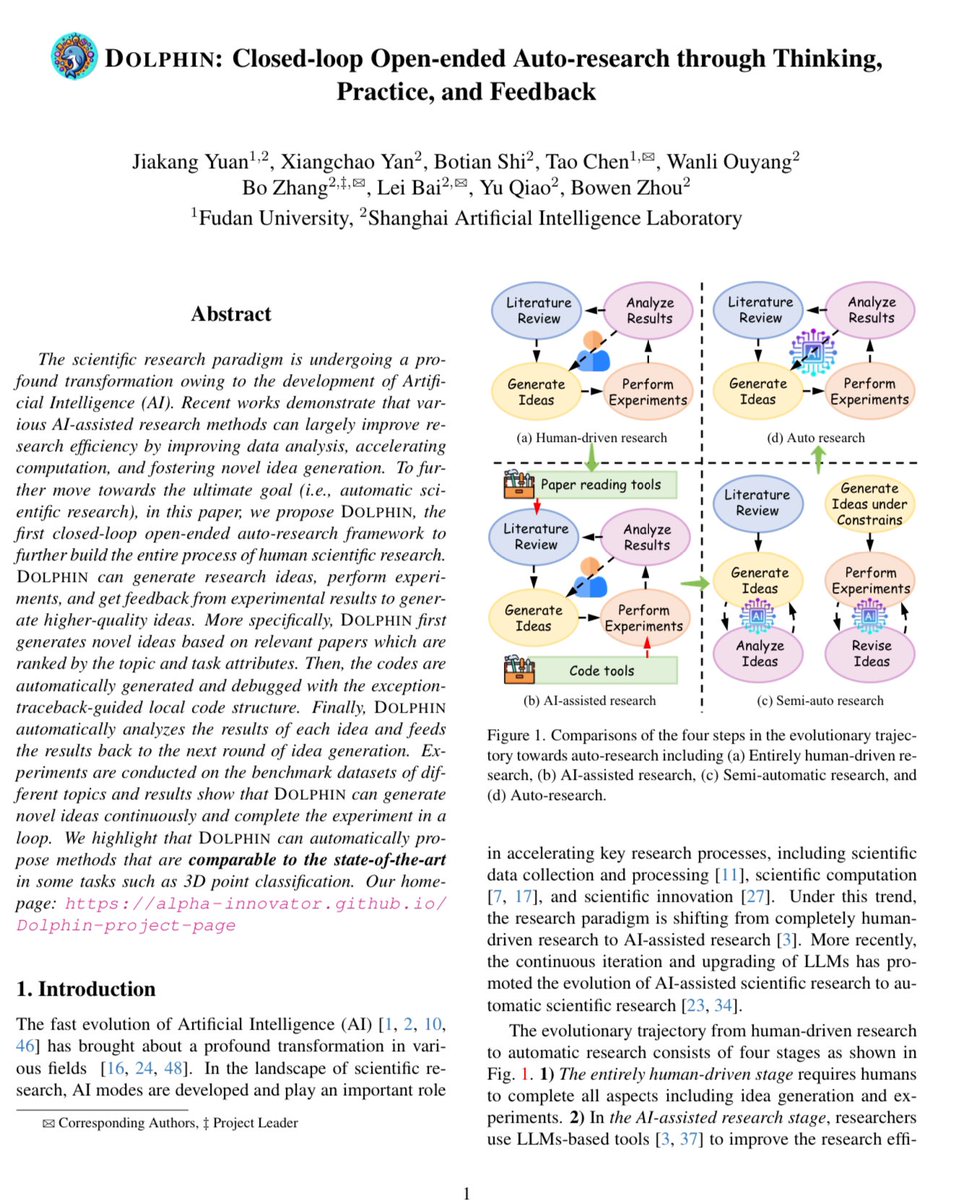
There are some early successes using current LLMs to autonomously research, plan & conduct experiments, including learning how to use equipment by reading documentation, with big implications.
Con la IA, sí, programamos varias veces más rápido. Pero también aprendemos varias veces más rápido.
Antes nos pasábamos el día en Stack Overflow, MDN, W3C�� Pero una parte importante del esfuerzo era localizar qué estudiar y reunir fuentes fiables de las que estudiarlo. Ahora la IA nos lo sirve en bandeja. 🚀
Do you know any businesses built by non-technical founders who used AI to build 100% of the system?
Around 60% - 70% of the teams I know use AI to augment their people, but I don't know anyone using AI *exclusively* instead of real engineers.
If this hasn't happened, I wonder how long it will take before we see the first real business with no human engineers behind a software system.
Somewhat scary, to say the least. More so when they blantantly use words suggesting what is mostly uncertain in the AGI future: broadly distributed wealth, prosperity...
This bit of Sam Altman’s newest post is similar in tone to a post by the CEO of Anthropic & what many (not all) researchers from every lab have been saying publicly and privately.
You do not have to believe them, but I think they believe what they are saying, for what it worth.
Compartí unos días con el padre jesuita Francois Kaboré este año en Burkina Faso. Además de una autoridad académica y social, es un ejemplo de compromiso con su país. https://t.co/yxKAkHR6JK
I do not think that AGI-seeking labs are in the best position to leverage AI power. Training NNets for achieving ever more powerful LLMs does not provide better understanding of the open opportunities. There is a gap, that should be addressed by someone else.
So all the labs that are aiming for AGI say they will have a system smarter than a human at every intellectual task in the future. Have any of them actually said what THEY are going to do with this?
Are they building the capacity to trade stocks? Do pharma research? Why not?
Here’s the thing: studies of social media find that most posts are actually positive, but angry posts spread more widely. Why?
Joyful posts only spread within our tight social network but anger & indignation are universal, moving more easily across the weak ties between network
The average IQ of software developers will increase by several points over the next few years.
This is just a theory, but I think AI will significantly decrease the number of developers over time. To stay employed, you'll need to be smarter and work harder than ever.
I don't think AI will replace everyone just yet, but it will certainly increase the bar to becoming a paid professional in the field.
This is already happening, albeit slowly. It will definitely accelerate during the next 5 years.
Every developer is upskilling right now or facing elimination. AI can now do much of the low-skilled work we used to do. The faster we can complete our jobs today, the less help we need.
As models get better, entry-level skills will be harder to get. I remember when "having a computer" was all you needed to cash a check. It will take many years of study to join the same club in a few years.
It'll be a bit like becoming a doctor. You need many years of school plus a ton of effort plus eating crap for years before seeing those sweet, sweet dollars. It's very hard, and I think that's where software development is going.
AI is coming first for the low-hanging fruit. It will render "general-available" knowledge useless, forcing people to specialize to increase their value and compete.
I think education is now more important than ever. I don't know what to do, but I certainly think that knowledge is our most important defense going forward.
El presidente de la Fundación Universidad Loyola, Jaime Oraá SJ, y el rector de la Universidad, Fabio Gómez-Estern, mantienen una audiencia privada con el Papa Francisco @sternblauHD https://t.co/kWMQghr3Y7
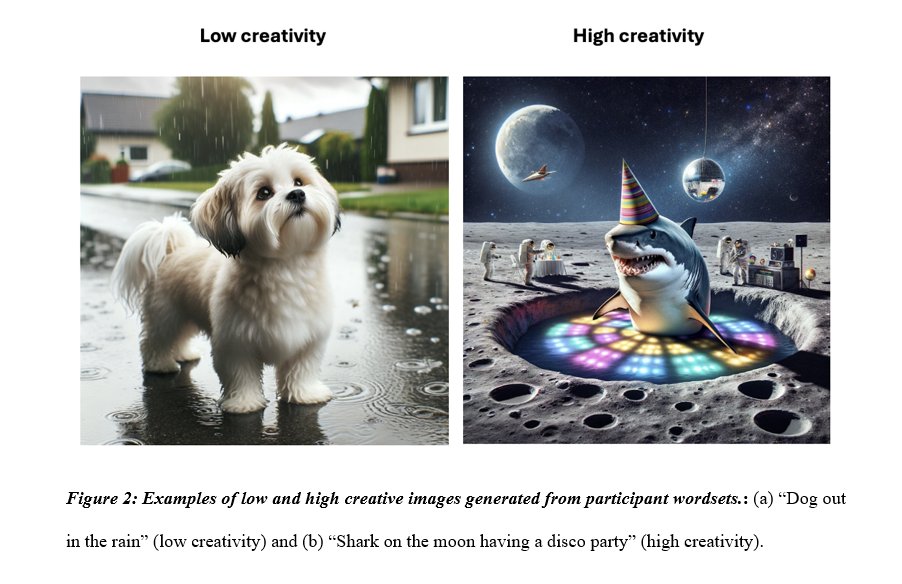
More creative humans generate more creative output from AI image generators, as judged by other people.
The effects are highly significant, but relatively modest, suggesting that human creativity matters in getting creative work from AI... but perhaps not as might be expected.
I really wish there was more interest in benchmarking AI models on real tasks.
The fact that there are not 30 different benchmarks from different organizations in medicine, in law, in advice quality, etc. is a real shame, as people are using systems for these things, regardless.
I have now run enough o1 experiments with fellow academics on their hard problems in fields ranging from neurology to genetics to economics that I believe that it has genuine potential to help with science & academics should try it to see.
Even when it is off, it spurs thinking.
Shipping fast versus writing good code.
I think there's a time and place for both. For certain things, my first priority is code quality and craft. For others, my first priority is to get something out in the world as fast as possible. As a general rule, I tend to be very pragmatic.
Unfortunately, most people pick one side and burn their ships defending that position.
I'd hate to work with people who are unwilling or incapable of analyzing the tradeoffs between building fast and building right.
Speed and Quality are both features, and the best developers I know can read the room and mix them both accordingly.