@ExplosiveEnema2 Another misrepresentation. You are uncomfortable your monopoly is breaking. I am perfectly fine with well trained professionals with a great track record looking after patients.
Written by an ex PWC employee who's never worked as a dr, nurse, teacher? If we had the slightest control over our efficiency why the hell would we not have improved it. Where are the beds, theatres, staff, IT, secretarial backup, pre operative assessment, scanners, etc?
I just supported @AnaesUnited with a further £100 contribution.
We recently received our arrears backpay, and should be in a position to help support this important cause.
https://t.co/hCxeiBa8OA
Why should I give? Read the latest reveal about the GMC… https://t.co/c60Un8G8V6
“The Government has acknowledged patient safety is potentially under threat from the way physician associates and anaesthesia associates are employed in the NHS.
“It's therefore its responsibility to ensure NHS England puts in place safety measures while the situation undergoes urgent review.”
Our response to the @UKHouseofLords debate on the roles of PAs and AAs:
https://t.co/I61Sef7JaD
With the GMC’s announcement yesterday, seems timely to remind ourselves that they had no intention of actually acting upon any feedback obtained from the consultation that they’d predetermined to be ignored.
They never intended this to be a meaningful consultation on the issue.
Genuinly flabbergasted by this choice of wording & @gmcuk could possibly think "with more doctors than ever before choosing locally employed (LE) roles"
Please can @drcolinm or GMC confirm that this was a social media faux pas, and you actually know its not a "choice" per 👇
Absolute drivel from the GMC as usual. Doctors are denied training posts and are therefore forced to apply for jobs advertised by Trusts with no chance of career progression. This is not a choice. It is an economic necessity. Why don’t you address the real issue?
The @gmcuk#StateOfMed report makes clear there must be a review of postgraduate training.
'It is imperative that our next generation of physicians are valued and supported in their educational and training journeys. We need to keep them in our UK training system rather than force them out. They need to feel valued and supported and we call for action and reform of the recruitment and training pathways.’ @Mumtaz_Patel_1
Read our full response to the report: https://t.co/XMiWKpHBrt
Polite suggestion to rename it the absolute state of medicine report?
75% growth in LEDs is damning: of our failure to train, of our failure to retain, and our misdirected focus on alternative professions whilst not even supporting those we have graduated to reach CCT.
We're pleased to share the second in our annual series of #StateOfMed reports – Workforce. This focuses on the changing shape of the medical workforce across the UK.
This year’s report shows that the medical register continues to grow, as does the diversity of the doctors on it.
Doctors’ career paths are also changing, with more doctors than ever before choosing locally employed (LE) roles, working outside of formal postgraduate training pathways and with local contracts.
In England and Wales, where data is currently available to us, the number of LE doctors grew by 75% between 2019 and 2023 – this makes this the fastest growing cohort on the register.
As we look to the next decade, it’s critical that all doctors have the infrastructure, support and resources they need to achieve their ambitions. That’s in the interests of doctors, as well as the interests of a growing and ageing population.
Discover more insights and key statistics by reading the report on our website https://t.co/lfIAeenhGC
The solution to sickness is investing in healthcare, not changing the rules so less people can be classed as sick. That doesn’t make people well, or productive.
We spend 20-25% less on healthcare than many of our European neighbours.
A record 2.8 million people are off work due to long-term sickness. A national scandal. UK must tackle long-term sickness crisis by enforcing far stricter eligibility criteria for benefits and tax cuts for workers. We cannot afford a culture of handouts.
This is literally one of the last good things about twitter
Holding outrageous corporate irresponsibility to account
Too bad you had to be shamed into doing the right thing @AXA
I wonder how much business you lost over this??
https://t.co/0qVeo9ouOB
@NickTriggle
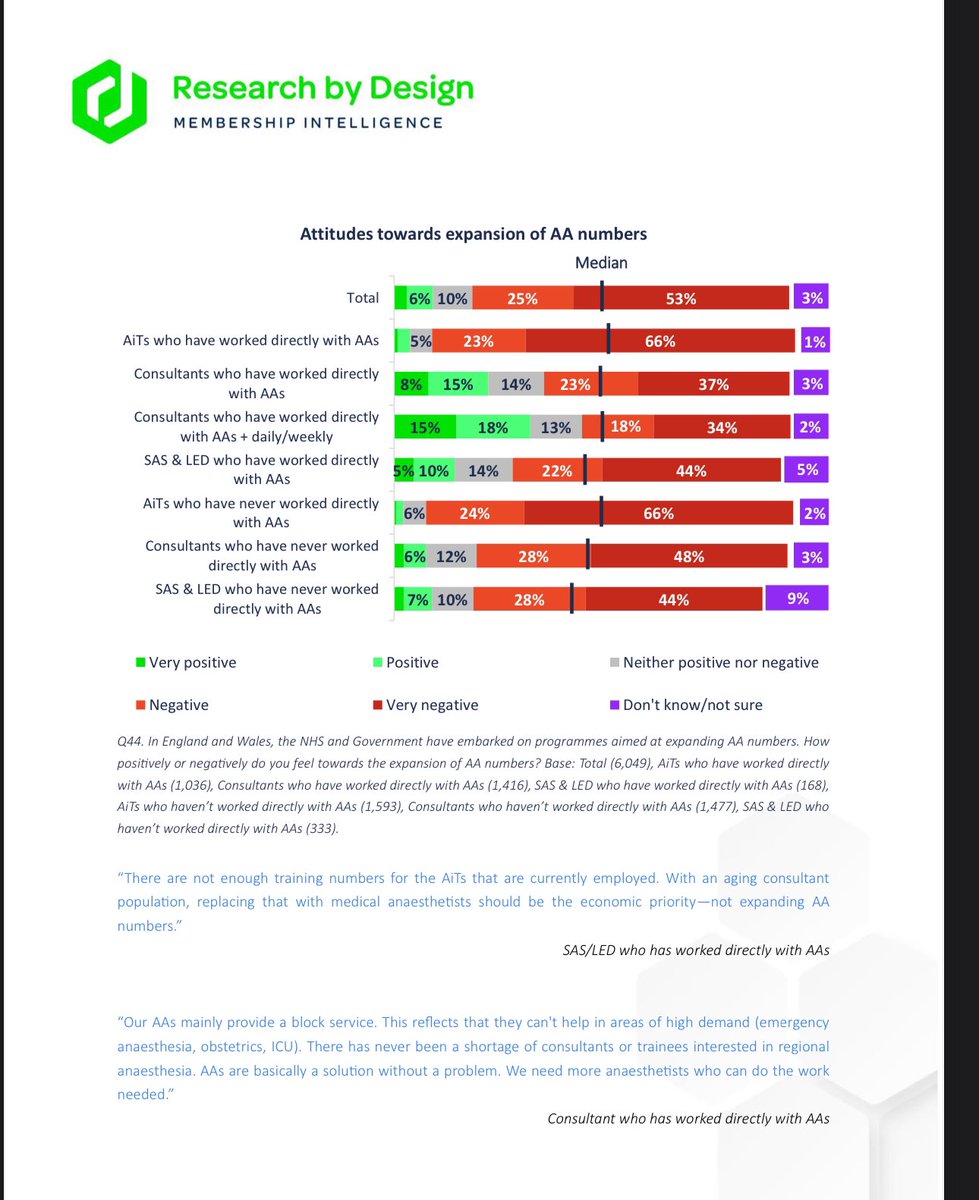
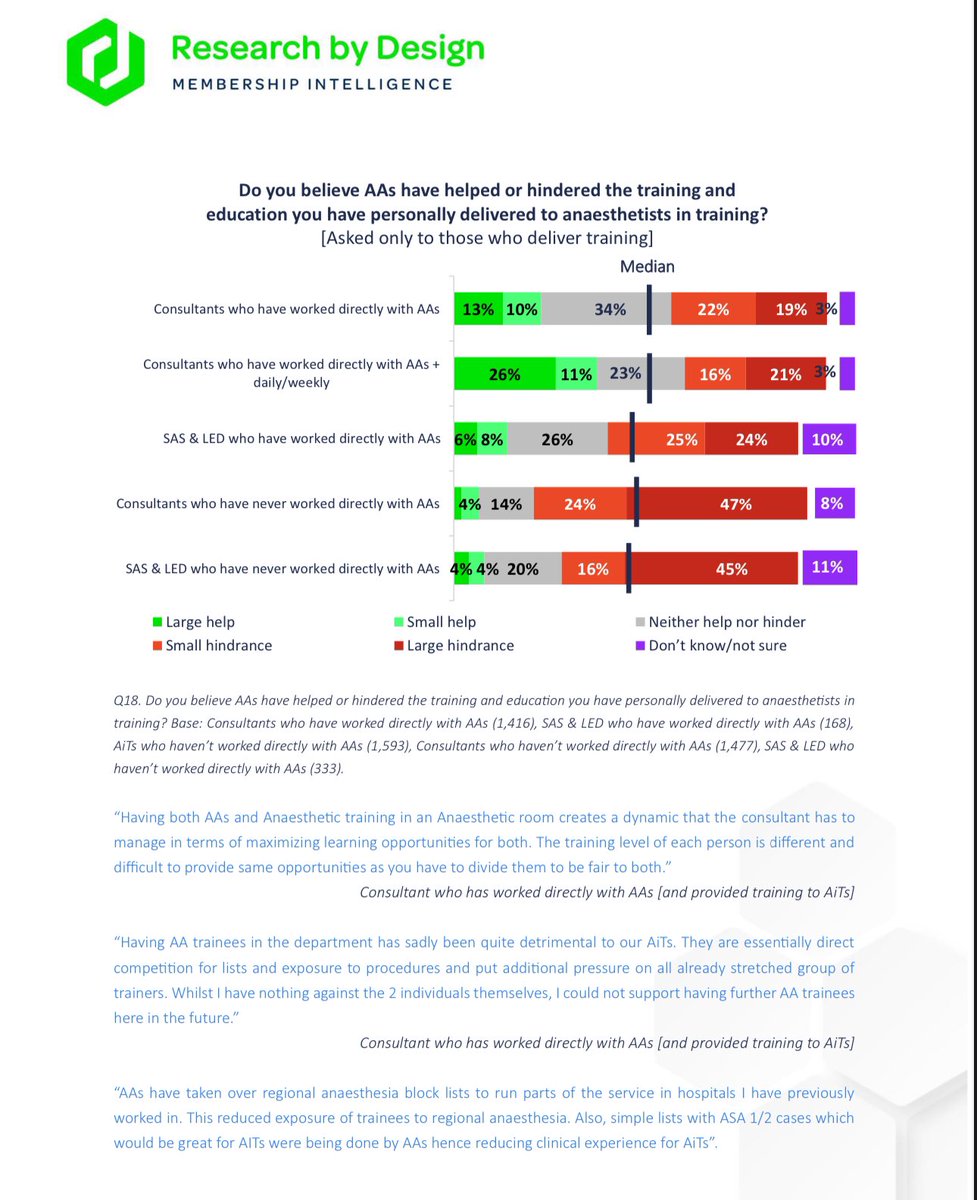
It is also well worth reading this survey of 6000 anaesthetists regarding AAs conducted by the @RCoANews
https://t.co/lg7Cyr1QaY
I think it’s notable for a couple of reasons
-it was a voluntary survey but almost 40% of all uk anaesthetists responded (a smaller than 5% response would be typical for this sort of thing)
-the survey answers have been carefully separated into those who have not worked with AAs, those who have done so occasionally & regularly. This provides an insight into opinion vs experience
Whichever way you dice the survey results they are stunningly negative from all three groups.
They raise concerns about
-patient safety
-training of anaesthetists
-knowledge deficits in AAs (but also a lack of awareness of what they don’t know)
-a lack of efficiency improvement
-a lack of cost saving (also backed up by this paper https://t.co/oFAYdi3ZTV)
FWIW the major concern is not about the current impact of PAs (& sadly they are caught by bin the crossfire) but about
-the impact of major expansion of PAs on safe healthcare delivery & education
-the lack of a scope of practice
-concerns about a lack of clarity for patients about who is treating them A&B their qualifications to do so
@doctimcook@NickTriggle@bbchealth I fear @NickTriggle doesn’t care too much for data, instead relying on emotionally loaded soundbites around “toxicity” or “trade unionism”
This should be about safety, scalability and economic viability- with rates of expansion/scope widening being driven by data, not rota gaps
Hi @NickTriggle
I read your piece for the @bbchealth today.
It’s an area rife with opinion & short on data
I hope this data-driven thread on AAs will interest you
As @wesstreeting has said, this review is to “make sure that we get the right people, in the right place, doing the right thing.”
This isn’t politics. This isn’t trade unionism. This is about maintaining the high standards of patient care that have taken decades to establish.
As for quoting Stephen Nash “They want us to be subservient.”
No Stephen, we want dependent practitioners with 2 years training to work within their limitations, and not replace those of us with 12-18 years training on a like for like basis. Patient safety, not politics.
The article also vastly misunderstands that even if current NHS safety data doesn’t demonstrate an increased number of incidents, this does not mean that will extrapolate and remain true when these dependent Dr-supervised positions are scaled in line with the NHS workforce plan
Absolutely woeful, biased journalism; even for the usual low bar of @NickTriggle
Royal colleges raising safety concerns and setting limits for associate professionals working outside of their scope is not “trade unionism”- it’s about patient safety 1/n
https://t.co/1wUgh611Gy
With the announcement of the inquiry into PAs & AAs it seems worth reposting this thread on Anaesthesia Associates.
It is DATA DRIVEN & I believe provides the greatest amount of objective data on the service they currently provide. Importantly the data is from the UK (& not from elsewhere which is not where the answers likely lie).
It hints at the huge potential problems that a major expansion in the number of AAs might lead to.
@wesstreeting@NHSEngland