One of Canada’s top heart surgeons is leaving Montreal citing rising antisemitism. When Jewish doctors no longer feel safe in a city that once prided itself on tolerance, it’s a warning that something has gone deeply wrong.
https://t.co/bomDjI0ur2
by Jonathan Fisher, MD, FACC
I am a Jewish physician, and I have never written about that here. I am going to, because of a surgeon I have never met. Emmanuel Moss, chief of cardiac surgery at Montreal’s Jewish General Hospital, is leaving for Atlanta in September.He is one of the few surgeons in Canada routinely performing robotic mitral valve and coronary bypass procedures. People close to him say the deciding factor was not Quebec’s strained healthcare system, which had been strained for years, but a growing sense that he was no longer safe in the city as a Jew.
The hospital he is leaving opened in 1934 with the first official non-discrimination policy of any hospital in Canada. It was founded in response to an era when many Jewish physicians faced discrimination in medical training and hospital appointments. The historical echo is difficult to miss.
When a clinician leaves because of who they are, a health system does not lose a statistic. It loses a specific person who held specific knowledge, relationships, judgment, and expertise developed over decades.
A 2024 survey of Canadian Jewish physicians found that reported antisemitism in hospitals rose from near zero before October 2023 to 39 percent after, and that nearly a third of respondents were considering leaving the country. The association’s chair warned that the consequences could include the loss of hundreds of physicians at a time when the healthcare system can least afford it. That mechanism is not unique to Jews. It is what happens whenever people feel unsafe because of their identity. Experts leave. Communities become poorer in ways that are difficult to measure. Eventually, patients and their families pay the price.
I am writing this as a Jewish physician because this story landed personally. I am writing it as a physician leader because I have spent decades thinking about what allows caring people to do their best work, and what it costs when they cannot. When any clinician feels unsafe because of who they are, something is lost long before they decide to leave.This time, the story touched my own community. That does not make it less relevant to anyone else. It does make it harder for me to stay silent.
This matters.
An obscure London event on the history of the ancient Jewish kingdoms in Judea and Israel is cancelled because of ‘security concerns’ and it turns out this was a reaction to a campaign to fill and then undermine the event by activist disrupters.
How strange! Why would a posse of aggressive activists be interested in the arcane details of bullae and steles and ostraca and inscriptions and numismatics in some small South Levantine kingdoms in the Iron Age?
Well, it is a little more than that which is why it is both disturbing and important. And it matters because at its least it is a threat to history in Britain’s - but also the world’s - greatest temple of History @britishmuseum - and its scholarly integrity.
The BM and its leadership are decent and well-meaning and have explained that they wished to save an event from disruption by bullying vandals but I am sure the BM realizes it is essential to announce a new event fast lest it give the impression that the permission of tiny cadres of aggressive bullies are required before it hold events. But the significance is wider than an event about the Moab and Tel Dan steles in a great museum.
British cultural life is the right and exercise of civic and cultural freedom – a privilege of our liberal democracy - that does not require the permission of gangs of ideological activists nor can it cancelled or postponed nor endured at their beck and sufferance nor permitted with a bend of the knee to their permissions or veto. But that is what this appears to be.
Across the cultural world in the West, though the bewildered middleaged managers of our institutions that are confronting and often submitting to a wave of self-righteous blackmail and mob threat, there is an increasingly thin – indeed ever more fragile and sometimes nigh invisible – line between ‘security concerns’ – and institutional pusillanimity.
Then there is the history itself.
This event concerns the study of the ancient kingdoms of Judah and Israel that existed between roughly 1100BC and 586BCin the Levant. It is not a coincidence that this was chosen for disruption. The history of the Judean kingdoms and the Jewish Temple in Jerusalem that stood for most of the time between 1000BC and 70ADetc is important and fascinating history in its own right, supported by complex and growing archaeological finds.
These small kingdoms and the subsequent Temple priestly mini-state (restored by the Persian kings Cyrus and Darius 539BC) and then the larger Judean kingdoms of the Hasmoneans and Herodians – between 167BC and 135AD chronicle the long indigenous history of Jews in the region – which the protesters are keen to erase. This is a political project of ideological erasure and malicious incitement of course concerned with the complex, brutal Israel-Palestine conflict that has now gone on for a hundred years and is unlikely to be solved in a small lecture theatre in the British Museum. But it also attempts to deny or erase Jewish history itself – and by implication the heritage of British Jews who live here in Britain, a small community that is now under cultural and sometimes physical threat.
Incidentally - but it is worth saying, this history does not deny anyone else’s history, nor the many other small realms in this region through ancient times nor the many names of the region and its entities and the historical origins of those names (Canaan, or Philistia or Peleset, Phoenicia, Aram Damascus or Moab or later Nabatea and the provinces of Palaestina Prime, Seconda and Tertia and the Ghassanid kingdoms and so on etc etc). The history of one can not be used to erase the history of the other and does not need to do so. The pursuit of knowledge which is one of the delights of human life and is the mission of the BM and indeed anyone who writes, reads or enjoys history, can celebrate and recognize all of these.
Yet this protest and the many like it deployed across Britain nowadays is the opposite of that - an attack on history using the methods of intimidation and vandalism. Much of this involves distorting or dismantling actual history or often lying to replace it with a fabricated ideological structure that nourishes no one and helps no one but degrades our culture and civic life not to speak of history itself. By the way, the frequent claims that these histories or names are ‘denied’ or ‘noone knows them’ is nonsense: anyone and everyone who is interested knows this history. (Much of it appears for example in my book Jerusalem a history of the Holy Land.)
And this is relevant not just to those of us who write study or enjoy the history of the region but also to those who believe that cultural life and civic society is a right that must not be submitted to the aggressions and plots of loud well-organized much-indulged ideologues who take advantage of the freedoms of our society to undermine its principles and the very freedoms they are designed to guard.
Just as vital is a rule of history itself that concerrns the rise and fall of civilizations: the society that ceases to allow to free discussion of ideas and stops respecting and recognizing the value of scientific and historical sources and facts is a society that will fail.
If the progressive framework for Indigenous rights is a moral principle, why does it stop when it comes to Jews?
I’m asking this from inside the politics, not outside them.
When Indigenous peoples reclaim ancestral land, languages, and sovereignty, the left rightfully treats it as a moral correction to historical displacement. We recognize continuity. We recognize memory. We recognize the right of a people to remain connected to their homeland across generations.
So what do you call it when a Jewish community maintained a religious, linguistic, and ritual connection to Jerusalem for centuries across exile, and finally returned?
Because that is what the Beta Israel did.
In my family, like every family in my community, the prayer toward Jerusalem wasn't just a ritual-it was a dream passed down through generations. It was an inseparable part of our identity, our entire reason for being: the unshakeable belief that one day, we would return home.
My family did not arrive in Israel as European colonizers. We walked from Gondar carrying centuries of prayer, memory, and longing for Jerusalem long before most modern nation-states even existed.
Today, I live with the profound awareness that the life I live is the physical fulfillment of my ancestors' wildest prayers. People fought, sacrificed everything, and died just so that I could live my life here, in the Land of Israel.
The framework the left uses for Indigenous return is fundamentally correct. I am not abandoning that principle-I am asking people to apply it consistently. Either Indigenous return is a coherent moral principle, or it becomes a privilege selectively granted depending on which people the world feels comfortable humanizing.
You do not have to support every policy of the Israeli government to engage honestly with that question.
There needs to also now be a major armed policing operation in north London. It is unconscionable that the Jewish community is effectively having to fend for themselves in the face of repeated, organised, premeditated state-sponsored violence.
Really, I'd love to know how to activate some of that *Jewish supremacy* I hear so much about on here to stop all this. Not sure what the fucking Elders of Zion are thinking about. It's almost as if British Jews are just a tiny vulnerable minority community living in terror.
I grew up in Golders Green in the 50s and early 60s. It was a perfect place to be happily and unproblematically Jewish and British. Now we need leaders of British Muslim communities to be vocal in their abhorrence at these violent acts - verbal as well as physical
full context by Orwell:
“And naturally the antisemite thinks of himself as a reasonable being. Whenever I have touched on this subject in a newspaper article, I have always had a considerable ‘come-back’, and invariably some of the letters are from well-balanced, middling people — doctors, for example — with no apparent economic grievance. These people always say (as Hitler says in Mein Kampf) that they started out with no anti-Jewish prejudice but were driven into their present position by mere observation of the facts. Yet one of the marks of antisemitism is an ability to believe stories that could not possibly be true. One could see a good example of this in the strange accident that occurred in London in 1942, when a crowd, frightened by a bomb-burst nearby, fled into the mouth of an Underground station, with the result that something over a hundred people were crushed to death. The very same day it was repeated all over London that ‘the Jews were responsible’. Clearly, if people will believe this kind of thing, one will not get much further by arguing with them.”
https://t.co/oWCl6tuFDq
I was released from Hamas captivity in January and I am a die hard fan of Maccabi Tel Aviv.
I am shocked to my core with this outrageous decision to ban me, my family and my friends from attending an Aston Villa game in the UK.
Football is a way of bringing people together irrespective of their faith, colour or religion and this disgusting decision does the exact opposite. Shame on you.
I hope you come to your senses and reconsider.
I do wonder what exactly has become of British society, this is like putting a big sign on the outside of a stadium saying “No Jews allowed”
What has become of the UK where blatant antisemitism has become the norm?
What a sad world we are living in.
Imagine having a family of 15 million people you’ve never met, yet somehow feel close to.
Even without having met before, no words can capture the feeling of reuniting with twenty of them.
May the healing finally begin.
A few years ago, I took my daughters to see the new Spider-Man in West Jerusalem. The theater was packed with Israeli kids from the neighborhood, their excitement filling the room before the movie even began.
As the film played, I noticed something strange. During certain scenes that seemed ordinary to me, the kids around us would burst into laughter or cheer. I couldn’t understand why they were getting so excited. My daughters later explained to me these were subtle callbacks to earlier Spider-Man films. But the kids recognized them instantly; their shared memory made them laugh as one.
Then I looked at my own daughters. At home, of course, they speak only in Arabic. But that night, in the middle of the movie, swept up in American pop culture, my daughters – and the Israeli kids around them – were suddenly speaking English, as if it was the most natural thing.
And in that darkened cinema, I couldn’t tell my daughters apart from the others. Their laughter sounded the same. Their words flowed in the same language. Their joy was identical. For those two hours, the divisions we are taught to see, the differences we are taught to fear – Arab and Jew, Palestinian and Israeli – disappeared.
This moment has stayed with me. I realized how quickly children adapt, how easily they find common rhythm. Maybe the divisions we cling to as adults are less natural than we think.
Where are the headlines? This mother in Iran is about to be hanged and I really feel helpless seeing silence from the big names, the anti-war activists in the West, the feminist leaders, the so-called free world leaders.
Her only “crime”? Fighting for freedom and dignity for her son and a better future. The regime wants to kill her for wanting justice. And the world looks away.
Why are the global justice and feminist movements silent? Where are the protests?
This is not about politics. This is about basic humanity. What does it mean for justice, when those who once marched against oppression turn their eyes away from a woman who seeks nothing but fairness and humanity?
This execution is not only her death sentence, it is a test of our collective humanity.
#SharifehMohammadi
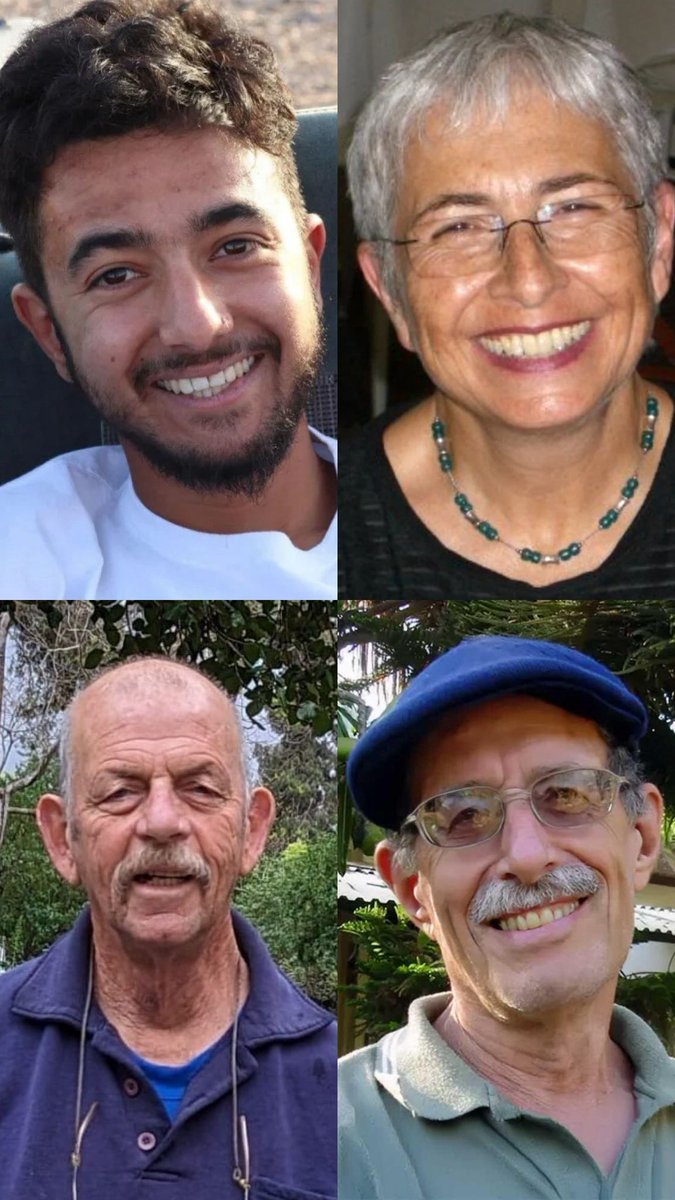
If Hamas cared about peace, they wouldn’t have kidnapped and shot Hersh Goldberg Polin, 23, a man who believed Jerusalem belonged to everyone.
They wouldn’t have murdered Vivian Silver, 74, a peace activist who spent her life bringing Israelis and Palestinians together through projects across Israel, Gaza, and the West Bank.
They wouldn’t have kidnapped and killed Chaim Peri, 79, who volunteered with the Road to Recovery organization, driving Gazan children to Israeli hospitals.
They wouldn’t have abducted and murdered Oded Lifshitz, 84, a progressive journalist who dedicated his life to peace and also helped transport sick Palestinians to Israeli hospitals.
Hamas never wanted peace. If they did, they wouldn’t have targeted the Israelis who believed most in coexistence.
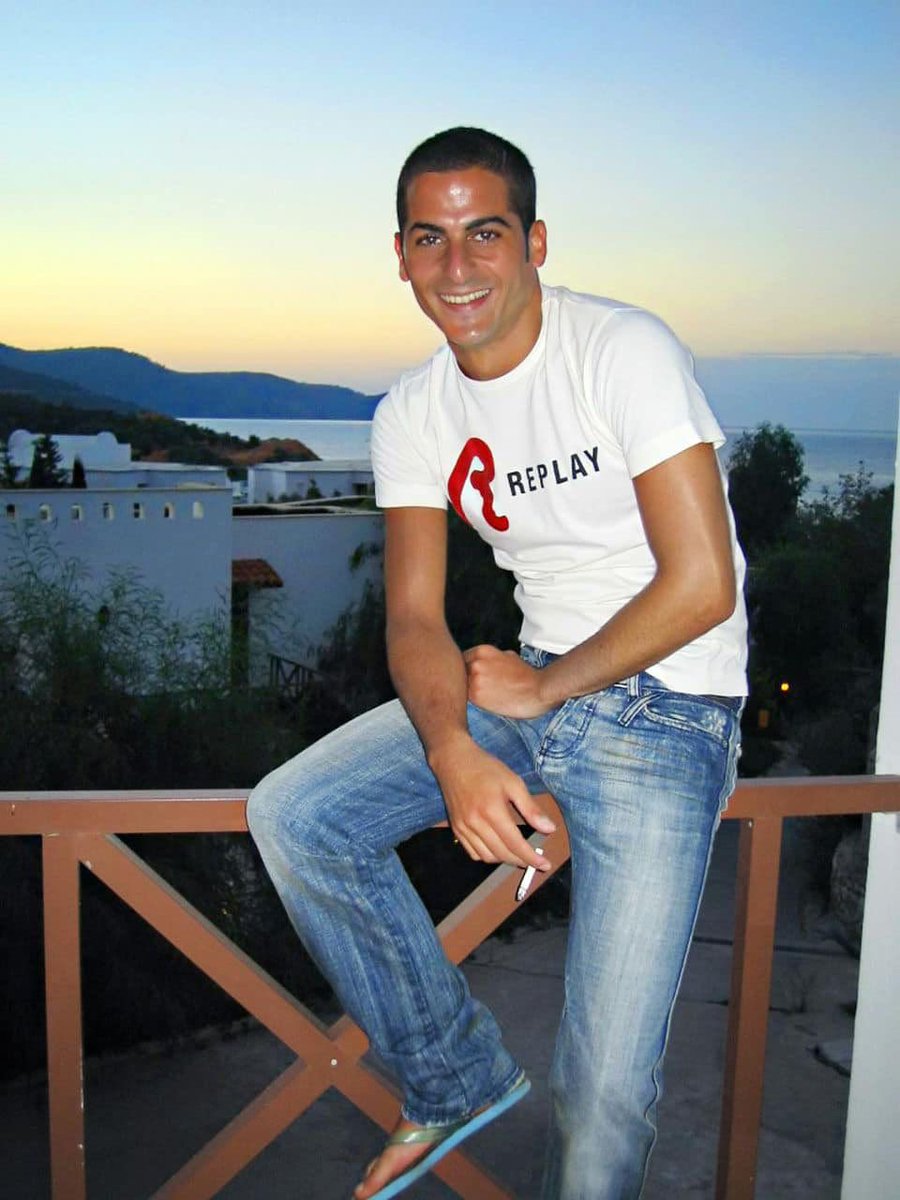
On January 21, 2006, Ilan Halimi, a 23-year-old Jewish man, was kidnapped in Paris by the “Gang of Barbarians,” led by Youssouf Fofana. The gang targeted him based on the antisemitic belief that “Jews have money” and could pay a large ransom.
For 24 days, Ilan was held captive in a suburban apartment in Bagneux, where he was brutally tortured and starved. His captors burned him with acid and cigarettes, beat him, and kept him bound and blindfolded, all while sending ransom demands to his family.
But the family wasn’t wealthy; they lived modestly in the Paris suburbs and couldn’t afford the ransom.
On February 13, 2006, they dumped him near a railway track in Sainte-Geneviève-des-Bois. Barely alive, naked, handcuffed, and with 80% of his body covered in burns and injuries, he died on the way to the hospital.
His murder was the first antisemitic killing in France since the Holocaust, shocking the country and exposing the brutal reality of modern antisemitism.
Yesterday, the tree planted in his memory was cut down in another vile antisemitic act.
Ilan’s story shows that France has learned nothing. Once antisemitism spreads, it only grows worse.
Since Ilan, 11 more French Jews have been murdered simply for being Jewish.
How many more until the world takes a stand?
A religious Jewish man in Montreal is attacked & beaten down in an unprovoked assault during broad daylight in front of his 3 young children.
The man throws his kippah at the end.
This is what @Val_Plante@francoislegault & @SPVM have emboldened.
A visibly Jewish man was beaten in front of his children today in a Montreal park. The antisemitic attacker is still free.
I am told the victim is recovering and is in stable condition. His children were not hurt.
Jews are being assaulted in broad daylight in Montreal. Our leaders need to stop pretending antisemitism isn’t a problem and start acting now.
I remember this speech by Shylock, the Jew in Shakespeare’s The Merchant of Venice, every single day:
“Hath not a Jew eyes? Hath not a Jew hands, organs, dimensions, senses, affections, passions? Fed with the same food, hurt with the same weapons, subject to the same diseases, healed by the same means,
warmed and cooled by the same winter and summer as a Christian is?
If you prick us, do we not bleed? If you tickle us, do we not laugh?
If you poison us, do we not die? And if you wrong us, shall we not revenge?”
I was 19 when I first read those lines. It was in Dr. Refaat Alareer’s @itranslate123 English Literature class in Gaza. He spent more time analyzing that one speech than any other part of the play. At the time, I didn’t know the difference between a Jew and a Zionist. None of us did.
My classmates and I hated Shylock. He was the “Jewish” moneylender who lent 3,000 ducats to Antonio, a Christian merchant, on the condition that if Antonio failed to repay the loan on time, Shylock would be entitled to a pound of his flesh. Antonio agreed, certain he could repay it. But when his ships were lost at sea, Shylock demanded what the contract promised. Around the same time, Shylock’s daughter Jessica ran away with a Christian and stole his money. Then he learned that Antonio’s fortunes had collapsed. And while he was still grieving, still reeling, two Christian men mocked him. That’s when he said those words. That’s when he stood up and defended his humanity.
Dr. Refaat made us listen. He made us feel every word. And somehow, by the end of that class, we all sympathized with Shylock. We stopped seeing him as the villain and started seeing him as a man crushed by the world around him. That moment stayed with me.
Dr. Refaat inspired me to write my research paper on how my Palestinian classmates responded to Shylock. Most of them said the same thing. They understood him. They sympathized with him.
The world needs to know more about Dr. Refaat. May he rest in peace.