7 of your 9 risk gates are off by default.
No daily loss limit. No drawdown ceiling. Strategy runs till capital runs out.
The AI built the strategy correctly.
You still have to set the limits.
Check your risk panel before you deploy anything.
https://t.co/vUQUlczL20
6. None of this is a complaint about the framework.
It is that the distance between reading a threshold and enforcing one is where the engineering lives, and a lot of small teams are crossing it privately right now.
https://t.co/E84Oua6hyx
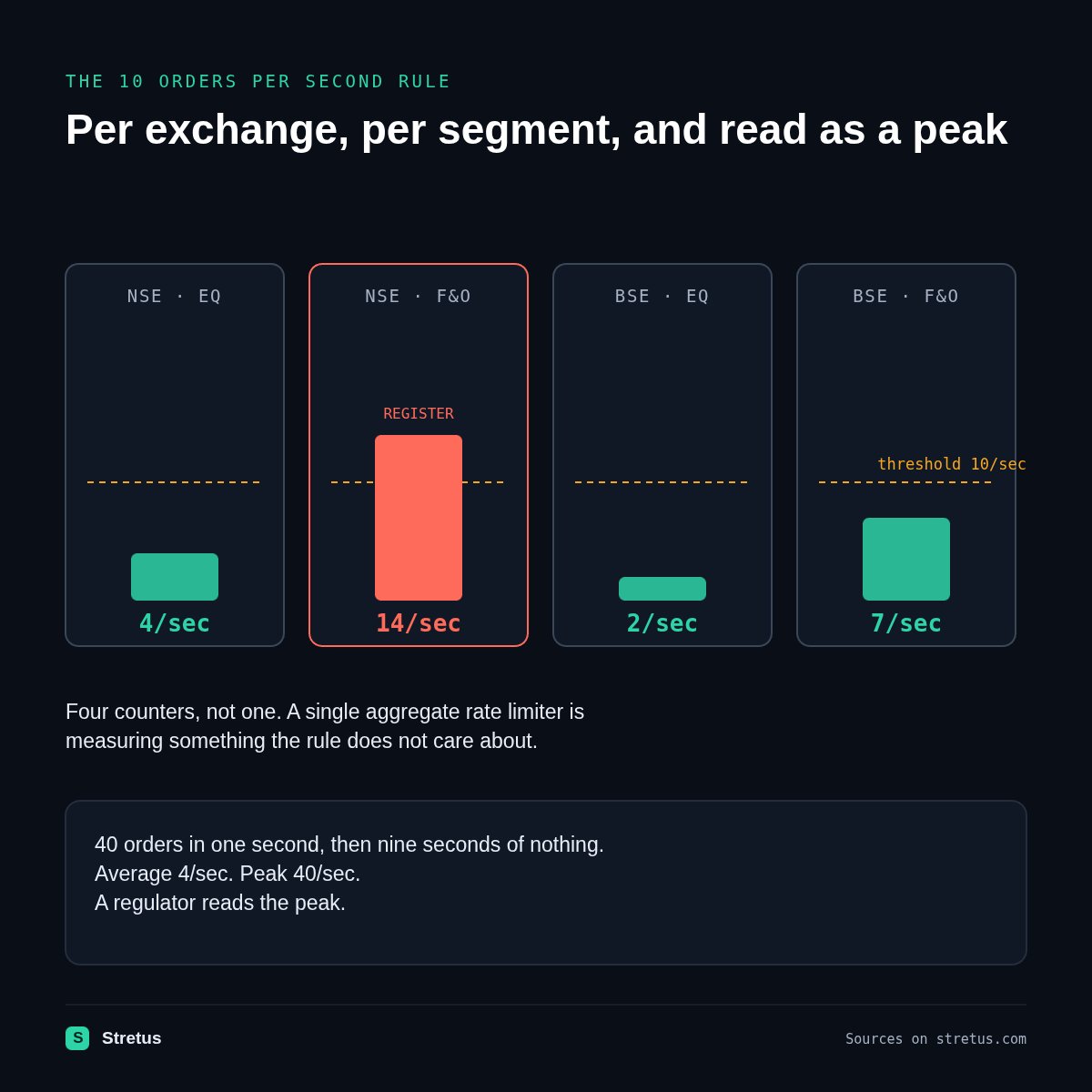
1. The retail algo framework sets a threshold of 10 orders per second. Above it the algorithm has to be registered and every order carries an exchange-assigned identifier.
Five things about implementing that honestly, having watched several teams do it
https://t.co/wLNmHBWCRF
5. Underneath it all: static IP, and mapped addresses can be updated at most once per calendar week.
NSE/INVG/67858, 5 May 2025. Secondary addresses are permitted. A connection whose address changes on reconnect will not survive this.
https://t.co/t4NAMmndIk
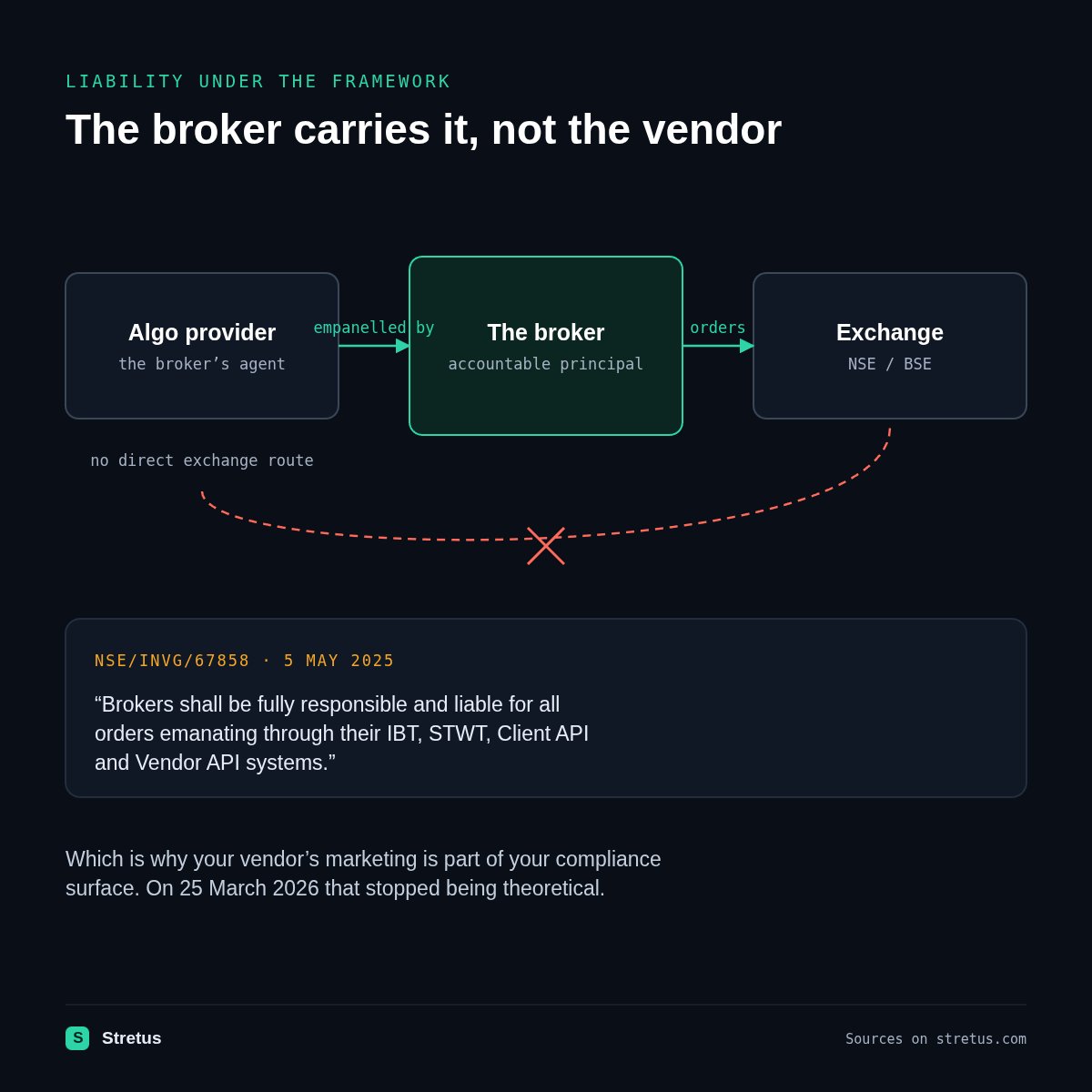
On 25 March SEBI penalised brokers in the TradeTron matter.
Not for anything they said. For staying API-integrated with a platform whose marketplace advertised returns.
Your vendor's marketing is your compliance surface.
https://t.co/YurPgcxmAL
4. It is a rate, so the window matters.
40 orders in one second then nothing for nine averages 4/sec and peaks at 40. A regulator reads the peak. Which means capacity planning is driven by burst, not average.
3. Nobody has settled what counts as an order for an iceberg.
Do disclosed legs count individually or does the parent count once? It changes whether a strategy crosses the line. Get it from your broker in writing, do not infer it.