📣 The next generation of Permian Basin principals is coming soon.
We're thrilled to welcome 33 aspiring principals from West Texas and New Mexico into the Holdsworth Aspiring Principal Program. Read the full announcement to see who is on the list! https://t.co/w3YLSGLLJI
🚨DOWN GOES #1 IN OVERTIME🚨
THE 16-SEED @NMJCTbirds WITH THE GAME WINNER TO PULL OFF A 16 POINT COMEBACK & BEAT BUTLER IN OVERTIME😱😱😱
@ESPNAssignDesk | #SCTop10
Friendly reminder that Hobbs Schools will be closed and there is no school for students on Monday, February 16th, as we are having a professional development day for our staff.
We will see students back in class for regular schedule on Tuesday, February 17th.
GO Eagles!
🎉Big News!🎉
The Holdsworth Center has secured nearly $5 million in grant funding support up to 100 future principals across 42 school districts in West TX & Southeast NM.
📅 Apply by January 30: https://t.co/kVoew20lQL
🔗 Read the full announcement: https://t.co/LPHAJuDPM5
Nobody plays 9 basketball games in 13 days. Not in the NBA or WNBA, not at the college level. Nobody. It’s absurd, right?
But the tired Hobbs girls did as the Eagles won metros on Saturday night.
GIRLS BASKETBALL: Hobbs beat La Cueva 67-35 in the 2nd round of the Albuquerque Metro Championships. Here are some of the highlights (including a buzzer beater to end the opening quarter)
Uncle Ralph stands at 1,117 wins in his stints with Lovington and Hobbs ... meaning Jim would have to coach probably at least another 10 years with Hope to challenge that remarkable record. Jim is 66.
Congrats to Jim Murphy for hitting yet another major coaching milestone today. His Hope Christian boys routed St. Pius X 99-62 today for his 900th career victory with the Hope boys. Second all time in NM to Ralph Tasker.
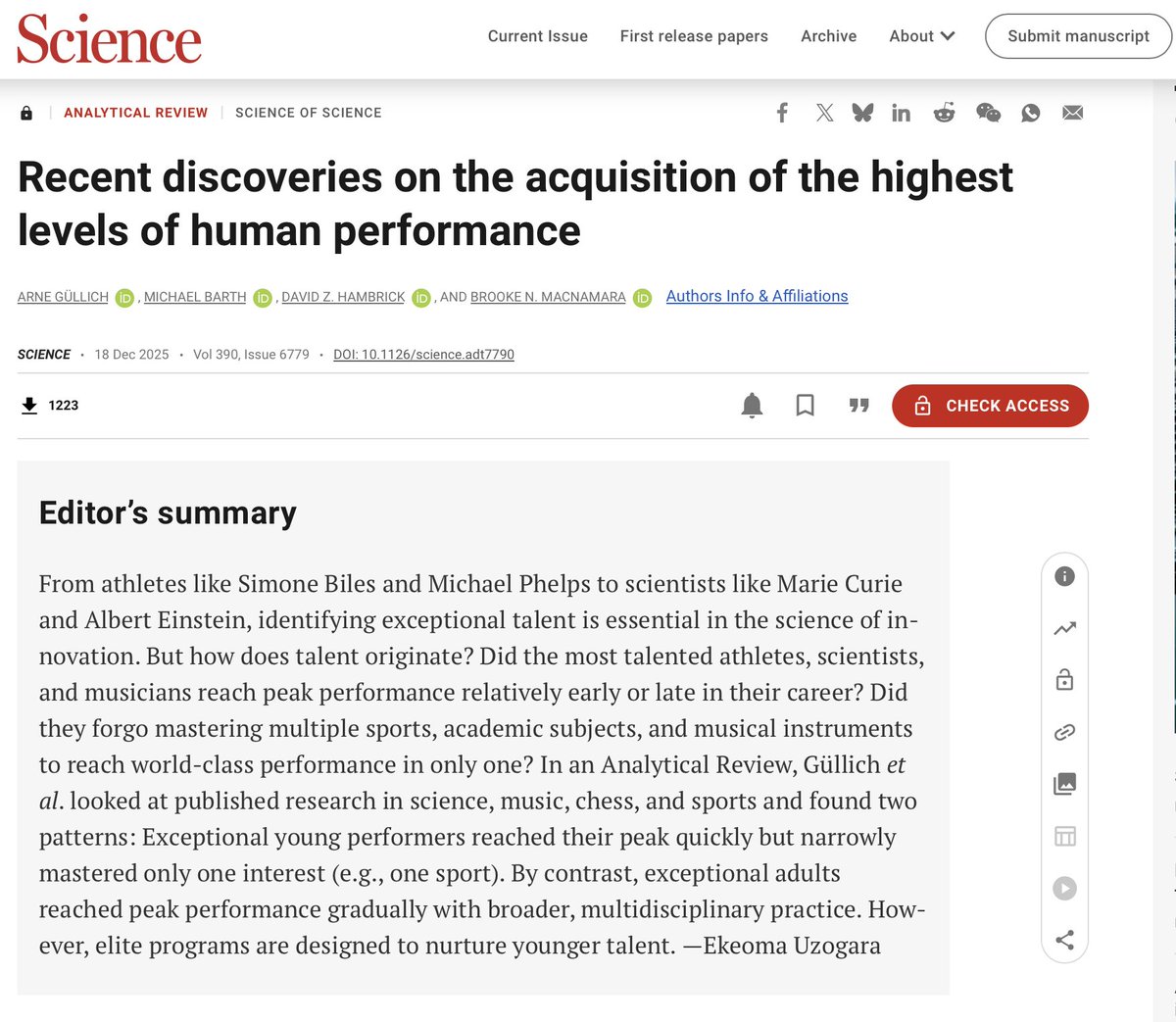
Why most world-class achievers weren’t the best as kids — and what it means for talent, learning, and development
A major Science review synthesizing data on 34,839 internationally elite performers finds that the path to world-class achievement does not usually start with early exceptionalism — debunking a core assumption behind traditional gifted-education and talent-development programs .
What the evidence shows
Top performers as adults are generally not the top performers in youth. Across fields including science, music, chess, and elite sport, there is surprisingly little overlap between early high achievers and elite adults later in life. Most adult masters were not early prodigies, and most early prodigies do not go on to elite adult performance.
Two distinct developmental patterns emerge:
- Early specialists gain rapid skills in one domain and stand out young, but often plateau and don’t reach the very top as adults.
- Late achievers show gradual gains, engage in multidisciplinary practice, and often surpass early stars over the long run — suggesting breadth and sustained growth matter more than early speed .
Why this matters
The study challenges the idea that early brilliance equals future excellence and suggests instead that exploration, cognitive flexibility, and diversified early experience help build the deep learning capabilities needed for peak performance later on .
Bottom line:
Top adult achievement is less about early specialization and more about long-term learning, multidisciplinary exposure, and patience — insights that could reshape education, talent development, and how societies nurture future leaders and innovators.
Why most world-class achievers weren’t the best as kids — and what it means for talent, learning, and development
A major Science review synthesizing data on 34,839 internationally elite performers finds that the path to world-class achievement does not usually start with early exceptionalism — debunking a core assumption behind traditional gifted-education and talent-development programs .
What the evidence shows
Top performers as adults are generally not the top performers in youth. Across fields including science, music, chess, and elite sport, there is surprisingly little overlap between early high achievers and elite adults later in life. Most adult masters were not early prodigies, and most early prodigies do not go on to elite adult performance.
Two distinct developmental patterns emerge:
- Early specialists gain rapid skills in one domain and stand out young, but often plateau and don’t reach the very top as adults.
- Late achievers show gradual gains, engage in multidisciplinary practice, and often surpass early stars over the long run — suggesting breadth and sustained growth matter more than early speed .
Why this matters
The study challenges the idea that early brilliance equals future excellence and suggests instead that exploration, cognitive flexibility, and diversified early experience help build the deep learning capabilities needed for peak performance later on .
Bottom line:
Top adult achievement is less about early specialization and more about long-term learning, multidisciplinary exposure, and patience — insights that could reshape education, talent development, and how societies nurture future leaders and innovators.
Let that sink in. 🌍 That’s why our responsibility isn’t to prepare them for our past, but for their future—one filled with challenges, innovations, and opportunities we can’t fully imagine yet.
Let’s focus on skills that endure:
✨ Creativity
✨ Critical thinking
✨ Collaboration
✨ Adaptability
✨ Resilience
Hobbs America! Due to a utility outage Heizer Staff Meeting needed to be relocated. #hobbspolicedepartment and #cityofhobbsnm stepped up and provided a space for the Professional Learning to continue. Thank you for leading the right way and meeting the need! #Service