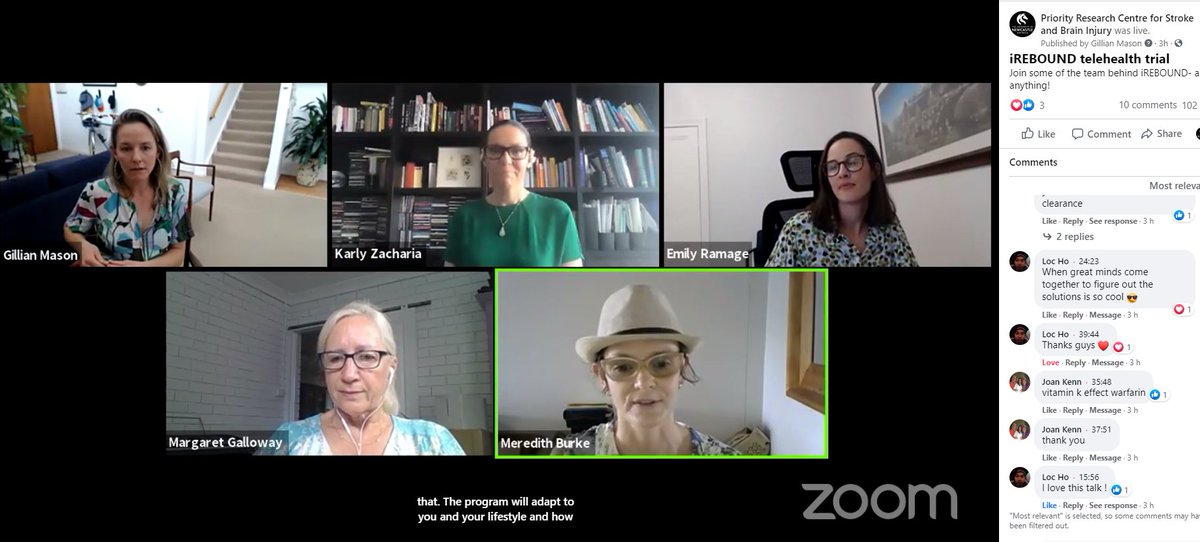
The ENAbLE / iREBOUND trial is testing a videocall-supported recovery & second-stroke prevention program. Some of the team talked to @gillyminn about what's involved for people w/ #stroke who take part, and the process of designing the program ➡️
https://t.co/9UKH77tqrh
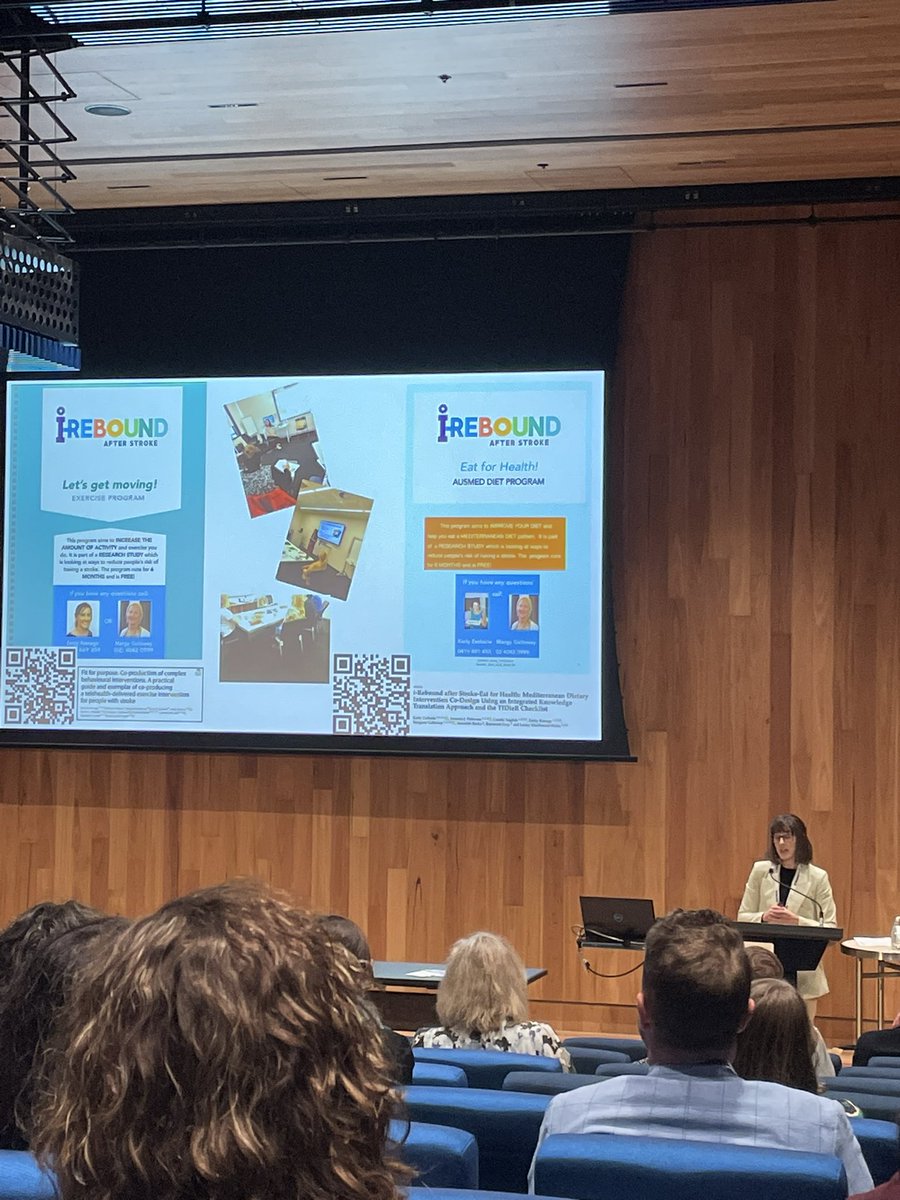
@emilyrramage presenting the results of the ENAbLE i-Rebound trial physical activity and diet intervention for secondary stroke prevention. #stroke2023
We’re going to need a bigger room! Lots of people with lived experience of stroke together with researchers talking about genuine partnerships in research. Good things to come.
Packed room of #stroke lived experience experts and researchers talking about genuine lived experience engagement in research #stroke2023 congrats and 🙏🏽to @SSA_Stroke organizing committee & @strokefdn for putting this in the program.
@KarlyZacharia learnings from evaluation of the ENAbLE Pilot 👏👏👏- participants rated the i-REBOUND Telehealth-delivered programs highly and fidelity was high. Fatigue and health issues were barriers and the right Telehealth platform are important for success @Coralie_English
@msjuliedavey leading the way with lived experience expertise in co-design and winning the ‘Best New Investigator Abstract Award’ at #Stroke2023 for work on i-Rebound. @SSA_Stroke @SMARTSTROKES17
The Take Charge program improved people’s independence and quality of life after stroke and we’re testing ways to make it available online – if you’ve had a stroke in the last 12 months, you can help test the prototype 🧠🧐 https://t.co/7ePsVMLg7z
Our colleagues @jovic_em & @maz7262 are developing a program to help survivors of #stroke get more active, w/ support.
If you have had a stroke, would you chat to them, or do a 15min online survey so they know what would work best for you?
https://t.co/MCYXpatQSh
Researchers need to be able to measure what you eat to be able to develop programs to support you to change habits. We are looking for stroke survivors to test the Australian Eating Survey to find out if it works for you!
https://t.co/JLT4Uwn7Ye
#stroke#research#AES
Tweeps at #ARCSAus who had so many qu's about involving #patients / #consumers in your research & project teams, check out this free online training - 40min.
It's for researchers who work with survivors of stroke, but the learnings are transferrable.
https://t.co/50xui7vt2O
Do you care for someone with post-stroke fatigue?
Where have you found information about strategies that might help manage #fatigue?
Share your experiences with us?
(20-30min chat w/ @dsimpsonphysio - phone, videocall or in-person if in Newcastle)
https://t.co/2sFSdjKRy6
Measuring food intake can be complicated – and messy! But what if there were an easier way? We are looking for volunteers to test whether the Australian Eating Survey can be used by stroke survivors to accurately measure their food intake.
https://t.co/uPiOJA9V9W
You can take part in this phase of the study if you live in Lake Macquarie, Newcastle, Maitland, Singleton or Tamworth, or somewhere along the road between any of these places. The research team can drive out to you at home, or you can come to us at @HMRIAustralia .
🧠💛
If you’ve had a #stroke and are interested in helping develop a computer program that will assist with stroke recovery, please read more about how you can help!
https://t.co/SFDbKGFs5E
Breaking news:
Our Living Clinical Guidelines for Stroke paper in @MJA today "the old model of static updates is no longer acceptable, and ongoing long term investment in living guidelines must be prioritised” @strokefdn @UON_research @HMRIAustralia@StrokeBrainPRC@strokeCRE
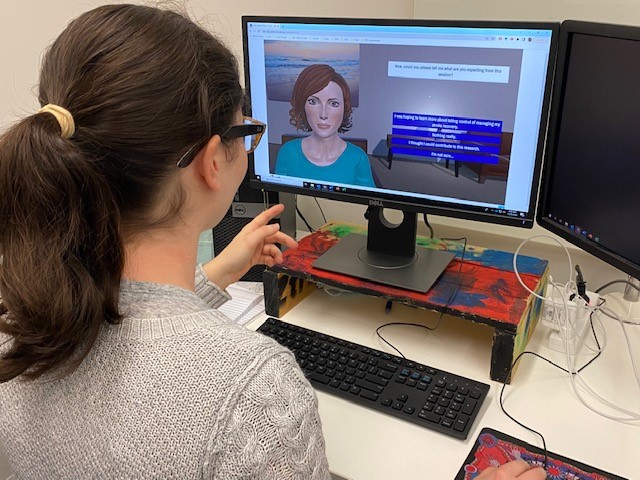
Dr Heidi Janssen @slootal and her team are looking for people to test a prototype of a computer character that could help people living with stroke.
If you’ve had a stroke in the past 12 months, you can help! 🧠🧡
https://t.co/SFDbKGFs5E
🗣️Do you have aphasia?
🥱Are you tired of post-stroke fatigue?
✅ What helps?
❎ What doesn’t?
👩🦱 Talk to Dawn, over a cup of tea, to help develop good treatments
https://t.co/GCWnd0VK11