🚨EPI Analysis: Level 3 Results Day 2024🚨
This morning Level 3 results have been published for students across England, Wales and Northern Ireland.
We have examined the key trends and takeaways from this year's results. Read our EPI analysis below👇
https://t.co/PpiBymkidj
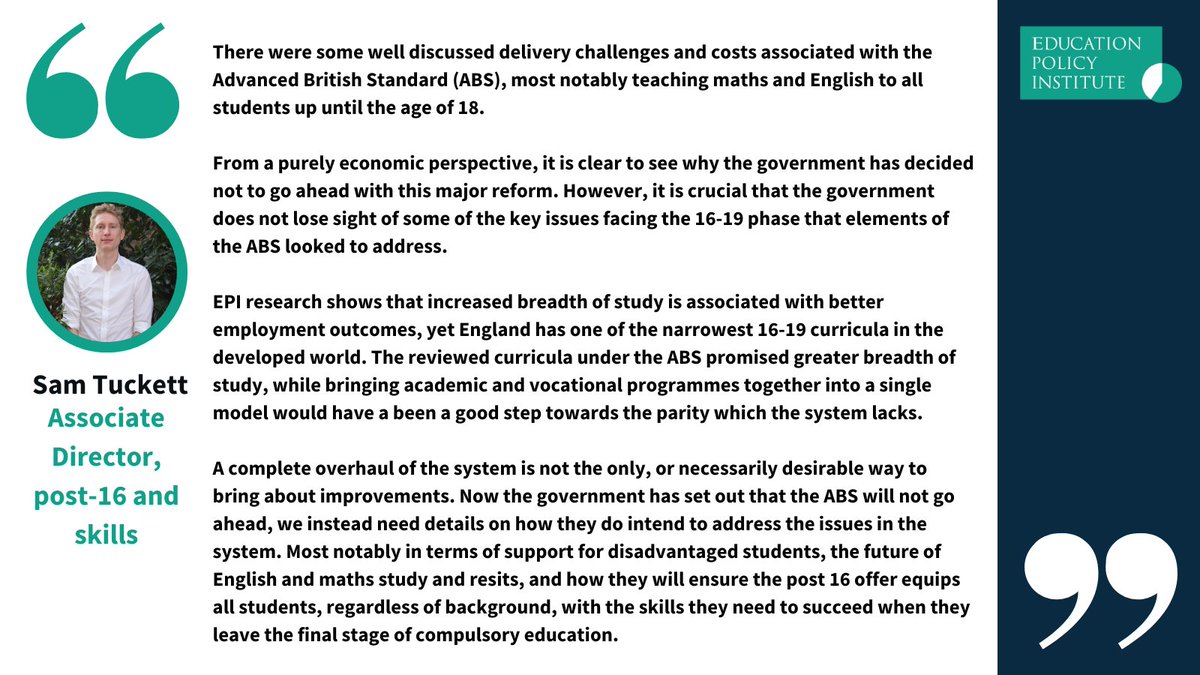
🗣️Comment: Advanced British Standard🗣️
@STuckett responds to the government's announcemnt that it will not continue with the introduction of an Advanced British Standard (ABS).👇
https://t.co/sSyTKYM1nk
In October @EduPolicyInst published the 1st instalment of our annual report. We found record attainments gaps for young children with special educational needs and no progress over the last decade in tackling gaps for persistently disadvantaged children
https://t.co/7UHhHQ0gWk
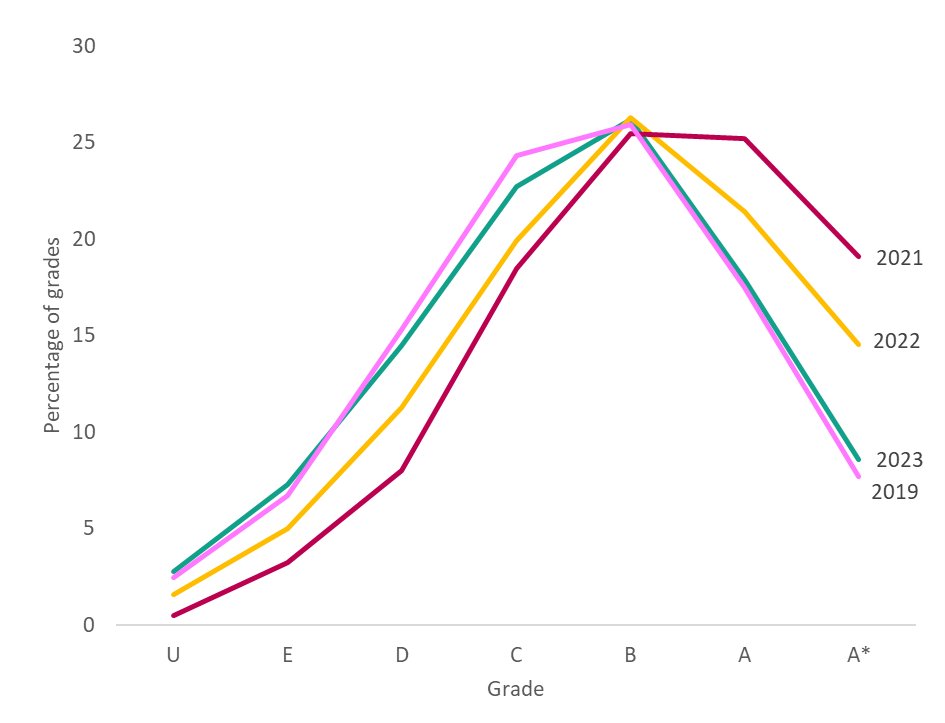
As expected, this year's A level grades are much closer to those of 2019 than those of previous years.
👉In 2023, 26.5% of entries were awarded an A or A*.
👉In 2019, this was 25.2%.
👉In 2022, this was 35.9%.
In both 2019 and 2023, 3/4 of entries were C grade or above.
🧵Most of the focus last week was on the pay award for school teachers, but there was an important funding announcement for the FE sector too. FE pay isn't determined by the government, but it has announced an additional £470m (over 2 years) for the sector. 1/3
.@STuckett:"Previous EPI research revealed the pandemic to have exacerbated inequalities within the education system, yet it’s extremely concerning that the 16-19 disadvantage gap now stands at its widest since the first publication of official measures."
https://t.co/ORBktM7oQU
Our very own @STuckett has written an excellent article in the @guardian today on the perseverance of A Level students, but the need for policy-makers to focus on addressing inequalities. https://t.co/gsbJ02OxXG
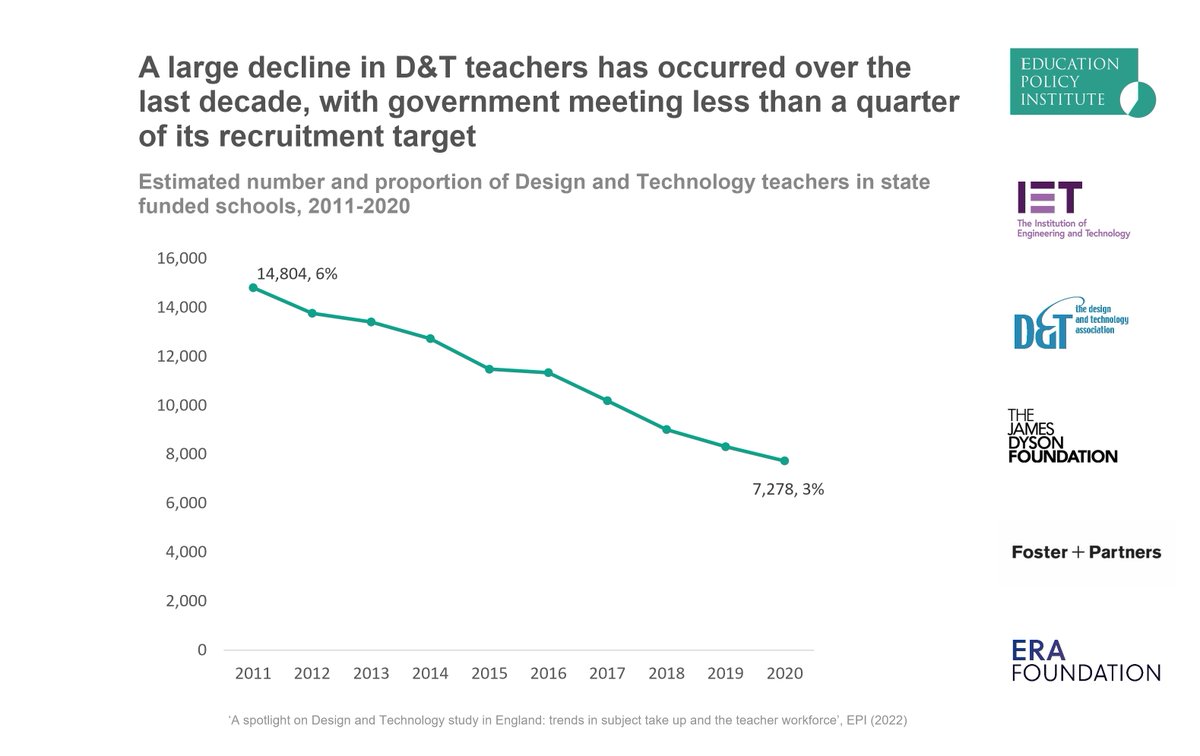
Our new report shows how steeply entries in Design and Technology have decreased in recent years. There is also great geographic variation, with less than 10 per cent of pupils entered for a D&T or related GCSE in some local authorities
A large decline in D&T teachers has coincided with the fall in student entries over the last decade.
Just 23% of the recruitment target for D&T was met in 2021/22.
Major school accountability reforms also occurred during this period.
Report: https://t.co/i36Upifhd7 #designtech
3) Statistics show that A level grade increases in FE sector colleges were significant, however increases in Applied General grades were greater in school sixth forms
Some interesting themes emerging from todays A level/vocational qualification statistics for 2021:
1) The A level disadvantage gap is narrower than it was in 2019 overall, BUT wider when looking at just those receiving the top grades, key for HE admissions in certain courses
2) Disadvantage gaps have grown for those entering applied general qualifications. Important in itself, but within qualification gaps don’t show the true extent of disadvantage – Nuffield funded EPI research for the 2020 cohort will address overall student disadvantage gaps
New report: Today we have published a study on identifying pupils with special educational needs & disabilities (SEND).
We find huge inconsistencies in how children with SEND are identified, with support highly dependent on where a pupil goes to school ⬇️
https://t.co/Y7nBegJLE3
New @EduPolicyInst report finds big variation in 16-19 disadvantage gap. Poorer students are equiv of 5 A-level grades behind more affluent peers in some areas of Eng. In other areas, poorer students are level with or even ahead of more affluent peers https://t.co/V14Tw3eVOB
This makes a strong case for increased and better targeted support for disadvantaged students at sixth forms and colleges, as well as reinforcing how important effective strategies to close the disadvantage gap at an earlier age are too.
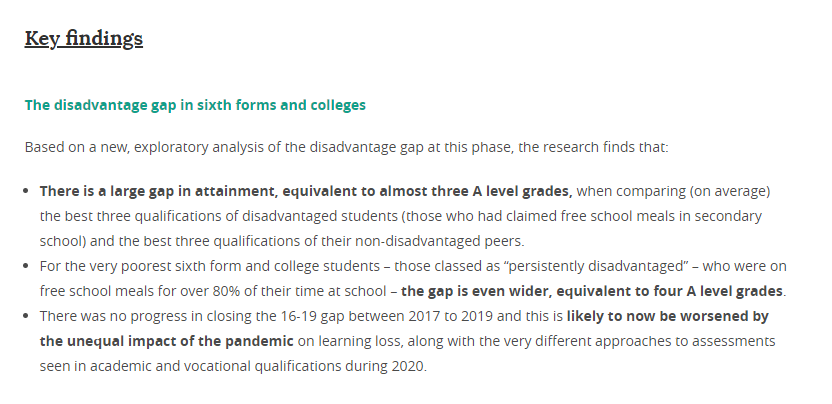
New research we've published today shows that disadvantaged students in sixth forms and colleges were the equivalent of 3 A level grades behind their peers over their best 3 qualifications https://t.co/BbeqFXnfk7
A lot, but not all of this gap can be explained by students' GCSE results at the end of school, and the type and number of qualifications entered in 16-19 study. But even when controlling for this, disadvantaged students are still falling behind in this phase of education.
New report: for the first time, we've measured the disadvantage gap in 16-19 education.
We find poorer sixth form and college students are 3 A level grades behind their affluent peers - while in some areas, this is 5 grades.
Full report: https://t.co/ZRFEiLBcct
@NuffieldFound
Disadvantaged sixth form and college students are 3 whole A level grades behind their more affluent peers
New Nuffield-funded exploratory research from @EduPolicyInst@STuckett@DavidR0bins0n @MrFBunting
https://t.co/KWoj3b8gcH
With job opportunities lacking, we might be about to see an influx of young people entering further education, meaning a lot more will be required to take English and Maths resits.
NEW: Thousands of young people typically enter work following GCSEs, but with unemployment set to soar, many will now opt to remain in education and continue with English and maths.
📊 EPI's @STuckett considers the impact of this large influx of students: https://t.co/AaSw6UQyF9