10 MOST WANTED TECHNICAL STOCK BOOKS:
1. Technical Analysis of the Financial Markets – John J. Murphy
Why Read: Considered the bible of technical analysis. Covers everything: chart patterns, indicators, moving averages, intermarket analysis.
2. Japanese Candlestick Charting Techniques – Steve Nison
Why Read: Introduced candlestick charting to the Western world. Essential for mastering candlestick patterns and signals.
3. Encyclopedia of Chart Patterns – Thomas Bulkowski
Why Read: In-depth statistics on how patterns perform. Great for understanding the probability behind technical patterns.
4. Trading in the Zone – Mark Douglas
Why Read: Focuses on the psychology behind technical trading. Complements technical skills with mindset mastery.
5. The New Trading for a Living – Dr. Alexander Elder
Why Read: Combines trading psychology, technical analysis, and risk management in one practical guide.
6. Technical Analysis Explained – Martin J. Pring
Why Read: Classic foundational text. Offers deep insights into momentum indicators, trends, and cycles.
7. How to Make Money in Stocks – William J. O’Neil
Why Read: Introduces the CAN SLIM strategy combining technical and fundamental analysis. Proven with real success stories.
8. Charting and Technical Analysis – Fred McAllen
Why Read: A great entry-level book for understanding charts, support/resistance, and market behavior.
9. The Art and Science of Technical Analysis – Adam Grimes
Why Read: A modern, in-depth, and data-driven book on pattern recognition and market structure.
10. Swing Trading using Candlestick Charting – Michael C. Thomsett
Why Read: Focuses specifically on candlestick patterns for swing trading setups and strategies.
10 Rules of Ruthless Trading Discipline
1. Plan every trade. If you can’t write it down, don’t take it.
2. Cut losers fast. Hope is not a strategy — exits are.
3. Size conservatively. Big trades come from big setups, not big egos.
4. Never chase. If it’s gone, let it go.
5. Follow your process. Consistency beats brilliance.
6. Don’t trade boredom. Sit out bad markets. Wait for clarity.
7. Avoid revenge trades. Emotion-based trades are account killers.
8. Respect your stops. Moving them is self-sabotage.
9. Journal everything. Self-awareness creates edge.
10. Show up like a pro. Every day, every trade, every click — with intent.
William O’Neil once turned $5,000 into $200,000 in just a few years by mastering momentum, timing, and disciplined stock selection.
The biggest lesson:
The stock market is not about being right every day.
It’s about managing risk, staying disciplined, and compounding
This is your reminder. Don’t miss this.
Day 1 of the Prompt Atlas AI Summit was incredible.
The energy. The breakthroughs. The ideas. The possibilities.
We want to sincerely thank everyone who showed up, participated, asked questions, and took action. I hope you left realizing that AI is not the future… it’s happening right now.
But honestly… Day 2 is going even deeper. 🔥
Tonight we’ll be covering:
�� AI Clones & Virtual Avatars
• Lead Generation Systems
• ChatGPT, Claude & Manus Workflows
• Build Mobile Apps with AI
• Live AI Builds & Real Business Use Cases
• more & more & more…
This is not theory. This is practical, real-world AI that can transform how you work, create, market, and build.
Invite your friends, family, business partners, and team members. Let’s pack out Day 2 and help more people step into the AI economy.
https://t.co/w3fI3iNWqY
See you tonight at the AI Summit 🚀
He predicted the 1987 crash.
Made $100M.
Then spent years trying to destroy this footage.
In this documentary, you’ll watch Paul Tudor Jones:
– Lose $6M in a single afternoon
– Sit back and say: “total devastation”
– Then make it all back… +100%
This will change how you see risk forever.
Bookmark this. Watch it. Then read below ↓
“Patterns Don’t Predict the Future — They Reveal Who’s Winning the Fight.”
Beginners think chart patterns are magic shapes.
Professionals know they’re battle maps.
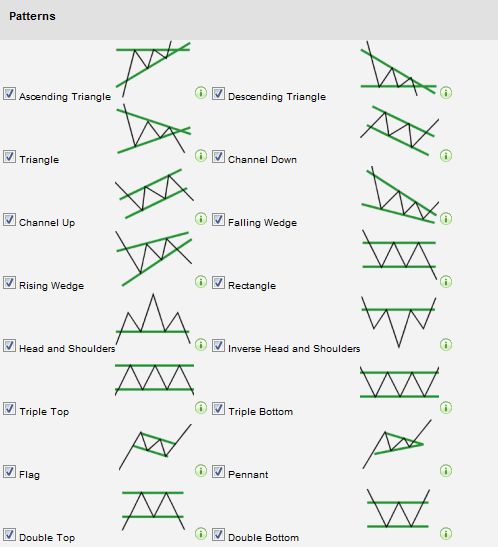
Every triangle, wedge, flag, or head‑and‑shoulders is just the market exposing the truth:
- Who’s in control
- Who’s losing control
- Who’s trapped
- Who’s about to get squeezed
- Who’s about to take over
A pattern is not a prediction.
A pattern is pressure.
Pressure between buyers and sellers.
Pressure between fear and confidence.
Pressure between weak hands and strong hands.
When you learn to read patterns, you’re not memorizing shapes —
you’re reading psychology in motion.
- An ascending triangle shows buyers tightening the noose.
- A falling wedge shows sellers running out of ammunition.
- A double top shows confidence cracking.
- A flag shows strength resting, not dying.
Patterns don’t tell you what will happen.
They tell you what the crowd is feeling —
and that’s what moves price.
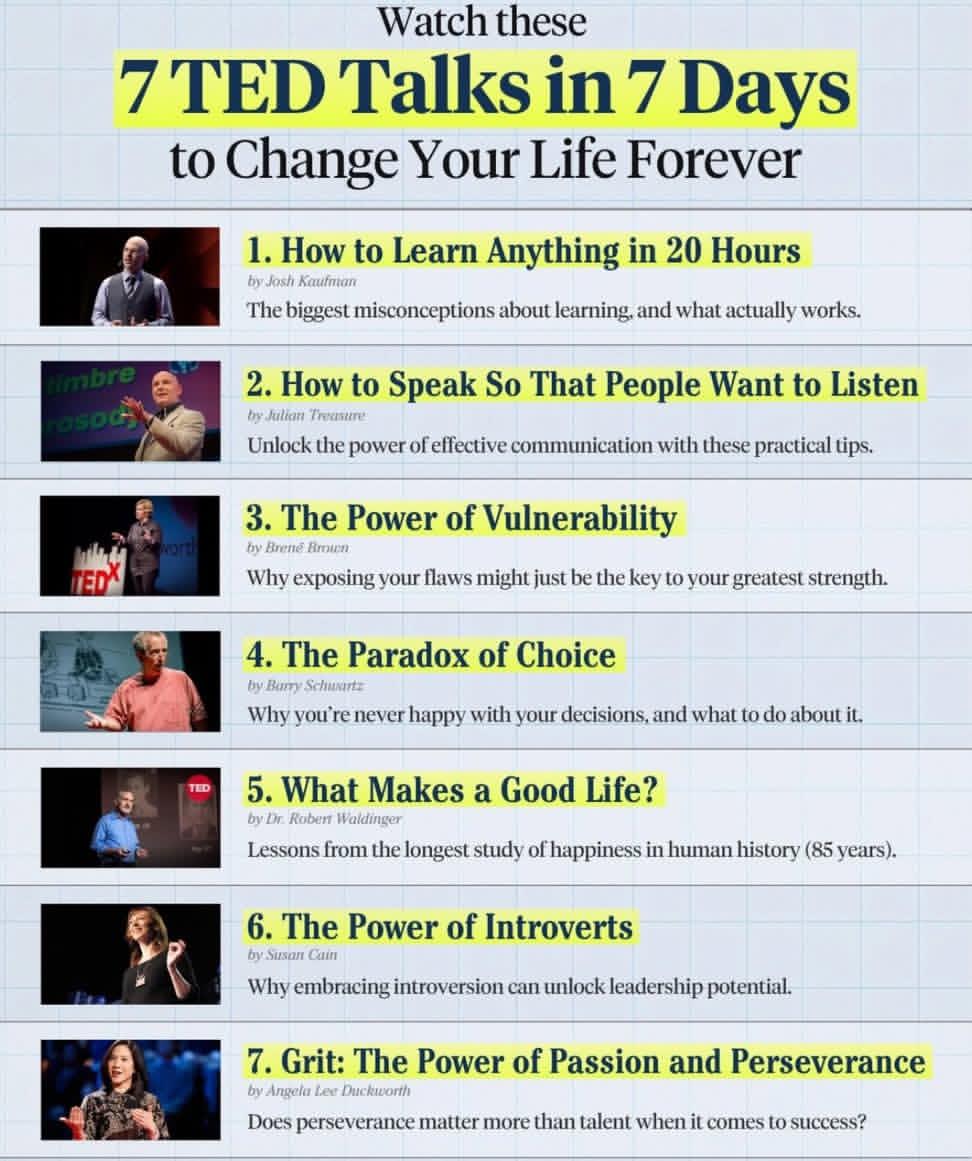
7 TED TALKS IN 7 DAYS:
1. How to Learn Anything in 20 Hours
2. How to Speak So That People Want to Listen
3. The Power of Vulnerability
4. The Paradox of Choice
5. What Makes a Good Life?
6. The Power of Introverts
7. Grit: The Power of Passion and Perseverance