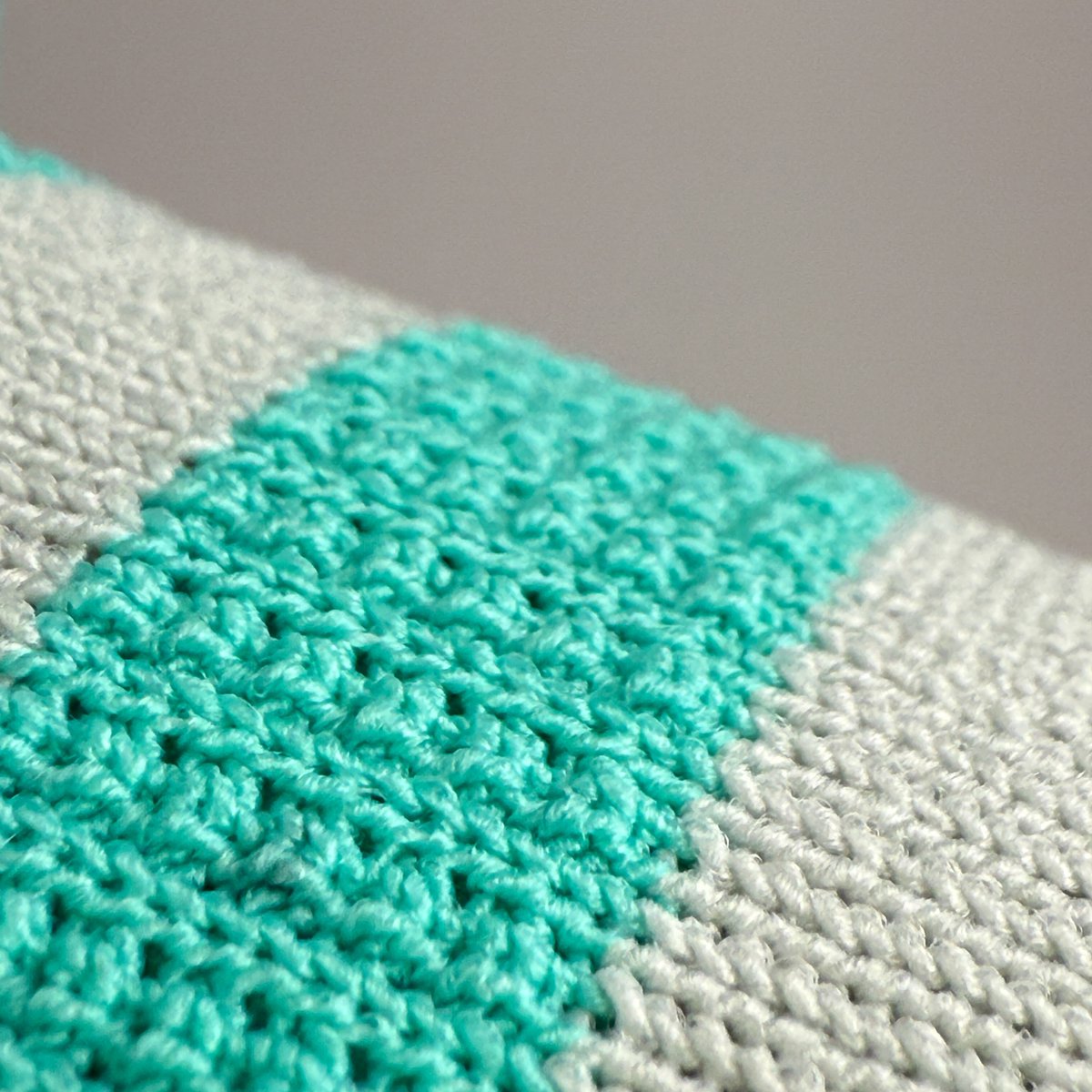
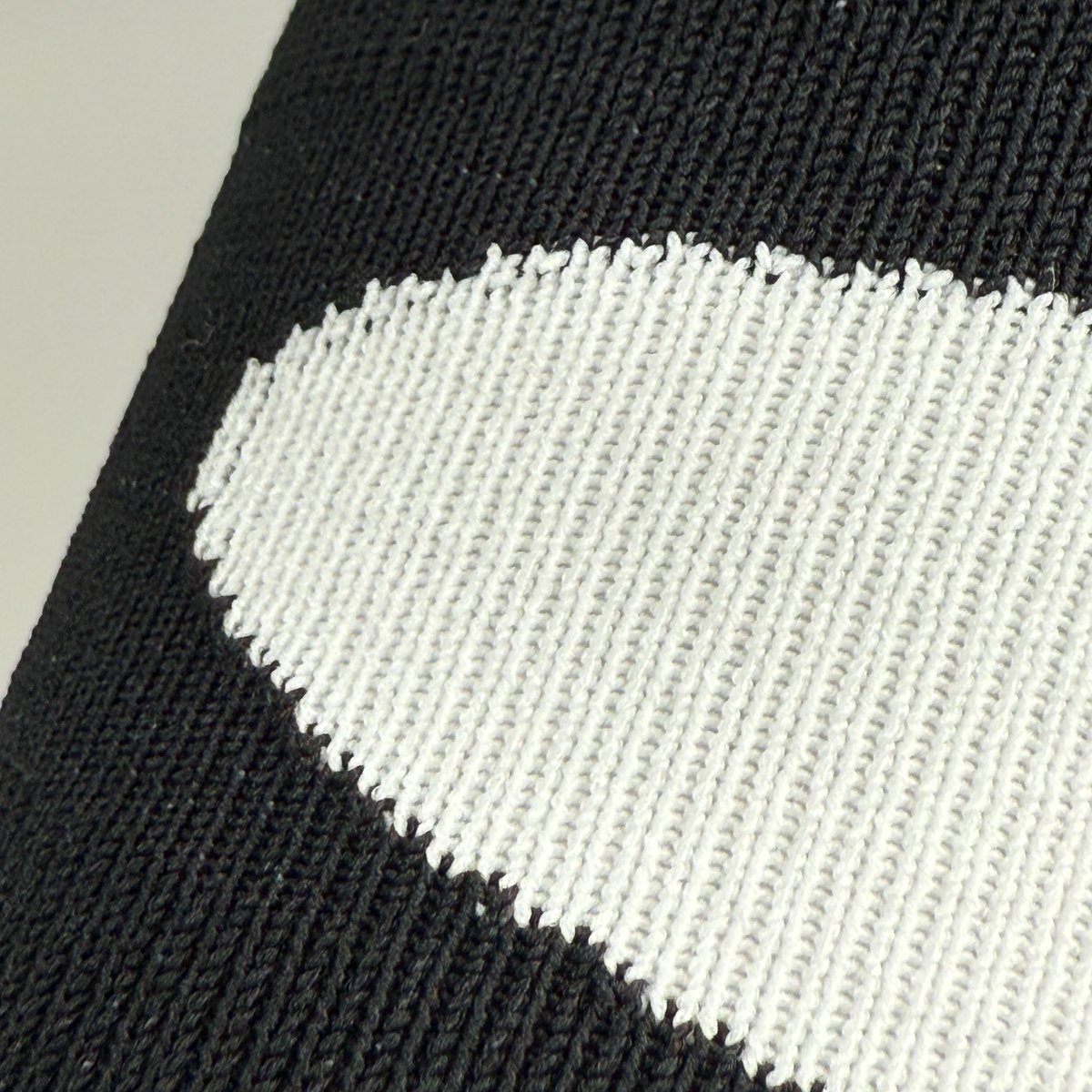
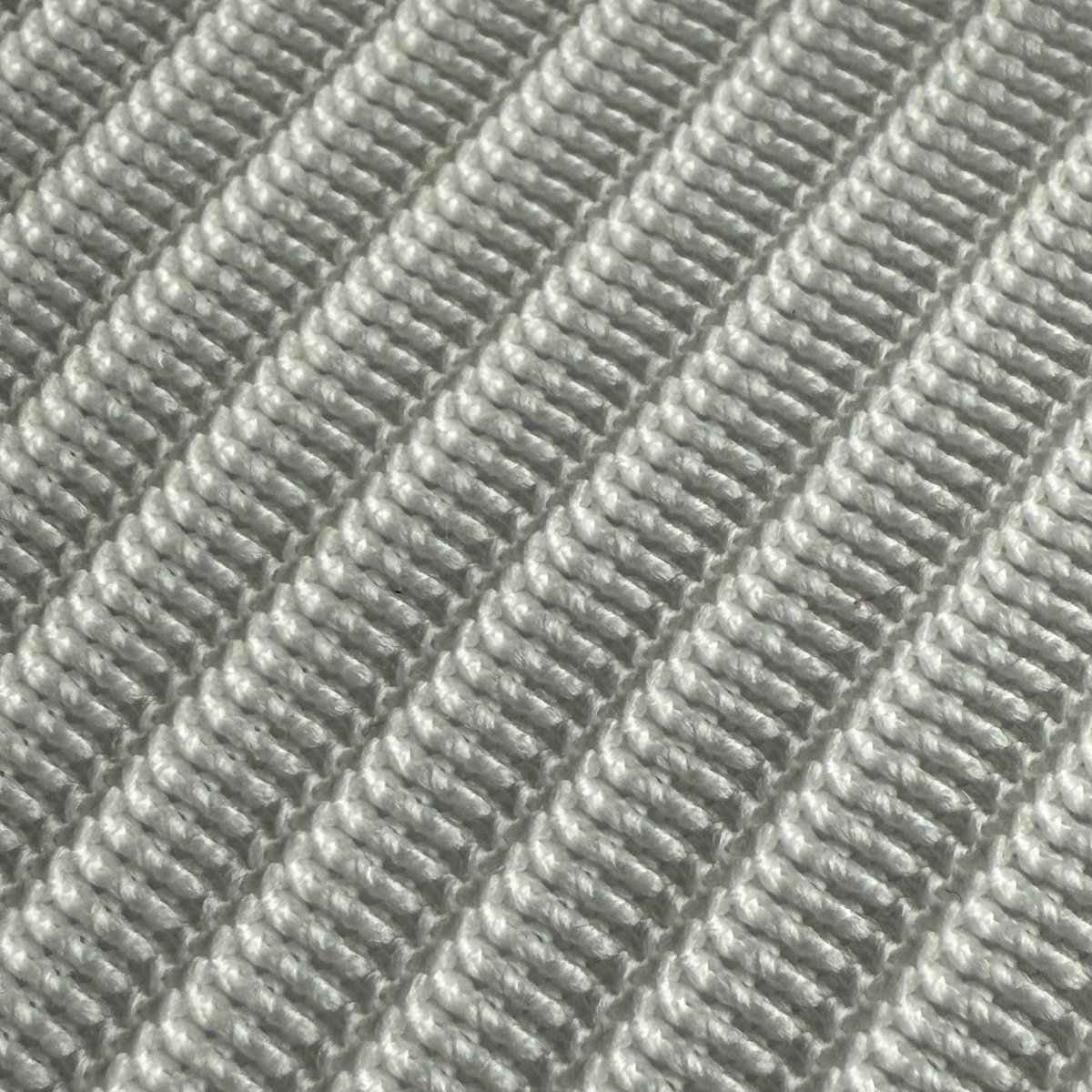
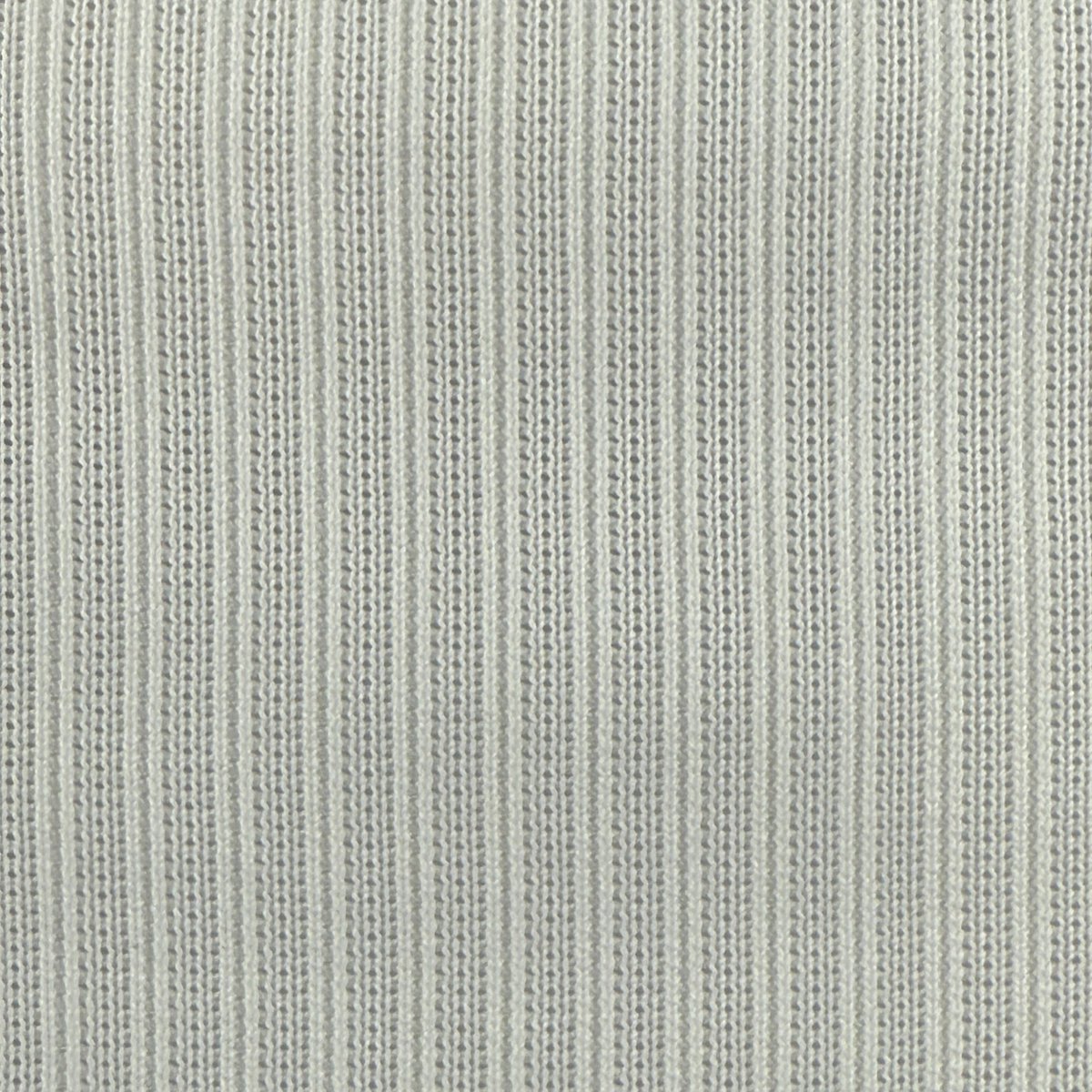
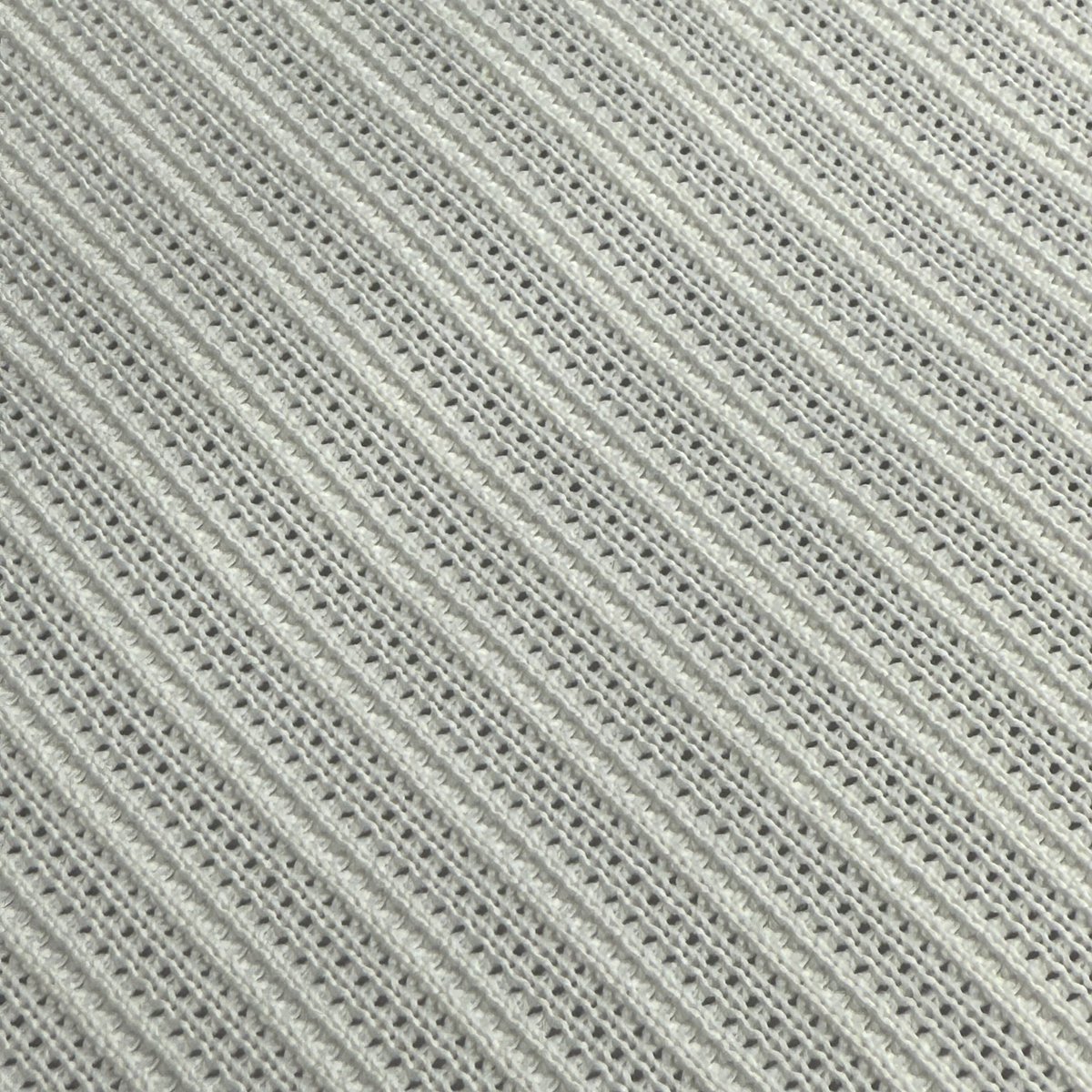
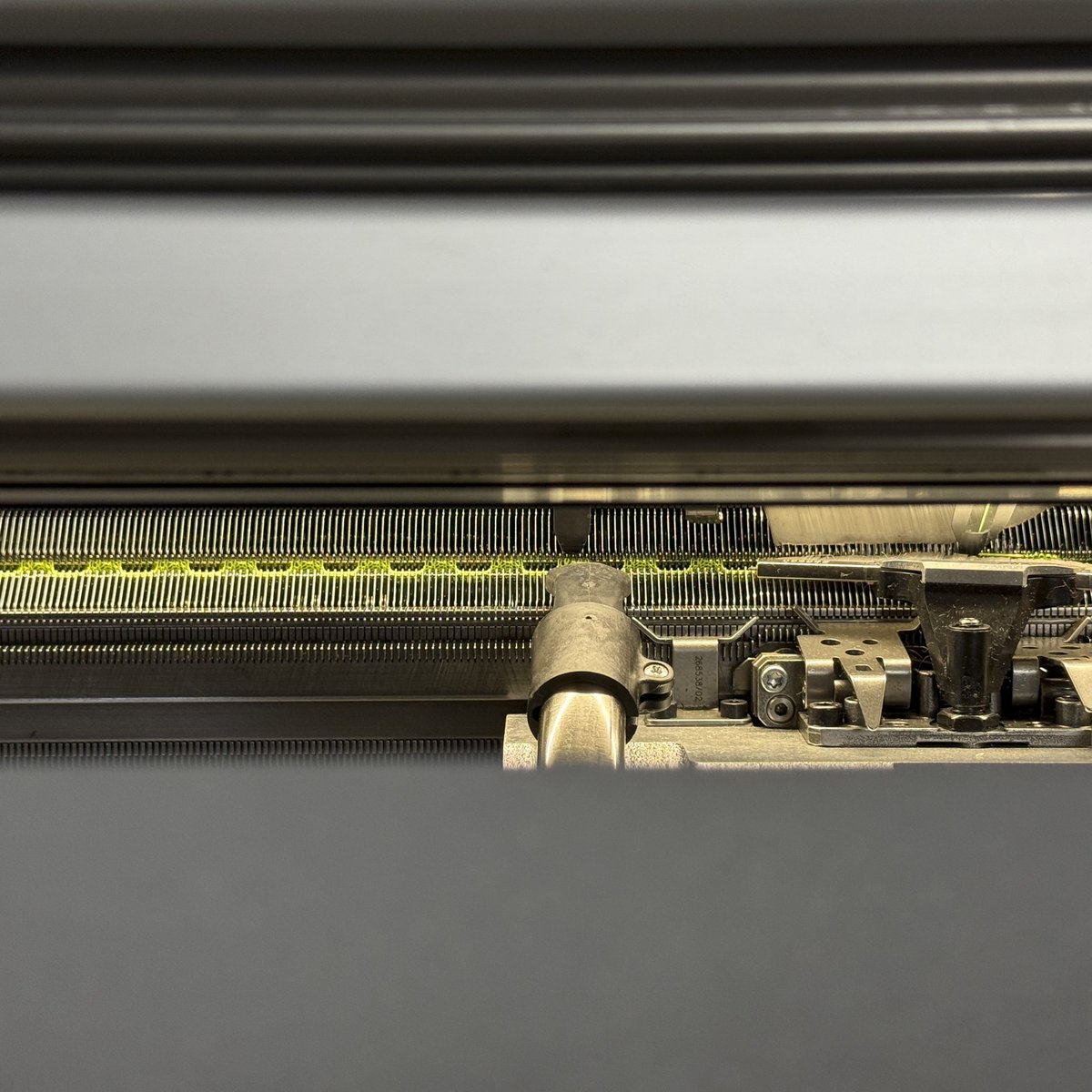
Details from knit samples developed on our Colosio small circular knitting machine. We're exploring stitch variation and intarsia techniques. Sampling like this allows us to test yarns, structures, and construction methods early in the development process.
Multi-material 3D printing allows rigid and flexible features to be built into a single prototype. Using PETG and TPU, this sample illustrates how two materials can be combined to create a stiff and flexible zone within a single part.
Quick knit test exploring shape, stretch, and texture. Small swatches like this help us evaluate how knit architecture responds before moving into larger prototypes and more developed soft goods applications.
Test swatches help designers and clients evaluate materials before committing to a direction. Samples of materials such as seam-sealing tapes and adhesive films make it easy to assess appearance, hand feel, bonding, flexibility, and construction performance early in development.
Textile structure directly affects performance, appearance, manufacturability, and cost. Understanding the differences between woven, knit, and nonwoven structures helps identify the right material for the use case and leads to more successful product design.
The KMD archive is a growing collection of knit studies exploring construction, structure, and material behavior. We use these samples to test technical possibilities and inspire client conversations. See the growing archive on our website: https://t.co/u7PZNEC3AR
At Studio KMD, we bring ideas from concept to creation through thoughtful design, rapid prototyping, and hands-on development, working closely with clients to refine concepts, explore materials and technologies, and turn early-stage ideas into fully realized, functional outcomes.
From the knitter's perspective.
Working with our in-house Stoll flat knitting machine enables real-time programming, sampling and refinement. This iterative workflow gives us precise control over knit structures and patterns while bringing development from concept to prototype.
Stitch by stitch, knit textiles are engineered through deliberate material and construction decisions.
Each loop, transition, & tension adjustment influences structure, stretch, and surface quality. This precision guides how we develop textiles built for both function and form.
Built for footwear, the Colosio S1 small circular knitting machine enables intarsia constructions. This pull tab style sample demonstrates integrated shaping and localized structures. It's a capability study, not a finished product, used to evaluate manufacturing possibilities.
Technical yarns allow knit structures to be engineered for specific performance needs. In this sample, PTFE yarn is used on one face to create a low-friction surface within the knit while also providing chemical resistance, thermal stability, and durability.
The sound of development in progress.
In-house knitting enables rapid iteration, real-time evaluation, and efficient refinement of structures, materials, and performance characteristics.
Material selection has a direct impact on knit performance.
Using the same knit structure, these samples compare elastic, wool, and polyester yarns across multiple deniers, demonstrating how yarn choice affects stretch, recovery, fit, handfeel, and appearance.
Our in-house electronics setup enables rapid concept prototyping and validation. From embedded systems and sensor integration to power management and iterative bench testing, we’re able to evaluate performance early in development and refine hardware alongside physical prototypes
Yarn packages are fundamental to textile performance, directly influencing aesthetics, durability, and hand feel.
At Studio KMD, we develop custom twisted, covered, and engineered yarn constructions tailored to the functional and aesthetic demands of each application.
To find the best knit structure for a project, we produce comparison samples featuring multiple knit constructions for side-by-side evaluation. This mesh sample helps assess airflow, stretch, recovery, and overall material behavior early in development.
Intarsia enables discrete zones within a knitted structure, allowing color and material changes without reverse-side floats. At Studio KMD, we use techniques like this to control structure, stretch, and permeability in soft goods development.
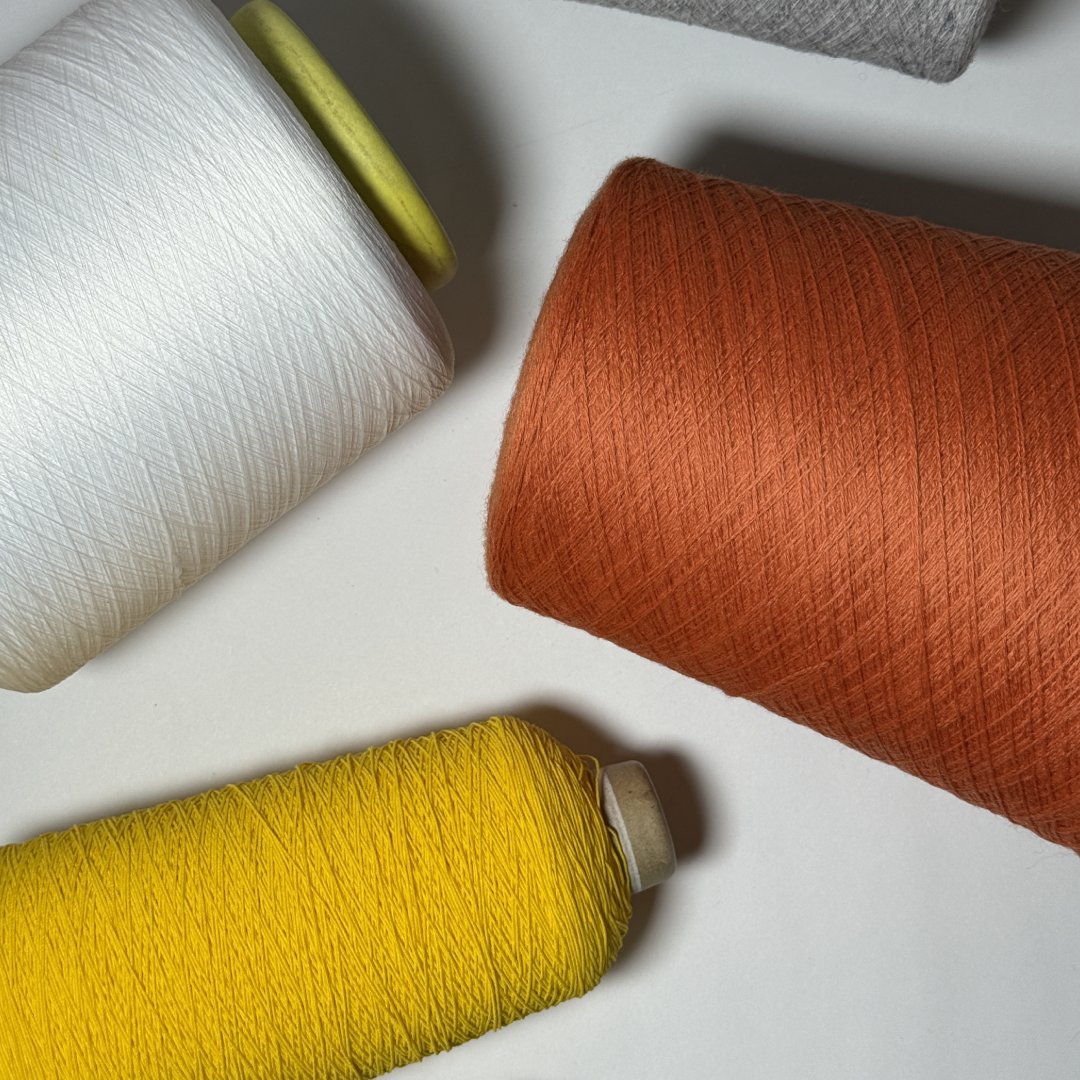
Yarn selection plays a critical role in textile development. Variables like color, material, and denier affect performance, structure, and hand feel. At Studio KMD, we evaluate yarns early in the process to ensure materials align with the intended function and final application.