Looking for simple to use, customisable clocks?
Designed to be printed or pasted into PowerPoints etc.
The snipping tool (win+shift+s) is your friend.
https://t.co/c9Aa7UrjAf
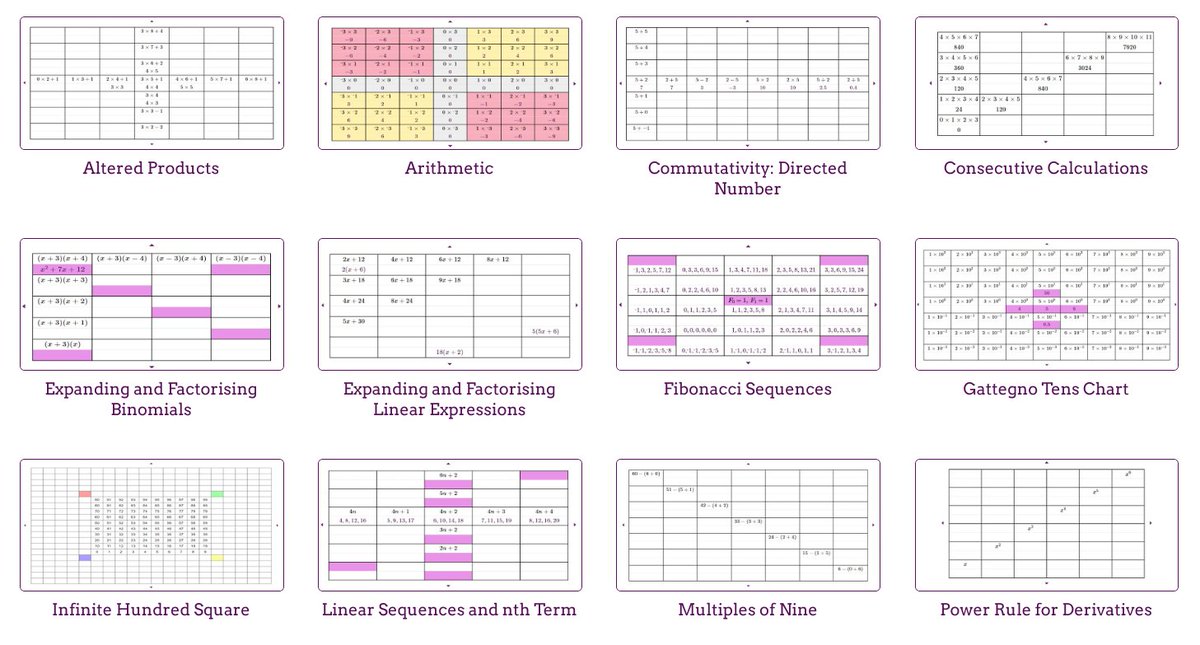
The Gattegno Tens Chart. Great for exploring place value.
Customisable with switch, toggle, highlight and standard form options.
https://t.co/0NkEpuvLMS
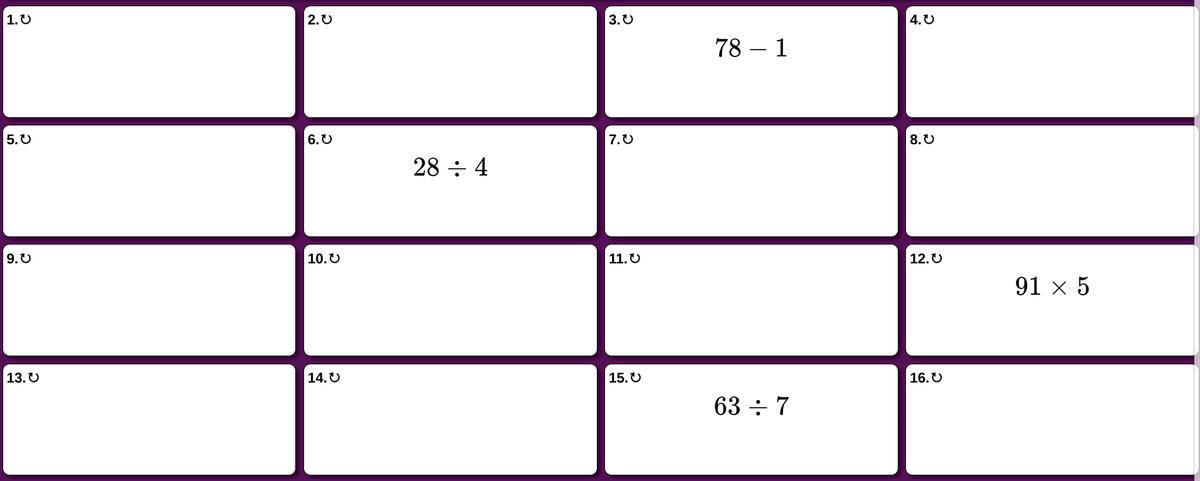
Completion tables are a great way to get pupils working backwards and add an extra layer of challenge.
Here's one for the Four Operations.
https://t.co/FMaCeiQc5c
Using prime factors tiles and the product rule for counting to calculate the total number of factors of any number.
https://t.co/cBvZKry1gy
#MiniMathsBots
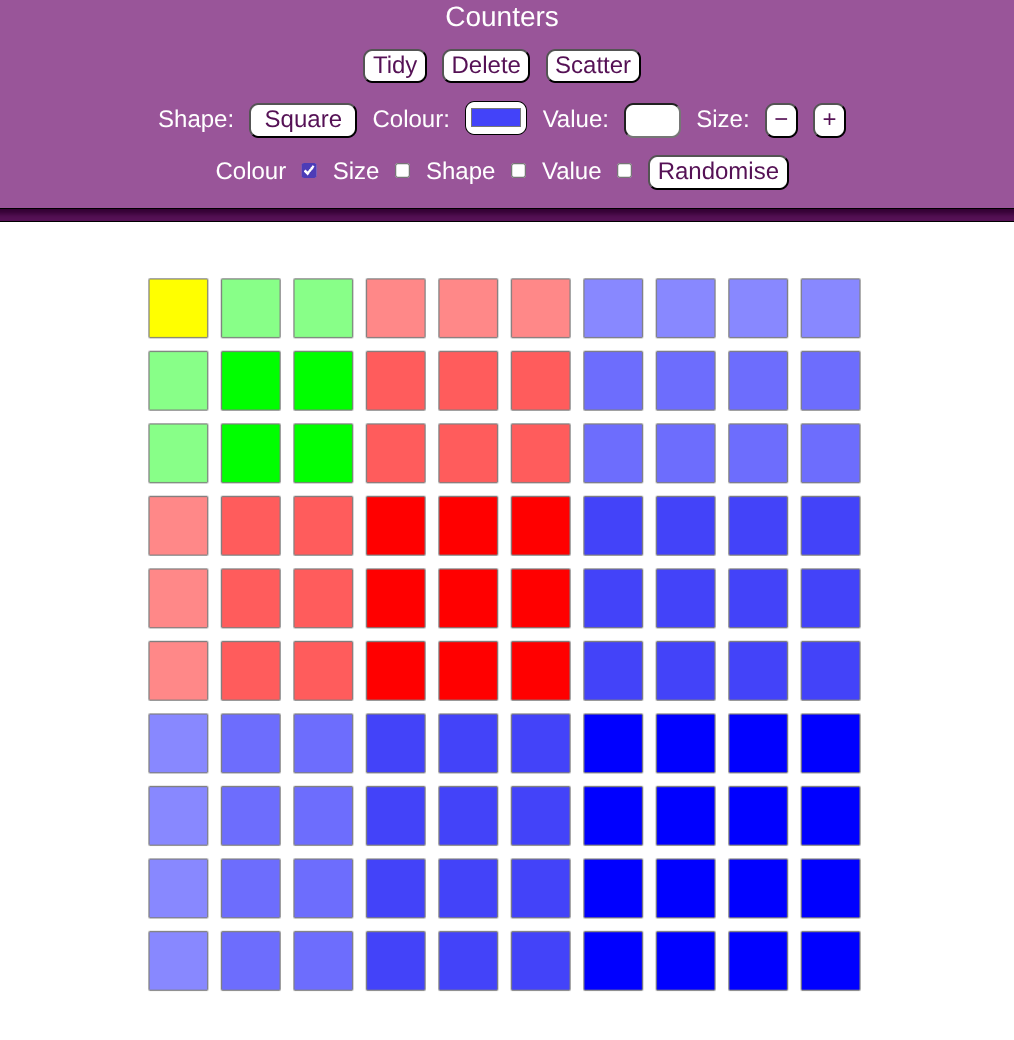
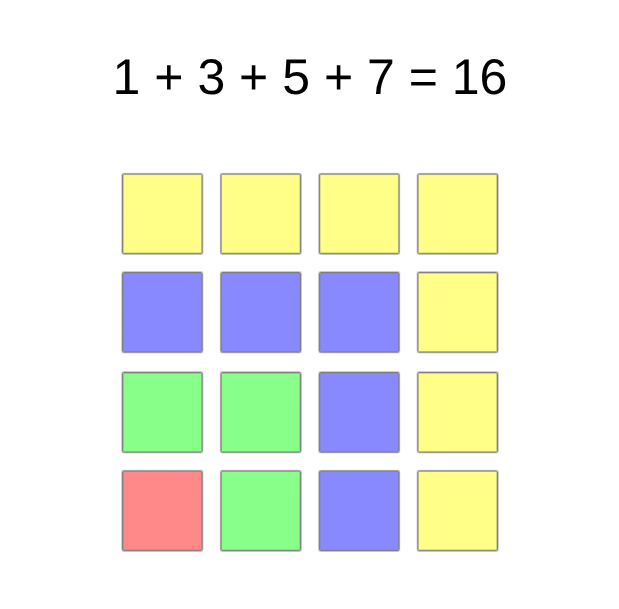
Did you know: The Two-Colour Counters work with the example-problem pairs?
Just launch the counters whenever you have a question you want to model.
For example:
https://t.co/MfUq5cA1gF
All the KS1-KS2 arithmetic generators in one place.
Not just for primary, they're handy for keeping the rust of the basics in secondary too!
https://t.co/XVVEEu8Oku
Modelling the traditional column method of addition using Dienes blocks. In this case adding a pair of two-digit numbers where an exchange is required.
https://t.co/b6HFDCvl3L
A visual demonstration of how counting to "100" in base four works.
It's fun to pause the video at 33 with pupils and ask them what comes next...not many get it right first time!
https://t.co/Ke7NSyyc2P
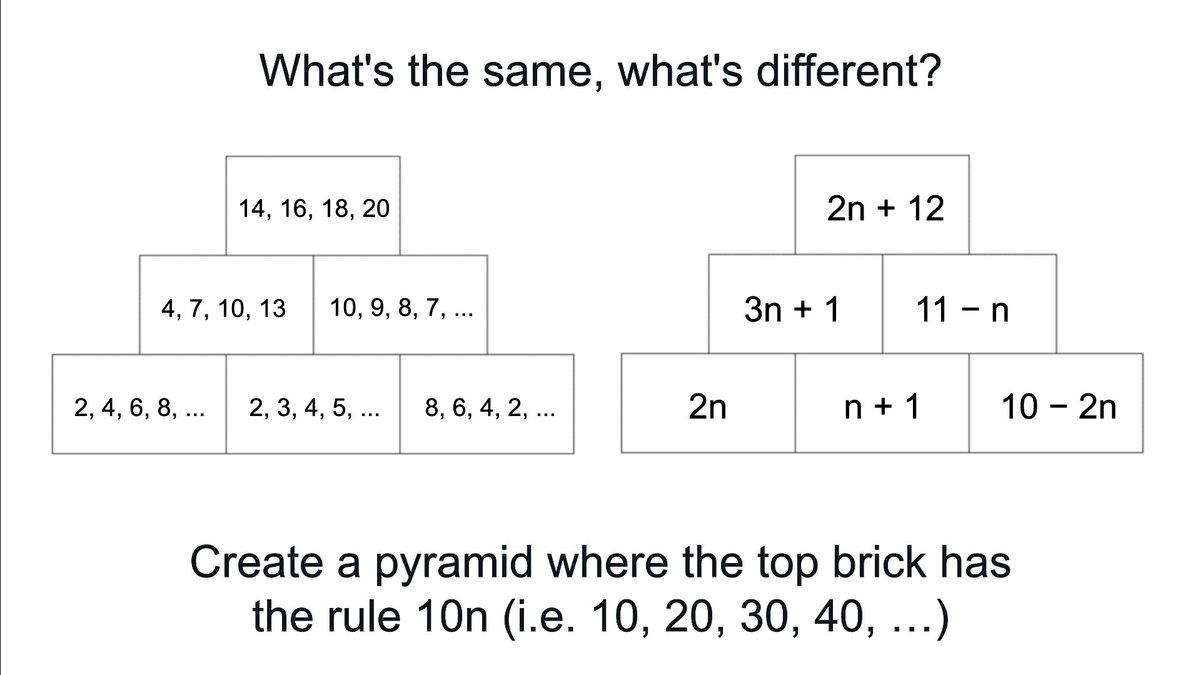
When number pyramids meets sequences.
What other questions could we ask? Could we throw in some quadratic sequences?
#1001MathsBots
https://t.co/NiLafqbWe6
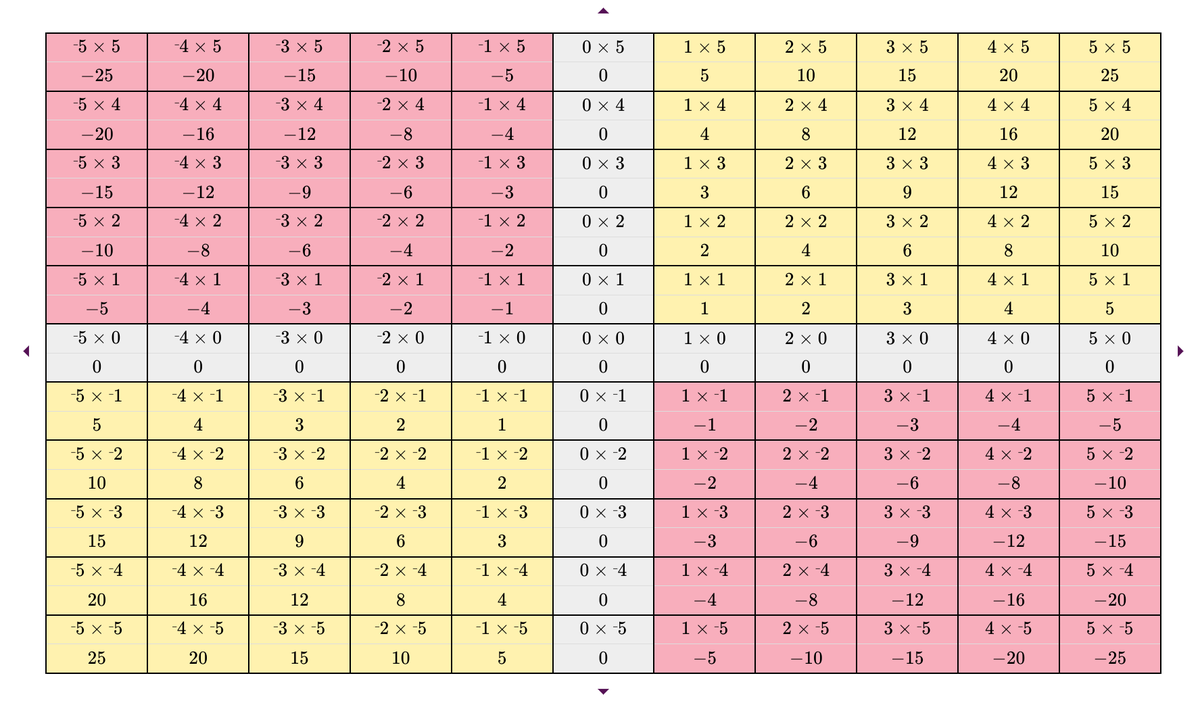
The Structured Variation Grid is a powerful tool to encourage pupils to harness their mathematical powers, spot patterns, and make conjectures leading to generalisations.
My growing collection of them is here:
https://t.co/gAdLaeaeVf
Remember Memory Maths from years ago?
I've just added custom URLs to the starter generator so you can make and save your own.
Here's an example that mimics the classic version almost exactly. Great for MWB bell work.
https://t.co/Tzmz28IAPJ